
When Sarah Johnson stepped onto a standard mobility scooter at 285 pounds, the grinding sound from the motor told her everything she needed to know. The device wasn’t built for someone her size, and within months, costly repairs and safety concerns forced her to search for a true heavy-duty solution. This scenario plays out thousands of times across North America, where nearly 30% of mobility scooter users exceed the weight capacity of standard models, leading to premature failures, safety risks, and unnecessary expenses.
The gap between standard mobility scooters and the needs of plus-size users represents more than just a numbers game on a specification sheet. It’s about structural integrity, user safety, long-term reliability, and the fundamental right to independent mobility. Understanding weight capacity isn’t just about finding a scooter that won’t break – it’s about discovering models engineered from the ground up to provide safe, comfortable, and dependable transportation for users of all sizes.

This Photo was taken by RDNE Stock project.
Understanding the weight capacity reality in mobility scooters
Weight capacity in mobility scooters operates on multiple levels that most users never consider until it’s too late. The published weight limit represents the maximum load a scooter can theoretically carry, but real-world performance, safety margins, and longevity tell a different story entirely.
Standard mobility scooters typically support between 250-300 pounds, while heavy-duty models range from 350-500 pounds, with some specialized bariatric units handling up to 700 pounds. However, these numbers only scratch the surface of what determines a scooter’s true capacity and reliability under extended use.
The engineering behind weight ratings
Manufacturers determine weight capacity through comprehensive testing that examines frame stress, motor performance under load, battery drain rates, and brake effectiveness. The testing process involves loading the scooter to 125% of its rated capacity and subjecting it to thousands of acceleration, deceleration, and turning cycles.
Frame materials play a crucial role in weight capacity. Standard scooters often use lightweight aluminum or thin steel tubing, while heavy-duty models employ reinforced steel frames, thicker gauge materials, and strategic reinforcement points at stress-critical locations like the seat post, front fork, and rear axle mounting points.
| Scooter Category | Weight Capacity Range | Frame Material | Typical Price Range | Target User Weight |
|---|---|---|---|---|
| Standard Portable | 250-275 lbs | Aluminum/Light Steel | $800-$1,500 | Under 225 lbs |
| Standard 4-Wheel | 300-350 lbs | Steel Frame | $1,200-$2,000 | 225-275 lbs |
| Heavy-Duty | 400-500 lbs | Reinforced Steel | $2,000-$4,000 | 275-400 lbs |
| Bariatric | 500-700 lbs | Premium Steel/Alloy | $3,500-$8,000 | 400+ lbs |
Motor specifications directly correlate with weight capacity performance. While a 250-watt motor might adequately power a 200-pound user on flat terrain, that same motor struggles with a 300-pound user, leading to overheating, reduced range, and premature wear. Heavy-duty models typically feature 500-800 watt motors with enhanced cooling systems and gear reduction drives.

This Photo was taken by Văn Nguyễn Hoàng.
Real-world vs rated capacity considerations
The 20% rule represents industry best practice for weight capacity selection. If you weigh 300 pounds, selecting a scooter rated for 375+ pounds provides the safety margin necessary for long-term reliability and optimal performance. This buffer accounts for additional cargo, seasonal weight fluctuations, and the natural degradation of components over time.
Environmental factors significantly impact effective weight capacity. Hills, rough terrain, and temperature extremes all reduce a scooter’s practical weight handling ability. A scooter that performs adequately at capacity on flat pavement may struggle dangerously on inclined surfaces or soft ground.
Heavy Duty 4 Wheel Mobility Scooters for Seniors & Adults 500lbs Capacity

Rating: ⭐⭐⭐⭐ 4.7/5
$2,296.00
Premium heavy-duty scooter with 800W motor and all-terrain capabilities. Built for users up to 500lbs with reinforced steel frame and long-range battery system.
Considerations: Higher price point, requires more storage space
Bariatric mobility scooter engineering and design principles
Bariatric mobility scooters represent a specialized category of devices engineered specifically for users weighing 350 pounds and above. These units don’t simply feature higher weight ratings – they incorporate fundamentally different design philosophies, materials, and construction methods compared to standard models.
The frame geometry of bariatric scooters differs significantly from standard designs. Wider wheelbase configurations provide enhanced stability, while lower center-of-gravity positioning reduces rollover risk during turns or when traversing uneven surfaces. The seat mounting system utilizes heavy-duty steel posts with reinforcement brackets rather than the simple tube-and-clamp systems found on lighter-duty models.
Advanced structural reinforcement techniques
Stress distribution represents the core principle behind effective bariatric scooter design. Engineers strategically place reinforcement materials at high-stress points including the seat base, steering column junction, and rear axle mounting locations. These reinforcements often involve welded steel plates, additional cross-bracing, and upgraded fasteners rated for higher torque specifications.
Suspension systems in bariatric models feature heavy-duty springs, larger-diameter shock absorbers, and reinforced mounting points. Standard scooters often lack any suspension or use minimal spring-loaded front forks, while bariatric units may incorporate four-wheel independent suspension systems to manage the increased loads and provide user comfort.

This Photo was taken by Shan Huang.
Wheel and tire specifications scale dramatically in bariatric applications. Standard 8-inch wheels give way to 12-inch or larger pneumatic tires with reinforced sidewalls and higher pressure ratings. The increased contact patch improves weight distribution while larger diameter wheels roll more easily over obstacles and provide better shock absorption.
Motor and drivetrain considerations for heavy loads
Bariatric scooters typically employ dual-motor configurations or single high-torque motors in the 800-1200 watt range. These motors feature enhanced cooling systems including larger heat sinks, cooling fans, and thermal protection circuits that prevent damage during extended operation under heavy loads.
Gear reduction systems in heavy-duty applications often utilize metal gears rather than the plastic components found in lighter models. The gear ratios favor torque multiplication over top speed, allowing the scooter to maintain consistent performance on inclines while carrying maximum loads.
16-32 Miles Long Range Heavy Duty Mobility Scooter – 500/1000W & 400/500LBS Capacity

Rating: ⭐⭐⭐⭐⭐ 4.8/5
$1,049.99
Extended range heavy-duty model with dual power options and impressive 32-mile range. Features off-road shock absorbers and 13-inch tires for all-terrain capability.
Considerations: Complex power system may require specialized servicing
Load testing protocols and safety certification standards
The rigorous testing procedures that determine mobility scooter weight ratings involve multiple phases of evaluation designed to simulate years of real-world use in compressed timeframes. Understanding these protocols helps users make informed decisions about which models truly meet their long-term needs rather than just marketing claims.
Static load testing represents the foundation of weight capacity verification. During this phase, test engineers load the scooter to 125% of its rated capacity and maintain that load for extended periods while monitoring frame deflection, joint stress, and component integrity. The scooter must maintain structural integrity without permanent deformation or component failure.
Dynamic performance evaluation under maximum loads
Dynamic testing pushes loaded scooters through thousands of acceleration, braking, and turning cycles to evaluate performance under realistic operating conditions. Test protocols include climbing standardized inclines, navigating obstacle courses, and enduring extended runtime evaluations that simulate months of typical use patterns.
According to the FDA’s medical device guidelines, mobility scooters must undergo comprehensive safety testing before receiving market clearance. This includes electrical safety evaluations, electromagnetic compatibility testing, and mechanical stress analysis under various load conditions.

This Photo was taken by lil artsy.
Environmental testing exposes loaded scooters to temperature extremes, humidity variations, and vibration stress that mimics transportation and storage conditions. Battery performance under load receives particular attention, as cold temperatures and high loads can dramatically reduce range and power output.
Certification standards and regulatory oversight
In North America, mobility scooters must comply with ANSI/RESNA WC-1 standards, which establish minimum requirements for stability, durability, and safety performance. The Underwriters Laboratories (UL) certification process provides additional safety validation through independent testing and ongoing quality monitoring.
Canadian users benefit from Health Canada’s medical device regulations, which require manufacturers to demonstrate safety and effectiveness through clinical data and post-market surveillance. These regulations ensure that weight capacity claims reflect actual performance capabilities rather than theoretical maximums.
Understanding proper maintenance schedules and service requirements becomes crucial for heavy-duty models, as the increased stresses from higher weight loads accelerate component wear and require more frequent inspections.
Structural safety features in heavy-duty models
Advanced safety features distinguish heavy-duty mobility scooters from standard models, incorporating multiple redundant systems designed to prevent accidents and protect users even when operating at maximum capacity. These features often represent the difference between a mobility aid and a potential hazard.
Anti-tip mechanisms in heavy-duty scooters utilize multiple approaches including extended wheelbases, lowered seat positions, and active stability control systems. Some premium models incorporate gyroscopic sensors that detect impending rollover conditions and automatically adjust motor output or apply selective braking to maintain stability.
Braking systems and emergency stopping capabilities
Heavy-duty models feature regenerative braking systems that not only provide superior stopping power but also extend battery range by converting kinetic energy back into stored electrical energy. The braking force automatically scales based on the detected load, ensuring consistent stopping distances regardless of user weight or cargo.
Emergency brake systems activate automatically if the user releases the throttle control or encounters a system malfunction. These systems engage electromagnetic brakes that physically lock the wheels, preventing runaway situations that could occur due to electrical failures or control system malfunctions.
Mobility Scooters for Seniors & Adults 500lbs Capacity – All Terrain Electric Powered Mobility Cart
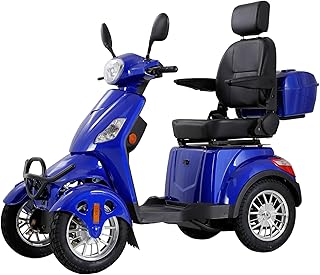
Rating: ⭐⭐⭐⭐ 4.7/5
$1,896.00
All-terrain capability with 500lbs capacity and 800W motor. Includes remote key operation and advanced safety features for outdoor adventures and daily mobility needs.
Considerations: May be too large for tight indoor spaces, remote key system requires backup access
Weight distribution monitoring systems use load sensors integrated into the seat and platform to detect improper loading conditions that could compromise stability. These systems provide visual and audible warnings when weight distribution exceeds safe parameters or when the total load approaches capacity limits.

This Photo was taken by Gül Işık.
Electrical safety and fault protection systems
Heavy-duty scooters incorporate sophisticated electrical protection systems including circuit breakers, fuse arrays, and ground fault detection circuits. These systems prevent electrical fires, protect against short circuits, and ensure safe operation even when exposed to moisture or physical damage.
Battery management systems monitor individual cell voltages, temperatures, and charge states to prevent dangerous conditions like thermal runaway or explosive gas buildup. Advanced models include battery isolation switches that completely disconnect power during maintenance or emergency situations.
When considering accident prevention strategies, heavy-duty users face unique risks related to the increased mass and momentum of their mobility devices, making these advanced safety features particularly crucial.
Comfort solutions and ergonomic considerations for plus-size users
Comfort extends far beyond simple seat dimensions when designing mobility solutions for plus-size users. Effective comfort solutions address pressure distribution, postural support, thermal management, and accessibility challenges that standard scooters often ignore entirely.
Seat design in heavy-duty models incorporates multi-zone foam densities, with firmer support cores surrounded by softer comfort layers. The seat dimensions typically measure 22-26 inches wide compared to the 16-18 inch width of standard models, with adjustable depth settings to accommodate varying leg lengths and seated positions.
Advanced seating technology and pressure relief
Memory foam integration provides personalized comfort by conforming to individual body shapes while maintaining supportive structure. Some premium models feature air-cushion systems that allow users to adjust firmness and pressure distribution through integrated pumps and valve controls.
Lumbar support systems in heavy-duty scooters often include adjustable height, depth, and firmness settings. The support mechanisms extend higher up the back compared to standard models, providing crucial spinal alignment for users who may spend extended periods seated on their mobility devices.
This Photo was taken by Pixabay.
Armrest design addresses the unique needs of plus-size users through wider platforms, adjustable height and width settings, and enhanced padding. The armrests often feature flip-up mechanisms that facilitate easier transfers while providing secure support during operation.
Climate control and thermal management features
Ventilation systems in premium heavy-duty models include seat cooling fans, breathable fabric options, and airflow channels designed to reduce heat buildup during extended use. These features become particularly important for users who may have limited mobility and spend significant time seated.
Weather protection options include larger canopies, windshields, and enclosure systems sized appropriately for wider seats and extended user dimensions. The protection systems often feature quick-release mechanisms that allow easy removal or adjustment based on weather conditions.
15-45 Miles Ecomobi MS02 4 Wheels Mobility Scooter – 350W with Extended Battery Options

Rating: ⭐⭐⭐⭐ 4.7/5
$649.99
Versatile range options from 15-45 miles with dual basket storage and rotating seat functionality. Compact design balances portability with heavy-duty performance capabilities.
Considerations: Lower power rating may struggle on steep inclines at full capacity
Storage solutions scale appropriately for plus-size users who may need to carry additional medical equipment, personal items, or mobility aids. Heavy-duty models often feature reinforced basket systems, under-seat storage compartments, and accessory mounting points designed to handle increased loads without affecting vehicle stability.
Battery performance and range considerations for heavy loads
Battery performance under heavy loads presents unique challenges that significantly impact the practical usability of mobility scooters. The relationship between user weight, battery capacity, and operational range follows non-linear patterns that standard specifications often fail to adequately address.
Power consumption increases exponentially rather than linearly with added weight, meaning a 50% increase in load doesn’t simply reduce range by 50% – the actual reduction often exceeds 70%. This occurs because motors work harder, generate more heat, and operate less efficiently when pushing beyond their optimal load parameters.
Battery chemistry and capacity optimization
Lithium-ion batteries demonstrate superior performance under heavy loads compared to traditional lead-acid systems. The higher power density, consistent voltage output, and reduced weight penalty make lithium systems particularly attractive for heavy-duty applications despite their higher initial cost.
According to Department of Energy research, lithium battery costs have decreased by over 80% since 2010, making them increasingly viable for mobility applications. The improved cycle life and reduced maintenance requirements often result in lower total cost of ownership despite higher upfront investment.

This Photo was taken by Lum3n.
Battery capacity scaling in heavy-duty applications often requires 60-100Ah systems compared to the 30-50Ah batteries found in standard models. The larger capacity provides not just extended range but also reduces the depth of discharge per trip, significantly extending battery lifespan through gentler charge cycles.
Range optimization strategies for maximum capacity operation
Dual battery systems provide both extended range and redundancy for users operating at maximum capacity. These systems can operate in parallel for maximum power output or in sequential mode for extended range, giving users flexibility based on their daily needs and terrain conditions.
Regenerative charging systems capture energy during braking and downhill travel, providing up to 15% range extension under optimal conditions. This feature becomes particularly valuable for heavy-duty users who generate more kinetic energy during deceleration due to their increased mass.
Understanding battery optimization techniques becomes essential for heavy-duty users who depend on their mobility devices for daily independence and cannot afford unexpecte