
How to Choose a Mobility Scooter: USA and Canada Rules
Polaris Mobility is not Polaris Inc.: the snowmobile and ATV maker lists no mobility scooter, and this site covers the medical kind: which class fits your home, bus and flight. Four measurements decide the class: turning radius, climbing angle, and the heaviest piece you have to lift, which Pride publishes as 29.5 lb for the Go-Go Ultra X front section. Four rules decide where it goes: Medicare Part B’s conditions, the 300 Wh airline battery line, the ADA’s wheelchair definition, and the 600 lb bus-lift load.
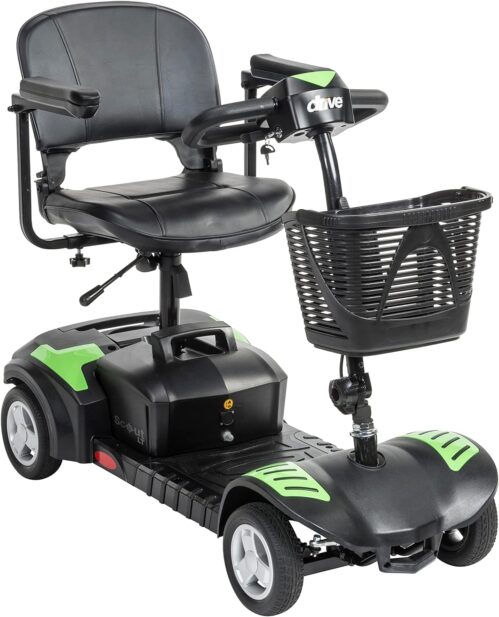
Drive Medical Scout Compact Travel Power Scooter (4-Wheel)
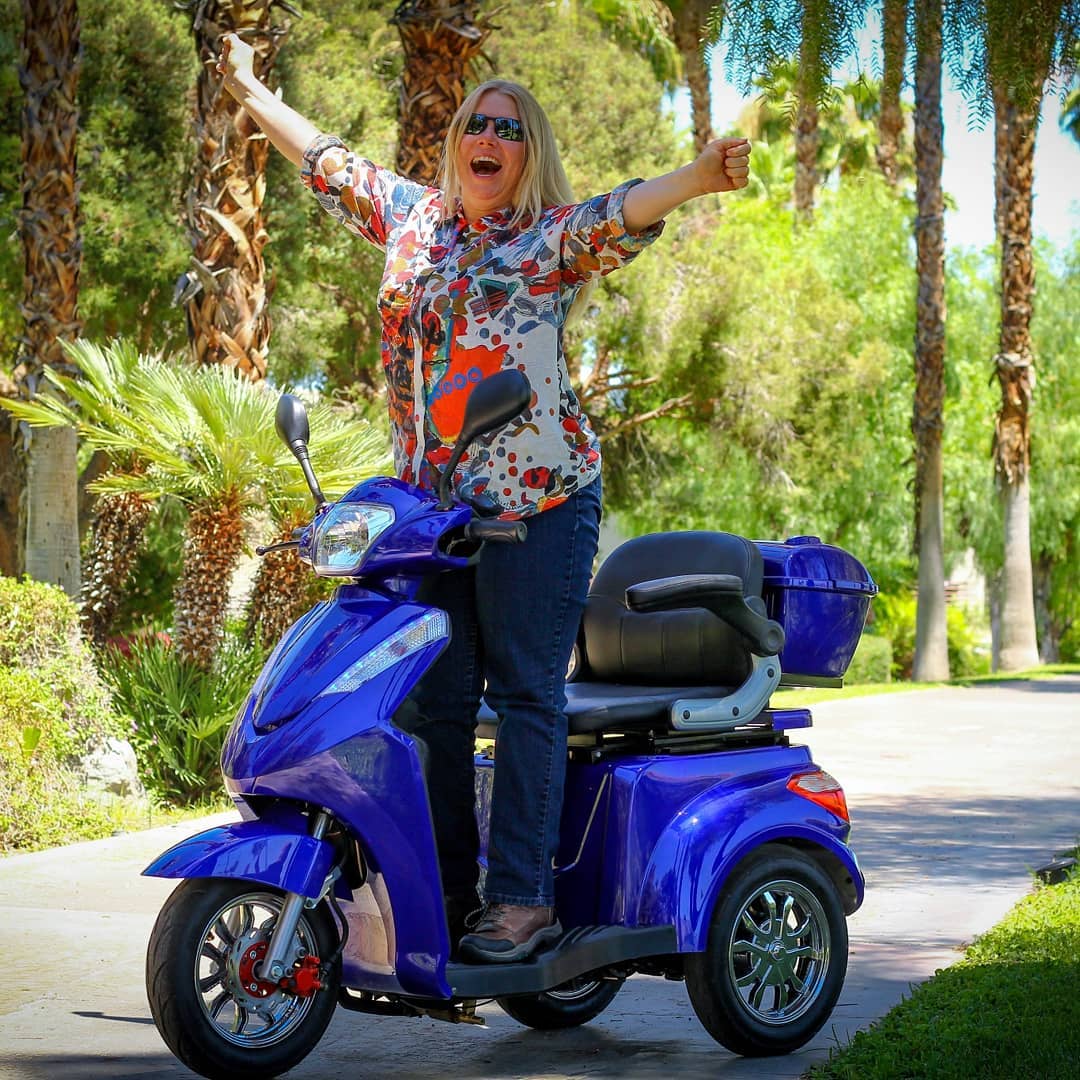
Polaris mobility scooter: what this site is, and what Polaris Inc. is not
Polaris Inc., the company most people mean by “Polaris scooter”, builds snowmobiles, ATVs, military vehicles and a 3-wheel roadster, has done so since 1954 according to its own investor site, and lists no mobility scooter or medical device on that page. Polaris Mobility has no connection to Polaris Inc.; the name is a coincidence, and the subject here is the medical mobility scooter, the seated, tiller-steered device Medicare classes as a power-operated vehicle and the ADA classes as a wheelchair.
Which mobility scooter type should you choose: travel, 3-wheel, 4-wheel or heavy-duty
Thresholds decide the class before any brand does, and the manufacturers publish every one of them. Turning radius separates an indoor scooter from an outdoor one: Pride rates the 3-wheel Go-Go Ultra X at 36.5 in against 53 in for the 4-wheel Drive Medical Scout LT. Climbing angle is the second number, and Drive Medical caps the Scout LT at 6 degrees, which is the grade a curb ramp is built to. Capacity is the third: 300 lb on the Go-Go Ultra X and 325 lb on the Go-Go Sport, measured against rider weight plus whatever rides in the basket.
| Model, as the maker publishes it | Turning radius | Heaviest piece to lift | Total weight with batteries | Capacity |
|---|---|---|---|---|
| Pride Go-Go Ultra X, 3-wheel | 36.5 in | 29.5 lb, front section | 95.75 lb | 300 lb |
| Pride Go-Go Sport, 3-wheel | not stated in the brochure | 35.75 lb, front section | 122.25 lb | 325 lb |
| Drive Medical Scout LT, 4-wheel | 53 in | takes apart, piece weights not stated | 100 lb | 300 lb |
Every one of those scooters plus its rider stays inside the 600 lb bus-lift design load, and each is narrower than the 30 in by 48 in platform the same rule sets, so the limit that bites first is the one at the doorway rather than the one at the bus.
Three wheels or four is a turning-radius and weight trade, and two spec sheets show the size of it: Pride’s 3-wheel Go-Go Ultra X turns in 36.5 in and weighs 95.75 lb with batteries, while Drive Medical’s 4-wheel Scout LT needs 53 in and weighs 100 lb. The fourth wheel buys stability on cambered sidewalks and curb ramps; the third wheel buys the store aisle. If lifting decides, start with lightweight mobility scooters one person can lift; if the trunk decides, the best folding & travel mobility scooters; if a capacity above 325 lb decides, the best heavy-duty & bariatric mobility scooters.

Does Medicare cover a mobility scooter
Medicare Part B pays for a scooter as durable medical equipment only when a treating provider documents medical necessity in a face-to-face examination and writes a prescription, the supplier is enrolled in Medicare and accepts assignment, and you then pay 20% of the Medicare-approved amount after the Part B deductible, which CMS set at $283 for 2026. A scooter bought from a retailer that is not a Medicare-enrolled supplier gets no reimbursement no matter how strong the prescription, and that supplier condition is the one buyers discover last. In Canada, Ontario’s Assistive Devices Program pays 75% of the approved price for a covered mobility aid and the client pays the remaining 25% plus optional accessories, for an Ontario resident with a valid Ontario health card and a physical disability requiring the equipment for 6 months or longer. Other provinces set their own cost shares, so the Canadian city pages below quote each province’s source.
Where can you legally ride a mobility scooter
Under the ADA, a power-driven device designed primarily for a person with a mobility disability for indoor, or indoor and outdoor, locomotion is a wheelchair, and a covered business must admit it into all areas of a facility where members of the public are allowed to go, per ADA.gov’s guidance last updated February 2020. Segway-type devices and golf cars form a separate class, other power-driven mobility devices, which a venue may assess on type, size, weight, dimensions and speed and may hold to the speed of pedestrian traffic. Streets and sidewalks belong to state or provincial law: California Vehicle Code section 467 treats a person on a self-propelled wheelchair, motorized tricycle or motorized quadricycle who cannot otherwise move about because of a physical disability as a pedestrian, and other states differ, which the city pages below cover. Public buses set the last limit: 49 CFR 38.23 requires a lift design load of at least 600 lb, a platform with a clear width of 30 in and a clear length of 48 in, and 600 lb support for ramps 30 in or longer. A Drive Medical Scout LT, which the maker lists at 100 lb and 19.7 in wide, carries a 300 lb rider inside that design load and fits the platform, while a 500 lb heavy-duty machine plus a rider at its rating does not.
Mobility Scooters by City
Fares, paratransit rules, funding and the right scooter: written city by city, from that city’s own sources. 161 cities so far.
Can you take a mobility scooter on a plane
The battery label decides the flight, not the scooter: under 49 CFR 175.10, a lithium ion battery removed from a mobility aid must not exceed 300 Wh, one spare up to 300 Wh or two spares up to 160 Wh each may travel with it, the removed battery rides in carry-on baggage only, and its terminals must be protected from short circuits. Watt-hours are volts times amp-hours, and a pack that prints only volts and amp-hours has to be multiplied out before it can be held against that 300 Wh line. Sealed lead-acid packs sit outside the lithium rule entirely, which is why a scooter such as the Drive Medical Scout LT travels on its 12V by 12Ah battery pair without the watt-hour arithmetic. US airlines must give mobility aids priority for stowage over other cargo and baggage and may not charge for services Part 382 requires; TSA officers screen the scooter itself, cushion and pouches included. For Canadian departures, CATSA permits a lithium battery to operate a mobility device plus one spare of up to 300 Wh at the checkpoint and defers checked-baggage batteries to the carrier.
How far does a mobility scooter go on one charge
Drive Medical rates the Scout LT at a maximum range of 9 miles on its 12 Ah battery pair, and the 20 Ah version of the same scooter at up to 14 miles per charge. Pride publishes the more useful form of the number, range against rider weight rather than one figure: the Go-Go Ultra X is rated up to 8 miles at a 200 lb rider and 6.2 miles at 300 lb. Read any range claim that way, because the rider, the terrain and the state of the batteries move it more than the model does.
How much does a mobility scooter cost in 2026
Across the Amazon listings captured for this site’s catalog in June 2026, prices ran from $459 for the lowest-priced full-size model to $3,499 in the 500 lb heavy-duty class, with the Drive Scout at $849 in the middle band. The lowest band runs $459 to $599.99, where the listings titled folding or airport-approved sit. The middle runs $649.99 to $1,299: the Zipr Roo 4-wheel at $649.99, the Rascal Venture 3-wheel at $699, the Scout at $849, the SuperHandy Explorer at $879.99, and a 36 lb lithium folder at $1,299 rated for 300 lb and 22 miles. The Pride Go-Go Sport 3-wheel at $1,601 tops the travel class; heavy-duty 500 lb capacity starts at $1,890.
Verified data
- 27.7% of US adults aged 65 and older report a mobility disability, against 16.8% at ages 45 to 64 and 4.5% at ages 18 to 44. CDC Disability and Health Data System, BRFSS 2021
- 3,129,770 Canadians aged 15 and older live with a mobility disability, 39.2% of all disabled adults and 63.0% of disabled seniors. Statistics Canada, Canadian Survey on Disability 2022
- Drive Medical Scout LT 4-wheel: weight capacity 300 lb, top speed 4 mph, climbing angle 6 degrees, turning radius 53 in, product weight 100 lb, maximum range 9 miles on the 12 Ah pair. Drive Medical, Scout LT product specifications
- Pride Go-Go Ultra X 3-wheel: heaviest piece when disassembled 29.5 lb (front section), total weight with batteries 95.75 lb, turning radius 36.5 in, capacity 300 lb, range up to 8 miles at a 200 lb rider. Pride Mobility, Go-Go Ultra X brochure
- Medicare Part B annual deductible for 2026: $283; standard monthly premium $202.90. CMS fact sheet, November 2025
- Lithium ion battery removed from a mobility aid for a US flight: 300 Wh maximum, one spare up to 300 Wh or two up to 160 Wh each, carry-on only. 49 CFR 175.10, current eCFR text
- Bus lift design load at least 600 lb; platform clear width 30 in and clear length 48 in. 49 CFR 38.23, current eCFR text
Frequently asked questions
Does Medicare pay for a mobility scooter used only outdoors?
Medicare.gov’s coverage page does not sort scooters by indoor or outdoor use; the page conditions payment on medical necessity documented in a face-to-face examination with a written prescription from a treating provider, plus a Medicare-enrolled supplier that accepts assignment. Whether an outdoor-only need meets that test is the prescribing provider’s call to document, so ask the provider and the supplier to confirm before buying.
Can you take a lithium mobility scooter battery on a plane?
Yes, within a watt-hour limit read off the label: a lithium ion battery removed from a mobility aid may not exceed 300 Wh on a US flight, spares are capped at one of 300 Wh or two of 160 Wh, and CATSA applies the same 300 Wh spare limit in Canada. Multiply the volts by the amp-hours printed on the pack and compare the result with 300 before booking.
Is the Lexis Light foldable mobility scooter a good travel choice?
Polaris Mobility has not verified a manufacturer spec sheet for the Lexis Light, so no figure appears here; judge any folder by three label numbers: the folded weight against what one person can lift, which Pride puts at 29.5 lb for the Go-Go Ultra X front section; volts times amp-hours against the 300 Wh mobility-aid limit; and a capacity that clears rider weight plus whatever rides in the basket. Verified folders are in the folding guide below.
Mobility Scooter Buying Guides
Each guide below compares Amazon-listed mobility scooters for one buyer need, with owner ratings, real reviews and the same measured thresholds used on this page.
Browse the full mobility scooter catalog (all models compared)
- Best All-Terrain Mobility Scooters (USA & Canada)
- Best Folding & Travel Mobility Scooters
- Best Heavy-Duty & Bariatric Mobility Scooters
- Best 3-Wheel Travel Mobility Scooters
- Best Mobility Scooters That Fit in a Car Trunk
- Lightweight Mobility Scooters One Person Can Lift
- Best Mobility Scooters for Seniors
- Most Comfortable Mobility Scooters
- Best Mobility Scooters to Buy for a Parent
- Fastest Mobility Scooters
- Best Mobility Scooters for Apartments
- Best 4-Wheel Mobility Scooters
- Best Budget Mobility Scooters Under $700
- Mobility & Wheelchair Statistics (USA & Canada)
- Mobility Scooters for Arthritis
- Mobility Scooters for MS
- Mobility Scooters for COPD
- Heavy-Duty Scooters for Heavier Adults
- Pride Mobility Scooters
- Vive Mobility Scooters
- Browse all guides, states & articles (sitemap)