Choosing between a mobility scooter, a cane or walker, and a wheelchair comes down to three questions: how far you can comfortably walk, how much of the day you spend seated, and where you spend it. A mobility scooter fits when distance and stamina are the wall but you can still stand and take steps. Full-time seated support points to a wheelchair, and steady legs that only want backup point to a walker.
Getting around town shouldn’t feel like a negotiation with your own body every morning. If walking distances has gotten harder, a mobility scooter is one option worth weighing against a cane or walker, a manual or power wheelchair, and simply asking others for rides. Each shines in different situations, and the honest answer is that the right pick depends on how much you can do on your feet, how far you travel, and where you’re headed.
What a mobility scooter is really good at
A mobility scooter is built for people who can stand, transfer, and take a few steps, but who run out of stamina over longer distances. You steer with handlebars and sit in a supportive seat, so a trip through a grocery store, a park, or a shopping district stops being the thing that wipes out your whole day. It saves your energy for what you actually came to do.
Where it’s less at home is tight indoor spaces and truly rugged ground. Scooters have a wider turning path than most wheelchairs, so a small apartment or a narrow shop aisle can feel cramped. They’re at their best when your main problem is distance and endurance, not balance or the ability to walk at all.
A cane or walker: when your legs mostly cooperate
If you can still walk but want steadier footing or a little support, a cane or walker may be all you need. They’re light, inexpensive compared with wheeled seats, and they keep you upright and moving under your own power, which is good for staying strong. A walker with a built-in seat also lets you rest whenever you like.
The trade-off is effort. These tools help you walk; they don’t cover the distance for you. If a few hundred steps leaves you exhausted or unsteady toward the end, a cane or walker may not be enough on its own, and that’s a sign to look at wheeled options.
Manual and power wheelchairs: seated all the way
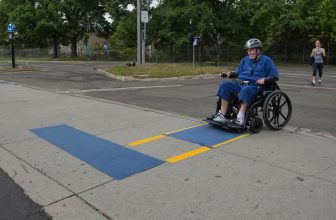
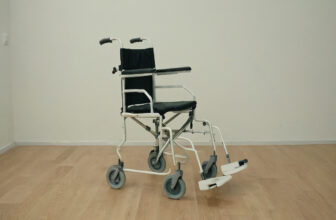
Wheelchairs are made for people who can’t rely on walking for most of a trip. A manual chair is pushed by your arms or by a companion, so it’s compact, easy to fold into a car, and keeps you active if your upper body is strong. The catch is that self-propelling all day is tiring, and it asks a lot of your shoulders over time.
A power wheelchair does the moving for you and is usually controlled with a joystick, which suits people with limited arm strength or those who need full-time seated support. Power chairs tend to turn tightly and handle indoor life well. Compared with a scooter, they generally cost more and are heavier to transport, but they’re built around continuous seated use rather than the sit-and-walk pattern a scooter assumes.
Leaning on lifts and rides from others
Plenty of people get by on rides from family, friends, or paid services, and there’s nothing wrong with that. It costs nothing to own, needs no storage, and works fine when your outings are occasional or easy to plan ahead.
The hidden cost is your independence. When every errand depends on someone else’s schedule, spontaneous trips fade away, and small outings can start to feel like favors you’d rather not ask for. Many people use rides as a backup while a scooter or chair handles day-to-day freedom, rather than relying on lifts for everything.
How to tell which one fits you
A simple way to sort this out is to ask three questions: How far can you comfortably walk, how much of the day are you seated, and where do you spend most of your time? If distance is the wall you keep hitting but you can still stand and take steps, a scooter often fits. If you need to be seated nearly all the time, a wheelchair is usually the better match. If you’re steady and just want backup, a cane or walker may do.
Your body and your daily routes are unique, so this is a decision worth making with help rather than alone. An occupational or physical therapist can watch how you move, measure your real endurance, and recommend the option that matches your needs and your home, so you don’t spend money on the wrong thing.
FAQ
Can I use a mobility scooter indoors at home?
Sometimes, but it depends on your space. Scooters need more room to turn than wheelchairs, so tight hallways and small rooms can be a struggle. Many people use a scooter mainly for getting out and about and rely on something more compact inside the house.
Is a scooter better than a power wheelchair?
Neither is better overall; they solve different problems. A scooter suits people who can still stand and walk a bit but tire over distance, while a power wheelchair suits those who need full-time seated support and tight maneuverability. A therapist can help you tell which pattern matches your day.
What if I only need help once in a while?
If your outings are rare and easy to plan, rides from others or a walker with a seat may be plenty. It’s worth revisiting the question if you notice yourself turning down invitations or skipping errands because getting there feels like too much.