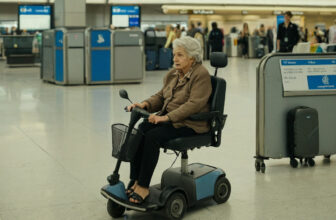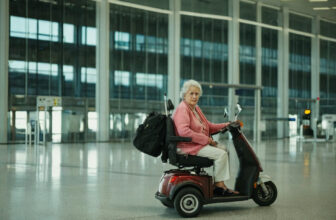
The biggest danger to a mobility scooter downtown is not traffic speed but sightlines. Cars backing out of driveways and parking spaces cannot see a seated rider past the vehicles beside them, and turning drivers scan at standing eye level. Line up straight with curb ramps instead of taking them at an angle, cross metal grates and manhole covers head on, and travel the edges of a parking lot rather than cutting across the middle.
Getting around a busy downtown on a mobility scooter takes a little more planning than a quiet neighborhood, but with steady habits you can move through crowds, crossings, and transit with confidence. The ideas below are about awareness and routine, not speed, so you stay in control wherever the sidewalk gets tight.
Sharing crowded sidewalks
On a packed sidewalk, treat your scooter the way a careful walker treats a crowd: keep to a comfortable pace, stay to one side so faster foot traffic can pass, and leave a little cushion in front of you in case someone stops short. People stepping out of shops, checking phones, or turning around often won’t see you coming, so slow down near doorways, cafe patios, and bus stops where folks cluster. A gentle bell or a friendly “coming through on your left” works better than trying to squeeze past silently. Watch for sandwich-board signs, planters, and outdoor seating that narrow the path, and when the way is truly blocked, it’s fine to wait a moment rather than forcing through. Keep your hands and elbows tucked in tight spaces so you don’t clip anyone, and give small children and dogs extra room since they change direction without warning.
Curb cuts, crossings, and traffic
Curb ramps are your gateways between sidewalk and street, so scout the corner before you commit. Line up straight with the ramp rather than taking it at an angle, which can tip you or catch a wheel, and check that the bottom meets the road smoothly instead of dropping into a gutter or a puddle hiding a dip. At crossings, wait for the walk signal, make eye contact with drivers who might be turning, and remember that a turning car is often looking for pedestrians at eye level, not someone seated. Cross with the group when you can, since a cluster of people is easier to see than one person alone. Push the accessible pedestrian button if there is one to give yourself the full crossing time, and if the light starts counting down when you’re only partway across, keep going steadily to the far curb rather than stopping in the lane. Local rules about where scooters belong differ from place to place, so check what applies in your city.
Being seen among tall vehicles
Downtown streets are full of delivery vans, buses, and pickups that block sightlines and hide you from other drivers. The biggest risk is in driveways and parking lots, where cars back out slowly and the driver’s view is cut off by the vehicles beside them. Never assume a backing car sees you; pause, watch for reverse lights and exhaust, and roll behind it only once it has clearly stopped or the driver waves you on. In parking lots, travel along the edges rather than cutting across the middle, and treat every gap between parked cars as a spot where someone might pull out. Make yourself easier to spot with bright or reflective clothing, a flag or a light if your scooter has one, and by choosing routes with good lighting after dark. When you’re next to a stopped bus or truck, wait until you can see clearly past it before moving into any open space.
Transit, elevators, and tight spaces
Public transit and buildings can be smooth if you plan the entry and exit. For buses and trains, position yourself where the operator can see you, let them deploy the ramp, and board straight on rather than at an angle. Inside, back into the designated space if that’s how it’s set up so you face the doors for your exit, and set your brake for the ride. At elevators, wait for people to step off, enter facing out when there’s room to turn, and if it’s crowded it’s perfectly reasonable to wait for the next car. Mind the gap between platform and train, watch for the threshold lip at doorways, and give yourself extra seconds so you’re never rushing the closing doors. Know your stop ahead of time and signal early so you’re not scrambling at the last second.
Weather and uneven pavement
City pavement is rarely perfect, and weather makes it trickier. Rain fills potholes and hides broken edges, painted crosswalk lines and metal grates get slick, and fallen leaves or ice can be as slippery as they look. Slow down on wet surfaces, cross grates and manhole covers straight on, and steer around anything shiny you can’t read. In cold or snow, give yourself more stopping distance and skip routes that haven’t been cleared. Heat and cold both affect your battery, so charge fully before a long outing and keep a little reserve for the trip home. Scan the pavement a few feet ahead for cracks, tree-root heaves, and sudden level changes so you can ease over them rather than hitting them square.
City safety FAQ
Should I ride on the sidewalk or the road?
It depends on where you are; rules for mobility scooters vary by city and even by street. In general, sidewalks and crossings are the safer choice when they’re available and in good repair. Check your local guidance and choose the path that keeps you away from fast traffic.
How do I handle a busy intersection alone?
Wait for the walk signal, position yourself where turning drivers can see you, and make eye contact before you roll. If a downtown crossing feels too rushed, it’s fine to use a quieter corner nearby or cross with a group of pedestrians.
What should I carry for city trips?
Keep your phone charged, bring a bit of battery reserve, and add something that makes you visible such as reflective clothing or a light. A small kit with water and any personal essentials helps if a route takes longer than planned.