
You’ve just received the devastating news that your mobility scooter claim was denied. After weeks of paperwork, medical evaluations, and hope, the insurance company says no. The $3,000 device you desperately need for independence feels financially impossible. But here’s what insurance companies don’t want you to know: denial doesn’t mean defeat. The approval process has specific pathways, appeal mechanisms, and strategic approaches that can turn rejection into reimbursement. Understanding the intricate world of mobility scooter insurance coverage across Medicare, Medicaid, and private insurance plans is your key to securing the mobility aid you need without breaking the bank.

This Photo was taken by Artem Podrez.
Breaking through the insurance maze: what you need to know first
The mobility scooter insurance landscape changed dramatically in 2025, with new regulations affecting both coverage criteria and reimbursement rates. Understanding these changes is crucial for successful claims processing. According to the Centers for Medicare & Medicaid Services, durable medical equipment coverage guidelines now require more comprehensive documentation than previous years.
Insurance coverage for mobility scooters falls into three primary categories: Medicare Part B, Medicaid state programs, and private insurance plans. Each has distinct approval criteria, documentation requirements, and reimbursement structures. The key difference lies in how each program defines medical necessity and what constitutes appropriate supporting evidence.
Medicare covers mobility scooters under the durable medical equipment (DME) benefit when specific conditions are met. The device must be prescribed by a doctor, deemed medically necessary for use in the home, and obtained from a Medicare-approved supplier. Private insurance plans often mirror Medicare guidelines but may have additional restrictions or more generous coverage options.
| Insurance Type | Coverage Percentage | Patient Responsibility | Prior Authorization Required |
|---|---|---|---|
| Medicare Part B | 80% | 20% + deductible | Yes |
| Medicaid | Varies by state (60-100%) | $0-$200 | Yes |
| Private Insurance | 70-90% | 10-30% + deductible | Usually |
Medicare coverage decoded: your path to Part B approval
Medicare Part B treats mobility scooters as power-operated vehicles (POVs) under specific coverage guidelines. The approval process requires meeting four critical criteria that insurance representatives rarely explain clearly. First, you must have a mobility limitation that significantly impairs your ability to participate in activities of daily living within your home. This goes beyond simple walking difficulties.
The second requirement involves demonstrating that a mobility scooter is the most appropriate device for your specific condition. Medicare won’t approve a scooter if a wheelchair or power chair would better serve your needs. The third criterion requires that you possess the physical and mental capabilities to operate the device safely, including adequate vision, cognitive function, and upper body strength.
Finally, Medicare requires that you can transfer safely to and from the scooter. This assessment often involves occupational therapy evaluations and detailed physician documentation. The process typically takes 30-45 days from initial application to final determination, assuming all documentation is complete and accurate.
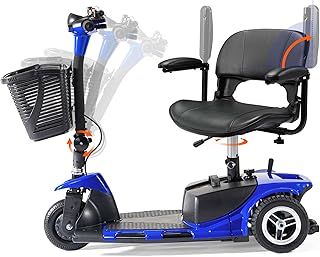
Go-Go Ultra X 3-Wheel Travel Mobility Scooter
Compact travel scooter perfect for Medicare coverage applications. Easy disassembly and lightweight design make it ideal for seniors transitioning to mobility aids.
Price: $1,172.00 | Rating: ⭐ 4.6/5
Cons: Limited weight capacity, shorter range than 4-wheel models
Essential documentation for Medicare approval
Medicare requires comprehensive medical documentation that goes far beyond a simple prescription. The process begins with a detailed physician evaluation that documents your specific mobility limitations, underlying medical conditions, and functional assessments. Your doctor must complete a Certificate of Medical Necessity (CMN) form, specifically the DIF-07 form for power mobility devices.
The CMN requires detailed information about your diagnosis, prognosis, and functional limitations. Your physician must specify why alternative mobility aids are insufficient and how a scooter will improve your quality of life within your home environment. This documentation should include information about your home layout, daily activities, and specific mobility challenges you face.

This Photo was taken by Piers Olphin.
Supporting documentation from physical therapists, occupational therapists, or other healthcare providers strengthens your application significantly. These professionals can provide detailed functional assessments, mobility evaluations, and recommendations for specific scooter features that address your unique needs. The more comprehensive your documentation, the higher your approval probability.
Medicaid state programs: navigating regional variations
Medicaid coverage for mobility scooters varies dramatically by state, creating a complex landscape that requires state-specific knowledge. Unlike Medicare’s standardized approach, each state Medicaid program establishes its own coverage criteria, prior authorization processes, and reimbursement rates. Some states provide generous coverage with minimal patient responsibility, while others impose strict limitations or lengthy approval processes.
States like California, New York, and Texas typically offer comprehensive mobility scooter coverage under their Medicaid programs, often covering 90-100% of approved costs. However, states with more restrictive budgets may limit coverage to basic models or require extensive documentation proving that less expensive alternatives are inadequate.
The key to successful Medicaid approval lies in understanding your state’s specific requirements. Many states require pre-authorization before purchasing a scooter, and some mandate that you try and fail with less expensive mobility aids before approving a scooter. Working with DME suppliers experienced in your state’s Medicaid system can significantly improve your approval chances.
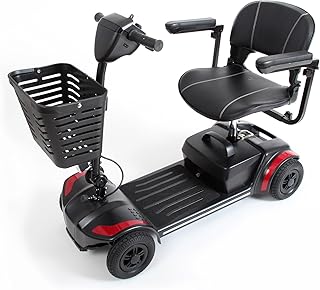
All Terrain Heavy-Duty 4 Wheel Mobility Scooter
Heavy-duty scooter with 3-speed settings and long-range capability. Excellent for users who need robust outdoor performance and higher weight capacity.
Price: $2,298.00 | Rating: ⭐ 5.0/5
Cons: Higher price point, not easily transportable, may exceed some insurance coverage limits
State-specific approval strategies
Each state’s Medicaid program has unique characteristics that affect your approval strategy. For example, Florida’s Medicaid program requires a face-to-face evaluation with your prescribing physician within six months of your application, while Michigan’s program allows for telemedicine evaluations under certain circumstances. Understanding these nuances can make the difference between approval and denial.
Some states have expedited approval processes for certain medical conditions or emergency situations. Others require participation in state-specific programs or consultations with approved providers. Researching your state’s specific requirements through the official Medicaid website or contacting your state’s Medicaid office directly provides the most current information about coverage policies and procedures.

This Photo was taken by Hoàng Ngọc Long.
Private insurance navigation: maximizing your benefits
Private insurance plans offer the most variable coverage for mobility scooters, with benefits ranging from excellent to minimal depending on your specific policy. Unlike government programs, private insurers have significant flexibility in establishing coverage criteria, and many policies include specific exclusions or limitations for durable medical equipment.
The key to private insurance success lies in understanding your policy’s specific language regarding DME coverage. Some plans classify mobility scooters as medically necessary equipment with standard coverage, while others categorize them as convenience items with limited or no benefits. Review your Summary of Benefits and Coverage (SBC) document or contact your insurance company directly to understand your specific benefits.
Many private insurance plans require step therapy, meaning you must try and document failure with less expensive mobility aids before they’ll approve a scooter. This process can include trials with canes, walkers, or wheelchairs, along with documentation from healthcare providers explaining why these alternatives are insufficient for your needs.
30 Miles Long Range 4 Wheel Electric Mobility Scooter
Impressive 30-mile range with foldable design and dual baskets. FSA/HSA eligible making it perfect for insurance reimbursement strategies.
Price: $599.00 | Rating: ⭐ 4.6/5
Cons: Assembly required, limited customer service network
Prior authorization mastery
Most private insurance plans require prior authorization for mobility scooter coverage, a process that can take 2-4 weeks when handled correctly. The prior authorization process involves submitting detailed medical documentation, including physician orders, diagnosis codes, and justification for the specific equipment requested.
Working with your healthcare provider to ensure accurate coding is crucial for approval. The most commonly used diagnosis codes for mobility scooter authorization include various codes for mobility limitations, neurological conditions, and musculoskeletal disorders. Your physician must use specific language that aligns with your insurance company’s coverage criteria.

This Photo was taken by Fang.
Follow up on your prior authorization request weekly to ensure processing continues smoothly. Many denials occur due to incomplete documentation or requests that expire due to time limits. Maintaining active communication with both your healthcare provider and insurance company throughout the process significantly improves your approval odds.
Canadian coverage landscape: provincial programs and private options
Canada’s healthcare system approaches mobility scooter coverage through a combination of provincial health programs and private insurance supplements. Each province maintains its own assistive device program (ADP) with varying coverage levels, eligibility criteria, and application processes. Understanding your provincial system is essential for maximizing coverage opportunities.
Ontario’s Assistive Devices Program covers up to 75% of mobility scooter costs for eligible residents, while British Columbia’s program may cover different percentages depending on your specific circumstances and chosen equipment. Quebec’s system operates differently, often requiring documentation in French and following distinct approval pathways.
Private insurance in Canada often supplements provincial coverage, helping to cover the remaining 25-50% of costs not covered by government programs. Many employer-sponsored health plans include DME benefits that can be combined with provincial coverage for comprehensive protection. When planning your mobility needs, consider how home accessibility modifications might also be covered under these programs.
| Province | Coverage Percentage | Maximum Benefit | Wait Time |
|---|---|---|---|
| Ontario | 75% | $2,500 | 6-8 weeks |
| British Columbia | 60-80% | $3,000 | 4-6 weeks |
| Quebec | 100% (qualifying residents) | $2,200 | 8-12 weeks |
| Alberta | 80% | $2,800 | 6-10 weeks |
Strategic claim submission: timing and documentation tactics
The timing of your mobility scooter claim submission can significantly impact your approval chances and processing speed. Insurance companies process claims more efficiently during certain periods, and understanding these patterns gives you a strategic advantage. Submit claims early in the week and early in the month when possible, as processing departments typically have lighter workloads and can dedicate more attention to individual cases.
Document everything throughout your claim process. Create a detailed timeline of your mobility decline, medical appointments, treatment attempts, and functional limitations. This documentation becomes invaluable if you need to appeal a denial or provide additional information to support your claim. Include photographs, videos, and written statements from family members or caregivers who witness your daily mobility challenges.

This Photo was taken by Andrea Piacquadio.
Consider the seasonal aspects of your mobility needs when submitting claims. If you experience increased difficulty during winter months, ensure your documentation reflects how weather conditions impact your mobility limitations. This is particularly relevant for users in northern climates where winter mobility challenges create additional barriers to independence.
3 Wheel Folding Mobility Scooter for Adults
Compact folding design perfect for travel and storage. Includes charger and basket with impressive user ratings and budget-friendly pricing.
Price: $499.99 | Rating: ⭐ 4.9/5
Cons: Three-wheel design less stable than four-wheel models, limited weight capacity
Building your medical necessity case
Creating a compelling medical necessity case requires strategic thinking about how you present your condition and needs. Focus on functional limitations rather than just medical diagnoses. Insurance companies want to understand how your condition prevents you from performing essential daily activities and how a mobility scooter will specifically address these limitations.
Include details about your home environment and daily routines. Explain how your current mobility limitations prevent you from accessing different areas of your home, performing household tasks, or maintaining your independence. This functional approach to documentation resonates more strongly with insurance reviewers than purely medical descriptions of your condition.
Appeal processes: turning denials into approvals
Insurance claim denials are not final decisions but rather the beginning of an appeal process that often leads to approval when handled correctly. Statistics from 2025 show that approximately 40% of initially denied mobility scooter claims are approved upon first appeal, and an additional 25% are approved through secondary appeals or external reviews.
The appeal process typically involves multiple levels: initial reconsideration, formal appeal, and external review. Each level requires specific documentation and has defined timelines that you must meet to maintain your appeal rights. Understanding these requirements and preparing comprehensive responses significantly improves your success probability.

This Photo was taken by Andrea Piacquadio.
When preparing your appeal, address the specific reasons cited in your denial letter. If the denial was due to insufficient medical documentation, provide additional physician statements, therapy evaluations, or functional assessments. If the denial questioned medical necessity, include detailed explanations of how alternative mobility aids have failed to meet your needs.
Professional appeal assistance
Consider working with healthcare advocates or specialized appeal services for complex denials. These professionals understand insurance company procedures, know what documentation is most effective, and can help present your case in the strongest possible terms. Many healthcare systems employ patient advocates who provide these services at no additional cost to patients.
Some DME suppliers also offer appeal assistance as part of their customer service. These companies have extensive experience with insurance processes and can provide valuable guidance throughout your appeal. When researching suppliers, ask about their success rates with appeals and what support they provide throughout the process.
Journey Adventure Mobility Scooter
Lightweight electric motorized travel scooter designed for adventure-seeking seniors. Perfect balance of portability and performance for active users.
Price: $999.00 | Rating: ⭐ 4.7/5
Cons: Mid-range pricing, limited availability of replacement parts
Cost reimbursement strategies: maximizing your financial recovery
Understanding reimbursement strategies can help you minimize out-of-pocket costs even when insurance coverage is partial. Many insurance plans have complex reimbursement structures that include deductibles, coinsurance, and coverage limits that affect your final costs. Developing a strategic approach to these financial aspects can save hundreds or thousands of dollars.
Flexible Spending Accounts (FSAs) and Health Savings Accounts (HSAs) can cover costs not reimbursed by insurance, including deductibles, coinsurance amounts, and accessory costs. These accounts use pre-tax dollars, effectively reducing your mobility scooter costs by your marginal tax rate. Many mobility scooter accessories and