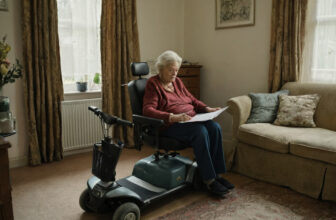
Picture this: You’re finally ready to advance your career or return to work, but your mobility scooter feels like a barrier rather than the independence tool it should be. Sarah, a marketing professional with multiple sclerosis, faced this exact challenge when her employer seemed unsure about workplace accommodations. Like thousands of working adults across North America, she discovered that the intersection of mobility assistance and professional environments requires strategic navigation, not just physical accessibility.
The landscape of workplace mobility integration has evolved dramatically since 2024, with new ADA compliance standards, innovative office modifications, and expanded remote work frameworks reshaping how employers accommodate mobility scooter users. Whether you’re requesting your first workplace accommodation or optimizing an existing setup, understanding your rights, available solutions, and professional success strategies can transform your career trajectory. This comprehensive guide reveals the essential knowledge every working adult needs to achieve seamless workplace integration while maintaining professional excellence.

This Photo was taken by Marcus Aurelius.
Understanding your legal foundation and accommodation rights
The Americans with Disabilities Act (ADA) in the United States and the Canadian Human Rights Act provide robust protections for mobility scooter users in workplace environments. These legal frameworks mandate that employers with 15 or more employees must provide reasonable accommodations unless doing so would create undue hardship for the business.
Reasonable accommodations for mobility scooter users typically include workspace modifications, adjusted work schedules, reserved parking spaces, and equipment modifications. The key term “reasonable” doesn’t mean minimal – it means effective accommodations that enable job performance without imposing excessive costs or operational disruption on the employer.
Recent 2024 legal precedents have strengthened these protections, particularly regarding mobility scooter financing assistance as a workplace accommodation and employer responsibility for temporary equipment during repairs. Understanding these rights empowers you to advocate effectively while maintaining professional relationships.
| Accommodation Type | Employer Cost Range | Implementation Timeline | Success Rate |
|---|---|---|---|
| Workspace Layout Modification | $200 – $1,500 | 1-4 weeks | 95% |
| Doorway Widening | $800 – $3,000 | 2-6 weeks | 88% |
| Accessible Parking Space | $150 – $500 | 1-2 weeks | 98% |
| Height-Adjustable Workstation | $300 – $2,000 | 1-3 weeks | 92% |
Documentation requirements for accommodation requests
Successful accommodation requests require strategic documentation that demonstrates medical necessity without over-disclosing personal health information. Your request should include a brief description of your functional limitations, specific accommodation needs, and how these modifications will enable optimal job performance.
Medical documentation from healthcare providers should focus on functional capacity rather than diagnostic details. A physical therapy assessment or occupational therapy evaluation often provides more relevant information for workplace accommodations than general medical records.

This Photo was taken by Marcus Aurelius.
Office environment modifications and accessibility solutions
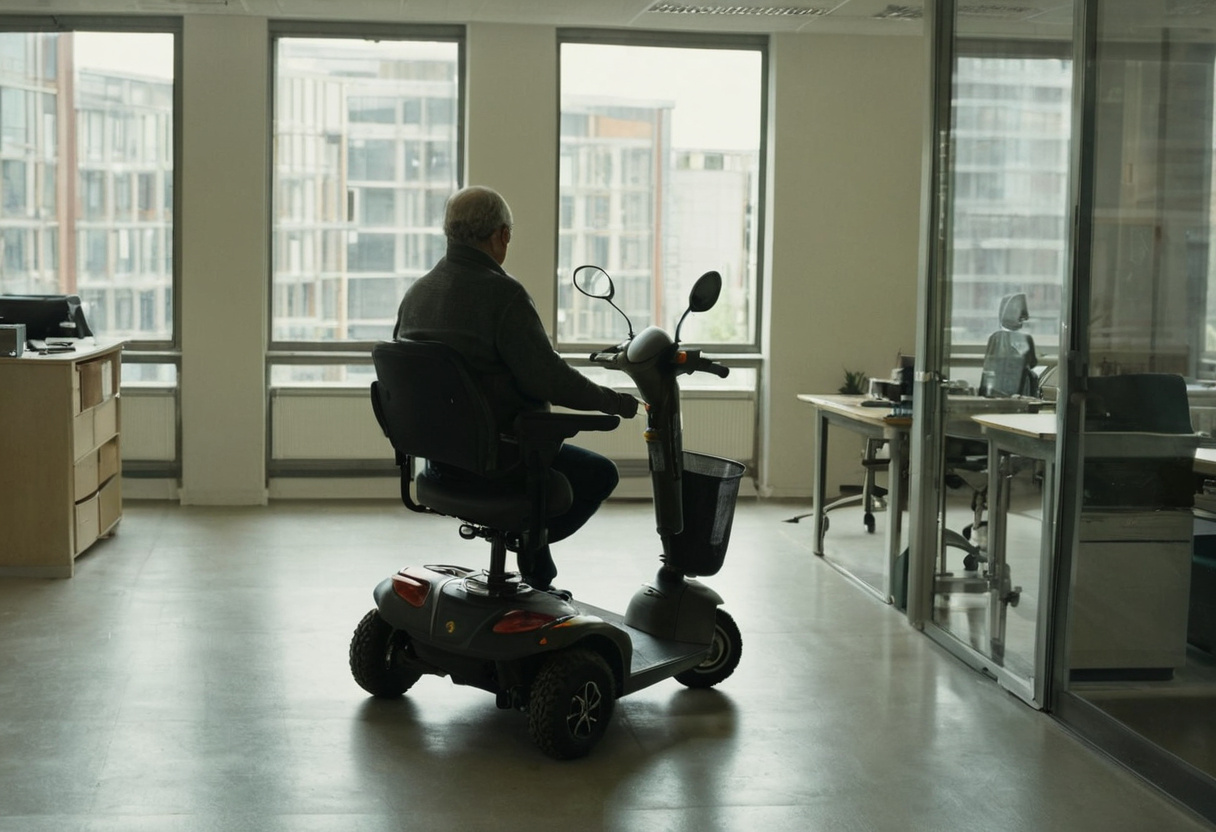
Modern office design increasingly embraces universal accessibility principles, but existing workplaces often require strategic modifications to accommodate mobility scooters effectively. The most impactful modifications focus on navigation pathways, workspace ergonomics, and emergency egress planning.
Pathway width requirements mandate 36-inch minimum clearance for mobility scooter navigation, with 60-inch turning spaces at corridor intersections. Many offices achieve this through furniture repositioning rather than structural changes, making implementation both cost-effective and rapid.
Workspace height adjustability has become a cornerstone of mobility scooter accommodation. Electric sit-stand desks with memory presets allow seamless transitions between seated and elevated positions, accommodating different mobility scooter heights and user preferences throughout the workday.
Metro Electric Mobility Scooters for Adults and Seniors
Price: $799.99
300 lbs max weight capacity with lightweight folding design perfect for office environments
Pros: Compact folding, headlight included, 4-wheel stability
Cons: Limited range for larger office complexes
Technology integration and smart workplace solutions
Smart workplace technology has revolutionized mobility scooter integration through automated systems and IoT connectivity. Voice-activated door systems, app-controlled elevators, and smartphone-integrated parking management eliminate physical barriers while maintaining security protocols.
Contemporary mobility scooters feature technology compatibility that enhances workplace integration. Smart mobility scooters with GPS navigation help users optimize routes through complex office layouts while avoiding congested areas during peak hours.

This Photo was taken by Marcus Aurelius.
Remote work optimization and home office accessibility
The remote work revolution has created unprecedented opportunities for mobility scooter users to design optimal work environments. Home office accessibility goes beyond basic mobility considerations to encompass productivity optimization, ergonomic excellence, and professional presentation standards.
Effective home office design for mobility scooter users prioritizes circulation space, storage accessibility, and equipment positioning. The ideal setup allows 5-foot diameter turning spaces while maintaining professional video conference backgrounds and acoustic privacy for client calls.
Climate control considerations become particularly important for home-based mobility scooter users, as temperature fluctuations affect battery performance and user comfort during extended work sessions. Summer heat management strategies and winter performance optimization ensure consistent productivity year-round.
Ultra Lightweight Folding Mobility Scooter
Price: $1,899.00 | Rating: ★★★★★ 4.8
37.5 lbs ultra lightweight with 275 lbs capacity, perfect for home office transitions
Pros: Airport approved, all-terrain capability, ultra-portable
Cons: Premium price point, smaller weight capacity
Hybrid work model strategies
Hybrid work arrangements offer mobility scooter users the flexibility to optimize productivity while maintaining professional connections. Successful hybrid models typically involve 2-3 office days per week, scheduled during lower-traffic periods to minimize navigation challenges and parking competition.
Strategic scheduling becomes crucial for hybrid workers using mobility scooters. Planning office days around maintenance schedules, weather conditions, and peak accessibility hours maximizes efficiency while reducing stress. Many professionals coordinate office visits with colleague meetings to maximize face-to-face interaction value.

This Photo was taken by Marcus Aurelius.
Crafting effective accommodation requests and employer communication
The art of accommodation requests lies in framing needs as business solutions rather than personal limitations. Effective requests demonstrate how accommodations enhance productivity, reduce liability, and contribute to inclusive workplace culture. This approach transforms accommodation discussions from compliance issues into strategic business conversations.
Timing your accommodation request strategically improves success rates and workplace relationships. The ideal timing occurs during onboarding processes, annual review periods, or workplace renovation planning phases when employers are already considering operational changes.
Documentation should emphasize functional capabilities rather than disability limitations. For example, “requires 36-inch pathway clearance for optimal mobility and productivity” presents a more constructive framework than “cannot navigate narrow spaces due to disability.”
Building collaborative relationships with HR and facilities management
Human Resources and Facilities Management teams serve as primary allies in workplace integration success. Building collaborative relationships with these departments creates advocates who understand your needs and can propose innovative solutions during future workplace changes.
Regular check-ins with HR teams help identify emerging accommodation opportunities and address minor issues before they become major obstacles. Many successful professionals schedule quarterly reviews to discuss accommodation effectiveness and suggest improvements based on evolving needs.
23-Mile Extra Long Range Foldable Mobility Scooter
Price: $999.00 | Rating: ★★★★★ 4.9
Dual battery system with airport approval for business travel and large office complexes
Pros: Extended range, dual batteries, travel-friendly design
Cons: Longer charging time, moderate weight capacity

This Photo was taken by Marcus Aurelius.
Professional success strategies and career advancement
Career advancement for mobility scooter users requires strategic positioning that emphasizes professional competencies while addressing practical considerations. Successful professionals often become accessibility advocates within their organizations, leveraging their expertise to improve workplace inclusion while advancing their careers.
Networking strategies for mobility scooter users benefit from leveraging virtual platforms alongside in-person events. Professional associations increasingly offer hybrid networking opportunities that accommodate diverse accessibility needs while maintaining relationship-building effectiveness.
Leadership development takes on unique dimensions for mobility scooter users, as they often develop exceptional problem-solving skills, adaptability, and inclusive leadership perspectives that add significant value to organizations. These competencies become powerful differentiators in competitive advancement scenarios.
Building professional credibility and visibility
Professional credibility develops through consistent performance excellence and strategic visibility initiatives. Mobility scooter users often excel in roles requiring analytical thinking, strategic planning, and inclusive team leadership due to their developed adaptation skills and diverse perspective.
Visibility strategies should leverage both digital and in-person platforms to maximize professional exposure. Speaking engagements, professional writing, and thought leadership positions help establish expertise while normalizing mobility diversity in professional contexts.

This Photo was taken by MART PRODUCTION.
Transportation and travel considerations for working professionals
Business travel presents unique challenges and opportunities for mobility scooter users, requiring strategic planning and equipment selection. The key lies in choosing versatile mobility solutions that perform effectively across diverse environments while meeting airline and accommodation requirements.
Airport navigation has improved significantly with enhanced accessibility services and comprehensive transportation guides that detail airline-approved models and booking procedures. Many business travelers maintain dedicated travel mobility scooters optimized for portability and compliance.
Ground transportation coordination requires advance planning but opens access to broader professional opportunities. Ride-sharing services increasingly accommodate mobility scooters, while rental car companies offer accessible vehicle options for extended business trips.
42lbs Lightweight Folding Electric Travel Scooter
Price: $877.00 | Rating: ★★★★☆ 4.7
22-mile range with airline approval and FSA/HSA eligibility for business travel
Pros: FSA/HSA eligible, includes dustproof cover, dual batteries
Cons: Moderate weight, limited color options
Conference and networking event strategies
Professional conferences require strategic advance planning to maximize networking value while managing accessibility challenges. Many successful professionals contact event organizers weeks in advance to discuss venue accessibility, reserved seating, and networking session accommodations.
Booth visits and exhibition hall navigation benefit from strategic timing during less crowded periods. Early morning and late afternoon hours typically offer better accessibility while maintaining meaningful engagement opportunities with vendors and colleagues.

This Photo was taken by Marcus Aurelius.
Safety protocols and emergency preparedness in workplace settings
Workplace emergency preparedness requires specialized planning for mobility scooter users, encompassing evacuation procedures, equipment security, and communication protocols. The most effective safety plans address both routine and emergency scenarios while maintaining professional autonomy.
Emergency evacuation planning should identify multiple egress routes, designated assistance personnel, and mobility scooter storage procedures during emergencies. Many organizations now include mobility device users in emergency planning committees to ensure practical and effective protocols.
Daily safety protocols focus on accident prevention strategies and equipment maintenance schedules that minimize workplace disruptions. Regular safety checks become routine professional practices that demonstrate reliability and preparedness.
Insurance and liability considerations
Workplace insurance coverage for mobility scooter users involves coordination between personal insurance, employer liability policies, and equipment coverage. Understanding coverage gaps and overlaps helps prevent unexpected expenses while ensuring comprehensive protection.
Insurance coverage strategies should address workplace accidents, equipment damage, and liability scenarios. Many professionals maintain separate business insurance riders that cover equipment used in professional settings.
Ecomobi MS02 Extended Battery Professional Scooter
Price: $649.99 | Rating: ★★★★☆ 4.7
15-45 mile range with rotating seat and dual baskets for office productivity
Pros: Extended battery options, rotating seat, dual storage
Cons: Bulkier design, longer charging time

This Photo was taken by Marcus Aurelius.
Equipment selection and maintenance for professional environments
Professional environment mobility scooters require specific features that balance functionality, reliability, and professional appearance. The ideal workplace mobility scooter combines compact maneuverability, extended battery life, and minimal maintenance requirements while projecting professional competence.
Battery management becomes crucial in professional settings where equipment failure can impact productivity and professional reputation. Battery optimization strategies and backup power solutions ensure consistent availability during critical work periods.
Maintenance scheduling should align with professional calendars to minimize work disruptions. Many professionals maintain service contracts that provide priority scheduling and loaner equipment during maintenance periods.
Climate considerations and seasonal planning
Seasonal performance variations require strategic planning for year-round professional reliability. Winter weather performance optimization and summer heat management ensure consistent functionality regardless of seasonal conditions.
Regional climate adaptation strategies help professionals select equipment suited to local environmental conditions. Climate-specific performance solutions address unique challenges faced by professionals in different geographic regions.

This Photo was taken by Marcus Aurelius.
Building inclusive workplace cultures and advocacy
Mobility scooter users often become inadvertent accessibility advocates, helping organizations develop more inclusive workplace cultures that benefit all employees. Strategic advocacy balances personal professional goals with broader accessibility improvements that create lasting organizational change.
Employee resource groups focused on accessibility provide platforms for collective advocacy while building professional networks. These groups often influence corporate policies, facility planning, and hiring practices in ways that extend far beyond individual accommodations.
Mentorship opportunities allow experienced professionals to guide newcomers while sharing practical workplace integration strategies. Many successful professionals find that mentoring others enhances their own professional reputation while contributing to positive industry change.
Technology integration and digital accessibility
Digital accessibility considerations extend beyond physical workplace modifications to encompass software interfaces, communication platforms, and collaborative tools. Modern workplace technology increasingly supports voice commands, customizable interfaces, and accessibility integration features.
Cross-platform compatibility ensures consistent functionality across different devices and work environments. Cloud-based accessibility settings allow seamless transitions between home and office technology while maintaining personalized optimization preferences.