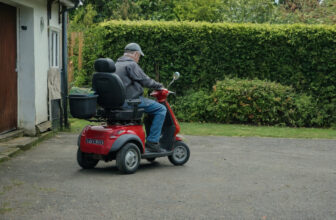
Mobility scooters are water resistant, not waterproof, so light rain on a short trip is manageable while heavy downpours and deep puddles are not. Weatherproofing a mobility scooter is mostly four habits: a snug breathable cover whenever it is parked, a charging port that only meets a plug when completely dry, sheltered storage away from damp, and a clean-water rinse after salted winter roads.
A mobility scooter is a real investment in your independence, and like any machine that lives partly outdoors, it lasts longest when the weather is kept at arm’s length. A little routine care against rain, damp, salt, cold, and sun goes a long way toward reliable rides and fewer repairs.
Start With a Good Cover
The simplest habit that protects everything else is keeping your scooter covered when it is parked. A breathable, water-resistant scooter cover shields the seat, tiller, and battery area from rain and morning dew, and it keeps grit and pollen from settling into moving parts. Choose a cover made for scooters rather than a loose tarp, since a snug fit is less likely to flap loose or trap moisture underneath.
When you drape a cover, make sure the scooter is dry first, then leave a little room for air to move so condensation does not build up inside. If you park outdoors regularly, a cover with a drawstring or straps stays put on windy days. Keeping a spare cover folded in a storage basket means you are never caught out when the sky turns unexpectedly.
Keep the Controls and Charging Port Dry
The tiller holds the throttle, key switch, and display, and these are the parts you least want to get wet. If you are caught in the rain, wipe the tiller and controls with a soft, dry cloth as soon as you are under shelter, and dry around any buttons or seams where water likes to collect. Avoid spraying water directly at the console when cleaning; a damp cloth followed by a dry one is gentler and safer.
The charging port deserves special attention. Only plug in to charge when the port and connector are completely dry, and keep the port’s cover or flap closed whenever you are not charging. After a wet ride, give the port area a moment to dry before you connect the charger. Letting the whole scooter warm up to room temperature after coming in from the cold also helps any hidden condensation evaporate before you charge.
Store It Somewhere Sheltered
Where your scooter sleeps matters as much as how you cover it. An indoor or sheltered spot, such as a garage, mudroom, shed, or covered porch, protects it from the daily swing of temperature and humidity that wears on batteries and electronics. A dry, ventilated space is far kinder than a damp corner, so avoid parking against wet walls or on ground that stays soggy.
In cold weather, bringing the battery indoors to charge and rest can help it hold up better, since batteries generally dislike prolonged cold. If your scooter must stay outside, park it out of pooling water and off bare soil when you can, and keep that cover on. For long stretches without use, follow your battery’s charging guidance so it neither sits fully drained nor bakes in a hot spot.
Rinse Road Salt and Protect the Connections
Winter roads and sidewalks are often treated with salt and de-icer, and that residue is corrosive to metal and connectors. When the roads have been salted, rinse the wheels, frame, and undercarriage with clean water after your ride, then dry the surfaces so moisture does not linger. A gentle rinse is enough; you are washing away grit, not pressure-blasting the machine.
For the electrical connections that you can safely reach, a thin coat of dielectric grease helps keep moisture and corrosion off the metal contacts. Apply it sparingly to clean, dry connectors, and only where your owner’s manual indicates it is appropriate. This small step protects the points where damp weather tends to cause trouble first, and it keeps connections making clean contact through the seasons.
Sun and Heat Need Protection Too
Weatherproofing is not only about rain and cold. Strong sun fades seats and plastics over time and can leave a parked scooter uncomfortably hot to touch, while heat is hard on batteries as well. Whenever you can, park in the shade or under cover during the warmest part of the day, and use your cover to shield the seat and tiller from direct sunlight.
If your scooter has been sitting in the sun, let it cool before charging, and keep it out of the hottest, most airless corners of a garage. Treating heat with the same respect you give rain rounds out year-round care and helps the upholstery, tires, and battery age more slowly.
Weatherproofing FAQ
Can I ride my mobility scooter in the rain?
Light rain is usually manageable for short trips, but water and electronics are not friends, so avoid heavy downpours and deep puddles when you can. Keep the tiller and charging port as dry as possible, and dry the scooter off once you are back under shelter.
How should I dry my scooter after a wet ride?
Wipe it down with a soft, dry cloth, paying attention to the seat, tiller, controls, and around the charging port. Let it finish drying in a ventilated indoor or sheltered spot, and wait until it is fully dry before you plug in to charge.
Do I really need a cover if I park in a garage?
A garage already blocks rain and sun, so a cover is less essential there, but it still helps keep dust, damp, and debris off between rides. If your garage gets humid or you park near an open door, a breathable cover adds a worthwhile extra layer.