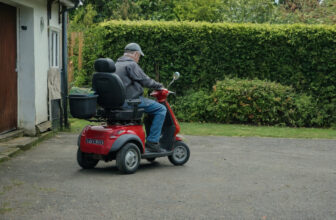
How to maintain your mobility scooter comes down to five habits. Charge after each day of use and let the charger finish its cycle rather than running the battery flat. Keep air-filled tires at the pressure marked on the tire, wipe the scooter dry after wet trips and never point a hose at it, touch up chipped paint before damp reaches the metal, and store it sheltered under a breathable cover.
A mobility scooter is a big part of getting through the day, so it makes sense to want it running well for as long as possible. The good news is that a little steady care goes a long way, and most of the parts that wear out can be nursed along with simple habits you can build into your routine.
Treat the battery gently and charge with care
The battery is the heart of your scooter, and how you charge it matters more than almost anything else. Try to top it up after each day of use rather than letting it run all the way down, since deep drains put extra strain on the cells. Plug in with the charger that came with the scooter, and let it finish its full cycle instead of pulling it off early or leaving it connected for days on end once it is done.
Warmth and cold both take a toll, so charge and keep the battery somewhere that stays comfortable, not in a freezing garage or a hot spot in the sun. If you are setting the scooter aside for a while, give the battery a charge before it sits and check on it now and then, because a battery left flat for a long stretch can lose its ability to hold power. Keep the contacts clean and dry, and if you ever notice swelling, a strange smell, or much shorter runtimes, have it looked at rather than pushing through.
Keep the tires in good shape
Tires carry your weight and soak up the bumps, so a quick look at them each week pays off. If your scooter has air-filled tires, keep them properly inflated to the level marked on the tire; running them soft makes the motor work harder, wears the tread unevenly, and gives you a rougher, less stable ride. Firm, well-filled tires roll easier and last longer.
Watch for cracks, bald patches, and anything sharp lodged in the tread, and clear away grit or debris that gets stuck. Solid tires need less fuss but still deserve a glance for splits or flat spots. Rotating or replacing a worn tire before it fails saves you from being stranded and spares the wheel and axle from extra stress.
Keep the motor and electronics dry and clean
Water and dust are the quiet enemies of the motor, controller, and wiring. Whenever you can, steer around deep puddles and avoid riding through heavy rain, and if you do get caught out, wipe the scooter down and let it dry fully before charging or storing it. Never aim a hose or pressure washer at it; a damp cloth for the body and a dry brush for the crevices is all you need.
Give the connectors, the key switch, and the control panel a gentle wipe to keep dirt from building up, and keep drinks and loose crumbs away from the tiller controls. If the scooter ever feels sluggish to respond, cuts out, or throws an error, stop and let it rest rather than forcing it, since a small electrical fault handled early is far easier than one you rode until it broke.
Protect the frame and drive gently
The frame holds everything together, and its main threat is rust from moisture sitting on bare metal. Wipe the frame dry after wet trips, keep an eye on any spots where the paint has chipped, and touch up scratches so damp air cannot reach the metal underneath. A soft wax or protective coating on exposed parts adds another layer of defense, and keeping bolts snug stops rattles that loosen joints over time.
How you drive shapes how long everything lasts, too. Ease into starts and stops instead of jabbing the throttle, take curbs and thresholds slowly and straight on, and respect the weight limit so you are not overloading the motor and frame. Smooth, unhurried driving means less shock through the wheels, bearings, and welds, and that gentleness quietly adds years.
Store it the right way
Where and how you park the scooter between uses matters as much as how you ride it. Aim for a dry, sheltered spot out of direct sun and away from damp, and if it must sit outdoors, use a breathable cover that keeps rain off without trapping moisture against the metal. A cover also keeps dust out of the motor housing and controls.
For longer breaks, park it on a firm, level surface, tend to the battery as described above, and turn it off fully rather than leaving it on standby. A quick monthly once-over during storage, checking the tires, wiping away any dampness, and topping the charge, keeps small problems from setting in while the scooter waits for you.
FAQ
How often should I charge the battery?
A good habit is to charge after each day you use the scooter, letting the charger complete its full cycle. Even if you only rode a little, a regular top-up is kinder to the battery than waiting until it is nearly empty.
Can I leave my scooter outside?
It is best kept in a dry, sheltered place, since sitting out in rain and sun invites rust and wears the electronics faster. If you have no choice, a breathable cover and an occasional wipe-down go a long way toward protecting it.
What are the first signs a part is wearing out?
Shorter runtime between charges often points to the battery, while a rougher ride or uneven tread points to the tires. Sluggish controls, cutouts, or new rattles are worth checking early, because catching them soon usually keeps a small fix from turning into a big one.