Mobility Scooters

Mobility Scooter Emergency Preparedness and Disaster Response Guide 2025: Hurricane, Earthquake, and Power Outage Survival Strategies, Evacuation Planning, Backup Battery Systems, and Emergency Supply Kits for Disability Safety in USA and Canada

When disaster strikes, mobility means survival

Picture this: hurricane-force winds howl outside, power lines snap like matchsticks, and evacuation orders echo through emergency broadcasts. For the 6.8 million Americans who rely on mobility scooters for independence, this scenario represents a unique survival challenge that standard emergency plans rarely address. While able-bodied individuals can quickly adapt their evacuation strategies, mobility scooter users face critical decisions about battery life, accessible routes, and equipment protection that can mean the difference between safety and catastrophe.

The stark reality hit home during Hurricane Harvey in 2017, when emergency responders reported that 73% of mobility device users experienced significant challenges during evacuation procedures. Traditional emergency preparedness guides fall short because they don’t account for the specific vulnerabilities and needs of powered mobility device users. This comprehensive guide bridges that gap, providing you with battle-tested strategies, essential supply checklists, and life-saving protocols specifically designed for mobility scooter users facing natural disasters, power outages, and emergency evacuations across the USA and Canada.

Emergency preparedness supplies and mobility equipment

This Photo was taken by Mikhail Nilov.

The hidden vulnerabilities mobility scooter users face during emergencies

Emergency situations expose critical dependencies that mobility scooter users navigate daily, but these challenges intensify exponentially during disasters. Unlike manual wheelchairs, mobility scooters require consistent electrical power, creating a cascade of vulnerabilities when infrastructure fails.

Power dependency creates survival bottlenecks

Your mobility scooter’s battery represents your lifeline during emergencies. Most standard scooter batteries provide 8-15 miles of range under normal conditions, but emergency situations rarely qualify as normal. Rough terrain, debris navigation, and temperature extremes can reduce battery life by up to 40%, according to 2024 data from the National Institute on Deafness and Other Communication Disorders.

The proper battery maintenance practices you’ve established become critical survival factors when evacuation routes stretch beyond anticipated distances.

Featured Product: Long-Range Emergency Scooter

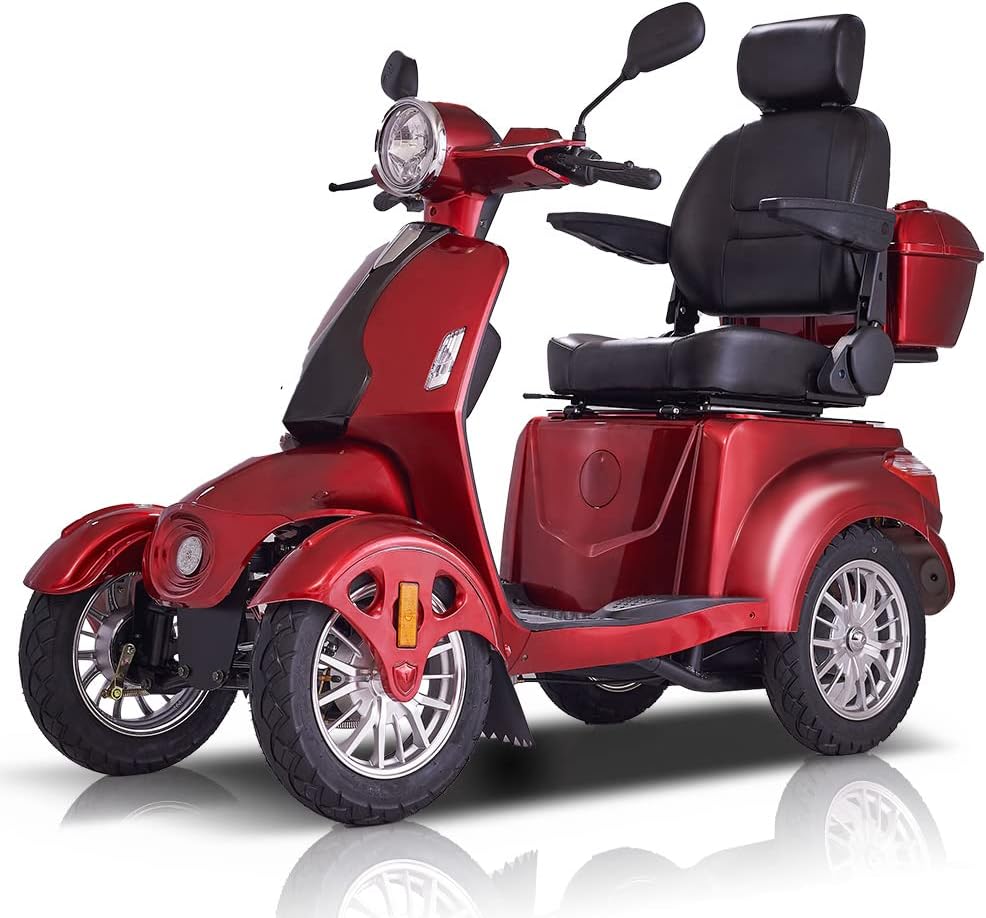
Mobility Scooters for Adults,Ultra Lightweight 36Lbs Folding Electric Powered Scooter

Mobility Scooters for Adults – Ultra Lightweight 36Lbs Folding Electric

Rating: ⭐⭐⭐⭐⭐ 4.4/5

Price: $1,799.00

This ultra-lightweight scooter offers exceptional 22-mile range with dual lithium batteries, perfect for emergency evacuations. The airline-approved design ensures portability during relocations. Cons: Higher price point may limit accessibility for some users.

Buy on Amazon

Infrastructure failures compound mobility challenges

When disasters strike, the accessibility features you rely on vanish. Elevators stop working during power outages, automatic doors become barriers, and accessible parking spaces flood or become blocked by debris. The Federal Emergency Management Agency (FEMA) reports that 68% of evacuation centers established during 2024’s major weather events initially lacked adequate charging stations for mobility devices.

Disaster Type Primary Mobility Challenge Battery Impact Infrastructure Risk
Hurricane Flooding and debris navigation 25-40% reduction Power grid failure
Earthquake Uneven surfaces and cracks 15-30% reduction Structural damage to ramps
Winter storm Ice and snow traction 30-45% reduction Blocked accessible routes
Wildfire Smoke visibility and air quality 10-20% reduction Road closures

Emergency evacuation planning and mobility accessibility

This Photo was taken by Mikhail Nilov.

Building your disaster-ready power backup system

Your mobility scooter’s electrical system requires a comprehensive backup strategy that goes beyond simply owning a spare battery. Emergency power planning involves layered redundancy, portable charging solutions, and strategic resource allocation that keeps you mobile when traditional power sources fail.

Multi-tier battery backup strategy

Professional emergency preparedness experts recommend a three-tier battery approach for mobility scooter users. The primary tier consists of your scooter’s main battery plus one fully charged spare. The secondary tier includes a portable power station capable of recharging your batteries multiple times. The tertiary tier involves solar charging capabilities or generator-powered charging systems.

Lithium-ion batteries maintain their charge longer during storage, making them superior for emergency preparedness compared to traditional lead-acid options. However, lithium batteries require specific temperature management, particularly in extreme weather conditions that often accompany disasters.

Featured Product: Heavy-Duty Emergency Scooter

Heavy Duty Mobility Scooters for Seniors & Adults 500lbs Capacity

Heavy Duty Mobility Scooters – 500lbs Capacity All Terrain

Rating: ⭐⭐⭐⭐⭐ 4.7/5

Price: $3,299.00

This robust 1000W all-terrain scooter handles emergency evacuation conditions with superior stability and range. Built for challenging environments and heavy-duty use. Cons: Higher weight makes transportation more difficult during evacuations.

Buy on Amazon

Portable power stations for extended operations

Modern portable power stations provide the capacity to recharge mobility scooter batteries multiple times without access to grid power. Look for units with pure sine wave inverters, which protect your scooter’s electrical components from power fluctuations. A 1000-watt-hour power station typically provides 3-4 full charges for standard mobility scooter batteries.

Consider the charging time requirements when selecting portable power solutions. Standard mobility scooter batteries require 6-8 hours for complete charging, but emergency situations may not provide that luxury. Fast-charging compatible batteries and power stations can reduce this time to 2-3 hours, though at the cost of potentially reducing overall battery lifespan.

Solar charging systems for sustained independence

Solar charging systems offer renewable power generation during extended emergencies, but their effectiveness depends heavily on weather conditions and available sunlight. A 100-watt solar panel system can maintain mobility scooter batteries indefinitely under optimal conditions, but disaster situations rarely provide optimal conditions.

Foldable solar panels designed for RV and marine use adapt well to mobility scooter emergency applications. These systems typically weigh 15-25 pounds and pack into compact carrying cases. However, charging a depleted mobility scooter battery using solar panels alone requires 8-12 hours of direct sunlight, making them better suited for maintenance charging rather than emergency recovery.

Mobility scooter emergency equipment and supplies

This Photo was taken by Rollz International.

Emergency supply kit essentials tailored for mobility scooter users

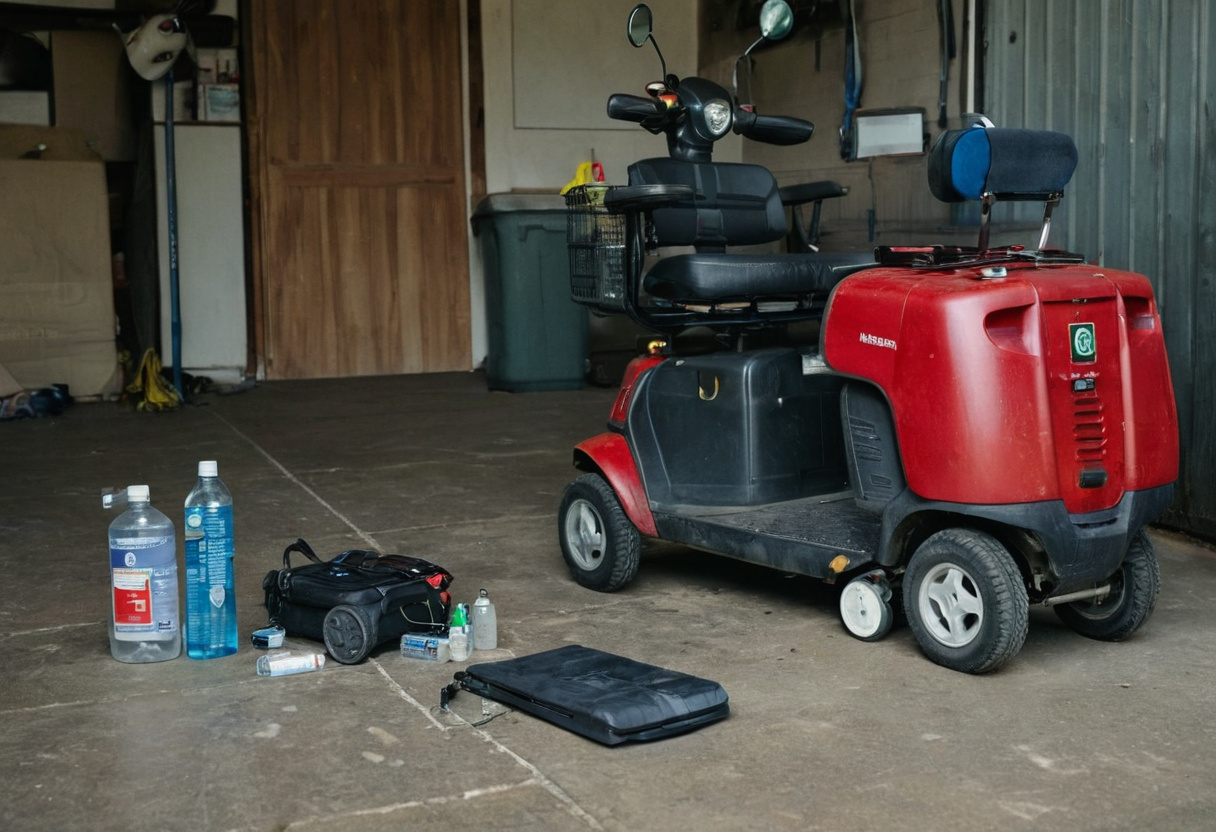
Your emergency supply kit requires specialized components that standard preparedness guides don’t address. Beyond basic survival supplies, mobility scooter users need equipment that maintains device functionality, protects electrical components, and provides alternatives when primary mobility systems fail.

Critical spare parts and repair tools

Mobility scooters contain components that commonly fail during emergency use. Carry spare fuses, a tire repair kit designed for pneumatic scooter tires, and basic tools including screwdrivers and wrenches that fit your specific model. A broken drive belt or flat tire becomes a life-threatening emergency during evacuation scenarios.

Featured Product: Essential Replacement Parts

AlveyTech Standard Key for Go-Go and Pride Mobility Scooters

AlveyTech Standard Replacement Keys for Mobility Scooters

Rating: ⭐⭐⭐⭐⭐ 4.4/5

Price: $11.10

Essential replacement keys for Go-Go and Pride mobility scooters. Critical backup component for emergency situations when original keys are lost. Cons: Only compatible with specific scooter brands and models.

Buy on Amazon

Include waterproof electrical tape, zip-ties, and a multi-meter for diagnosing electrical issues. Emergency situations often involve water exposure, making waterproof protection for electrical connections essential. A small tube of dielectric grease protects electrical contacts from corrosion caused by humidity and water exposure.

Weather protection and weatherproofing supplies

Standard mobility scooters lack weatherproofing for extended outdoor exposure during emergencies. Pack heavy-duty plastic sheeting, waterproof covers, and bungee cords to protect your scooter during outdoor storage or transport. Consider that winter weather conditions create specific challenges requiring additional protective measures.

Pack towels specifically designated for drying electrical components and battery terminals. Moisture infiltration into control systems causes immediate failures that strand users in dangerous situations. Silica gel packets stored in sealed containers help control moisture in battery compartments during humid conditions.

Communication and signaling equipment

Emergency responders need to locate and communicate with you during rescue operations. Pack a whistle, reflective tape, and battery-powered or hand-crank radio. Consider that mobility scooter users often travel at ground level where visual signals may be obscured by debris or vegetation.

A portable cell phone charger with multiple charging cables ensures communication capabilities remain active. Include a laminated card with emergency contact information, medical conditions, and scooter specifications attached to your mobility device.

Emergency evacuation routes and accessibility planning

This Photo was taken by Mikhail Nilov.

Hurricane survival strategies for mobility scooter users

Hurricanes present unique challenges that combine multiple threat factors: flooding, power outages, debris fields, and prolonged emergency conditions. Your hurricane survival strategy must account for the extended timeline of hurricane emergencies, which often span several days from initial warnings through post-storm recovery.

Pre-storm positioning and shelter selection

Hurricane evacuation timing becomes critical for mobility scooter users due to battery range limitations and reduced travel speeds. Begin evacuation procedures when hurricane watches are issued, not when warnings are upgraded. Traffic congestion during mandatory evacuations can extend normal travel times by 300-400%, consuming battery reserves at accelerated rates.

Select evacuation destinations based on accessibility features and charging infrastructure. Contact potential shelters in advance to verify they accommodate mobility devices and provide charging stations. Many emergency shelters installed dedicated mobility device charging areas following lessons learned from Hurricane Katrina, but availability varies significantly by region.

Featured Product: Portable Folding Scooter

Three Wheel Portable Mobility Scooter for Adults

Three Wheel Portable Mobility Scooter – Aircraft-Grade Aluminum

Rating: ⭐⭐⭐⭐⭐ 4.4/5

Ultra-portable design perfect for evacuation scenarios with 5 mph speeds and 13-mile range. Airline approved and foldable for easy transport. Cons: Three-wheel design provides less stability on rough emergency terrain.

Buy on Amazon

Flood navigation and water damage prevention

Hurricane flooding creates immediate electrical hazards for mobility scooter users. Never operate your mobility scooter through standing water, regardless of depth. Even shallow water can cause electrical shorts that disable your device and create electrocution risks.

Identify alternate routes that avoid flood-prone areas in your evacuation planning. Low-lying areas, storm drains, and areas near streams become impassable for mobility scooters long before they pose risks to pedestrians or vehicles. Plan multiple evacuation routes and verify their elevation profiles using topographic maps or online elevation tools.

If your mobility scooter experiences water exposure, disconnect the battery immediately and do not attempt to operate the device until it has been professionally inspected. Water damage to control systems can cause unpredictable operation that endangers users and bystanders.

Post-hurricane recovery and mobility restoration

Hurricane recovery periods often extend for weeks, during which normal accessibility infrastructure remains compromised. Debris removal prioritizes major roadways, leaving accessible parking areas and sidewalks blocked long after general traffic resumes.

Coordinate with senior living communities and disability service organizations to establish temporary charging stations when grid power remains unavailable. Many communities established mobile charging units using portable generators following major hurricanes in 2024.

Emergency shelter accessibility and mobility equipment

This Photo was taken by Rollz International.

Earthquake preparedness and rapid response protocols

Earthquakes differ from other disasters because they provide no warning time for preparation. Your earthquake survival strategy must focus on immediate response protocols, securing mobility equipment to prevent damage, and navigating post-earthquake terrain hazards that specifically impact mobility scooter operation.

Immediate earthquake response while using your mobility scooter

If an earthquake strikes while you’re operating your mobility scooter, immediately stop and engage the parking brake. Do not attempt to flee during active shaking, as mobility scooters can tip over on uneven surfaces created by ground movement. Position yourself away from buildings, power lines, and overhead hazards that may fall during or after the shaking stops.

After shaking ceases, inspect your mobility scooter for damage before attempting to operate it. Check wheels for alignment, test steering responsiveness, and verify that battery connections remain secure. Ground movement can jar electrical connections loose, creating intermittent failures that appear later during operation.

Post-earthquake terrain navigation challenges

Earthquakes create terrain hazards that persist long after the initial event. Sidewalk cracks, uneven pavement, and debris fields require careful navigation to avoid mobility scooter damage. Standard mobility scooters cannot safely cross gaps wider than 2 inches or climb over debris higher than 3 inches.

Featured Product: All-Terrain Emergency Mobility

MALISA Mobility Scooters for Adults, Heavy-Duty 4 Wheel

Heavy-Duty 4 Wheel Mobility Scooters – 500LBS Capacity

Rating: ⭐⭐⭐⭐⭐ 4.9/5

Price: $2,298.00

Exceptional 800W all-terrain capability handles post-disaster navigation challenges with superior stability and durability for emergency conditions. Cons: Larger size may limit maneuverability in confined emergency spaces.

Buy on Amazon

Carry portable ramps or threshold plates to navigate small gaps and elevation changes created by ground shifting. These lightweight aluminum ramps fold into compact packages and enable mobility scooters to cross obstacles that would otherwise block progress.

Structural damage assessment for mobility accessibility

Earthquakes compromise the structural integrity of ramps, elevators, and accessible pathways. Before using any accessibility infrastructure after an earthquake, visually inspect for cracks, tilting, or separation that indicates structural damage. A damaged ramp that appears functional may collapse under the weight of a mobility scooter and user.

Establish communication protocols with local emergency services to report accessibility infrastructure damage in your area. Emergency responders prioritize life safety, but accessible routes receive secondary attention during initial response phases. Documenting accessibility barriers helps emergency managers allocate repair resources effectively.

Power outage emergency lighting and mobility device charging

This Photo was taken by Roger Brown.

Power outage survival and extended grid-down scenarios

Extended power outages create cumulative challenges for mobility scooter users as battery reserves diminish and charging options disappear. Your power outage survival strategy must balance energy conservation with maintaining essential mobility for accessing food, medication, and emergency services.

Energy rationing and battery conservation techniques

During extended power outages, treat your mobility scooter’s battery as a finite resource that requires strategic management. Reduce maximum speed settings to extend battery life by up to 30%. Most mobility scooters allow speed adjustments that significantly impact power consumption without compromising safety for essential trips.

Plan consolidated trips that accomplish multiple objectives during single outings. Battery efficiency improves when mobility scooters operate continuously rather than through frequent start-stop cycles. A single trip to a charging station, pharmacy, and grocery store consumes less battery power than three separate trips.

Monitor battery voltage levels using your scooter’s built-in indicators, but don’t rely solely on basic LED displays. Advanced battery monitors provide more accurate remaining capacity information, helping you avoid unexpected power failures during critical trips.

Alternative charging strategies during grid failures

Vehicle inverters provide emergency charging capability when grid power remains unavailable. A 400-watt modified sine wave inverter connected to your car’s battery can charge most mobility scooter batteries, though charging times extend compared to standard wall chargers.

Community charging initiatives often emerge during extended outages. Libraries, community centers, and religious facilities with backup generators frequently establish informal charging stations for residents with medical equipment and mobility devices. Identify these resources in your area before emergencies occur.

Featured Product: Compact Emergency Scooter

Metro Mobility 4 Wheel Foldable Mobility Scooter for Adults

Metro Mobility 4 Wheel Foldable Scooter – 300 lbs Capacity

Rating: ⭐⭐⭐⭐⭐ 4.4/5

Price: $849.99

Budget-friendly foldable design with extended battery life and LED lighting for emergency navigation. Thickened

Mobility Scooters
Logo