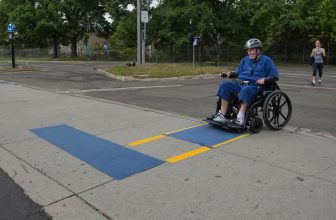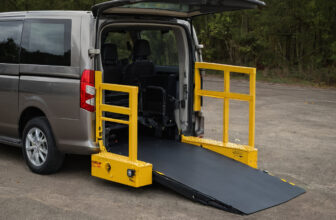
The lightest chair can become the harder chair once small wheels meet cracked paving or an attendant must lift an awkward folded frame over a high cargo sill. The practical question is not which label sounds convenient, but whether the chair works through seating, transfer, pushing, braking, loading, arrival, and return.
Is a transport chair or lightweight wheelchair better for an assisted trip?
A transport chair generally works better for a short, smooth trip controlled entirely by an attendant. A lightweight wheelchair is usually more versatile when the user may self-propel, the route includes uneven surfaces, or seated time will be longer. Fit and exact model specifications remain decisive.
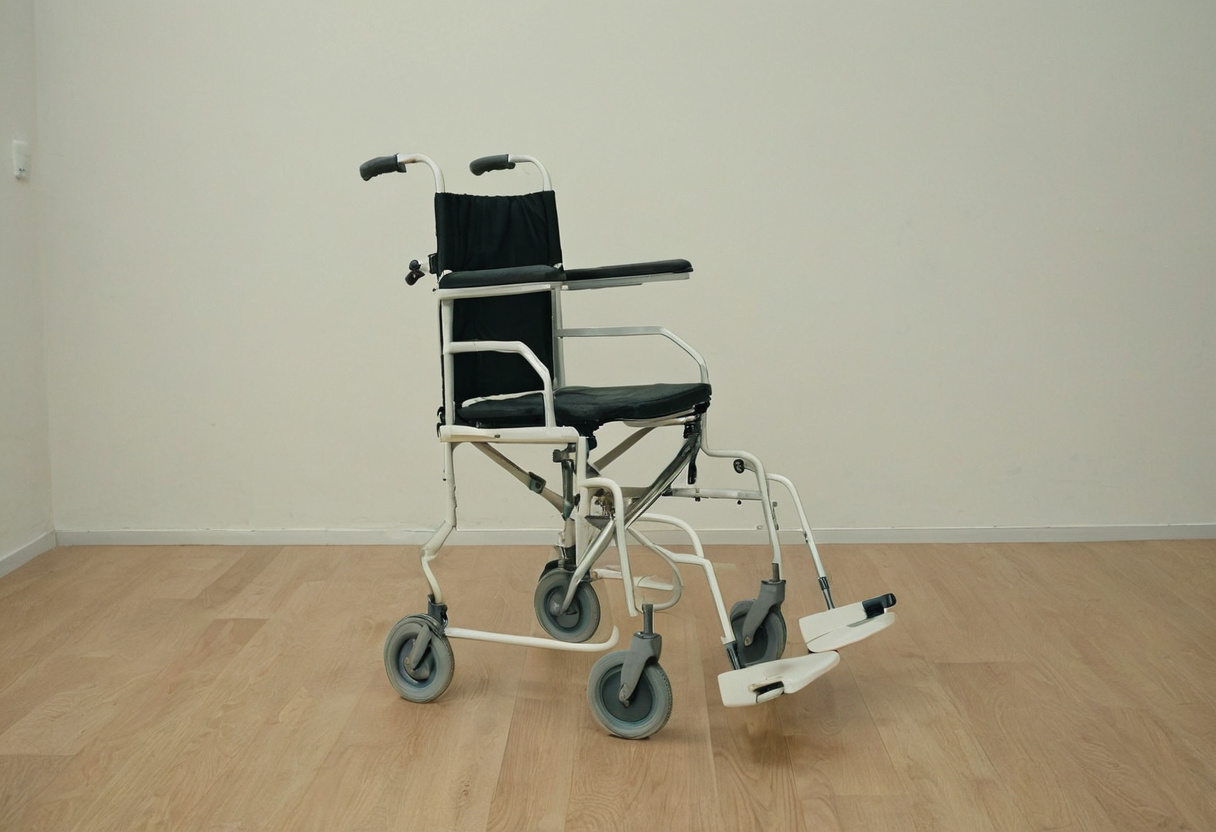
A transport chair is an attendant-propelled manual chair, commonly identified by small rear wheels that do not support practical handrim propulsion. A lightweight manual wheelchair generally has large rear wheels and handrims, allowing user propulsion when the user’s ability and chair setup permit it.
Choose a transport chair when the attendant will control the entire trip
- Propulsion: An attendant will remain available and push throughout the trip.
- Route: Floors, approaches, and thresholds are firm, smooth, and mostly level.
- Duration: The chair will support brief transfers between the vehicle and destination rather than extended sitting.
- Controls: The attendant can reach the push handles and identify the functions of hand brakes and parking locks.
- Loading: The folded chair fits the vehicle, and the attendant can complete the actual lift steadily.
Choose a lightweight wheelchair when propulsion flexibility and route capability matter
- The user may need or prefer to self-propel during part of the trip.
- The route includes long corridors, damaged paving, thresholds, or extended waiting.
- More seating, armrest, foot-support, or wheel configuration choices are required.
- The vehicle can accept the folded dimensions and any removable components.
This comparison concerns adult, non-powered chairs carried as vehicle cargo. Neither chair should be treated as an occupied vehicle seat without approval for that use. RESNA’s announced Section 15 revisions apply labeling and air-travel configuration-card requirements from RESNA AT-1:2021 Section 4 to new wheelchair models and new deliveries of existing models. Labels help identify a configuration, but wheel setup and terrain determine how it performs on the route.
Wheel size, chair setup, and terrain determine which wheelchair is easier to push
Neither chair type is universally easier to push. Rolling effort changes with wheel diameter, caster design, tire condition, loaded mass, slope, surface deformation, and attendant technique.
Small wheels favor compact transport, while large rear wheels improve route versatility
Small wheels turn readily on firm, level floors but can drop into joints or stop sharply at thresholds. Larger rear wheels generally cross irregularities more smoothly and give the user access to handrims. Soft tires, low pneumatic-tire pressure, misaligned casters, and baggage increase resistance for either chair.
RESNA’s Wheelchairs Standards Committee develops and maintains WC-1 and WC-2, and its page states that the next versions were approved by ANSI for publication. WC-1:2019 Section 15 covers manufacturer information, documentation, and labeling. WC-1:2019 Section 7 supplies measurement methods rather than prescribed wheel or seat dimensions.
| Trip condition | Transport-chair implication | Lightweight-wheelchair implication | What to test |
|---|---|---|---|
| Smooth floors or low-pile carpet | Usually manageable, although carpet raises effort | Large rear wheels may track steadily | Startup force, turning, and stopping |
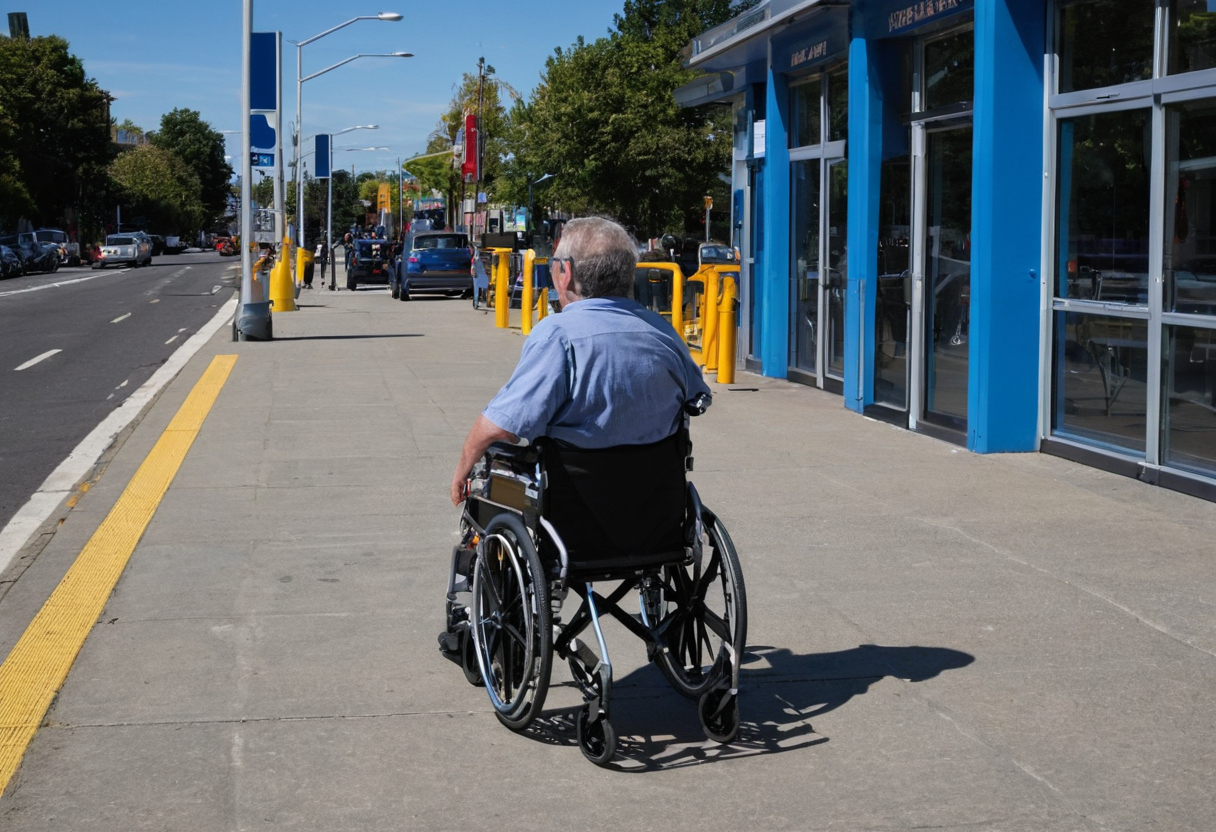
| Broken paving or thresholds | Small wheels may catch or stall | Larger rear wheels may cross gaps more smoothly | Controlled crossing and foot-support clearance |
| Gravel or grass | Small wheels may sink | Larger wheels can help, but soft ground still resists | Loaded effort and an alternate route |
| Slopes or cross-slopes | Attendant steering and brake access become critical | Control depends on setup, load, and technique | Tracking, grip, stopping, and rollback control |
| Wet surfaces | Traction and brake performance may change | Tires and handrims may become harder to control | A dry alternative and weather plan |
Slopes, cross-slopes, and surface damage increase attendant workload and risk
Route inspection should cover slope, landing space, edge conditions, drainage, weather, and another entrance. Review how ramp slope, rise, and landing space affect wheelchair access. The Department of Justice 2010 ADA Standards specify a 30-by-48-inch clear positioning space and accessible dining and work surfaces 28 to 34 inches above the floor. These building criteria are not chair performance ratings.
The FDA lists complete recognition of ISO 7176-1:2014 as recognition number 16-195, entered April 4, 2016. The standard addresses static-stability testing within its scope, but laboratory methods do not predict attendant effort on every route.
A loaded route trial is more informative than comparing catalog weights alone
Test with the user, cushion, attendant, and normal belongings. Observe startup effort, steering corrections, thresholds, brake reach, foot clearance, user movement, and attendant fatigue. The next question is whether the seat and transfer setup remain workable for the full trip.

Wheelchair seat fit and trip duration matter more than the lightweight label
A lighter chair is not better if its usable seat, back support, armrests, foot supports, or cushion arrangement do not fit the user. The chair must support the established transfer method, stable sitting, foot clearance, and comfort for the expected seated time.
Measure the user and the usable seat before comparing chair weights
Measure with the clothing, footwear, and cushion planned for travel. Compare those measurements with model-specific usable dimensions:
- Seat width: Check hip width, clearance, armrest spacing, and overall occupied width.
- Seat depth: Compare seated thigh length with the usable surface after fitting the cushion and back support.
- Lower-leg length: Confirm footplate adjustment without forcing the feet upward or reducing ground clearance.
- Support: Check back and arm-support heights and comfortable reach.
A compact transport chair may suit a brief vehicle-to-appointment trip. Longer or repeated use needs closer review of support, posture, cushion compatibility, and fatigue. Complex seating needs call for assessment by a qualified wheelchair professional.
Transfer method changes which armrests, brakes, and foot supports are practical
Match the hardware to the user’s established standing, pivot, sliding, or assisted transfer. Confirm that parking locks can be secured, foot supports move clear, and removable armrests do not obstruct the user or helper.
ISO 7176-1:2014 provides tipping-angle test methods, but the method excludes lateral anti-tip devices and does not account for sliding on the ground. A configured, occupied trial remains necessary. Once fit and transfers work, brake access and lifting workflow become the next test.

Attendant brakes, push handles, and lifting points shape transport-chair usability
For an attendant-propelled trip, control location and lifting workflow can matter as much as chair weight. The attendant must reach each control without losing grip and lift only from manufacturer-approved points.
Attendant hand brakes and parking locks perform different jobs
Attendant hand brakes may provide slowing or directional control if the manufacturer assigns that function. Parking brakes or wheel locks secure a stationary chair. A lever’s appearance does not establish its purpose, and wheel locks should not be assumed to stop a moving chair.
- Identify each brake using the terminology in the user manual.
- Test engagement on a level surface with the user positioned safely.
- Apply the specified parking system before transfers or foot-support adjustment.
- Check cables, levers, tires, and contact surfaces for looseness, wear, moisture, or contamination.
- Confirm that push-handle height supports an upright posture and stable grip.
One-handed operation needs particular scrutiny because paired controls may not provide balanced slowing. Attendant height, reach, and grip strength can turn an acceptable showroom setup into a tiring route.
Chair weight must be evaluated as a real lift into the actual vehicle
The complete lift includes the configured chair, cushion, foot supports, wheels, bags, and accessories. Record whether a published weight describes the complete chair, a bare frame, or a transport configuration with parts removed.
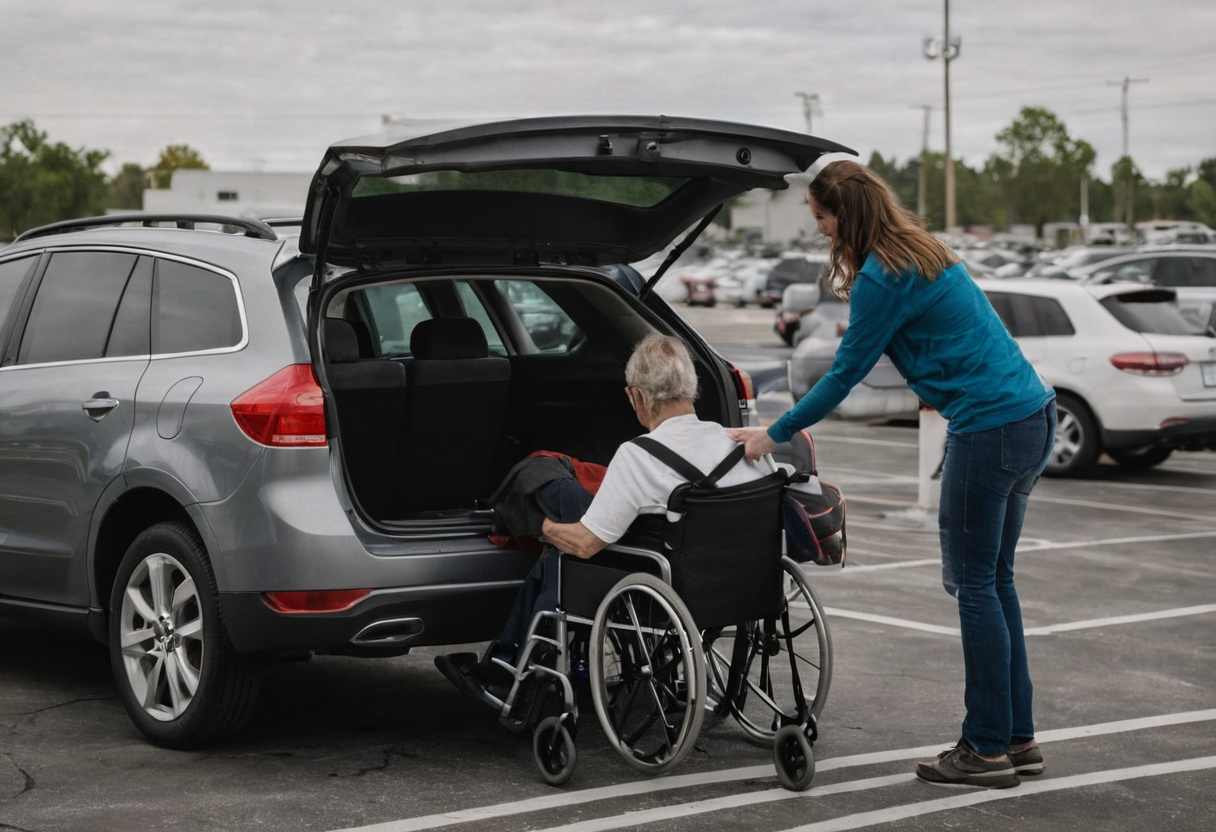
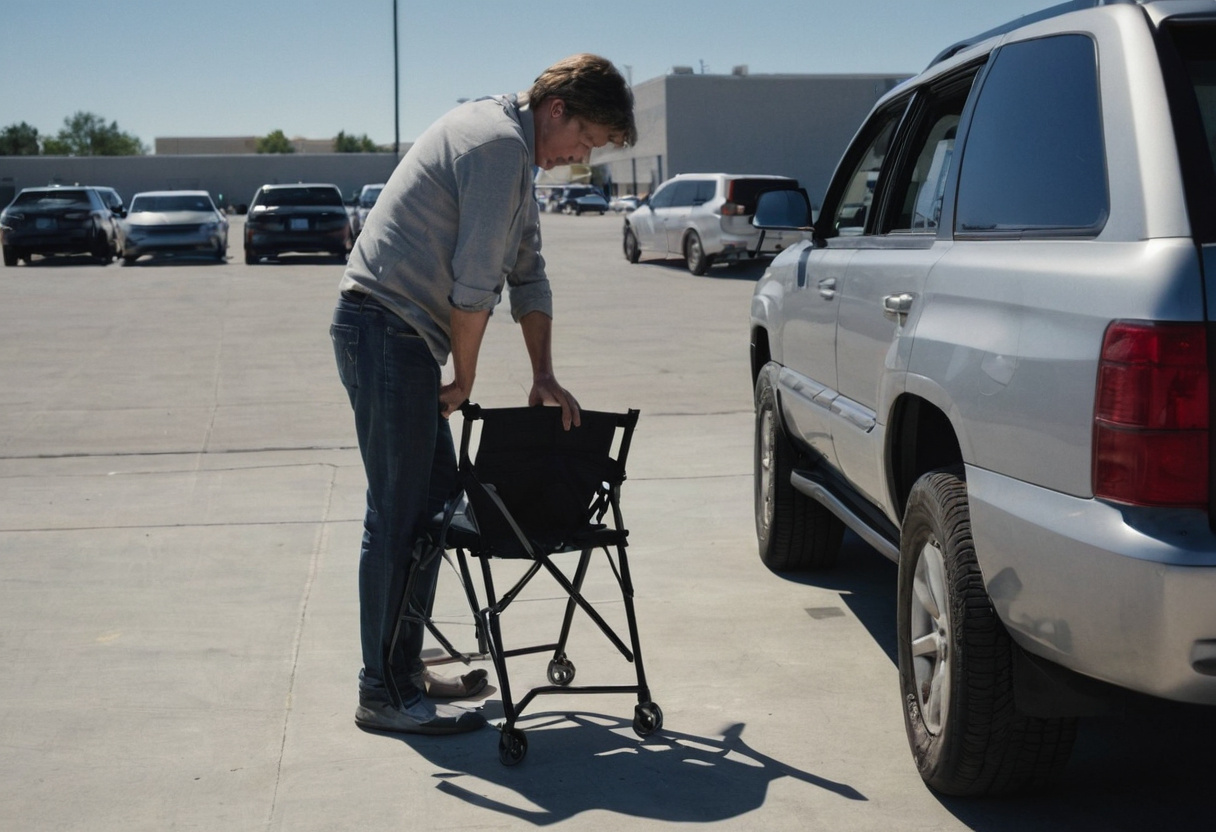
Rehearse with the vehicle parked level. Remove only approved components, fold the chair correctly, use designated structural lifting points, clear the bumper, and place the load without twisting. The user must not remain seated during cargo loading. If the manual specifies two-person handling or the lift cannot be completed steadily, choose assistance or another configuration. The folded chair must then pass the vehicle-clearance test.
Folded dimensions and vehicle clearances decide whether the chair will travel reliably
A chair fits only when its folded width, height, length, loose parts, and loading path clear the cargo opening and allow secure storage. Cargo volume alone does not establish fit.
Measure the cargo opening and loading path rather than cargo volume alone
Measure the narrowest opening, floor width and depth, diagonal clearance, lift-over height, hatch-closing path, passenger intrusion, and luggage space. Include the cushion, folded foot supports, armrests, and removable wheels in the normal transport configuration.
RESNA ANSI WC-1:2019 Section 7 specifies a method for measuring wheelchair seating and wheel dimensions within its stated scope. The FDA lists complete recognition as number 16-213, entered December 23, 2019. The method does not replace model-specific folded dimensions or a physical loading trial.
An occupied wheelchair requires transit-rated equipment and a compatible securement system
A folded wheelchair carried as cargo is different from an occupied wheelchair used as a vehicle seat. Secure the unoccupied chair and detached parts according to chair and vehicle instructions. Occupied travel requires manufacturer confirmation of transit testing, identified securement points, compatible tiedown and occupant-restraint equipment, suitable vehicle anchorages, and trained operation.
Use a specification sheet and trip rehearsal before choosing a transport chair or wheelchair
The final choice should follow a side-by-side specification check and a complete rehearsal, not a generic ranking.
Compare exact chair specifications in the same configuration
Record the model, verification date, usable seat dimensions, rated capacity, chair and transport weights, wheel sizes, folded dimensions, brake types, armrests, foot supports, anti-tippers, warranty, parts support, and service location. Record which accessories are removed for every weight or folded-size figure.
Inspect the chair before every assisted trip and schedule recurring service
- Rehearse the transfer, doorway, vehicle lift, cargo securement, unloading, destination route, waiting space, return loading, and post-trip check.
- Inspect the frame, cross-brace, upholstery, fasteners, tires, casters, wheel attachments, brakes, foot supports, anti-tippers, and folding locks.
- Assign responsibility for inspections, fault reports, repairs, and removing unreliable equipment from use.
- Reject any chair the team cannot transfer into, push, brake, fold, lift, secure, or service reliably.
Once one exact configuration passes the complete trip chain, compare wheelchair rental and purchase options using the same requirements. The better chair is the one the user-attendant team can operate reliably from departure through return.

Frequently asked questions
What is the practical difference between a transport chair and a lightweight wheelchair?
A transport chair normally depends on attendant propulsion and commonly uses four small wheels. A lightweight wheelchair commonly has large rear wheels and handrims, providing more propulsion flexibility and route versatility.
Are wheelchairs easier for an attendant to push than transport chairs?
Not always. Larger rear wheels may handle irregular surfaces better, while a compact transport chair may maneuver easily on smooth indoor floors. Loaded mass, tires, casters, slope, fit, and attendant technique affect effort.
Can a person use a transport chair like a self-propelled wheelchair?
Most transport-chair configurations do not provide reachable rear handrims for practical self-propulsion. Confirm the intended propulsion method in the exact model’s instructions.
Which chair type works better for car travel and compact cargo storage?
A transport chair often folds into a compact package, but the answer depends on measured folded dimensions, cargo-opening clearance, lift-over height, loose components, and the attendant’s lifting capacity.
How long can someone comfortably use a transport chair during an assisted trip?
No universal duration applies. Comfort depends on fit, support, cushion compatibility, posture, transfer needs, route vibration, and waiting time. Test the exact configuration for the planned trip and seek professional seating guidance when needs are complex.