A wheelchair lift can be rated to carry the load and still be wrong for the wheelchair or vehicle. Reliable boarding depends on a documented system calculation covering usable platform space, occupied weight, axle loading, doorway clearance, interlocks, securement, maintenance, and backup operation.
Will the wheelchair and occupant fit completely within the lift platform’s usable area?
A vehicle wheelchair lift fits only when the occupied wheelchair, including footrests, controls, anti-tip devices, bags, and mounted equipment, remains inside the manufacturer-defined usable platform area throughout boarding, lifting, and vehicle entry.
Measure the occupied wheelchair rather than relying on its catalog size
Measure maximum length, width, height, and ground clearance with the wheelchair occupied, tires inflated as specified, seating adjusted for travel, and usual accessories attached. Published base dimensions may exclude a joystick, head support, extended footplates, oxygen holder, or bag that becomes the widest or tallest point.
| Evidence to capture | How to test it with the occupied wheelchair | Pause-delivery condition |
|---|---|---|
| Lift drawing with usable platform length and width | Mark the usable boundary and position the wheelchair in the manufacturer-permitted orientation. | A caster, tire, footplate, anti-tip device, or attachment crosses the boundary or requires an unapproved orientation. |
| Configured wheelchair dimensions | Measure the outermost points and apply clearances specified by the lift manufacturer. | Approval depends on nominal platform dimensions, folded-chair dimensions, or zero clearance. |
| Doorway and threshold clearance | Measure clear width and height with trim, seals, hardware, lift structure, and bridge plate installed. | The joystick, head support, footplate, or wheel contacts the opening or transition. |
| Interior maneuvering space | Board, turn or reverse as intended, cross the floor transition, and reach the travel position. | The operator must remove routine equipment, force a turn, or use a movement prohibited by either manufacturer. |
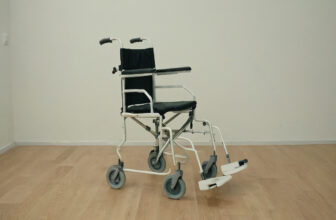
Readers choosing between a folding assisted-mobility chair and an occupied-lift arrangement can compare transport chairs and lightweight wheelchairs for assisted trips.
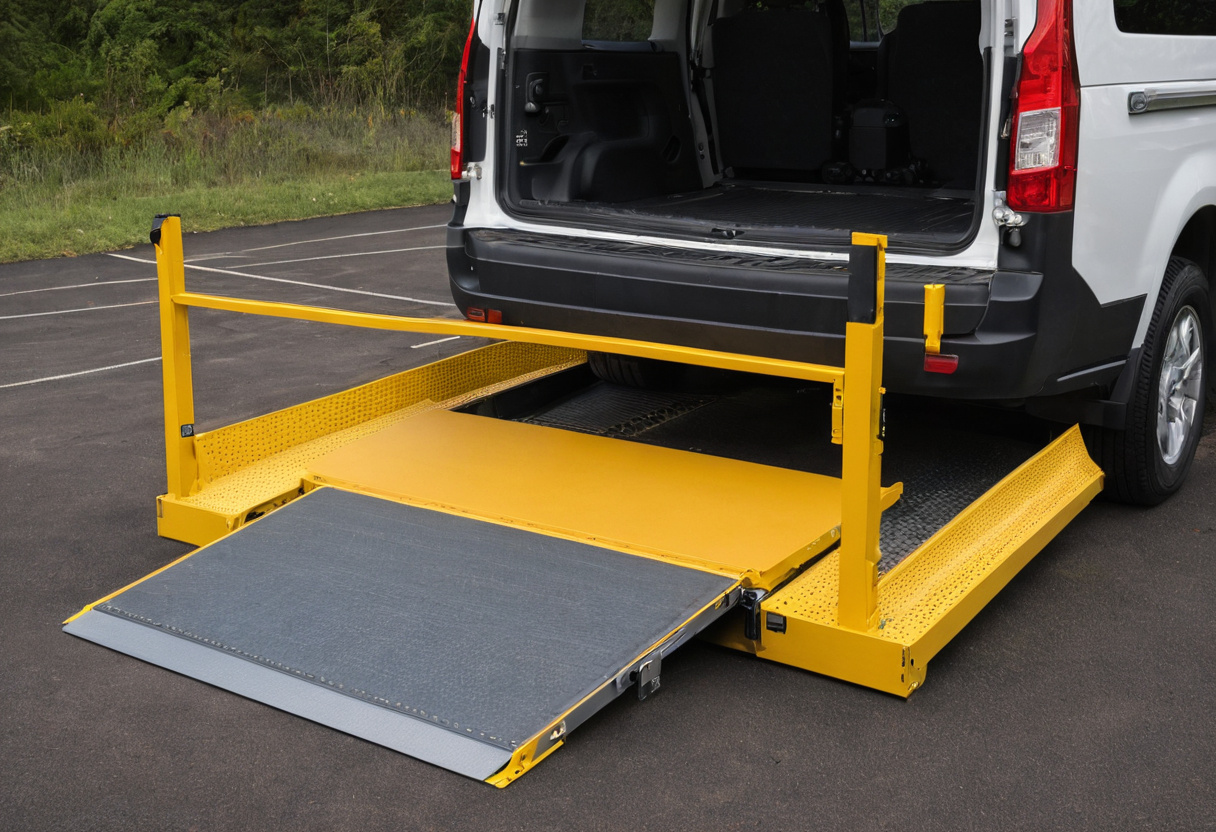
A platform fit test must include approach, entry, and exit movements
A stationary footprint is not enough. Test the permitted approach direction, outer barrier, bridge plate, roll stops, door header, and interior floor transition during a complete supervised boarding and exit sequence.
The test should reproduce ordinary parking conditions and caregiver workflow without removing accessories, changing the seating position solely to clear the doorway, or placing a caster at the platform edge. Once dimensional compatibility is documented, calculate everything the lift must carry.
Does the lift capacity cover the occupant, wheelchair, and every carried attachment?
Lift capacity must cover the combined operating weight placed on the platform, not merely the wheelchair’s catalog weight. Add the occupant, configured wheelchair, batteries, seating, mounted equipment, bags, and any manufacturer-permitted attendant.
Calculate occupied platform weight with a documented worksheet
Record every input and its source so the calculation can be updated after a battery, seating, accessory, or equipment change.
- Confirm the rated load against the lift data plate, owner’s manual, and model-specific documentation. Pause if those sources conflict.
- Enter the wheelchair’s configured weight, including batteries, powered seating, supports, trays, communication devices, carriers, and mounted accessories.
- Add the occupant and routinely carried bags, supplies, or equipment.
- Add an attendant only when the lift manufacturer permits attendant operation on the platform.
- Verify uncertain values on an accessible calibrated scale and record the measurement date and configuration.
- Compare the total with the rated load and any manufacturer-specified operating margin. Do not invent a universal percentage.
Motorized wheelchairs may create dimensional and load-distribution constraints
Motorized wheel chairs can remain below the total rating yet place heavy drive wheels, batteries, or small casters where concentrated loading is restricted. Record the wheelbase and wheel-contact locations, then check model-specific placement requirements.
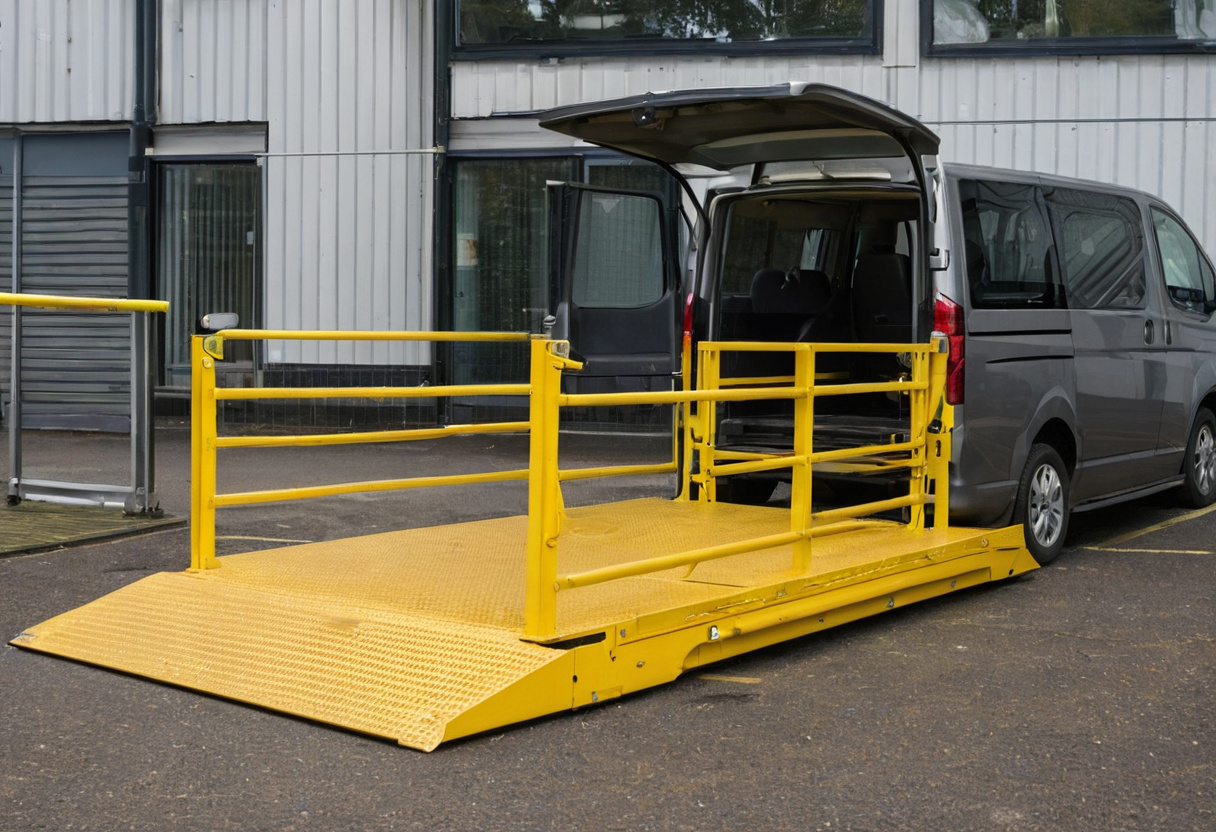
Test the normal configuration across the bridge plate, platform gaps, inner roll stop, and outer barrier. Pause delivery if a caster approaches an unsupported edge, a wheel interferes with a barrier, or the approved orientation cannot be maintained. A passing load calculation still leaves the vehicle ratings to resolve.
The vehicle must remain within payload, axle, doorway, floor, and electrical limits after lift installation
A lift that carries the occupied wheelchair may still be unsuitable for the vehicle. The completed conversion must account for lift and reinforcement mass, occupants, cargo, axle loading, doorway structure, floor height, ground clearance, suspension condition, and electrical demand.
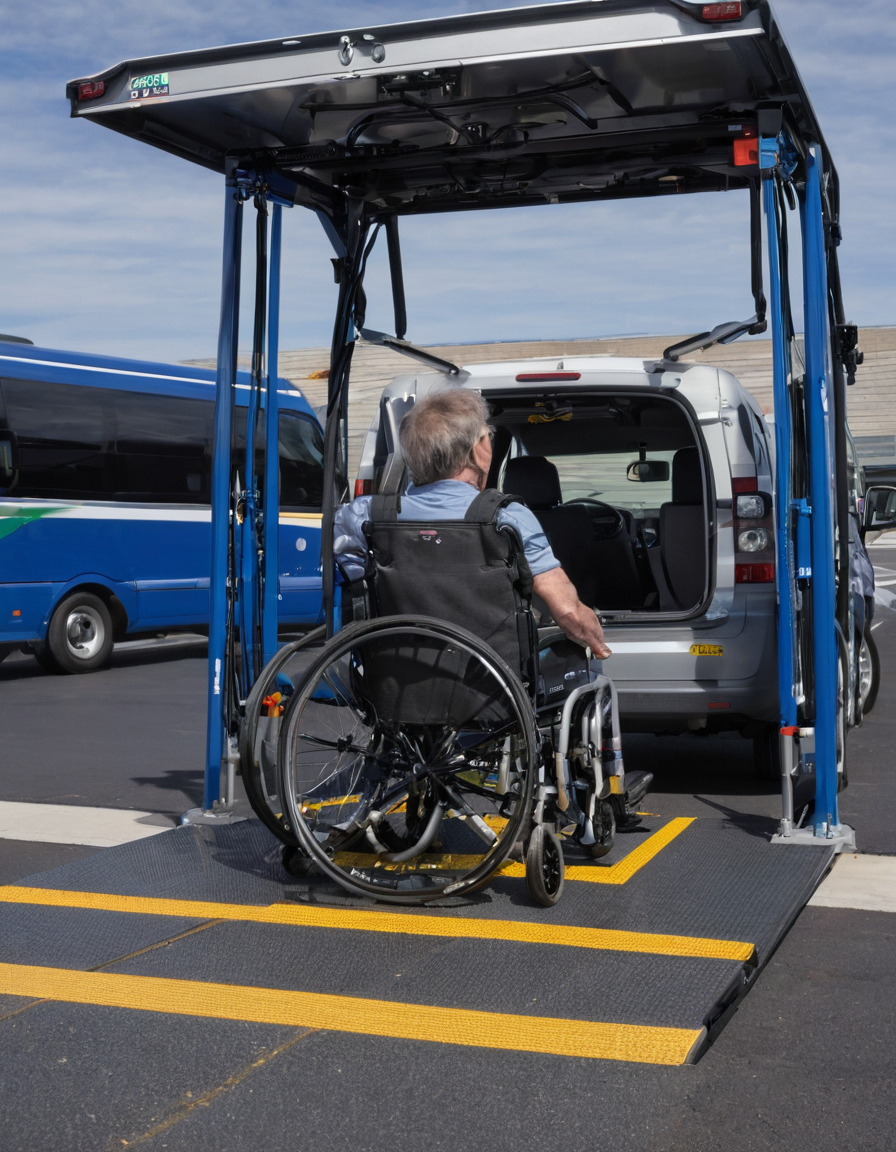
Vehicle payload and axle ratings require separate calculations
Remaining payload under GVWR does not prove that either axle is within its GAWR. A lift and its reinforcement add concentrated mass, often near one end of the vehicle. The rear axle can exceed its rating while total vehicle weight remains below GVWR.
Get completed-conversion scale weights with front and rear axle results recorded separately. The record should define fuel level, seating positions, wheelchair location, occupants, cargo, routine trip equipment, and lift position. Compare the results with GVWR, front GAWR, rear GAWR, tire load ratings, and vehicle certification labels.
Include the lift, mounting structure, modified flooring, seats, securement equipment, and other adaptations in the payload calculation. Suspension aids may change ride height or handling, but they do not automatically increase certified axle or vehicle ratings.
FMVSS 403 and FMVSS 404 applicability must be confirmed for the lift and modified vehicle
FMVSS No. 403 governs platform lift systems within its scope, including lifts that move passengers or mobility aids between ground and vehicle-floor loading positions. FMVSS No. 404 governs covered motor vehicles equipped with those lifts. A compliant lift does not by itself validate the completed installation.
FMVSS No. 404 requires the lift to be installed using the lift manufacturer’s procedures in a vehicle type identified as appropriate. The installed lift must continue to meet applicable FMVSS No. 403 requirements. Vehicle category, GVWR, lift classification, manufacturing stage, and modification timing affect certification and labeling responsibilities.
NHTSA’s platform-lift rulemaking record provides regulatory context. Current eCFR text, model-specific instructions, and installation records should control the acceptance review.
Installation quality must be documented rather than inferred from lift brand
Require the installation manual, approved vehicle application, lift certification label, applicable vehicle or alterer label, mounting drawings, and reinforcement records. Inspect fasteners, specified welds, floor openings, weather sealing, doorway clearance, platform travel, underbody clearance, and future service access.
Electrical records should cover battery and alternator suitability, cable gauge, routing, grounding, circuit protection, connector security, and manufacturer-defined low-voltage limits. Test complete lift cycles under the engine and power conditions specified by the manufacturer.
Pause delivery if scale records, labels, wiring documentation, functional-test results, owner-manual inserts, or installer sign-off are missing. With the vehicle calculation established, verify that interlocks and barriers control movement as intended.
Lift interlocks and barriers must control unsafe vehicle and platform movement
Wheelchair lift interlocks must function as an integrated vehicle system. The prescribed sequence should prevent incompatible vehicle movement, door operation, lift deployment, and platform travel while barriers, bridge plates, warnings, and handholds perform as designed.
Interlock logic varies by installation. The acceptance test should verify the required ignition state, transmission position, parking brake, doors, lift position, and vehicle-movement lockout, plus the specified response to an obstruction, low voltage, emergency stop, interlock fault, or incomplete stow condition.
A delivery test should show every normal interlock state
The installer should test the completed vehicle rather than merely showing that an empty platform moves.
- Permitted states: Confirm deployment, lowering, raising, barrier movement, bridge-plate operation, and complete stowage under the required conditions.
- Prohibited states: Attempt operation with each relevant door, brake, transmission, ignition, and stowage condition deliberately incorrect. Record the expected warning or lockout.
- Traceability: Record the date, technician, vehicle identification number, lift model and serial number, results, defects, and corrective work.
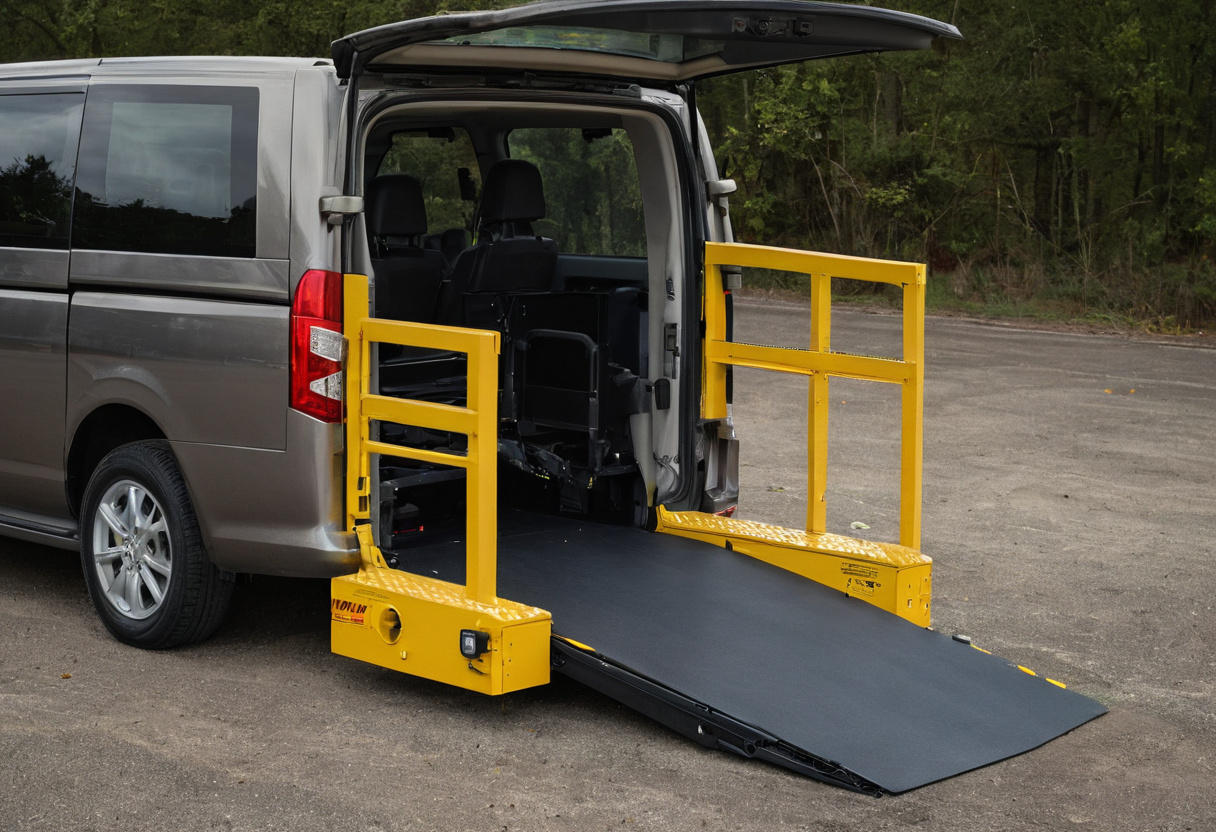
FMVSS No. 403 defines a lift cycle as deployment, travel between ground and vehicle-floor loading positions, and stowage, including operation of retention and bridging devices. The inner roll stop protects the vehicle-floor edge, while the outer barrier protects the ground-loading edge during passenger operation.
Operators need a boarding workflow that does not bypass safety features
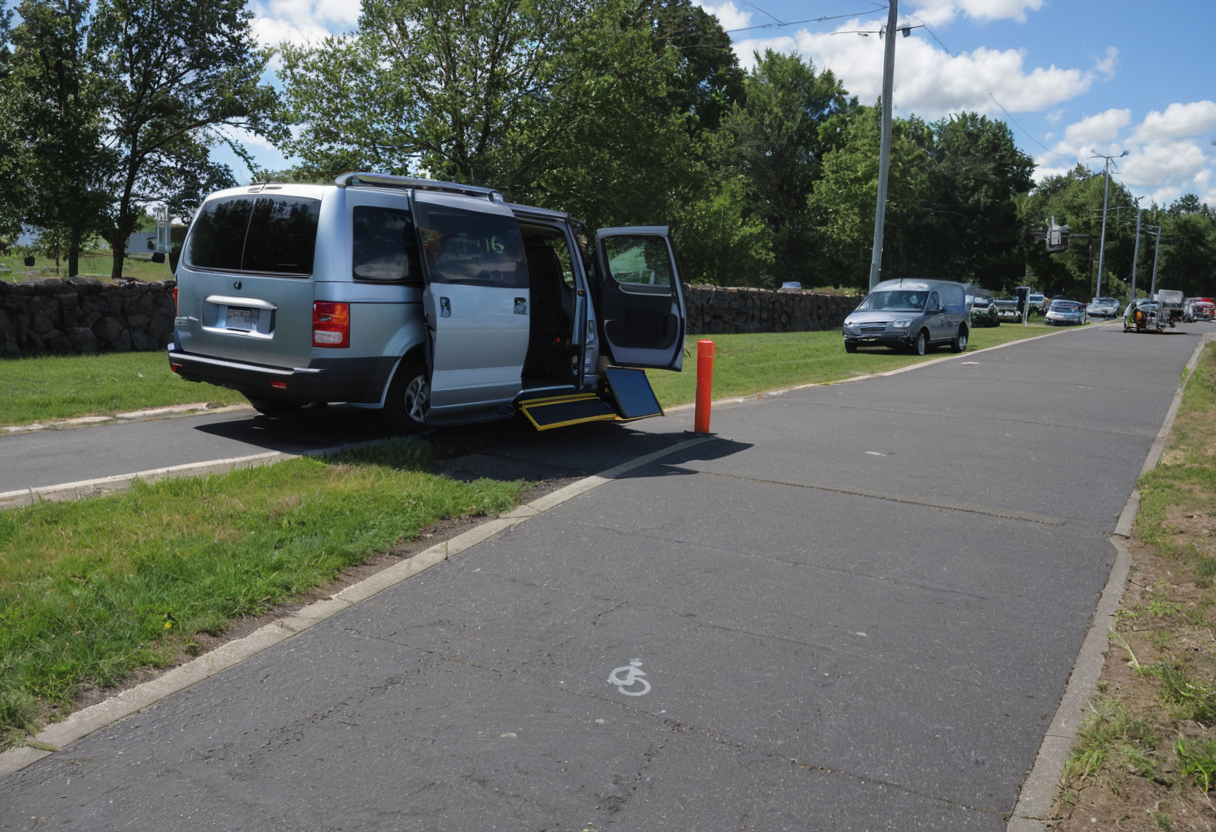
Park on stable ground with adequate clearance, secure the vehicle, open the designated doors, deploy the lift fully, and position the wheelchair as instructed. Confirm that casters, foot supports, bags, and controls remain within the usable area.
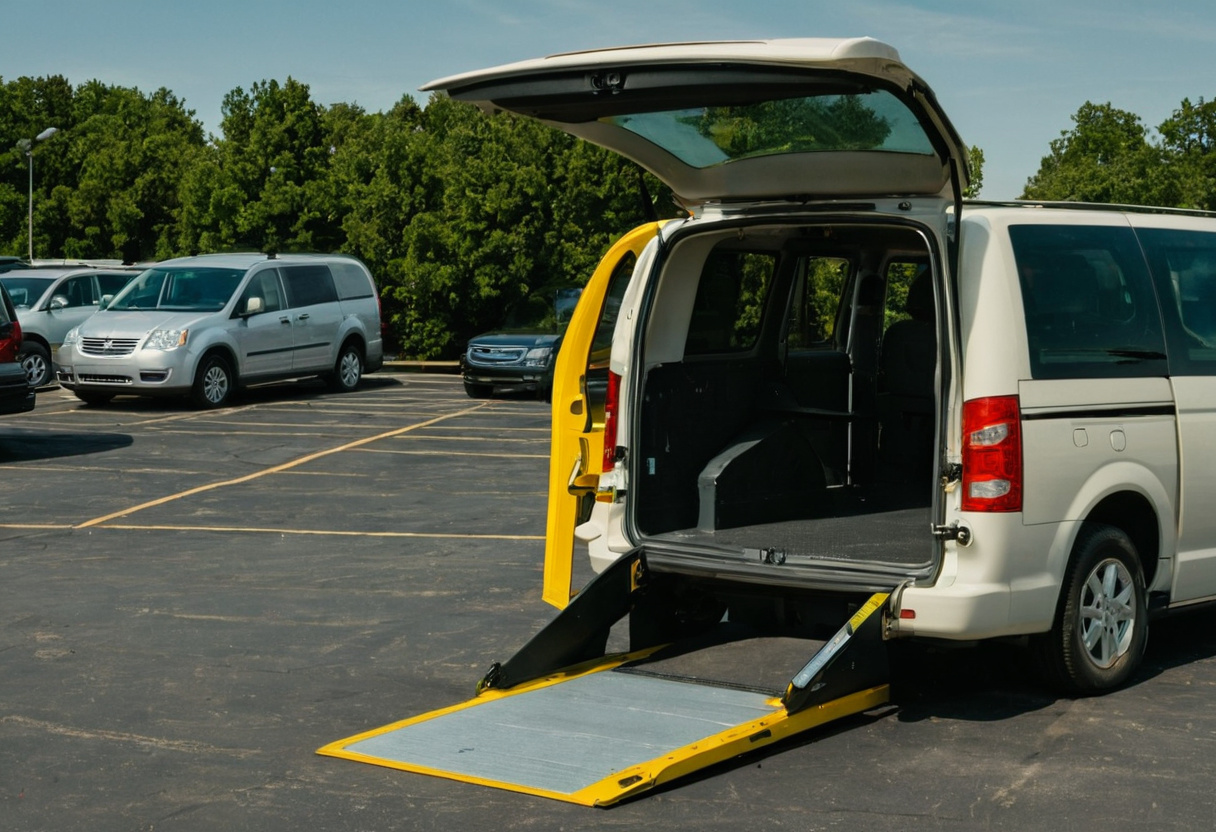
Wheelchair power, brakes or drive mode, orientation, and attendant position must match manufacturer instructions. Do not defeat an interlock or hold a barrier out of position. Correct lift operation reaches the vehicle floor, but it does not provide securement during travel.
Lift compatibility does not replace wheelchair securement and occupant restraint
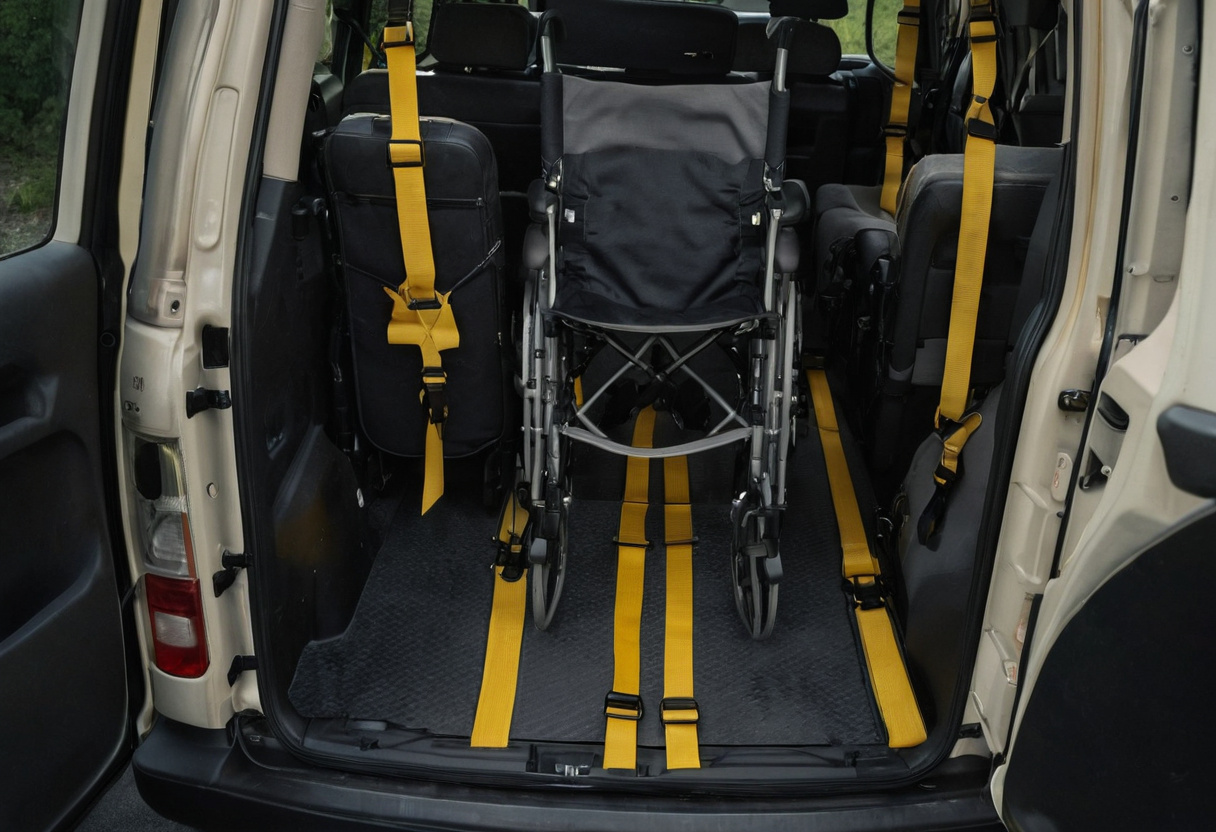
A wheelchair lift only transfers the wheelchair between ground and vehicle floor. Travel requires a compatible tiedown and occupant restraint system, suitable anchor locations, workable belt geometry, and procedures matched to the wheelchair, vehicle, and transport service.
- Confirm the travel method: Document whether the occupant transfers to a vehicle seat or remains in the wheelchair.
- Verify the equipment: Check tiedown and restraint instructions, ratings, anchor locations, and inspection criteria.
- Check the wheelchair: Get manufacturer guidance about securement points and any transit-tested configuration.
- Assign the workflow: Train caregivers, drivers, or fleet operators to attach, inspect, release, and store the equipment correctly.
The travel position must be assessed separately from the lift platform
The occupied wheelchair must move from the lift to the designated position without striking seats, cabinetry, wheel housings, lift towers, or stored equipment. The position needs head clearance and enough access for the operator to reach tiedowns and place the occupant restraint as instructed.
After the travel position passes this assessment, maintenance determines whether the wheelchair lift remains available for routine trips.
Wheelchair lift maintenance should combine pre-use checks, scheduled service, and recall review
Reliable operation depends on inspections and service at the intervals and duty cycles specified for the exact lift model. Private owners and fleets should document pre-use checks, scheduled work, fault history, and recall status.
A pre-use lift check should focus on visible condition and complete operation
Follow the manufacturer’s checklist and run a complete cycle before service. Check controls, platform surfaces, bridge plates, barriers, handrails, warnings, wiring, leaks, mounting points, movement, and complete stowage. For public-use lifts, applicable controls must give the operator an unobstructed view of the passenger or mobility aid throughout passenger operation under FMVSS No. 404.
Damaged barriers, exposed wiring, loose mounting, fluid leaks, abnormal movement, warning faults, or incomplete stowage should stop operation. Safety-critical adjustments belong with qualified service personnel.
Maintenance intervals must reflect cycles and operating conditions
A lift can accumulate heavy wear while the vehicle records little mileage. Follow model-specific time and cycle intervals for lubrication, fastener checks, electrical inspection, and wear assessment. Salt, moisture, dust, heat, and frequent operation may require closer attention under the manufacturer’s schedule.
Records should identify the date, cycles or mileage, fault, diagnosis, parts, technician, and return-to-service approval. Review recalls by manufacturer, model, serial range, and vehicle. Related mobility equipment maintenance and service planning can help organize preventive work.
A lift failure plan must cover occupied and stowed emergencies
Operators should rehearse the model-specific manual backup procedure and inspect any backup pump, release, tools, or auxiliary power equipment. FMVSS No. 404 requires applicable operating and backup instructions to remain permanently affixed beside the controls. Never force a barrier or drive with an incompletely stowed platform.
The response plan should assign assistance contacts, roadside support, and accessible replacement transport. Owners and fleets can also plan backup transport and mobility-equipment support.
Approve a vehicle wheelchair lift only after a documented compatibility and acceptance test
The final decision should follow an in-person test with the completed vehicle, actual wheelchair, usual occupant configuration, and intended operators whenever feasible. Approval should document dimensions, occupied weight, axle results, interlocks, electrical performance, securement access, training, service support, and manual backup operation.
The acceptance checklist should identify every reason to pause delivery
The compatibility worksheet should identify the vehicle VIN, lift model and serial number, wheelchair configuration, measured clearances, calculated platform load, and completed-vehicle axle weights. Installation, certification, functional-test, and delivery records should match the equipment presented.
- Pause delivery if labels, ratings, manuals, axle-weight records, or installation documents are missing or inconsistent.
- Reject the test if a caster approaches the platform edge, an accessory contacts the doorway, securement points cannot be reached, or the normal boarding path fails.
- Require correction and retesting for failed interlocks, barriers, controls, wiring, fault indicators, or manual backup operation.
- Record who will complete corrective work and the configuration required for the repeat test.
A different wheelchair, seating system, battery package, mounted device, or routine vehicle load can invalidate the original measurements. Treat each material configuration change as a reason to repeat the affected calculations and tests.
Service access and downtime belong in the lift-selection decision
A technically compatible lift can still be an operationally poor choice when qualified service is distant or essential parts are difficult to get. Compare technician location, mobile-service capability, parts support, warranty authorization, response arrangements, and roadside assistance for both the lift and vehicle modifications.
Training should cover controls, interlocks, barriers, fault reporting, and manual backup procedures. Fleets need an accessible spare vehicle, while private owners need alternative transport for service periods. Approve the wheelchair lift only when measured compatibility, signed records, trained operators, and a realistic downtime plan support reliable use.
Frequently asked questions about vehicle wheelchair lifts
The following answers summarize the calculations and records that should guide a lift decision.
How much capacity is needed for a powered wheelchair, occupant, batteries, and equipment?
Add the actual configured wheelchair weight, occupant, batteries, seating, mounted equipment, routine bags, and any permitted attendant. Compare that documented total with the model-specific rating and manufacturer-required margin.
Can a wheelchair fit the platform but still be unsuitable for the vehicle?
Yes. The wheelchair may contact the doorway, bridge plate, floor transition, interior fittings, or roof header, or it may lack room to reach the travel position.
What is the difference between FMVSS 403 and FMVSS 404?
FMVSS No. 403 addresses covered platform lift systems. FMVSS No. 404 addresses covered vehicles equipped with platform lifts, including installation-related requirements.
How often should a vehicle wheelchair lift be inspected and serviced?
Follow the exact model’s time-based and cycle-based schedule, plus applicable fleet or jurisdictional requirements. Frequent use or severe operating conditions may require additional inspections specified by the manufacturer.
What should an operator do if the occupied platform stops or will not stow?
Secure the situation, follow the permanently posted model-specific backup instructions, and request trained assistance. Do not improvise lifting, bypass interlocks, force barriers, or drive with the platform incompletely stowed.