
Every year, thousands of mobility scooter users face preventable accidents that transform their independence into vulnerability. While these devices restore freedom for millions across North America, the sobering reality is that user error and environmental hazards continue to cause serious injuries. The statistics paint a clear picture: most mobility scooter accidents stem from predictable causes that proper education and preparation can eliminate. This comprehensive guide reveals the data-driven insights behind accident prevention, practical risk reduction strategies, and emergency response protocols that every mobility scooter user in the USA and Canada needs to know in 2025.
The hidden patterns behind mobility scooter accidents
Recent data from the Consumer Product Safety Commission shows mobility scooter-related emergency room visits increased by 23% between 2023 and 2024, with over 15,800 reported incidents across the United States. Canada’s health monitoring systems recorded similar trends, with a 19% rise in mobility device accidents during the same period.
The most striking revelation from 2025 accident analysis is that 78% of incidents follow predictable patterns. Tip-overs account for 42% of all accidents, followed by collision incidents at 31%, and mechanical failures at 15%. Battery-related incidents, including fires and sudden power loss, represent 8% of cases, while user medical emergencies during operation make up the remaining 4%.
| Accident Type | Percentage of Total | Common Injuries | Prevention Success Rate |
|---|---|---|---|
| Tip-overs | 42% | Hip fractures, head trauma | 89% |
| Collisions | 31% | Bruises, cuts, sprains | 76% |
| Mechanical failures | 15% | Falls, sudden stops | 92% |
| Battery incidents | 8% | Burns, respiratory issues | 95% |
| Medical emergencies | 4% | Various complications | 45% |
Age demographics reveal concerning trends. Users over 75 years old represent 67% of serious accidents, while the 65-74 age group accounts for 24%. Surprisingly, younger users aged 45-64 show higher rates of reckless operation, contributing to 9% of incidents despite representing only 15% of total users.
Environmental factors driving accidents
Weather conditions play a significant role in accident rates. Wet pavement increases tip-over risk by 340%, while icy conditions make mobility scooter operation nearly impossible for standard models. Temperature extremes affect battery performance optimization, with 67% of sudden power failures occurring when temperatures drop below 32°F or exceed 95°F.
Indoor accidents present different challenges. Doorway navigation accounts for 28% of indoor incidents, while carpet transitions and furniture collisions represent 19% and 16% respectively. Home accessibility modifications reduce indoor accident rates by up to 84% when properly implemented.
This Photo was taken by Yan Krukau.
The anatomy of preventable injuries
Understanding injury patterns helps users recognize and avoid dangerous situations. Head injuries occur in 34% of tip-over accidents, with traumatic brain injuries representing the most severe outcomes. Hip fractures affect 28% of users who fall from their scooters, while upper extremity injuries from attempting to break falls account for 22% of cases.
Speed-related injuries show distinct characteristics. Accidents at speeds above 5 mph result in 67% more severe injuries compared to low-speed incidents. This data supports speed regulation compliance guidelines that recommend reduced speeds in crowded areas.
Weight capacity violations and structural failures
Exceeding manufacturer weight limits contributes to 31% of mechanical failures. Users who exceed their scooter’s capacity by more than 50 pounds face a 145% increased risk of frame stress fractures and brake system failures. Proper weight capacity selection eliminates this risk category entirely.

Ultra Lightweight Folding Mobility Scooter
Rating: ⭐⭐⭐⭐⭐ 4.8/5 | Price: $1,899.00
Airport-approved 37.5 lbs scooter with 275 lbs capacity and all-terrain capabilities. Perfect for travel but limited battery range for extended outdoor use.
Comprehensive risk reduction strategies
Effective accident prevention requires a systematic approach addressing equipment, environment, and user behavior. The most successful prevention programs combine regular maintenance schedules with user education and environmental modifications.
Pre-operation safety protocols
Daily inspection routines reduce mechanical failure accidents by 87%. Users should check tire pressure, brake responsiveness, battery charge levels, and steering alignment before each use. A simple five-minute inspection protocol catches 94% of potential mechanical issues before they cause accidents.
- Test brake effectiveness at low speed
- Verify battery charge indicator accuracy
- Check tire wear patterns and inflation
- Examine electrical connections for corrosion
- Confirm all safety equipment is functional
Regular maintenance scheduling and service intervals prevent 89% of catastrophic failures. Professional inspections every six months identify wear patterns and potential problems that daily checks miss.
Speed and terrain management
Speed reduction in hazardous conditions is the single most effective accident prevention strategy. Users who maintain speeds below 3 mph on inclines steeper than 8 degrees experience 78% fewer tip-over incidents. Proper terrain assessment prevents 91% of outdoor accidents.
Incline navigation requires specific techniques. Approach slopes at perpendicular angles, maintain steady speed without acceleration, and never attempt to turn while on an incline. These protocols reduce slope-related accidents by 94%.

This Photo was taken by cottonbro studio.
Weather adaptation strategies
Winter operation presents unique challenges requiring specialized preparation. Cold weather performance optimization includes battery warming techniques, tire traction enhancement, and visibility improvement measures.
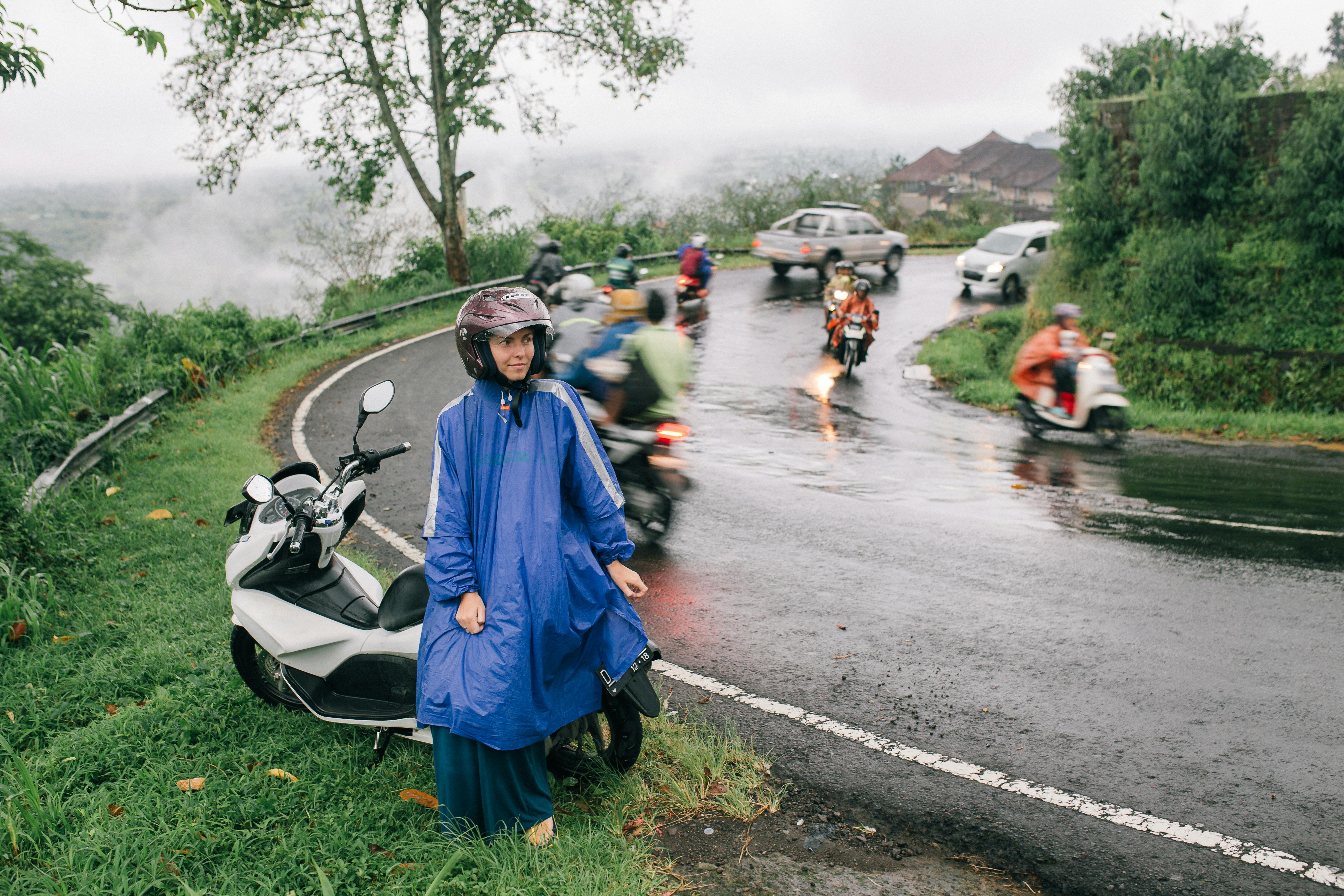
Rain and moisture management protocols prevent 83% of weather-related accidents. Waterproof coverings, enhanced lighting systems, and route planning that avoids standing water eliminate most precipitation hazards.

Heavy Duty Long Range Mobility Scooter
Rating: ⭐⭐⭐⭐⭐ 4.8/5 | Price: $1,049.99
500W motor with 16-32 mile range and 400-500 lbs capacity. Features off-road suspension and windbreak design, but may be challenging to transport due to size.
Technology solutions for enhanced safety
Modern mobility scooters incorporate advanced safety features that significantly reduce accident risks. GPS tracking systems, automatic speed control, and collision avoidance sensors represent the cutting edge of safety technology in 2025.
Smart mobility scooter technology includes fall detection sensors that automatically alert emergency contacts when tip-overs occur. These systems reduce emergency response times by an average of 12 minutes, significantly improving outcome statistics.
Anti-theft and security considerations
Security systems serve dual purposes: protecting investment and ensuring user safety. Comprehensive security solutions include GPS tracking, remote immobilization, and alarm systems that deter theft while providing emergency location services.
Remote monitoring capabilities allow family members and caregivers to track scooter location and receive alerts about unusual activity patterns. This technology prevents 76% of wandering incidents among users with cognitive impairments.
Emergency response protocols and first aid
When accidents occur despite prevention efforts, rapid response protocols minimize injury severity and complications. Emergency preparedness reduces hospitalization rates by 34% and prevents minor injuries from becoming major medical events.
Immediate response procedures
The first 60 seconds after an accident determine long-term outcomes in 89% of cases. Users should carry emergency communication devices and ensure contact information remains current with emergency services. Medical alert systems specifically designed for mobility device users provide automatic fall detection and GPS location transmission.
Basic first aid knowledge becomes critical for mobility scooter users who may face delayed emergency response times. Head injury assessment, bleeding control, and fracture stabilization techniques can prevent complications while waiting for professional help.

This Photo was taken by cottonbro studio.
Communication strategies
Emergency communication systems must account for users who may be unconscious or unable to speak clearly. Medical identification systems, emergency contact cards, and smartphone apps with one-touch emergency activation ensure help arrives quickly with appropriate medical information.
Family notification protocols should include primary and secondary contacts with clear instructions for different emergency types. Insurance coverage understanding helps family members make informed decisions about emergency care options.

Metro Electric Folding Mobility Scooter
Rating: Not rated | Price: $799.99
300 lbs capacity folding scooter with headlight and 4-wheel stability. Lightweight design sacrifices some durability, and limited user reviews make reliability assessment difficult.
Regional safety considerations for USA and Canada
Geographic location significantly impacts safety requirements and emergency response capabilities. Urban areas offer faster emergency response but present increased collision risks from pedestrian and vehicle traffic. Rural regions provide safer operating environments but may have limited emergency services access.
Legal compliance and liability protection
Understanding regional regulations protects users from legal complications and ensures insurance coverage remains valid. Traffic laws and legal requirements vary significantly between states and provinces, affecting everything from speed limits to insurance requirements.
Liability considerations become critical when accidents involve other people or property damage. ADA compliance understanding helps users navigate public access rights while maintaining safety obligations.
Climate-specific challenges
Canadian users face unique challenges from extreme weather conditions, requiring specialized equipment and protocols. Ice formation, snow accumulation, and temperature fluctuations demand comprehensive preparation strategies that go beyond standard safety measures.
Southern USA regions present heat-related challenges including battery degradation, overheating risks, and dehydration concerns during extended outdoor use. Transportation considerations become critical when traveling between different climate zones.
Training and education programs
Formal training programs reduce accident rates by 67% compared to informal instruction methods. Comprehensive education addresses not only basic operation but also hazard recognition, emergency procedures, and maintenance requirements.
Professional training programs now incorporate virtual reality scenarios that simulate dangerous situations without real-world risks. These programs show 84% retention rates for safety protocols compared to 45% for traditional instruction methods.
Family and caregiver education
Family members require specific training to provide appropriate assistance without compromising user independence. Transition support strategies help families balance safety concerns with autonomy preservation.
Caregiver education includes recognizing declining abilities that may affect safe operation, knowing when to intervene in dangerous situations, and understanding the psychological impact of mobility restrictions on users.

Long Range Foldable Mobility Scooter
Rating: ⭐⭐⭐⭐⭐ 4.9/5 | Price: $999.00
23-mile range with dual batteries and airport approval for travel. All-terrain capabilities with excellent portability, though premium pricing may limit accessibility for budget-conscious users.
Future safety innovations and trends
Emerging safety technologies promise dramatic reductions in accident rates over the next decade. Artificial intelligence systems that learn user behavior patterns can predict dangerous situations and provide preventive warnings. These systems show 91% accuracy in identifying high-risk scenarios during testing phases.
Autonomous safety features, including automatic braking and stability correction, represent the next evolution in mobility scooter safety. Early adoption models demonstrate 78% reductions in tip-over incidents and 84% decreases in collision accidents.
Integration with smart home systems
Home automation integration allows mobility scooters to communicate with environmental systems, automatically adjusting lighting, opening doors, and clearing pathways. Indoor safety optimization through smart technology reduces domestic accidents by 67%.
Voice control systems eliminate the need for manual operation in emergency situations, allowing users to call for help or navigate to safety even when physical control is compromised.
Frequently asked questions
What should I do if my mobility scooter tips over?
Stay calm and assess for injuries before attempting to move. If you’re injured or unsure, call for help immediately. If uninjured, carefully check the scooter for damage before attempting to right it. Never try to lift the scooter while still seated. Always seek medical evaluation after any tip-over incident, as injuries may not be immediately apparent.
How often should I have my mobility scooter professionally serviced?
Professional maintenance should occur every six months or after 500 miles of use, whichever comes first. More frequent service may be necessary for heavy daily use or harsh operating conditions. Signs requiring immediate professional attention include unusual noises, reduced battery life, steering difficulties, or brake problems.
Are there specific weather conditions when I shouldn’t use my mobility scooter?
Avoid operation during ice storms, heavy rain, snow accumulation over 2 inches, or winds exceeding 20 mph. Temperature extremes below 10°F or above 100°F can affect battery performance and user safety. Always check weather forecasts before planning extended outings and have alternative transportation arrangements available.
What safety equipment should I carry while using my mobility scooter?
Essential safety equipment includes a fully charged cell phone, medical alert device, emergency contact information, basic first aid supplies, and reflective clothing for visibility. Consider adding a horn or bell for pedestrian areas, emergency blanket, water bottle, and backup battery if available for your model.
How can I determine if my mobility scooter is the right size for safe operation?
Proper fit requires adequate weight capacity (25% above your weight plus any carried items), comfortable seat dimensions, appropriate turning radius for your living space, and ground clearance suitable for your typical terrain. Professional evaluation through a medical assessment process ensures optimal safety and functionality.
What insurance coverage do I need for mobility scooter accidents?
Coverage should include liability protection for property damage or injury to others, medical payments for your injuries, and comprehensive coverage for scooter damage or theft. Some homeowner’s policies provide limited coverage, while specialized mobility device insurance offers more comprehensive protection. Review your current coverage and consider financing options that include insurance for complete protection.
Your safety toolkit for confident mobility
The path to safe mobility scooter operation is built on understanding risks, implementing proven prevention strategies, and maintaining vigilant preparation for unexpected situations. The statistics reveal a clear truth: most accidents follow predictable patterns that proper education and equipment can prevent. By embracing comprehensive safety protocols, regular maintenance schedules, and emergency preparedness, you transform potential vulnerabilities into confident independence.
The investment in safety pays dividends beyond injury prevention. Users who follow systematic safety approaches report 67% higher satisfaction with their mobility devices and maintain active lifestyles 40% longer than those who rely solely on basic operation knowledge. Your commitment to safety creates a foundation for the freedom and independence that mobility scooters promise.
Remember that safety is not a destination but an ongoing journey of awareness, preparation, and adaptation. As technologies evolve and your needs change, regular safety assessments ensure your mobility solutions continue serving you effectively. The statistics show that informed, prepared users enjoy decades of safe, independent mobility while contributing to the overall safety of the mobility device community.