
Best Mobility Scooters for Multiple Sclerosis (MS)

Looking for a mobility scooter for multiple sclerosis? MS is different from most reasons people choose a scooter, because it is variable (good days and bad days, relapses and remissions), and it comes with two things a scooter helps enormously: fatigue and heat sensitivity. Many people with MS do not use a scooter all the time; they use it to save their energy for what matters, ride on a bad-fatigue or hot day, and walk on a good one. That points to a scooter that folds and travels easily, has the range to never strand you when you are tired, and is steady and effortless to drive. This guide explains what to look for, names an honest top pick, covers fatigue and heat, walks through how Medicare or Medicaid may pay, and answers the common questions.
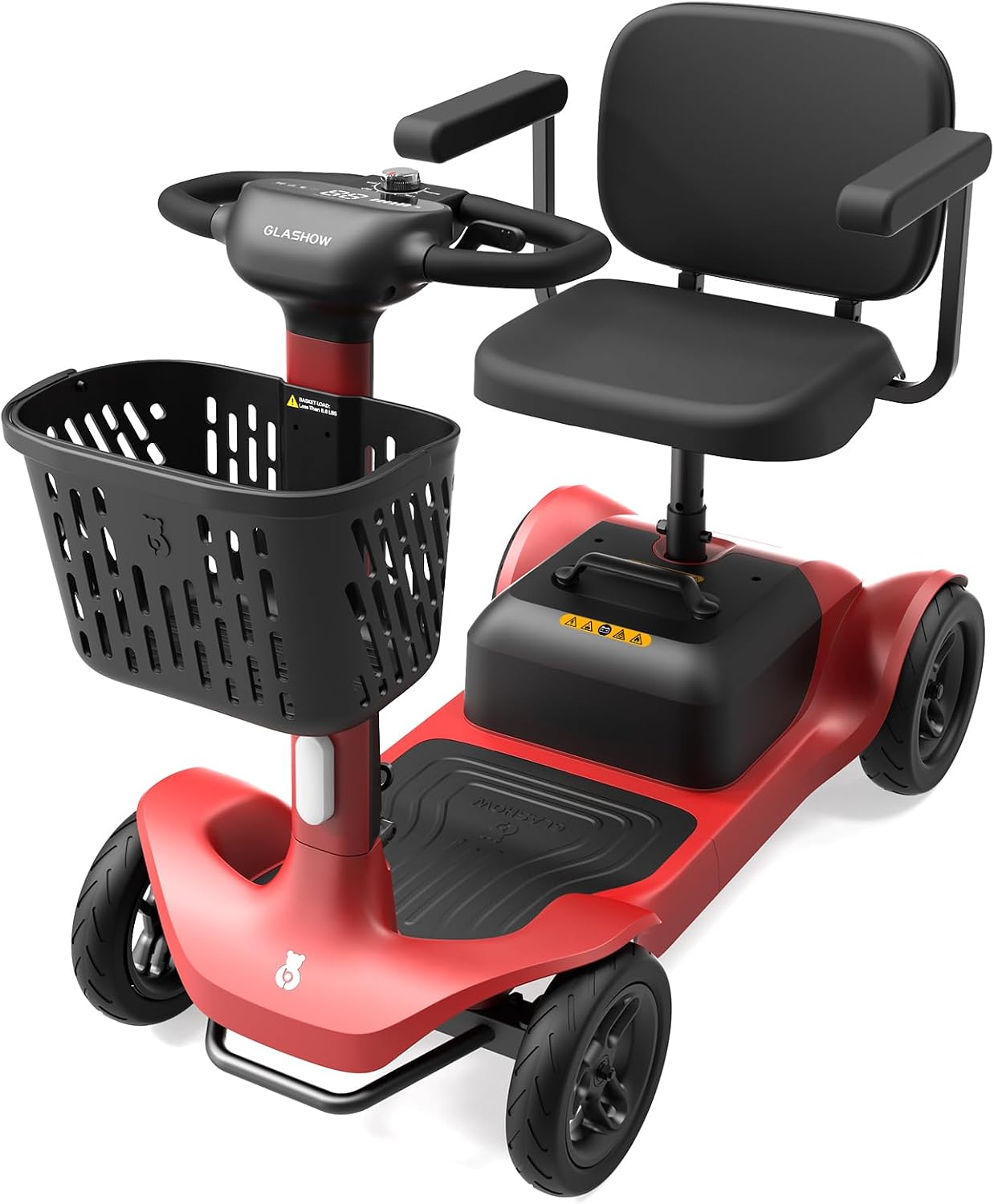
- Folds flat for the car
- Up to ~25 mi range
- 10″ wheels
- Four-wheel stability
MS asks for a scooter that fits a variable, appointment-heavy life: the Glashow S1 folds flat so it lives in the car and comes out on the days you need it, has the longest range of our four (around 25 miles) so a fatigue day never leaves you stranded, and rides on four wheels for steadiness when balance is off. If you want the plushest seat for spasticity or want to carry more, the Buzzaround EX is the comfortable alternative; the Aotedor is the lightest to lift and the value pick.
MS is a documented reason for coverage. Read the funding steps below.
What to look for in a scooter for MS
- It folds and travels easily. MS use is often part-time and appointment-heavy, so a scooter that folds into the car and comes out only when you need it fits real life far better than a big fixed one.
- Plenty of range. On a fatigue day you must not be stranded and forced to walk, so choose a long range and charge fully every night: the scooter’s job is to spend energy so you don’t.
- Effortless, forgiving controls. Hand weakness, tremor or numbness make a light throttle and a simple tiller important; you should be able to drive it even on a bad-hands day.
- Four-wheel stability. When balance and coordination are affected, four wheels are steadier than three and safer if you feel unsteady leaning or turning.
- It keeps you cool. Because heat worsens MS symptoms, letting the scooter do the moving, instead of walking and overheating, is itself a way to stay functional in warm weather.
Portability and range are the MS-specific priorities, because they let the scooter flex around good days and bad. The rest is comfort and control.
Managing fatigue and heat
Two of the hardest parts of MS, fatigue and heat sensitivity, are exactly where a scooter earns its place. Energy conservation is a core MS strategy: every bit of walking you don’t have to do is energy saved for the things you want to do, so using the scooter for the tiring stretches (the parking lot, the long corridor, the shops) can mean you still have something left at the end of the day. Heat matters just as much: many people with MS find symptoms flare when they get too warm, and physical exertion is one of the fastest ways to overheat. Letting the scooter do the moving keeps your body cooler and steadier in warm weather. The point is not to replace walking, but to ration your effort: walk on the good, cool days, ride on the tired, hot ones.
Controls and stability when balance or hands are affected
MS can affect coordination, balance and hand function, so the way a scooter drives matters. A light, forgiving throttle and a simple tiller mean you can steer even when your hands are weak, numb or tremoring, you are not fighting the machine. A four-wheel base like the Glashow’s or Buzzaround’s stays steady when balance is unreliable and is more forgiving than three wheels if you lean. Padded, adjustable armrests give you something to brace against and make getting on and off safer on an unsteady day. And a comfortable, supportive seat helps if you have spasticity or stiffness: the Buzzaround EX has the plushest seat of our four if that is your priority.
Will Medicare or Medicaid pay for a scooter with MS?
- See your doctor for a face-to-face exam. Your neurologist or GP must examine and document that your MS gives you real difficulty getting around inside your home, even with a cane or walker. That in-home need is the standard the program uses. Describe your fatigue and bad days honestly.
- Get a written order (prescription). The doctor writes an order naming the device, your MS diagnosis and why it is medically necessary, and confirming you can operate it safely.
- Use an enrolled supplier. Get the scooter from a supplier enrolled with Medicare, your Medicaid program or the VA. A non-enrolled shop means no payment, even with a valid prescription.
- Let the supplier file for authorization. The supplier submits the paperwork; the program reviews and approves eligible devices. With Medicare you then pay 20% of the approved amount after your Part B deductible; Medicaid may cover more.
One honest note: coverage is judged on in-home need, so a scooter for getting out and about is often a separate, out-of-pocket purchase, though with MS an in-home case is frequently genuine on bad days. The National MS Society has advisers who can help, and confirm current rules with Medicare, your state Medicaid, or the VA.
Renting vs. buying with MS
MS is a long-term condition, so an owned scooter that lives in your car and is ready whenever a bad day comes usually does far more good than renting, and buying within a couple of months is cheaper. Renting makes sense mainly for a specific trip.
- Keeps costing you. A travel scooter runs roughly $100 to $200 a week (Scootaround), so a month is several hundred dollars.
- Not there on the unplanned bad-fatigue day when you suddenly need it.
- Reasonable for a holiday, a theme park or a one-off event.
- Ready when MS is unpredictable, in the car, out on the days you need it.
- Set up for you: seat, controls and basket arranged your way.
- It folds for a car trunk: the whole point for an appointment-heavy life.
- And it may be funded if your MS makes it medically necessary.
Best mobility scooters for MS (2026)
Ranked for portability, range and effortless, steady driving, what MS actually needs. Specs are per manufacturer listings; confirm current details and price on Amazon.
| Model | Folds / transports | Range (rated) | Wheels | Owner rating |
|---|---|---|---|---|
| Glashow S1 Folding ★ Top pick | Folds flat | ~25 mi | 10″ (4-wheel) | 4.4★ (46) |
| Aotedor Lightweight Lightest to lift | Folds compact | ~10 mi | 7″ | 4.5★ (277) |
| Golden Buzzaround EX Most comfortable | Comes apart | ~13 mi | 9″ (4-wheel) | 4.7★ (verified) |
| Pride Go-Go Sport | Comes apart | ~11 mi | 3-wheel | 4.4★ (109) |
4.4★ (46 ratings) · folds flat · ~25 mi range · 10″ wheels
Why MS: folds flat to live in the car for an appointment-heavy life, the longest range of the four so a fatigue day never strands you, and four wheels for steadiness. Check the 265 lb limit.
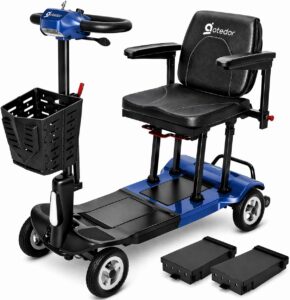
4.5★ (277 ratings) · folds compact · up to 300 lb
Why MS: the lightest and most owner-reviewed here, so a carer or family member can load it easily, ideal if your own strength varies. Its shorter range means keeping trips closer to home.
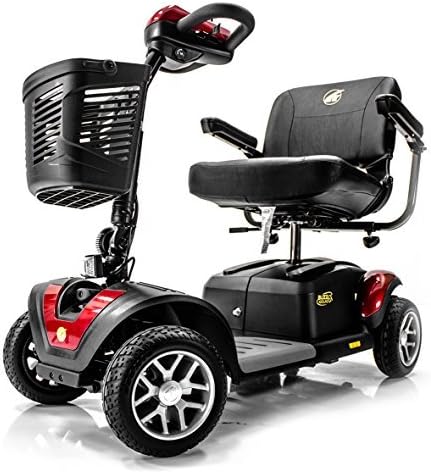
4.7★ (verified owners) · plush seat · up to 330 lb
Why MS: the plushest seat and highest capacity of the four: the choice if spasticity or stiffness means comfort matters most, or you need more support. It comes apart rather than folding in one piece.
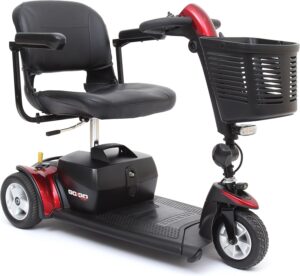
4.4★ (109 ratings) · compact · up to 325 lb
Why MS: compact and easy indoors with a comfortable seat and tight turns; three wheels turn tighter but are a little less steady than four if balance is a concern.
Watch: a travel scooter that folds for the car
An independent walkthrough of the Golden Buzzaround EX, our comfort alternative, showing the seat, controls and how a travel scooter comes apart to go in a car, the feature that makes one so practical for an appointment-heavy life with MS.
Video: Golden Buzzaround EX review (YouTube). Polaris Mobility is not affiliated with the reviewer.
Still choosing? Our guide to the best folding scooters for a car trunk compares the portable models, the full scooter catalogue lists every model we cover, and the city guide index links local guides with funding details for your area.
MS mobility scooter FAQ
What is the best mobility scooter for someone with MS?
Our pick is the Glashow S1, because MS use is often part-time and appointment-heavy: it folds flat so it lives in the car and comes out on the days you need it, has the longest range of our four (around 25 miles) so a fatigue day never leaves you stranded, and rides on four wheels for steadiness when balance is off. If comfort for spasticity matters most, the Golden Buzzaround EX has the plushest seat; if you need the lightest one to lift, the Aotedor is the value choice.
Should I use a scooter if I can still walk with MS?
Many people with MS do, and it is a recognized strategy. The idea is energy conservation: using a scooter for the tiring stretches (the parking lot, the long corridor, the shops) saves your energy for the things you want to do, so you still have something left at the end of the day. It is not about replacing walking, but rationing your effort: walk on the good, cool days and ride on the tired, hot ones. A folding scooter that lives in the car makes that flexibility easy.
Does heat affect using a mobility scooter with MS?
Heat is a real factor, and a scooter helps rather than hurts. Many people with MS find their symptoms flare when they get too warm, and physical exertion is one of the fastest ways to overheat. Letting the scooter do the moving keeps your body cooler and steadier in warm weather, so you stay functional on a hot day instead of being wiped out by the walk. Plan warm-weather outings around shade and cooler times, and let the scooter spare you the exertion.
Does Medicare cover a mobility scooter for MS?
It can. MS is a well-recognized neurological condition that can clearly limit how you move around your home, which is the standard Medicare uses. Your neurologist or GP examines and documents that in-home difficulty, writes an order, and an enrolled supplier files for approval. With Medicare you then pay 20% of the approved amount after your Part B deductible; Medicaid or the VA may cover more. Because coverage is judged on in-home need, a scooter for getting out and about is usually out of pocket. The National MS Society has advisers who can help.
Should someone with MS rent or buy a mobility scooter?
For a long-term condition like MS, buying usually does more good than renting: an owned scooter lives in your car and is ready whenever an unplanned bad-fatigue day comes, and buying within a couple of months is cheaper than renting. Renting makes sense mainly for a specific trip (a holiday, a theme park, a one-off event) where you just need wheels for a few days. If you buy, a folding model that fits a car trunk suits the appointment-heavy, unpredictable rhythm of MS best.