
Mobility Scooters in New York City

Looking for a mobility scooter in New York City, to buy or to rent? New York is the one big U.S. city where you may not own a car at all, so a scooter is transportation, not just a convenience. But three things shape every choice here: apartments are small, so storage and folding size matter; the subway is only about one-third elevator-accessible, so the bus and Access-A-Ride do the heavy lifting; and the rental market is unusually busy. This guide covers our top pick for the city, renting vs. buying, how to actually get around, Medicare and New York Medicaid, and the compact scooters that fit New York life. Polaris Mobility earns a commission on qualifying Amazon purchases through links on this page.
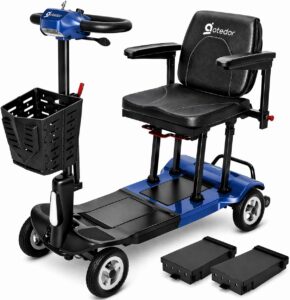
- Light to lift
- Folds compact
- Rated ~22 mi range
- ★ 4.5 (277)
In New York, portability beats everything: a scooter you can fold and lift fits a small apartment, goes up a walk-up landing, boards a city bus, and rides in a cab or an Access-A-Ride van. This one is light and folds compactly while still giving a full day’s range. If you have storage and an elevator and want more range or stability, see the Glashow S1 and Golden Buzzaround EX in the comparison below.
Bought this way it is out-of-pocket; see how Medicare and New York Medicaid coverage works further down.
Renting vs. buying a mobility scooter in New York
New York has one of the busiest scooter-rental markets in the country, around 210 people a month each search “mobility scooter rental nyc” and “rent a mobility scooter new york”: driven by visitors and by residents with nowhere to store one. Delivery services such as Scootaround and Cloud of Goods drop a scooter at your hotel or apartment for a trip or an event. For regular use, though, renting is expensive and a folding scooter you own solves the storage problem for good. Here is the real comparison:
- Keeps costing you. A travel scooter runs about $100 to $195 a week depending on the city (Scootaround), so a month of regular use is several hundred dollars.
- You hand it back, and it never becomes yours.
- Not fitted or sized to you; you take whatever model is free.
- Delivery windows, deposits and return deadlines to plan around.
- Pays for itself fast. A one-time purchase; after a few weeks of what renting costs you are ahead, and you keep the scooter.
- Always charged, sized to you, and a folding model tucks into a closet or corner.
- Spread the cost. Many scooters can be paid in monthly installments at checkout: Amazon Monthly Payments (no credit check) or Pay Over Time with Affirm on orders over $50 (Amazon).
- Comes with a manufacturer warranty and keeps resale value.
Bottom line: in New York the deciding question is usually storage, not money, and a folding scooter answers it. Rent for a visit; if you will use one regularly, a compact model you own is cheaper within a month or two and always ready by the door.
Getting around New York: buses, the subway, and Access-A-Ride
Here is the reality that shapes scooter use in New York: every MTA local bus is fully accessible (low-floor, with a ramp and a kneeling feature), but the subway is not. As of the end of 2025, only about 154 of the subway’s 472 stations (roughly a third) have elevators, so a scooter rider often cannot count on the nearest station having a step-free route (MTA). For many riders the practical network is buses plus Access-A-Ride, with the accessible subway stations used where they line up with the trip.
Access-A-Ride (AAR) is the MTA’s door-to-door paratransit for people whose disability prevents them from using the bus or subway (MTA):
- The fare matches a regular trip. As of January 4, 2026 the full MTA fare is $3.00, and Access-A-Ride costs the same, with no charge for a personal care attendant. Enroll in Fair Fares NYC and you get 50% off AAR trips.
- Eligibility has levels: full, continual, conditional and temporary. Conditional riders qualify for door-to-door service under set conditions such as “stairs restricted” (the trip needs an inaccessible station), or forecast temperatures below 39°F or above 90°F.
- How to apply: start with the Eligibility Unit at 718-393-4306; you will be mailed an application and given an in-person assessment.
Riding a scooter in the city, day to day
New York rewards a small, nimble scooter and a bit of planning:
- Crowded sidewalks. Keep to a walking pace, stay to one side, and give people room: a compact scooter with a tight turning circle is far easier in foot traffic and narrow store aisles.
- Curb cuts are everywhere, but uneven. Nearly every corner has a ramp, though some are steep or broken; larger wheels help, and it is worth learning the smooth-corner routes you use most.
- Boarding a bus. Wait at the front door, tell the driver you need the ramp, and they will lower it and the kneeling feature; the bus has a marked wheelchair-and-scooter area inside.
- Storage and charging. This is the New York constraint. A folding scooter stands in a closet or corner and charges from a normal outlet; measure your entry, elevator and hallway before you buy.
- Winter. New York gets snow and slush. Store and charge the scooter indoors, wipe off road salt, and stay on cleared, salted paths. Avoid ice and deep slush, which no standard scooter handles safely.
Wheelchair-accessible places in New York
OpenStreetMap volunteers have tagged nearly 3,000 places across New York City as wheelchair-accessible, including 722 restaurants, 461 fast-food spots, 334 cafés, 180 banks and 124 pharmacies. A few from the map: CVS Pharmacy, Hard Rock Cafe, Chipotle, Starbucks and countless neighborhood pizzerias. Tags are volunteer-maintained, so confirm current access, especially a step-free entrance, with each venue before visiting.
Accessibility data © OpenStreetMap contributors.
Who needs mobility support in New York
New York City has about 8.5 million residents, of whom roughly 16.0% are aged 65 and older, about 1.36 million seniors, the largest older population of any U.S. city, and about 11.7% report a disability. The senior share is close to the national and New York State figures, but the sheer numbers, combined with a transit-dependent lifestyle, make accessible getting-around a daily question for well over a million New Yorkers (U.S. Census Bureau, ACS 2019–2023 5-year estimates).
Best mobility scooters for New York City (2026)
Picks that suit a dense, transit-first city with small apartments: light and folding first, tight-turning second, with range and stability options for those who have the storage. Specs are per manufacturer listings; confirm current details and price on Amazon.
| Model | Wheels | Max rider | Top speed | Owner rating |
|---|---|---|---|---|
| Aotedor Lightweight ★ Top pick | 7″ | 300 lb | 3.7 mph | 4.5★ (277) |
| Pride Go-Go Sport | 3-wheel | 325 lb | 4.7 mph | 4.4★ (109) |
| Glashow S1 Folding | 10″ (4-wheel) | 265 lb | 6.2 mph | 4.4★ (46) |
| Golden Buzzaround EX | 9″ (4-wheel) | 330 lb | 5.0 mph | 4.7★ (verified) |
4.5★ (277 ratings) · folds compact · rated ~22 mi range
Why NYC: light to lift and quick to fold for a walk-up, a bus ramp, a cab or an Access-A-Ride van, and small enough to store in a city apartment.
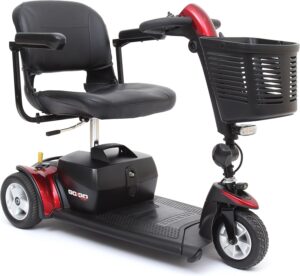
4.4★ (109 ratings) · compact · up to 325 lb
Why NYC: the tightest turning circle here for crowded sidewalks, narrow store aisles and tight apartment corners, and it disassembles for the car or a closet.
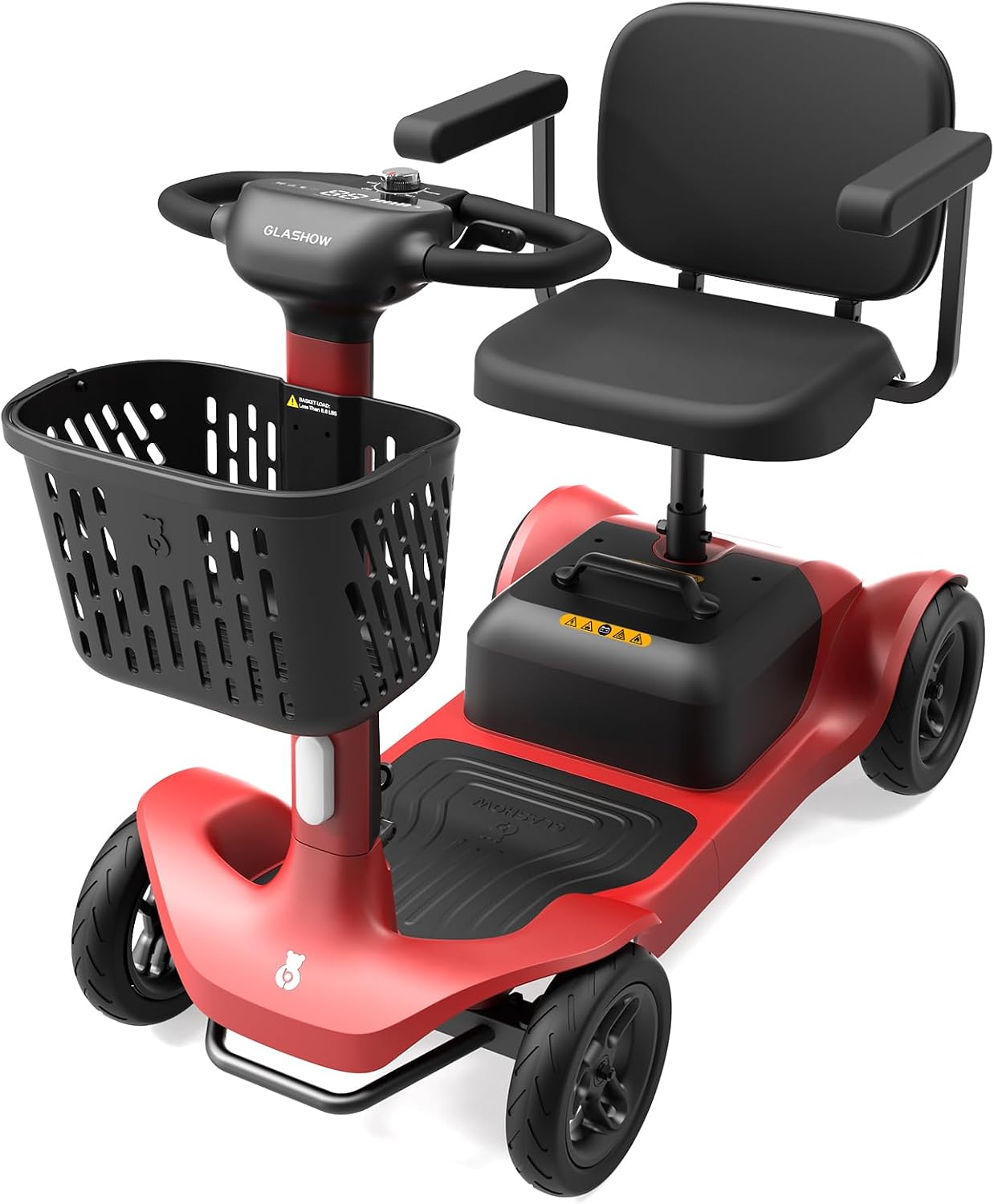
4.4★ (46 ratings) · 10″ wheels · rated ~25 mi range
Why NYC: if you have storage and an elevator, four wheels and the longest range here handle rough pavement and long crosstown days, and it still folds.
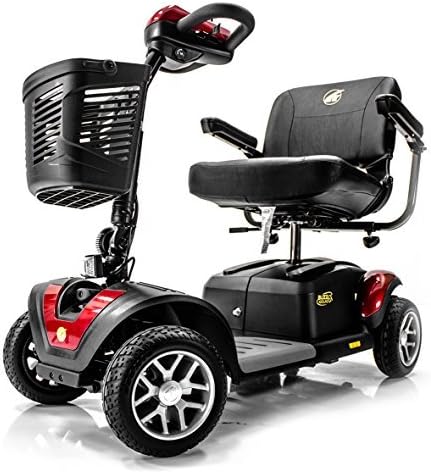
4.7★ (verified owners) · 9″ wheels · up to 330 lb
Why NYC: the highest owner rating and most comfortable, stable ride here for anyone with room to store it who values comfort over compactness.
How to pay: Medicare and New York Medicaid
If a scooter is medically necessary, insurance may cover most of the cost, but the rules are strict.
Medicare (Part B). Medicare covers a power scooter as durable medical equipment and pays 80% of the approved amount after your Part B deductible. You need a face-to-face exam and written order from a Medicare-enrolled doctor, must buy from a Medicare-approved supplier that accepts assignment, and the scooter must be needed to get around inside your home, not only outdoors (Medicare.gov). For most New York seniors this is the main route.
New York Medicaid. New York expanded Medicaid, and its program covers medically necessary durable medical equipment, including power mobility devices, with a physician’s order and prior approval (NY State Department of Health). Many older New Yorkers are dual-eligible for Medicare and Medicaid. Start with your doctor and a Medicare- or Medicaid-enrolled DME supplier rather than a retail purchase; the Amazon models above are usually bought out of pocket for the lower price and immediate delivery.
Watch: the Pride Go-Go Sport reviewed
An independent walkthrough of the Pride Go-Go Sport, the compact, tight-turning pick above, showing the seat, tiller, disassembly and driving.
Video: “Pride Mobility GO GO Sport S74 – 4 Wheel Scooter Review” by Marc’s Mobility (YouTube). Polaris Mobility is not affiliated with the reviewer.
Compare more lightweight models · full catalog
New York mobility scooter FAQ
Can I use the subway with a mobility scooter in New York?
Only at accessible stations. About a third of the subway’s 472 stations, roughly 154 as of the end of 2025, have elevators, so check the MTA accessible-station map before you travel. Every local bus, by contrast, is fully accessible with a ramp and kneeling feature, and Access-A-Ride offers door-to-door service where transit does not work.
How much does Access-A-Ride cost, and who qualifies?
Access-A-Ride charges the same as a regular MTA trip, $3.00 as of January 2026, with no charge for a personal care attendant, and 50% off if you enroll in Fair Fares NYC. Eligibility is full, continual, conditional or temporary; conditional riders qualify under set conditions such as an inaccessible station or extreme cold or heat. Apply through the Eligibility Unit at 718-393-4306.
Does Medicare or New York Medicaid cover a mobility scooter?
Yes, if it is medically necessary. Medicare Part B pays 80% after your deductible when a Medicare-enrolled doctor prescribes it for use inside your home and you buy from an approved supplier. New York Medicaid also covers medically necessary power mobility devices with a physician’s order and prior approval, and many older New Yorkers are dual-eligible.
What is the best mobility scooter for New York City?
Because apartments are small and the bus is the accessible backbone, a light, folding scooter you can lift and store wins for most New Yorkers: our top pick is the Aotedor Ultra Lightweight. The Pride Go-Go Sport is best for tight turning in crowds, while the Glashow S1 and Golden Buzzaround EX suit riders with storage who want more range or comfort.