The mobility scooter began as a motor bolted to a wheelchair, and the change that mattered was not mechanical but postural: a comfortable seat over a wheeled base, steered by a tiller out front. That layout read as a personal vehicle rather than clinical equipment, and it decided the scooter’s adoption as much as any component did. Lighter batteries and frames later added range, and folding designs turned it into a travel companion.
Getting around on your own terms is something most people take for granted until it becomes hard to do. The story of the mobility scooter is really the story of engineers, riders, and caregivers slowly solving that problem, turning heavy, hospital-bound equipment into the comfortable, go-anywhere machines many people rely on today.
From Hospital Chairs to Personal Freedom
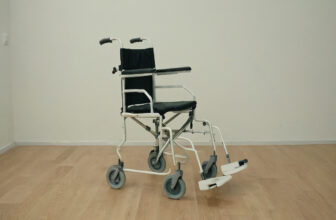
Long before the seated scooter existed, the first step was simply putting a motor on a wheelchair. Early powered wheelchairs were a genuine breakthrough, because they let people move without relying on someone to push. But they were built with a medical setting in mind: bulky, tall, and clearly designed as equipment rather than as something you would take to the shops or a family gathering. They freed people from being pushed, yet they still carried the look and feel of the clinic. That gap between “medical device” and “something I actually want to use every day” is the space the mobility scooter grew into.
The Tiller-Steered Idea
The real turning point was a shift in thinking about how a person should sit and steer. Instead of a chair with side controls, designers imagined a seated scooter: a comfortable chair mounted over a wheeled base, with handlebars, a tiller, out front to steer, much like a small boat or a bicycle. This layout felt familiar and friendly rather than clinical. It let riders sit upright, see where they were going, and control speed and direction with a simple, intuitive grip. Just as importantly, it looked approachable. A tiller-steered scooter reads less like a piece of hospital equipment and more like a personal vehicle, and that change in perception mattered as much as any mechanical part. Over the following years, this basic shape (seat, tiller, and a stable wheeled platform) became the template that nearly every model since has refined.
Better Batteries, Lighter Materials
Early powered mobility ran into the same wall again and again: weight and range. The batteries that made these machines possible were heavy, slow to charge, and limited in how far they could take you before needing a plug. For a long time, that meant a scooter was something that mostly stayed close to home. Over the following decades, steady improvements changed the math. Batteries grew more capable and, eventually, modern lithium options arrived that hold more energy in far less weight. At the same time, frames moved away from heavy steel toward lighter metals and engineered materials. Motors and controllers became smaller and more efficient. None of this happened overnight, but the combined effect was dramatic: scooters that went farther, charged faster, and no longer required a strong helper just to move them. Each gain in a battery or a frame quietly expanded how far, and how independently, a rider could go.
Folding, Portability, and Everyday Life
As the machines got lighter, a new question came into focus: could a scooter fit into a real, mobile life? A device that helps you cross a room is useful, but one you can bring to a restaurant, load into a car, or take on a trip is transformative. Designers responded with folding and take-apart models: scooters that collapse down or split into pieces light enough to lift into a trunk. Some fold with a single motion; others break into modular parts. This portability turned the mobility scooter from a home appliance into a travel companion, letting riders keep up with family outings, appointments, and vacations instead of planning around the equipment.
What Today’s Scooters Mean for Riders
Modern mobility scooters bring all of these threads together. Comfortable seating, intuitive tiller steering, lighter frames, longer-lasting batteries, and portable designs now come in sizes that run from compact models built for indoor errands and easy transport to sturdier ones made for longer outdoor distances and rougher ground. The through-line across the whole history is simple: every improvement, from the first motor on a chair to today’s foldable designs, has been about giving riders more independence with less effort. For the person choosing one, that progress means the real decision is no longer “can I manage this machine?” but “which one fits my life?”. That shift is exactly what generations of steady, practical engineering set out to make possible.
History FAQ
Why did seated scooters catch on instead of just improving wheelchairs?
Powered wheelchairs solved the core problem of independent movement, but they still looked and felt like medical equipment. The seated, tiller-steered scooter offered a more familiar, approachable design that people felt comfortable using out in public, so it filled a need that went beyond pure function.
What single change had the biggest impact over time?
It’s hard to name just one, but improvements in batteries and materials come closest. As batteries grew lighter and longer-lasting and frames shed weight, scooters gained range and portability at the same time, which is what made folding, travel-friendly models practical.
Are older scooter designs still relevant today?
Yes. The basic layout that emerged early on, a comfortable seat, a tiller for steering, and a stable wheeled base, is still the foundation of nearly every model. Today’s scooters refine that proven design rather than replace it.