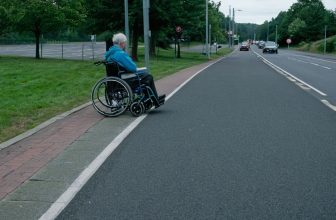

Buying a ramp before measuring the entrance can turn a simple access plan into a daily workaround: a ramp too steep for control, a door that cannot open from the landing, or a folded suitcase ramp stored where it blocks the hallway.
A home wheelchair ramp choice starts with rise, run, landing space, and storage
For a home wheelchair ramp, the first decision is not brand or material; the first decision is whether the measured rise can be served by an available run, safe landing, and manageable storage plan. In a U.S. residential setting, public ADA ramp rules can be useful reference points, but private single-family homes may be governed differently by local code, lease terms, site conditions, and the user’s equipment.
A ramp that looks simple online can fail at the doorway. A garage step may need more ramp length than the parking bay allows. A sliding-door threshold may only need a threshold ramp, but the track, door swing, and interior floor surface still matter. A folded suitcase ramp can also create a new hazard if storage means leaving it across a hallway.
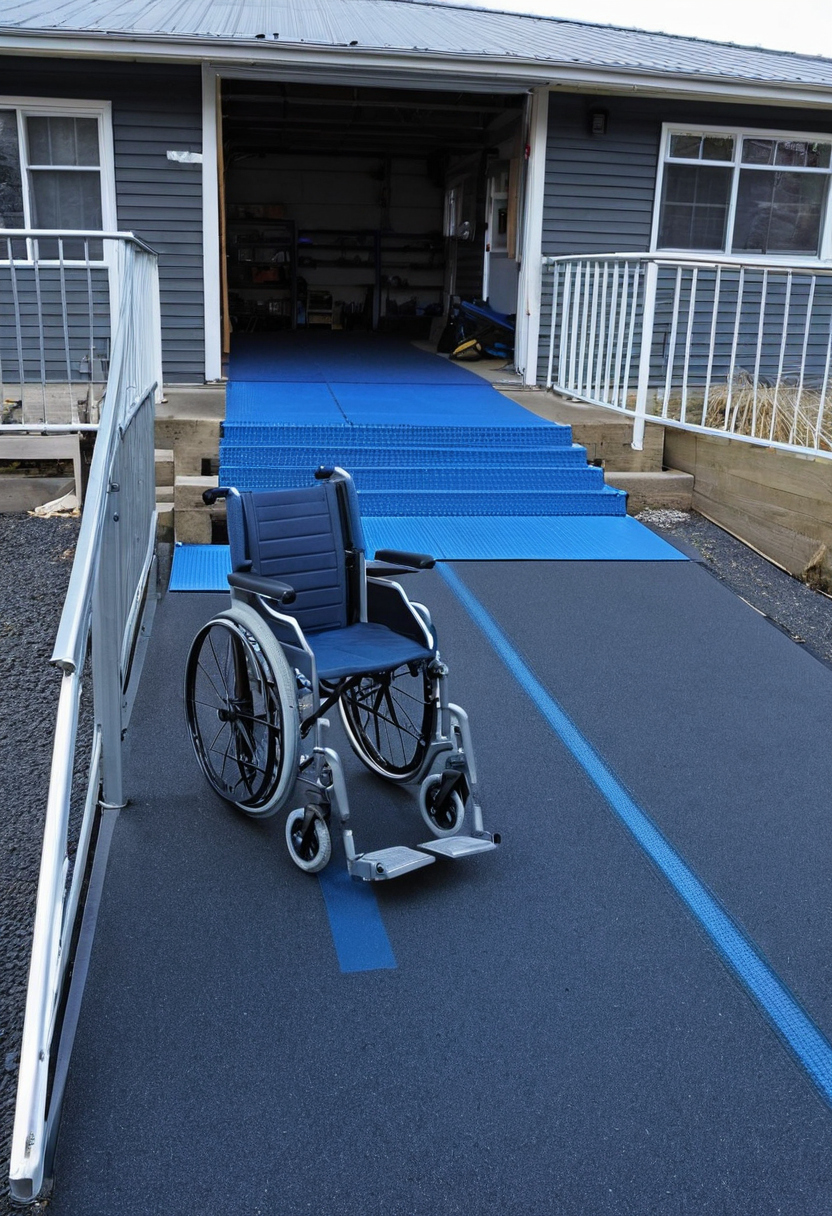
- Rise: Measure the total vertical change from the lower surface to the finished entry surface, not just the tallest visible step.
- Run: Confirm the straight or turning path available outside the door before choosing ramp length.
- Landing: Check whether the wheelchair, transport chair, power chair, or scooter can pause level while the door opens.
- Use pattern: Separate independent daily access from caregiver-assisted access, emergency-only access, temporary recovery, or a rental period.
- Storage: Decide where a portable ramp will live when wet, folded, dirty, or too heavy for one caregiver to move comfortably.
What makes a portable wheelchair ramp different from a modular home ramp?
A portable ramp is selected for movement: threshold, solid, folding, suitcase, and track-style products are typically placed for short access events or temporary needs. A modular ramp is selected for route reliability: sections, platforms, handrails, edge protection, and supports can be configured for higher rises, turns, porches, decks, and daily use.
Portability helps when housing is rented, access is occasional, or a caregiver can set up and remove the ramp without blocking the entrance route. Portability becomes a risk when the ramp is steep, heavy, exposed to rain, or needed every time someone enters the home. The next step is measurement, because the entrance decides which category remains practical.
How do you measure a home entrance before selecting a wheelchair ramp?
A home entrance should be measured before any ramp is priced because ramp length depends on vertical rise, available horizontal run, door operation, landing clearance, and surface conditions at the exact entrance used every day.
| Measurement | How to take it | What can disqualify a ramp |
|---|---|---|
| Total rise | Measure from the lower walking surface to the finished threshold or top landing height. | A short ramp that creates a steep approach. |
| Available run | Measure outward along the likely travel path, not across drains, driveways, sidewalks, or property limits. | A ramp that blocks shared circulation or ends on uneven ground. |
| Door and landing | Check door swing, storm door clearance, latch-side space, and whether a level pause area exists. | A ramp that reaches the door but leaves no usable space to open it. |
| Surface | Record concrete, asphalt, pavers, wood deck, gravel, lawn, slope, drainage, snow, or settlement. | A ramp placed on soft, wet, tilted, or shifting support. |
How is wheelchair ramp slope calculated from rise and run?
Wheelchair ramp slope is the vertical rise divided by the horizontal ramp run. The U.S. Access Board ramp guide explains ADA ramp slope as rise compared with horizontal length, with a 1:12 maximum running slope for ADA ramp runs and a recommendation to use the least slope possible. The guide also explains that running slope should be uniform along a ramp run, with only permitted running slope and cross slope changes. Private single-family homes may follow different residential rules, but ADA dimensions are useful reference points.
- Measure the total vertical rise at the entrance, including a garage step, porch lip, or sliding-door track.
- Measure the straight horizontal run available before the route hits a car, planter, sidewalk, drainage channel, or turn.
- Compare the ratio with product specifications and the user’s mobility device instructions before selecting length.
The same Access Board guide states that each ADA ramp run is limited to a 30-inch maximum rise, while the number of ramp runs is not limited. For a home entrance, that means a taller porch may need more than one run, with landings or turns, rather than one long steep ramp.
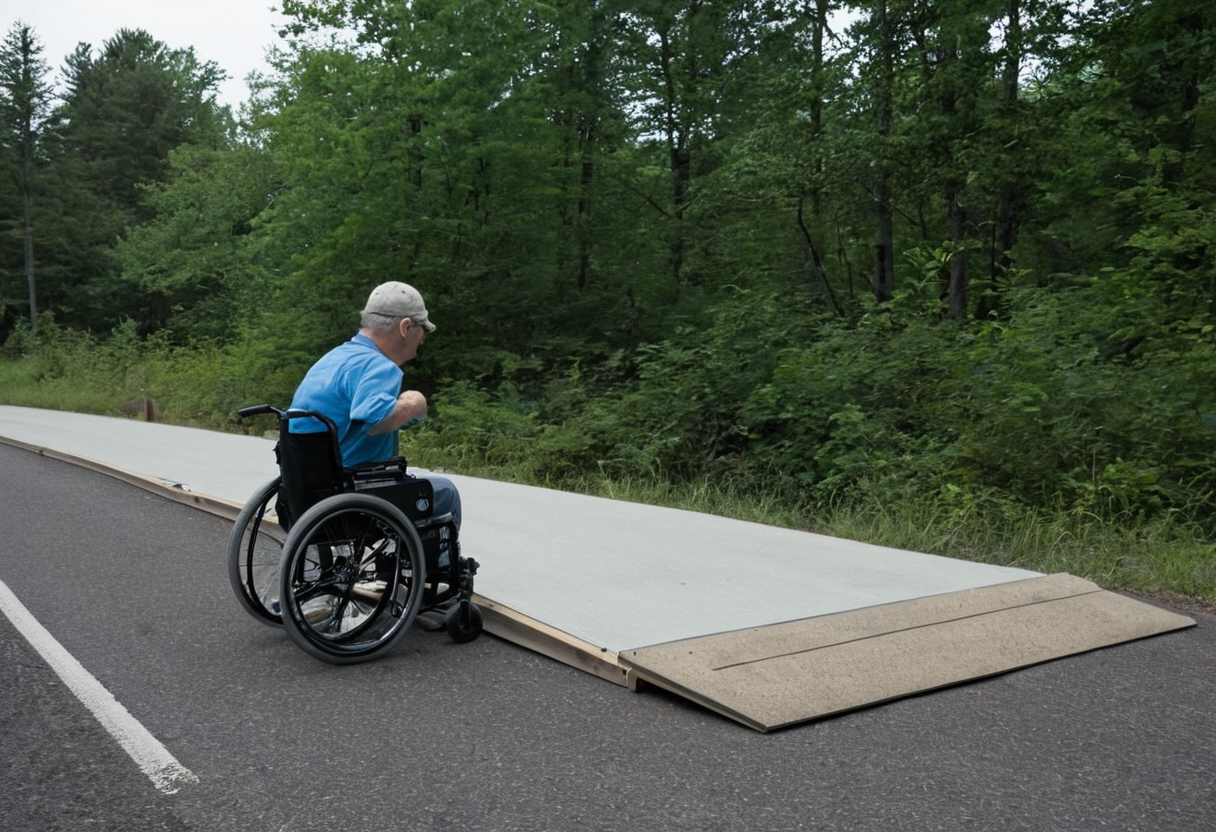
Why do landings and door swing matter for home wheelchair ramps?
Landings decide whether the entrance works after the ramp reaches the threshold. ADA ramp guidance requires level landings at the top and bottom of each ramp run, limits landing slope changes greater than 1:48, and advises keeping door swings outside ramp landings where practical. Door swing, storm doors, screen doors, automatic openers, and latch-side clearance should be measured as part of home mobility modification planning.
The 2010 ADA Standards for Accessible Design use a 30-inch by 48-inch clear floor or ground space as a wheelchair positioning reference. That dimension is not a complete residential ramp design by itself, but it helps explain why a top landing must be more than a narrow strip at the door.
Good entrance design also follows universal design principles for accessible entrances: the route should allow approach, pause, door operation, threshold crossing, and recovery if the first attempt is not smooth.
When does surface drainage make a wheelchair ramp layout unsuitable?
Drainage can reject a layout that looks correct on paper. The archived ADA.gov curb-ramp survey instructions, which warn that some archived material may not reflect current ADA rules, still illustrate useful measurement concepts: running slope is measured in the direction of travel, cross slope is measured perpendicular to travel, and transitions should be flush. The same archived instructions discuss clear ramp width and top clear space concepts for curb ramps, which are useful reminders that the usable route is measured where wheels actually travel, not across flares or blocked edges.
Wet pavers, shaded algae, freeze-thaw movement, gravel, lawn, coastal corrosion, and snow storage can push a household toward a shorter supervised portable option, a different entrance, or a modular system with better support. If adhesives, coatings, sealants, or repair products are used indoors near the route, the U.S. Environmental Protection Agency recommends increasing ventilation when using products that emit volatile organic compounds.
Permit timing can also affect planning when measurement leads to construction. Los Angeles County’s Building and Safety Division FAQ, for example, says a building permit can expire if work is not started within 180 days after issuance or if work is suspended or abandoned for 180 days after it starts, and permit fees are based on the total value of construction and finish work covered by the permit.
Portable, suitcase, and threshold wheelchair ramps fit short, temporary, or supervised access needs
Portable wheelchair ramps usually work best for low rises, temporary access, travel, rental housing, or caregiver-assisted entries where the ramp can be placed, checked, removed, and stored safely.
What rise range is realistic for a portable wheelchair ramp at home?
A portable ramp should pass the manufacturer’s own sizing chart before price or delivery date matters. Check the usable width, total length, maximum rise, load rating, hinge design, upper lip design, side edge protection, and surface material against the actual entrance, not a product photo.
- Reject the ramp if the rise forces a slope beyond the manufacturer’s instructions or beyond the user’s and caregiver’s control.
- Reject the ramp if the top lip cannot sit fully on a stable porch, garage slab, or threshold support.
- Reject the ramp if the wheelchair, scooter, hands, push rims, or footrests do not fit within the usable width.
- Reject the ramp if wet pavers, a sloped driveway, or an uneven landing would twist the ramp during use.
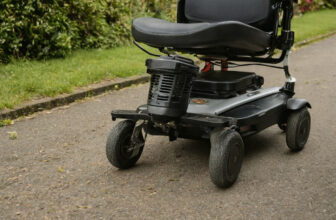
Manual wheelchairs, power chairs, and scooters load a ramp differently. A scooter’s wheelbase and ground clearance can make a short portable ramp bottom out, while a manual chair may require caregiver control on both ascent and descent.
How should caregiver lifting weight and storage location be compared?
Ramp weight and folded dimensions belong in the buying decision. A suitcase ramp that looks compact online may still be awkward for one caregiver to lift from a vehicle cargo area, hang on a garage wall, or carry through a narrow entry closet. A folded ramp blocking a hallway or exit is not a workable storage plan.
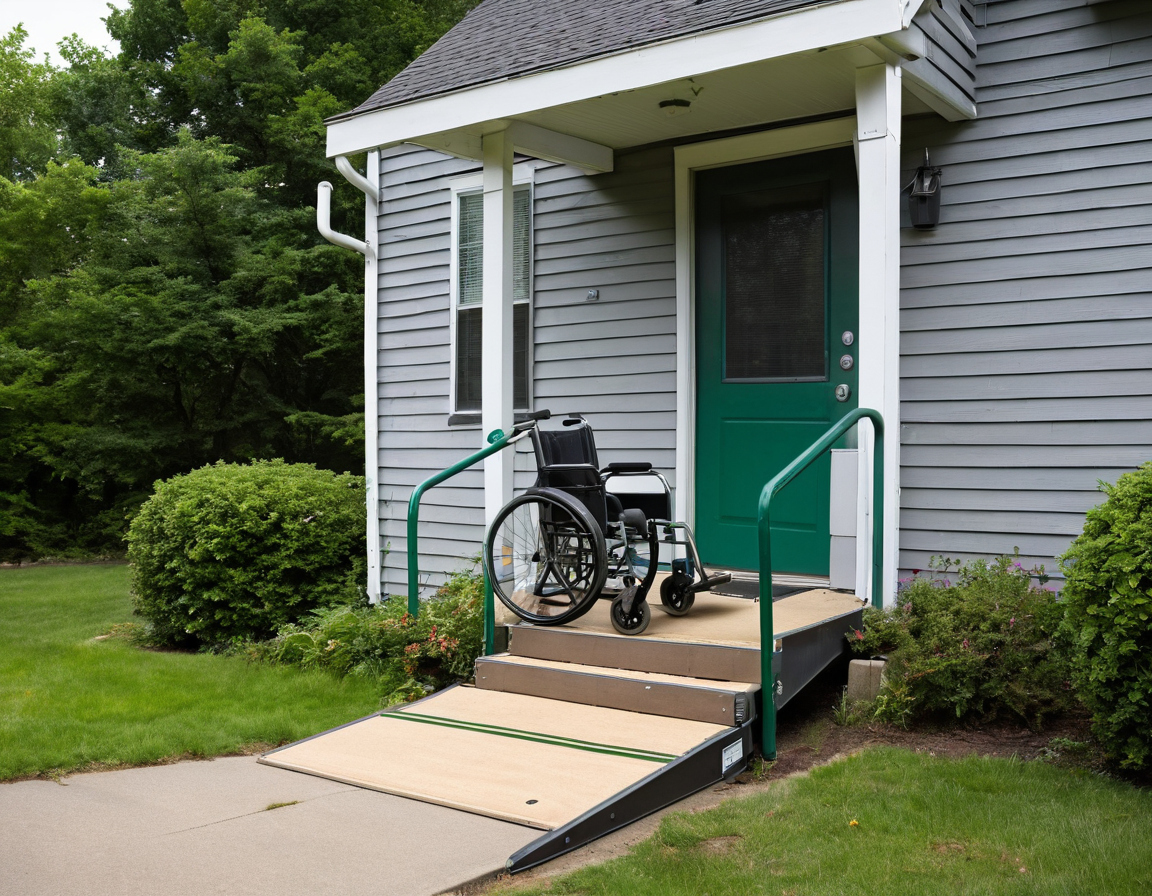
Night setup also needs visibility. If the ramp is handled in a dim garage or porch area, lighting becomes part of the route plan; ENERGY STAR states that qualified LED lighting uses at least 75 percent less energy and lasts up to 25 times longer than incandescent lighting.
Temporary access should also be coordinated with the mobility equipment plan. If the ramp is needed for a short recovery period, delivery window, or visiting family member, compare ramp handling with wheelchair rental-versus-buying decisions so the chair, ramp, storage, and caregiver workflow match.
When is a threshold ramp enough for a wheelchair entrance?
A threshold ramp fits a small sill, sliding-door track, raised weather strip, or uneven interior-to-exterior transition. It does not solve a full garage step or porch rise. Verify adjustable height range, width, load rating, drainage clearance, and door-seal contact before purchase.
For curb-ramp survey concepts, the archived ADA.gov instructions say gutter slope at a curb ramp may rise toward the ramp by no more than 5 percent and that curb ramps on accessible routes must not be blocked by parked vehicles, although the archive warns that some material may not reflect current ADA rules. The same operational lesson applies at home: if water, parking, or setup space controls the route, a modular layout may be the next filter.
Modular home wheelchair ramps fit higher rises, daily access, and entrances that need landings or turns
A modular home wheelchair ramp is usually the stronger option when the rise is too high for practical portable handling, when the route needs turns or intermediate landings, or when daily independent access is expected. The tradeoff is planning: permits, anchoring, railings, drainage, surface maintenance, and potential removal must be evaluated locally.
Which modular wheelchair ramp features are governed by codes or standards?
Modular ramp geometry should be checked against the local residential code, the manufacturer installation manual, and accessibility best-practice references before any order is placed. The U.S. Access Board ramp guide explains that ADA accessible routes treat changes in level greater than one-half inch and running slopes steeper than 5 percent as ramp conditions, but private single-family homes may be governed differently.
Clear width, platform size, handrail layout, edge protection, fasteners, and support spacing are not cosmetic details. The Access Board guide gives an ADA reference point of 36 inches minimum clear width for ramp runs, measured between handrails when handrails are provided, and 60 inches by 60 inches clear for intermediate landings where ramp runs change direction. A porch with a turn usually needs this kind of platform thinking, not just more ramp sections.
Residential code authority is local. New York State, for example, describes state building codes under Title 19 of the New York Codes, Rules and Regulations, while cities, towns, villages, and counties generally administer and enforce building codes within their jurisdictions. The same New York State resource directs homeowners, developers, and design professionals to code interpretation, variance, manufactured home, and technical support resources.
Los Angeles County’s FAQ shows why permit details should be checked with the authority having jurisdiction. Work under an expired permit may require a new permit before recommencing, and suspected construction without a permit is handled differently for unincorporated county areas and incorporated cities. The same FAQ describes limited permit exemptions for certain small detached accessory buildings, but that exemption is not presented as a ramp exemption.
How do frost depth, drainage, and exterior exposure affect modular ramp installation?
Ground-supported modular ramps need site planning because soil movement, water, and weather can change the ramp after installation. A snow-region ramp may need posts, pads, or piers matched to local frost-depth guidance. A shaded side entry with wet pavers may need drainage correction before the ramp is assembled, because a level platform that holds water can become an everyday access problem.
Material choice affects maintenance. Aluminum and galvanized steel systems need corrosion checks, fastener checks, and traction-surface cleaning. Wood systems need closer attention to rot, splinters, coatings, and connection points. Composite surfaces still need cleaning and inspection where algae, leaf debris, or ice can reduce traction. The EPA home moisture guidance says wet or damp spots should be fixed promptly, which applies to the area around an exterior entry as well as interior rooms.
Finishes also matter if parts are cut, painted, sealed, or stored indoors before installation. The EPA identifies paints, varnishes, waxes, cleaning products, building materials, and furnishings as common indoor sources of volatile organic compounds, so indoor work should be planned with ventilation and product instructions in mind.
Should a household rent or buy a modular wheelchair ramp?
Ramp rental can fit temporary recovery, a lease restriction, or a trial period before a permanent entrance change. Ramp purchase can fit long-term daily access, owned property, or a layout that needs custom platforms. Compare site assessment, permits, installation labor, monthly rental, purchase price, maintenance, and removal rather than using a universal break-even rule.
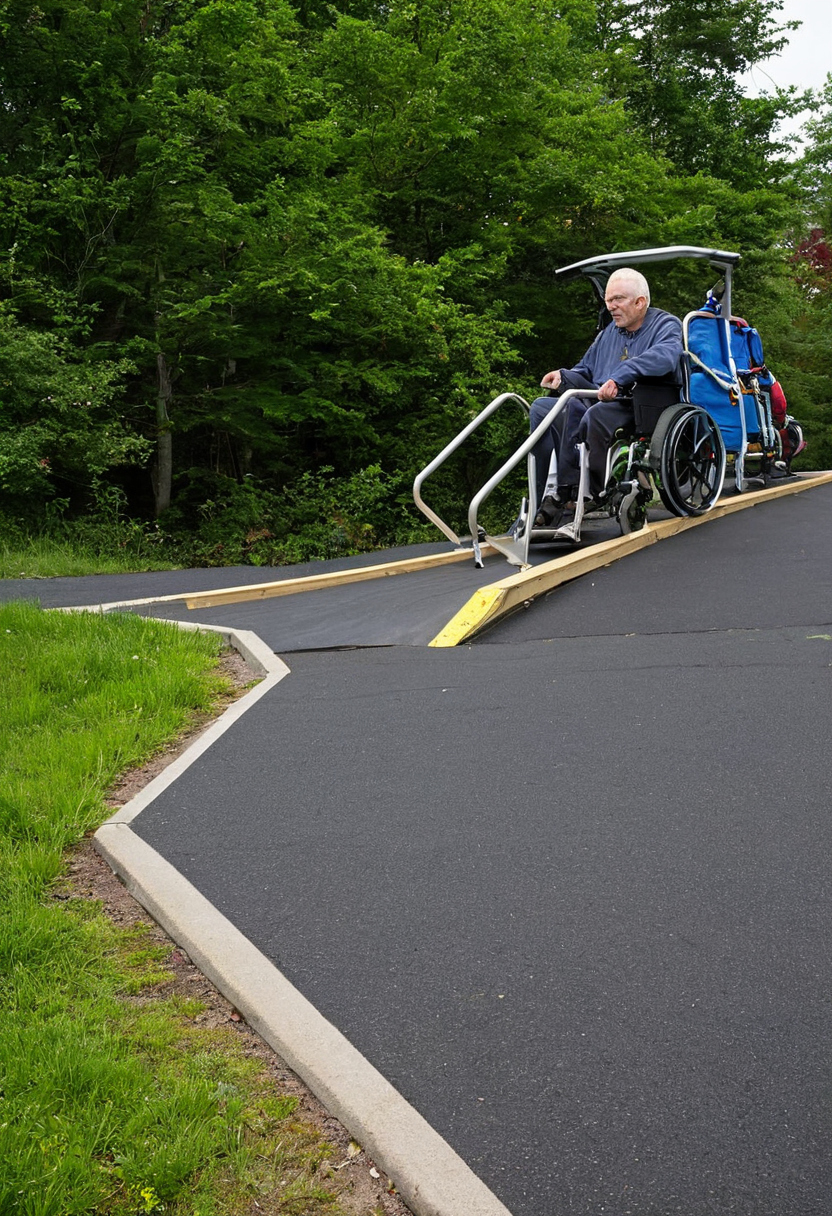
A rental home, HOA property, historic district, flood zone, or shared egress path can change the decision. Before selecting a system, ask the supplier or contractor to confirm clear width, platform sizes, load rating, handrail configuration, edge protection, surface material, anchoring method, and removal process. The next filter is a compact comparison table that keeps slope, rise, width, load rating, handling weight, and storage in the same decision view.
A wheelchair ramp comparison table should include slope, rise, width, load rating, handling weight, and storage
A useful wheelchair ramp comparison table should screen products against the entrance, not just compare prices. The table should connect measured rise, required run, usable width, load rating, ramp weight, surface material, landing needs, storage location, and installation limits.
| Type | Use | Rise | Run | Width | Load | Ramp weight | Storage | Landing | Install | Permit | Weather | Reject if |
|---|---|---|---|---|---|---|---|---|---|---|---|---|
| Threshold | Door sill | Spec sheet | Short | Door fit | Device plus user | Liftable | Near door | Level entry | Simple | Check locally | Outdoor rated | Unsupported lip |
| Single-fold | Garage step | Spec sheet | Measured | Chair fit | Rated | Caregiver fit | Wall or vehicle | Both ends | Set down | Check locally | Texture needed | Too steep |
| Suitcase | Temporary access | Spec sheet | Measured | Clear path | Rated | Carry weight | Folded space | Both ends | Portable | Check locally | Dry storage | Blocks hall |
| Modular aluminum | Daily porch route | Measured | Designed | System width | System rated | Installed | None | Platforms | Often professional | Check locally | Exterior rated | No landing |
Which wheelchair ramp specifications should be verified before purchase?
Verify clear usable width, total width, ramp length, maximum rise, load capacity, ramp weight, folded size, surface texture, side curbs, warranty, and outdoor rating. Match those fields to the wheelchair or scooter width, wheelbase, turning radius, ground clearance, operating weight, tire type, door width, threshold profile, and approach alignment.
What conditions should automatically reject a wheelchair ramp option?
Reject a ramp if manufacturer limits do not cover the measured rise, the usable width is too narrow, the load rating is insufficient, the top lip lacks support, the lower surface shifts, water pools at the base, the door cannot open, the route blocks egress, or storage creates a hallway hazard. The next screen is the setup and maintenance routine.
Wheelchair ramp safety depends on setup checks, surface traction, and maintenance routines
A wheelchair ramp is not a one-time purchase; it is an access route that needs setup checks and maintenance. In residential outdoor use, traction, edge protection, fasteners, snow, water, leaves, lighting, and storage damage can change ramp performance, especially when a portable ramp is moved often or a modular ramp stays exposed year-round.
What should be checked before each use of a portable wheelchair ramp?
Portable ramp setup should follow the manufacturer’s instructions every time, not just on the first day. Check that the top lip sits fully on the supported surface, hinge locks are engaged, anti-slip feet contact the lower landing, side curbs are intact, and the ramp does not rock under load.
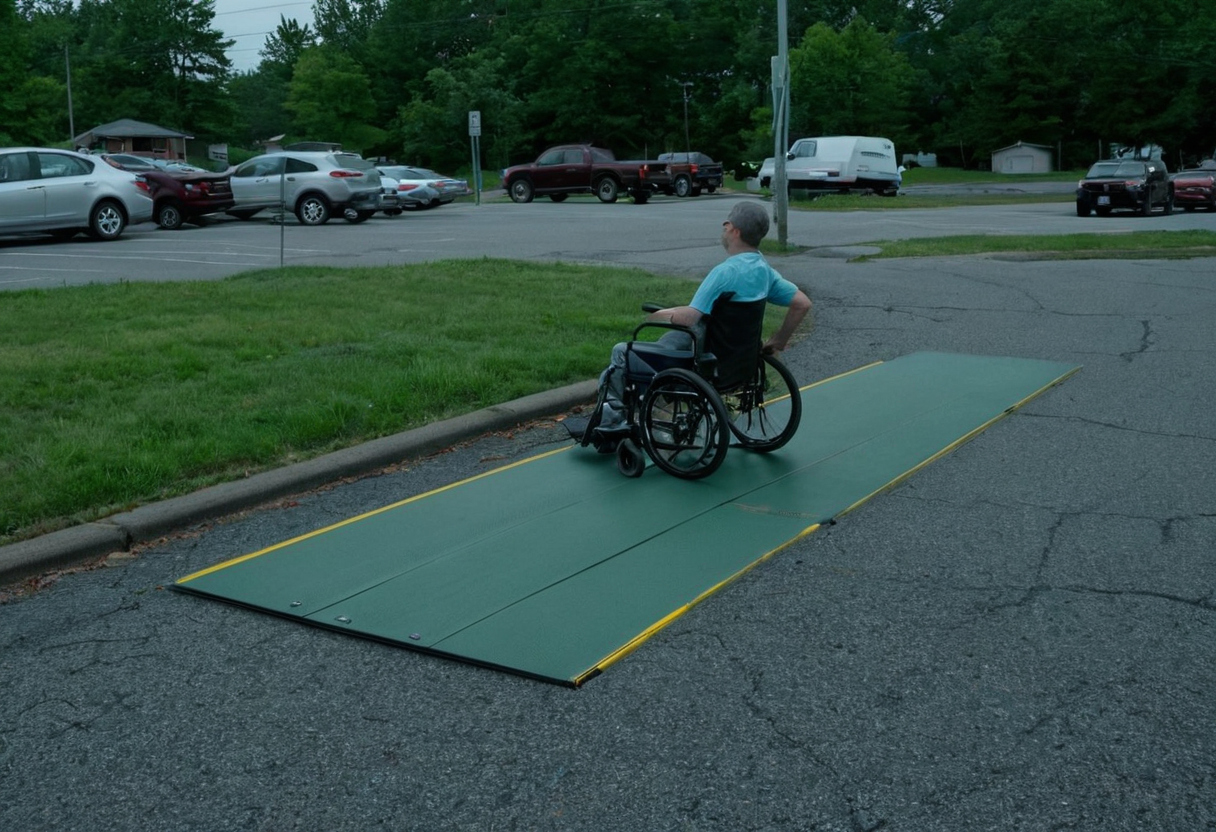
- Reject the setup if the ramp is wet, muddy, leaf-covered, misaligned, or poorly lit.
- Reject the setup if the doorway cannot open without pushing into the user or caregiver.
- Reject the ramp if storage caused bent panels, worn traction, loose hardware, corrosion, cracked welds, or damaged handles.
How should exterior modular wheelchair ramps be maintained through weather changes?
Exterior modular ramps need seasonal inspection after storms, freeze-thaw cycles, heavy rain, salt exposure, or any new movement, rattle, or surface change. Manufacturer maintenance instructions should control cleaning products, deicing methods, fastener checks, and corrosion inspection. The archived ADA.gov curb-ramp survey guidance treats transitions on and off a curb ramp as flush points without abrupt level changes, a useful measurement concept for checking home ramp ends even though the archive warns some material may not reflect current ADA rules: ADA.gov archived curb ramp survey instructions.
Permit or plan-check timing can also affect repairs or changes to a modular route. Los Angeles County’s FAQ says a plan check application submitted to the Building and Safety Division is valid for one year after the initial submittal date, with extensions limited by time, fee, and number. The next decision is whether the entrance scenario itself supports the ramp type.
The best wheelchair ramp choice depends on the entrance scenario, not a universal ramp type
There is no single best wheelchair ramp for every home entrance. A sliding-door threshold, one exterior step, two garage steps, a raised porch, and a temporary recovery visit can each point to a different answer. The workable choice fits the measured rise, available run, user device, caregiver support, weather exposure, and permit context.
A low sliding-door threshold may only need a threshold ramp if the door track, landing, and interior turning space stay usable. One exterior step may accept a short portable ramp for supervised use if the slope, surface traction, and storage location work. Two or three steps often move the decision toward a longer portable ramp, a modular layout, or a rejected route if the driveway, pavers, or landing do not provide enough run.
A high porch, narrow turn, shared entry, or daily independent access usually favors a modular ramp or an entrance modification before any ramp purchase. A rental home may require landlord approval and a removable system. Frequent travel may justify a portable ramp only after the folded size, ramp weight, vehicle storage space, and caregiver workflow are confirmed.
Which home wheelchair ramp scenario needs a professional assessment first?
A professional assessment should come before shopping when the route has high rise, independent daily use, a power wheelchair, complex turns, narrow landings, structural changes, uncertain support points, or a shared or public-facing entry. These conditions can turn a product decision into a site-design decision.
An occupational therapist can assess the functional route and caregiver workflow, an accessibility contractor can judge installation feasibility, a building official can interpret local permit and railing requirements, and an ATP can help match the ramp to complex mobility equipment. Availability and scope vary by location, so the practical rule is simple: measure first, screen products second, and bring in a qualified reviewer before buying a ramp that the entrance may reject.
FAQ about portable and modular wheelchair ramps
These short answers summarize the main planning decisions, but the entrance measurements and local rules should control the final choice.
What is the difference between a modular wheelchair ramp and a portable wheelchair ramp for a home entrance?
A portable wheelchair ramp is moved, placed, checked, and stored for short or temporary access. A modular wheelchair ramp is assembled into a more permanent route with sections, platforms, supports, handrails, and edge protection for daily access, higher rises, turns, or porch entries.
What is the best slope for a wheelchair ramp at home?
The best home ramp slope is the shallowest slope that fits the measured rise, available run, user control, caregiver workflow, manufacturer instructions, and local requirements. ADA public-access references use a 1:12 maximum running slope for ramp runs, but private homes may be governed differently.
What are the main types of wheelchair ramps for residential use?
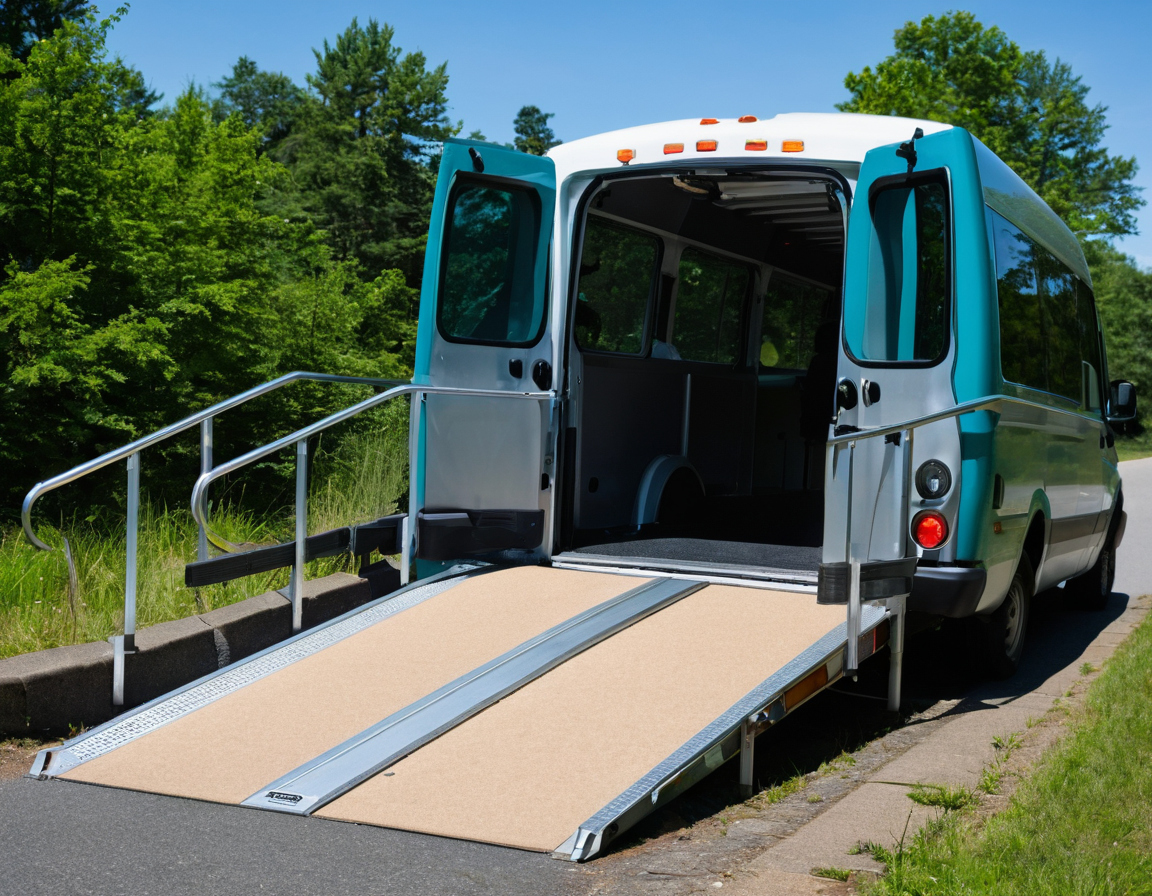
Common residential ramp types include threshold ramps, single-fold portable ramps, suitcase ramps, solid portable ramps, track ramps, and modular ramp systems. The entrance rise, landing space, surface condition, device width, load rating, and storage plan should decide which type remains practical.
What is the slope for a portable ADA ramp, and does ADA apply to a private home?
ADA ramp requirements are written for covered accessible routes, not as a universal rule for every private single-family home. The ADA reference point of 1:12 maximum running slope is still useful for screening portable ramp claims, but the manufacturer’s instructions, local residential rules, and the user’s equipment limits must also be checked.
Do modular wheelchair ramps usually need a permit for residential installation?
Permit requirements for residential modular ramps vary by jurisdiction, property type, ramp structure, anchoring, railings, guards, egress, and site conditions. A household should ask the local building department, landlord, HOA, or qualified installer before ordering a modular system, especially when the ramp affects a porch, shared entry, exterior stairs, or required exit path.