
Mobility Scooters in Albuquerque
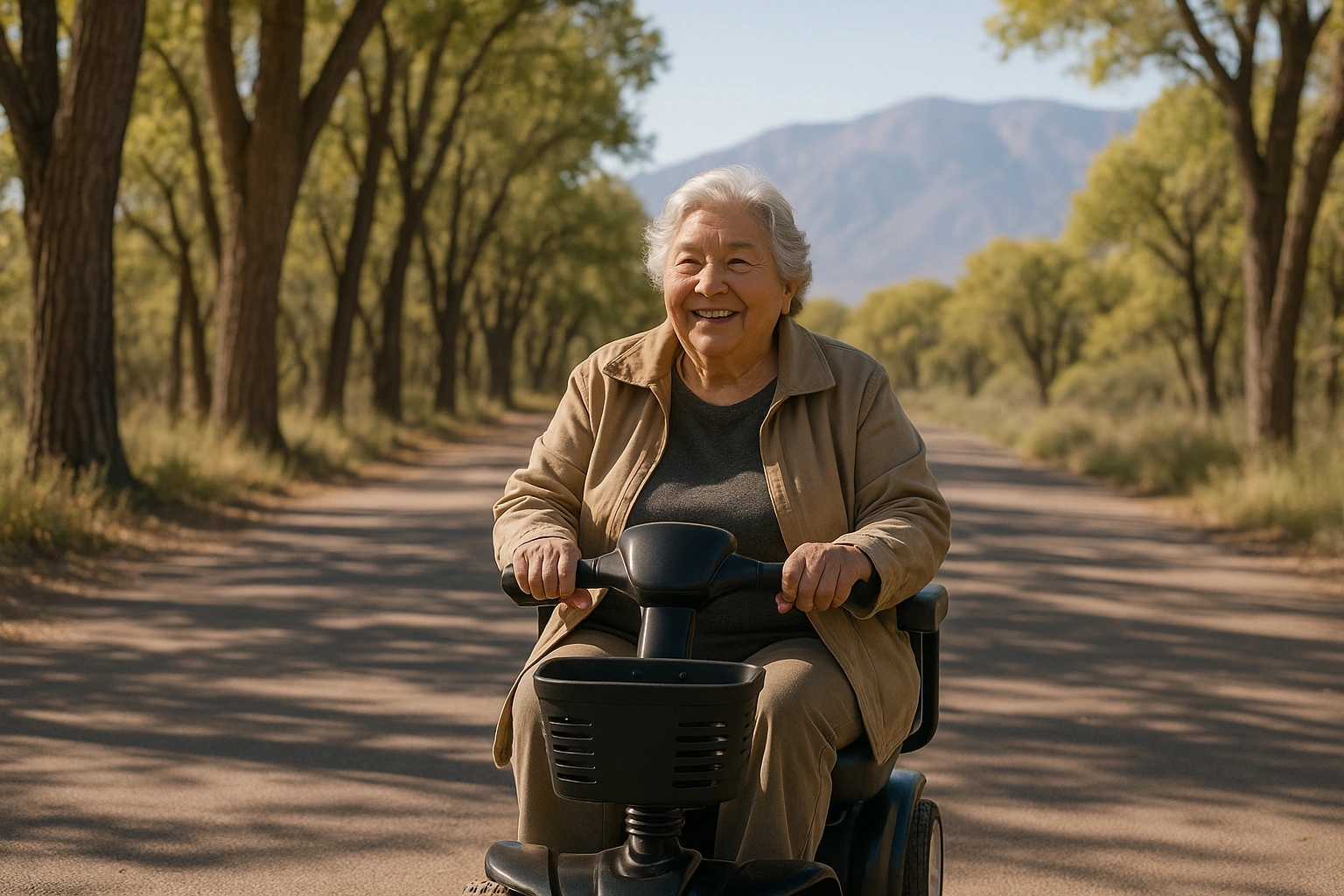
Looking for a mobility scooter in Albuquerque, to buy or to rent? Here is what makes this city different, and it is a small thing that turns out to be everything. When Albuquerque describes who uses its best trail, it writes: “Expect to meet bicyclists, walkers, runners, people with wheelchairs, in-line skaters, equestrians, families with strollers, among others.” No ban to decode. No exemption buried in brackets. You are simply on the list. That trail is 16 miles of paved path uninterrupted by roadways, shaded by cottonwoods, and the bus and the paratransit van that get you to it are free by ordinance, not by pilot, not by policy. This guide also carries one warning you will not find on the operator’s own website, about a tram that is fully wheelchair accessible and climbs to 10,378 feet in fifteen minutes. Polaris Mobility earns a commission on qualifying Amazon purchases through links on this page.
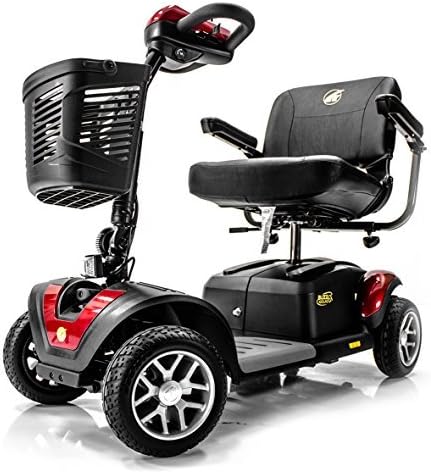
- Up to 330 lb
- Real brand service network
- Stable 4-wheel base
- ★ 4.7 rating
In some cities we pick for range because running out of battery is genuinely dangerous. Albuquerque is the pleasant opposite: the Bosque trail is shaded and uninterrupted, you are never far from a cross street above you, and this is an older city where the ride you actually take is a long, unhurried morning among the cottonwoods. That makes the seat the deciding spec, not the battery. This has the highest owner rating here, the highest weight capacity, and a real manufacturer service network. If you want maximum range for the full sixteen miles and back, the Glashow below is rated further.
On Medicare or New Mexico Medicaid? Read the funding section before you pay out of pocket.
The Paseo del Bosque: you are on the list
That may not look like much until you have spent time reading how other cities write about their trails. In Tucson, the rule for the equivalent path begins “No motorized vehicles or devices allowed” and you have to get to the brackets to find that ADA accessibility is exempt. On Louisville’s Big Four Bridge, the posted rules ban “motorized vehicles, including electric scooters” and the permission for mobility scooters sits in a separate sentence elsewhere on the page. Both of those are fine in the end, but you have to be the sort of person who reads to the end of the rule rather than the sort who reads the first six words and stays home.
Albuquerque skips the whole problem. There is no motorized-device prohibition on that page to decode, and no ADA exemption to hunt for, because wheelchairs are simply named among the people you should expect to meet. The City’s page does not address motorized devices at all: which, after two cities of decoding brackets, reads less like an omission than like an answer.
- “Uninterrupted by roadways” is the phrase to notice. The trail goes under the cross streets. No lights, no junctions, no waiting at a curb for a gap in traffic, for sixteen miles.
- Shade, which is not a small thing here. The trail runs through the Rio Grande’s cottonwood bosque; at Alameda, the City notes that “distinguished cottonwoods shade the picnic area from the New Mexico sun”. A high-desert city with a shaded sixteen-mile path is a genuine piece of luck.
- Pueblo Montaño has an ADA-accessible picnic area and trail, per the City.
- It is a multi-use trail, so expect bicycles at speed, and horses. Keep right, and remember an equestrian may not hear you coming.
Free, and it is the law, not a pilot, not a policy
It is worth being precise about why that sentence matters, because “the bus is free” is doing very different work in different cities. Elsewhere in this guide you will find a free fare that is a rolling 45-to-90-day pilot with no end date, renewed every few weeks. You will find another that is a six-year policy, free at the direction of a mayor and council who keep voting to defend it. Albuquerque’s is an ordinance: passed, numbered, permanent, covering everything ABQ RIDE runs. A pilot can lapse. A policy can be reversed at a meeting. An ordinance has to be repealed.
And it reaches the people it is for. The City reports that ABQ RIDE serves an average of 23,800 riders daily, 88% of whom live in households with an income of less than $35,000 annually. If you are weighing whether free transit is a gimmick, that number is the answer: it is not a discount for people who had options.
- Sun Van is the door-to-door paratransit service, and it is free, but the City is clear that “Sun Van passengers must qualify for the service”, and does not publish the eligibility criteria on that page. Ring and start that conversation before you need it.
- ABQ RIDE Customer Service: 505-243-7433. City services: 311 or 505-768-2000.
- A note on names. Tucson’s paratransit is also called Sun Van. They are different services run by different cities: if you are searching online, add “Albuquerque” or you will end up reading Arizona’s rules.
The tram: fully accessible, 10,378 feet, and no warning anywhere
Put those facts next to each other and you can see the shape of the problem. The tram is one of the most genuinely accessible attractions in the city, which means the people most likely to take it include wheelchair and walker users, and older visitors, who are also the people most likely to have the lung and heart conditions that altitude is hardest on. It lifts them roughly five thousand feet, well past the threshold where the ALA says altitude sickness starts, in a quarter of an hour, with no acclimatization and nothing on the FAQ to prompt a conversation with a doctor first.
We are not telling you to skip it. It is spectacular, and being accessible is to the operator’s credit. We are telling you what the FAQ does not: this is a trip to plan with your doctor if you have a breathing or cardiac condition. The ALA’s Dr. Rizzo says consulting your healthcare provider is “especially important for those who have an underlying lung disease such as asthma, emphysema or pulmonary fibrosis”, and notes that “having a medical diagnosis that affects your breathing can put you at greater risk as well”. Symptoms to know: headache, nausea, fatigue and weakness even while resting, dizziness or lightheadedness, shortness of breath, and swelling of the hands, feet or face.
One more practical thing the FAQ does tell you, and it catches people out: “The temperature at the peak tends to be 15-30 degrees cooler than the temperatures in the city of Albuquerque.” Take a coat you would not think you needed.
Renting vs. buying a mobility scooter in Albuquerque
With the buses and the paratransit van free by ordinance, the scooter is the only part of this that costs you anything, which makes the sum unusually simple.
- Keeps costing you. A travel scooter runs roughly $100 to $200 a week depending on model and city (Scootaround), so a month of regular use is several hundred dollars.
- You hand it back, and it never becomes yours.
- Not fitted or sized to you; you take whatever model is free.
- Delivery windows, deposits and return deadlines to plan around.
- Pays for itself fast. A one-time purchase; after a few weeks of what renting costs you are ahead, and you keep the scooter.
- Free buses plus your own scooter is close to free movement. There is no fare to add, and no card to buy.
- Spread the cost. Many scooters offer monthly payments at checkout or through your card.
- Sized to you, always charged, and ready for a cool morning on the Bosque without arranging anything.
Bottom line: rent for a week in October; buy if you live here. Once you own the machine, the ordinance has taken the fare out of the equation permanently: the moving costs you nothing after that.
How to pay: Medicare, and Turquoise Care
If you are 65 or older, Medicare is your route. Part B may cover a scooter if a doctor confirms you need it to move around your home and you can operate one safely, through a supplier that accepts Medicare (Medicare.gov).
- Apply or ask: 1-800-283-4465, or online at yes.nm.gov.
- If you are Native American, you have a choice that others do not. The Health Care Authority states that “All Native Americans have the choice of enrolling in Turquoise Care (managed care) or Fee-For-Service Medicaid”, may opt out at any time, and receive culturally responsive care coordination. In a state with as many tribal communities as this one, that is a live decision rather than a footnote, and which route you are on affects how equipment is authorized.
- What we will not tell you is that Turquoise Care buys you a scooter. The Health Care Authority’s overview page does not list durable medical equipment among its covered services: it says existing covered services remain and that new ones such as chiropractic care are added, without publishing the full benefit list. Ask your plan directly, and ask specifically about durable medical equipment.
Medicaid can pay for medically necessary equipment such as a power wheelchair or scooter when a doctor documents the need and it is supplied through an enrolled provider. Because these programs work through approved suppliers, a scooter bought on Amazon is a separate out-of-pocket purchase, which is why many buyers who do not qualify choose one for the lower price and immediate delivery. Confirm current criteria directly, as they change.
Comparing options across the state? Our New Mexico mobility scooter guide covers statewide Medicaid and Medicare details, the best models for the local climate and terrain, and how the picture changes from city to city.
Who needs mobility support in Albuquerque
Albuquerque is an old city in an old state, and both figures run above the national ones. 17.2% of Albuquerque residents are 65 or older (96,492 people out of 562,488) against a national 16.8%, and New Mexico’s 18.8% (U.S. Census Bureau, ACS 2023, 5-year).
Disability runs higher still, on both counts. 15.2% of Albuquerque residents report a disability, against 16.7% across New Mexico and 13.0% nationally. That is a city more than two points above the national rate, inside a state nearly four points above it. Which is the context for everything above: the free ordinance, the sixteen shaded miles and the trail that names wheelchair users out loud are not gestures in a city like this. They are infrastructure for a population that actually needs them, in a state where a great many people outside Albuquerque have none of it.
Best mobility scooters for Albuquerque (2026)
Picks that suit a long shaded trail, an older city, free buses and a tram you will transfer on and off. Specs are per manufacturer listings; confirm current details and price on Amazon.
| Model | Wheels | Max rider | Top speed | Owner rating |
|---|---|---|---|---|
| Golden Buzzaround EX ★ Top pick | 9″ (4-wheel) | 330 lb | 5.0 mph | 4.7★ (verified) |
| Glashow S1 Folding Best range | 10″ (4-wheel) | 265 lb | 6.2 mph | 4.4★ (46) |
| Pride Go-Go Sport | 3-wheel | 325 lb | 4.7 mph | 4.4★ (109) |
| Aotedor Lightweight | 7″ | 300 lb | 3.7 mph | 4.5★ (277) |
4.7★ (verified owners) · 9″ wheels · up to 330 lb
Why Albuquerque: a shaded, uninterrupted trail turns the ride into a long comfortable morning rather than a dash for shelter, so the seat matters more than the battery. Highest rating and capacity here, with a real service network.
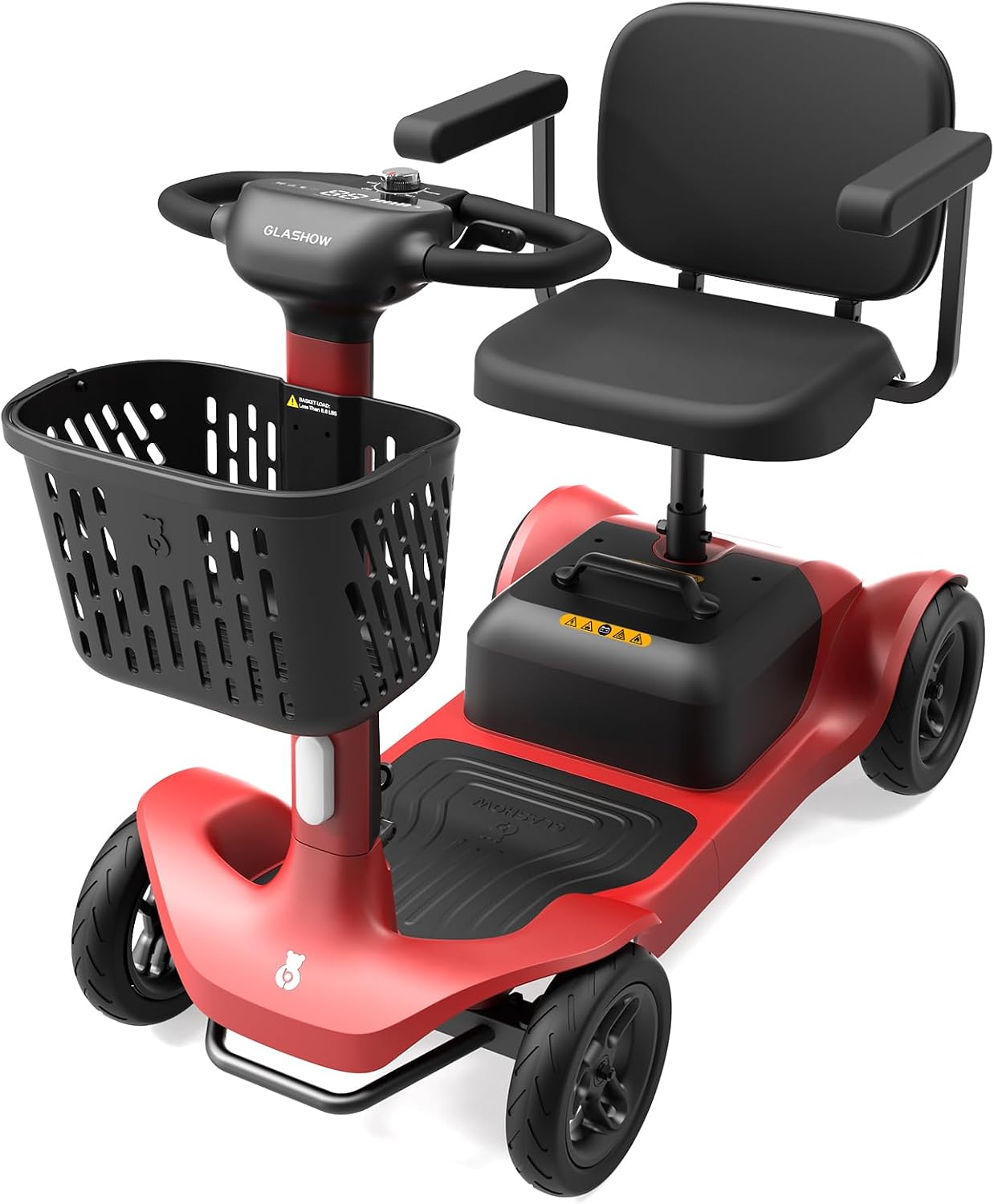
4.4★ (46 ratings) · 10″ wheels · rated ~25 mi range · 265 lb limit
Why Albuquerque: sixteen miles of trail is a long way out and back, and this is rated furthest. Check the 265 lb limit, the lowest of the four.
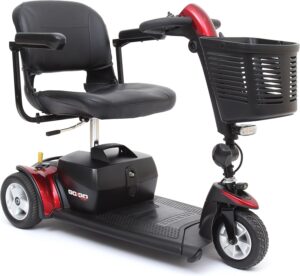
4.4★ (109 ratings) · compact · up to 325 lb
Why Albuquerque: 325 lb and it comes apart for a car trunk, which is how you reach a trailhead or the tram parking lot. A tight turning circle suits Old Town’s narrow corners.
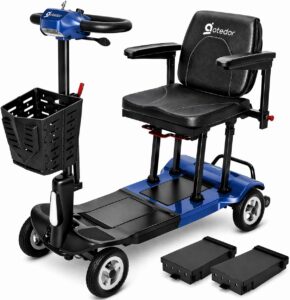
4.5★ (277 ratings) · folds compact · up to 300 lb
Why Albuquerque: the easiest to fold onto a bus or into a car for the tram, but the shortest legs: it will not give you the full Bosque and back.
Watch: our top pick in action
An independent walkthrough of the Golden Buzzaround EX, our top pick above, showing the four-wheel frame, seat, controls and how it comes apart to transport.
Video: Golden Buzzaround EX review (YouTube). Polaris Mobility is not affiliated with the reviewer.
Compare more 4-wheel models · full catalog
Albuquerque mobility scooter FAQ
Can you ride a mobility scooter on the Paseo del Bosque Trail?
The City of Albuquerque names wheelchair users among the people you should expect to meet there: “Expect to meet bicyclists, walkers, runners, people with wheelchairs, in-line skaters, equestrians, families with strollers, among others.” Unlike trails in some other cities, that page carries no motorized-device prohibition to decode and no ADA exemption to hunt for. The trail is 16 miles of paved multi-use path uninterrupted by roadways, it passes under the cross streets rather than across them, running through the Rio Grande’s cottonwood bosque, and Pueblo Montaño has an ADA-accessible picnic area and trail. It is multi-use, so expect bicycles at speed and horses.
Is the bus free in Albuquerque?
Yes, and permanently. The City states that on Wednesday, November 8, 2023, City Council approved O-23-89, officially making Zero Fares permanent for all services provided by ABQ RIDE; the Council had already voted to eliminate fares for the ART line and the Sun Van Paratransit service in April 2023. That is an ordinance rather than a pilot or a policy: it has to be repealed to end. ABQ RIDE serves an average of 23,800 riders daily, 88% of whom live in households with an income of less than $35,000 annually. Customer service is 505-243-7433.
Is Sun Van paratransit free in Albuquerque, and how do I qualify?
Sun Van is free: its fares were eliminated in April 2023 and Zero Fares was made permanent for all ABQ RIDE services in November 2023. But the City states that “Sun Van passengers must qualify for the service” and does not publish the eligibility criteria on its Zero Fares page, so call ABQ RIDE on 505-243-7433 and start the process before you need it. Note that Tucson’s paratransit is also called Sun Van: if you are searching online, add “Albuquerque” or you will find Arizona’s rules.
Is Albuquerque’s altitude a problem if I have a heart or lung condition?
The city itself sits at roughly 5,300 feet, which is well below the threshold the American Lung Association describes: the ALA says altitude sickness “only occurs at 8,000 feet (2,500 meters) or higher,” though it varies from person to person. The Sandia Peak Tramway is a different matter: it is fully accessible by wheelchair and walker and carries you to an upper terminal at 10,378 feet in a 15 minute ride, well past that threshold, and its own FAQ contains no warning or advice about altitude, breathing, or heart or lung conditions. If you have a breathing or cardiac condition, speak to your doctor before that ride. The ALA notes consulting your provider is “especially important for those who have an underlying lung disease such as asthma, emphysema or pulmonary fibrosis.” Also take a coat: the operator says the peak runs 15-30 degrees cooler than the city.
Does New Mexico Medicaid cover a mobility scooter?
New Mexico’s Medicaid managed care program is Turquoise Care, which began on July 1, 2024, with four health plans: Blue Cross Blue Shield of New Mexico, Molina Healthcare of New Mexico, Presbyterian Health Plan, and United Healthcare Community Plan of New Mexico. Medicaid can pay for medically necessary equipment such as a power wheelchair or scooter when a doctor documents the need and an enrolled provider supplies it, but the Health Care Authority’s Turquoise Care overview does not publish a full benefit list, so ask your plan directly about durable medical equipment rather than assuming. Apply or ask on 1-800-283-4465 or at yes.nm.gov. All Native Americans have the choice of enrolling in Turquoise Care or using Fee-For-Service Medicaid, and may opt out at any time.
What is the best mobility scooter for Albuquerque?
Our top pick is the Golden Buzzaround EX. Because the Bosque trail is shaded and uninterrupted, the ride here is a long unhurried morning rather than a dash for shelter, which makes the seat the deciding spec rather than the battery, and this has the highest owner rating of the four, the highest weight capacity at 330 lb, and a real manufacturer service network. If you want to do the full sixteen miles out and back, the Glashow S1 is rated furthest, though its 265 lb limit is the lowest here.