When you compare travel mobility scooters, the deciding number is the weight of the heaviest single piece you have to lift, not the scooter’s total weight. Folding models pack away in one motion but go into the car as one heavy object, while disassembling models give you lighter parts and more steps. Airlines gate on the battery rather than the scooter, and the rules differ by carrier, so call before you book.
- In the U.S., 27.7% of adults 65+ and 16.8% of adults 45–64 report a mobility disability (serious difficulty walking or climbing stairs).
- In Canada, about 3.13 million adults live with a mobility-related disability, which is 63% of disabled seniors.
- Mobility disability is reported more often by women than men (13.6% vs 10.5%).
Sources: U.S. CDC Disability & Health Data System (DHDS), BRFSS 2021; Statistics Canada, Canadian Survey on Disability 2022.
A travel-friendly mobility scooter is one you can lift and pack without a struggle, yet still trust to get you through a full day away from home. The right choice comes down to a few practical questions about weight, folding, your vehicle, and where you plan to go.
What makes a scooter travel-friendly
The most useful figure is not the total weight but the weight of the heaviest piece you have to lift on your own. A scooter that comes apart can have a heavy battery pack or seat base, and that one piece is what your back will remember. When you compare models, always ask how much the heaviest single component weighs, not just the whole machine.
Beyond weight, look for a design that goes from riding to packed in a few easy steps, with clips and handles that are simple to reach and grip. Smaller wheels and a tight turning circle help in shops, while a comfortable seat matters more on longer outings.
Folding versus disassembling
Travel scooters generally pack away in one of two ways, and each suits a different person.
- Folding models collapse in one motion, often in seconds, and stay in one piece. That means nothing to lift separately and nothing to reassemble, but the whole folded unit can still be heavy to hoist as a single object.
- Disassembling models break into several lighter parts: usually a seat, a battery, and a front and rear section. Each piece is easier to lift, which suits people who load a car alone, but you take it apart and put it back together every time.
If someone usually helps you, a one-piece fold can be quicker. If you travel solo and lift into the trunk yourself, lighter separate pieces are often kinder to your body.
Fitting your car, and getting on planes and cruises
Before buying, measure the inside of your trunk, its length, width, and the height of the opening, and compare it to the scooter’s folded or largest-piece size. A scooter that looks compact in a showroom can still be an awkward fit once your car has its parcel shelf and other bags.
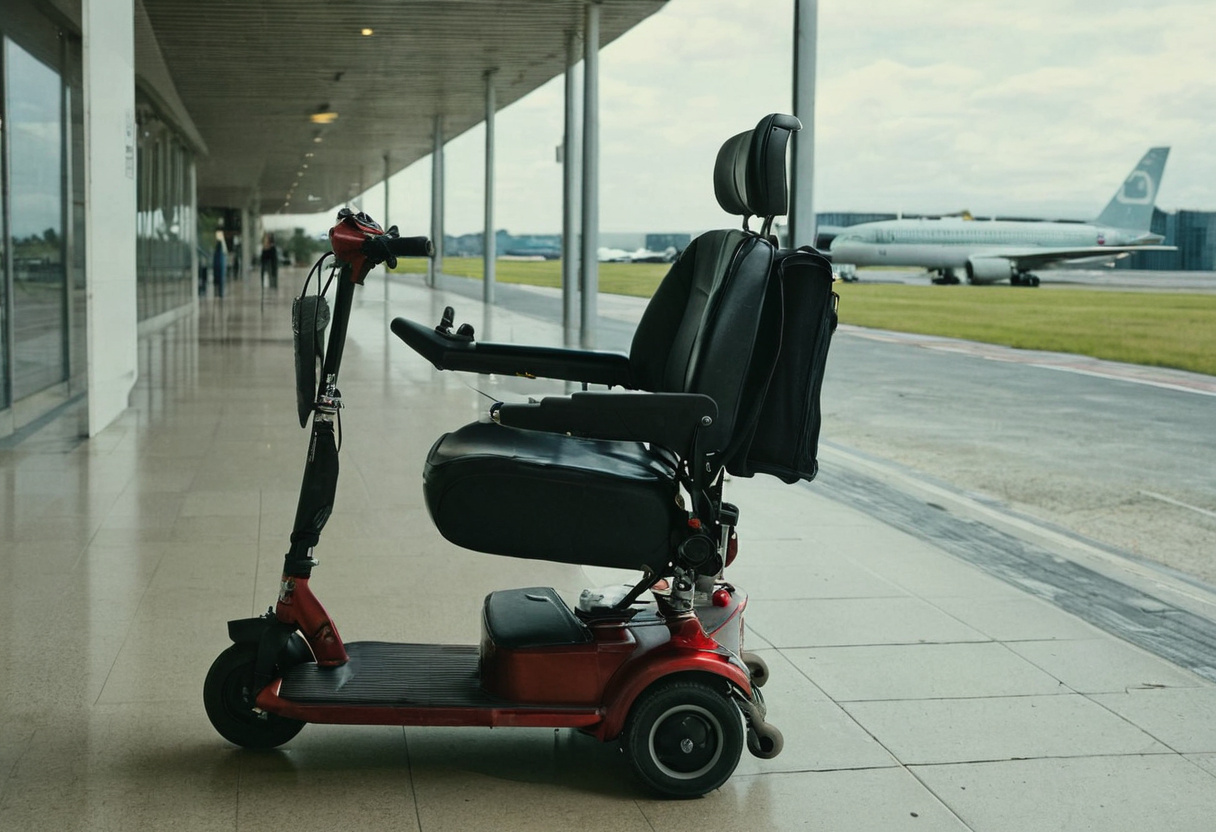
For flying, the important detail is almost always the battery. Airlines follow rules about the type and size of battery you can carry, and those rules vary from carrier to carrier, and some batteries travel more easily than others. Contact your airline well before your trip, tell them the battery type, and ask what documentation or packaging they need. Cruise lines have their own guidance too, often about scooter size in cabins and corridors and where it can charge, so check with the cruise line ahead of time rather than on the day.
Range, capacity, and the trade-offs of going lighter
Range is how far a scooter travels on a full charge, and for a day out you want enough to cover getting there, moving around, and getting back, with room to spare. Real-world distance is usually shorter than a best-case figure, because your weight, hills, cold weather, and stop-start use all draw more power. If you plan long days, check whether a spare battery is available to swap in.
It helps to be honest about the trade-offs. Lighter, more packable scooters usually give up something in return:
- Weight capacity: lighter frames often support less rider weight, so check the limit fits you plus anything you carry.
- Range: smaller, lighter batteries tend to cover less distance between charges.
- Comfort and stability: compact scooters can have firmer seats, less legroom, and a busier ride over bumps and curbs than a larger everyday model.
The goal is not the lightest scooter you can find, but the lightest one that still carries you comfortably and goes far enough for the trips you take.
How to choose the right one for you
Start with the parts of your life the scooter has to fit: the car it rides in, the person who lifts it, and the kind of days you spend out. Picture a typical outing from start to finish (loading, unloading, moving around, charging) and choose the scooter that makes each step easy rather than the one with the most impressive specification sheet.
If you can, try before you buy: sit in it, drive it, and lift the heaviest piece yourself. A scooter that feels manageable in the shop is far more likely to feel manageable at a station, a hotel, or a busy parking lot.
Travel scooter FAQ
Can I take a mobility scooter on a plane?
Often yes, but it depends mostly on the battery. Airlines have their own rules about which batteries are allowed and how they must be carried, and those rules differ between carriers. Call your airline before you book if you can, tell them your scooter’s battery type, and ask what they need so there are no surprises at the airport.
Should I choose a folding or a disassembling scooter?
Choose based on who lifts it and how. A folding scooter stays in one piece and packs away fast, which is great if you have help or a low load area. A disassembling scooter breaks into lighter parts, easier on your back if you load it alone. Think about the heaviest single piece you would have to lift and let that guide you.
How much range do I need for a day out?
Enough to cover your whole outing with margin to spare, remembering that real-world distance is usually less than the headline figure once you factor in hills, cold weather, your weight, and stop-start use. If you often spend long days out, look for a model that lets you carry a spare battery.
Other models worth comparing: the SNAPnGO portable 3-wheel scooter, a heavy-duty 4-wheel scooter.