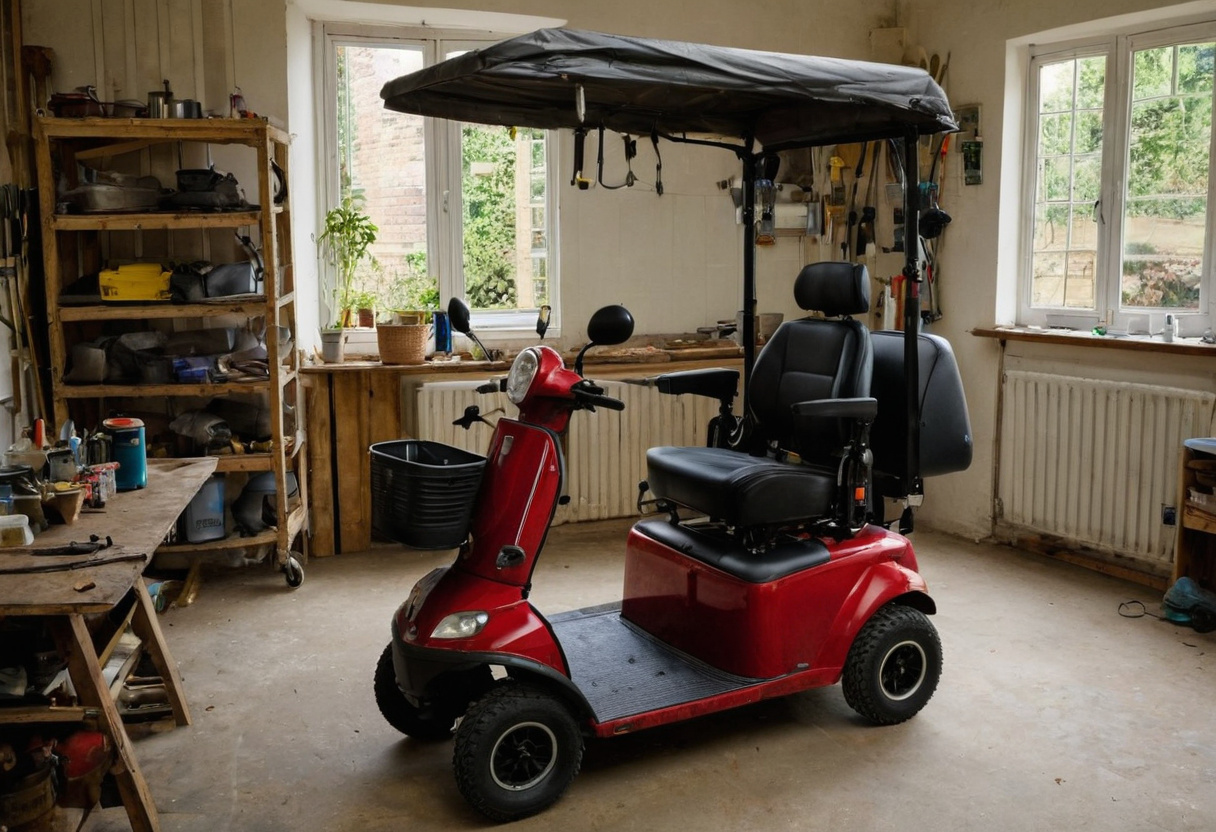
Customizing a mobility scooter splits into changes you can undo and changes you cannot. Vinyl wrap, seat covers, cushions, clip-on holders and add-on lighting are reversible and carry no warranty risk. Repainting, rewiring, and anything that touches the controls or the frame is where a manufacturer can decline a claim later, so ask the dealer before you commit to those.
Beyond beige and basic: why your mobility matters more than just getting from point A to B
A mobility scooter does not have to look like hospital equipment. Finishes, seating and accessories have all widened well past the standard grey, and most of what changes the look is reversible.
Most buyers take the scooter they are offered and never ask what can be changed. This guide covers what is worth changing, what it costs to reverse, and which changes touch the warranty.
The psychology of personal expression through mobility
Your mobility scooter represents more than transportation – it’s an extension of your independence and identity. Riders often say a scooter that looks like something they chose, rather than something they were issued, is easier to be seen on. That matters, because a device you are comfortable using in public is one you actually take out.
The stigma around mobility aids has faded as the range of finishes and accessories has widened, and manufacturers now treat personalization as a normal part of the order rather than a special request.

Color is the change most people ask about first, but personalization goes well past appearance. Seating, controls, storage and lighting are all adjustable, and those are the changes that alter how the scooter feels to use every day.
Color schemes that command attention and respect
Gone are the days when mobility scooters only came in institutional beige or hospital white. Today’s color palette rivals that of luxury automobiles, offering everything from vibrant metallic finishes to subtle matte textures that complement any personal style.
Popular color trends for 2025
Deep ocean blues and forest greens dominate the premium market, appealing to users who want sophistication without flashiness. These colors work particularly well for all-terrain models used in natural settings. Burgundy and charcoal gray offer classic elegance, while sunset orange and electric purple cater to those who aren’t afraid to make a statement.

Aircraft-Grade Aluminum Portable Scooter
Lightweight and airline-approved design perfect for customization. However, limited weight capacity may not suit all users.
Custom paint options and professional services
Some automotive paint shops will refinish a mobility scooter using the same paints and clear coats they use on cars, which holds up to weather and daily wear. Pricing depends on the shop, the complexity of the job and where you live, so get a written quote rather than working from an online figure.
Vinyl wrap is the cheaper and fully reversible alternative, and it is a realistic weekend job for someone comfortable with the material. Popular patterns include carbon fiber textures, wood grain finishes, and geometric designs that reflect current automotive trends.

Essential accessories that blend form with function
The right accessories transform a basic mobility scooter into a personalized mobility command center. Today’s market offers solutions for every lifestyle, from urban commuters to outdoor enthusiasts who enjoy exploring nature trails.
Storage solutions and practical additions
Custom storage systems rank among the most popular modifications. Rear cargo boxes made for mobility scooters add lockable, weatherproof storage without spoiling the lines of the scooter. Side-mounted bags offer quick access to daily essentials without compromising passenger space.
Prices for these vary widely by brand and by where you buy, so compare current listings rather than working from a fixed range. Fitting time is the more useful thing to check before you order: a cargo box that bolts to the rear frame is a different job from a cup holder that clamps to the tiller in a minute.
Will customizing void your warranty?
Usually not, and federal law is more on your side here than most owners expect. The Magnuson-Moss Warranty Act governs consumer product warranties in the United States, and the Federal Trade Commission’s guide for businesses is explicit that tie-in sales provisions are not allowed. Those are “provisions that state or imply that a consumer must buy or use an item or service from a particular company to keep their warranty coverage”. The FTC’s own example of an unlawful clause is a vacuum cleaner warranty demanding “genuine Plenum Brand Filter Bags”.
What a manufacturer may legitimately do is refuse a claim for damage the modification actually caused. The FTC sets out the permissible wording: “Necessary maintenance or repairs on your AudioMundo Stereo System can be performed by any company. Damage caused to the AudioMundo Stereo System by you or any non-authorized third party, however, may void this warranty.” Source: FTC, Businessperson’s Guide to Federal Warranty Law.
In practice a basket, a cushion, a seat cover, a vinyl wrap or a clip-on light cannot cost you your warranty on their own. Rewiring the controller or drilling into the frame is a different matter, because if that work causes a failure, refusing the resulting repair is fair. Keep the receipt for anything you fit and photograph the scooter before and after, so the line between the two is easy to establish later.
Related buying guides: 4-Wheel Scooters, Scooters for Seniors, 3-Wheel Scooters, and the full catalog and mobility statistics.