
Mobility Scooters in Boise

Looking for a mobility scooter in Boise, to buy or to rent? Boise’s great gift to a scooter rider runs right through the middle of the city: the Boise River Greenbelt, a 29-mile tree-lined pathway along both banks of the river, from Lucky Peak to Eagle. Most of it is smooth, flat and shaded: a long, car-free riverside ride of a kind few cities can offer. But there is a catch a scooter rider has to know before setting off, because the tourist pages leave it out: the path is paved except for one 1.5-mile section from Barber Park downstream, which is not. This guide tells you where the pavement ends, covers the fares, the four seasons, and the models that suit a long river path and a real winter. Polaris Mobility earns a commission on qualifying Amazon purchases through links on this page.
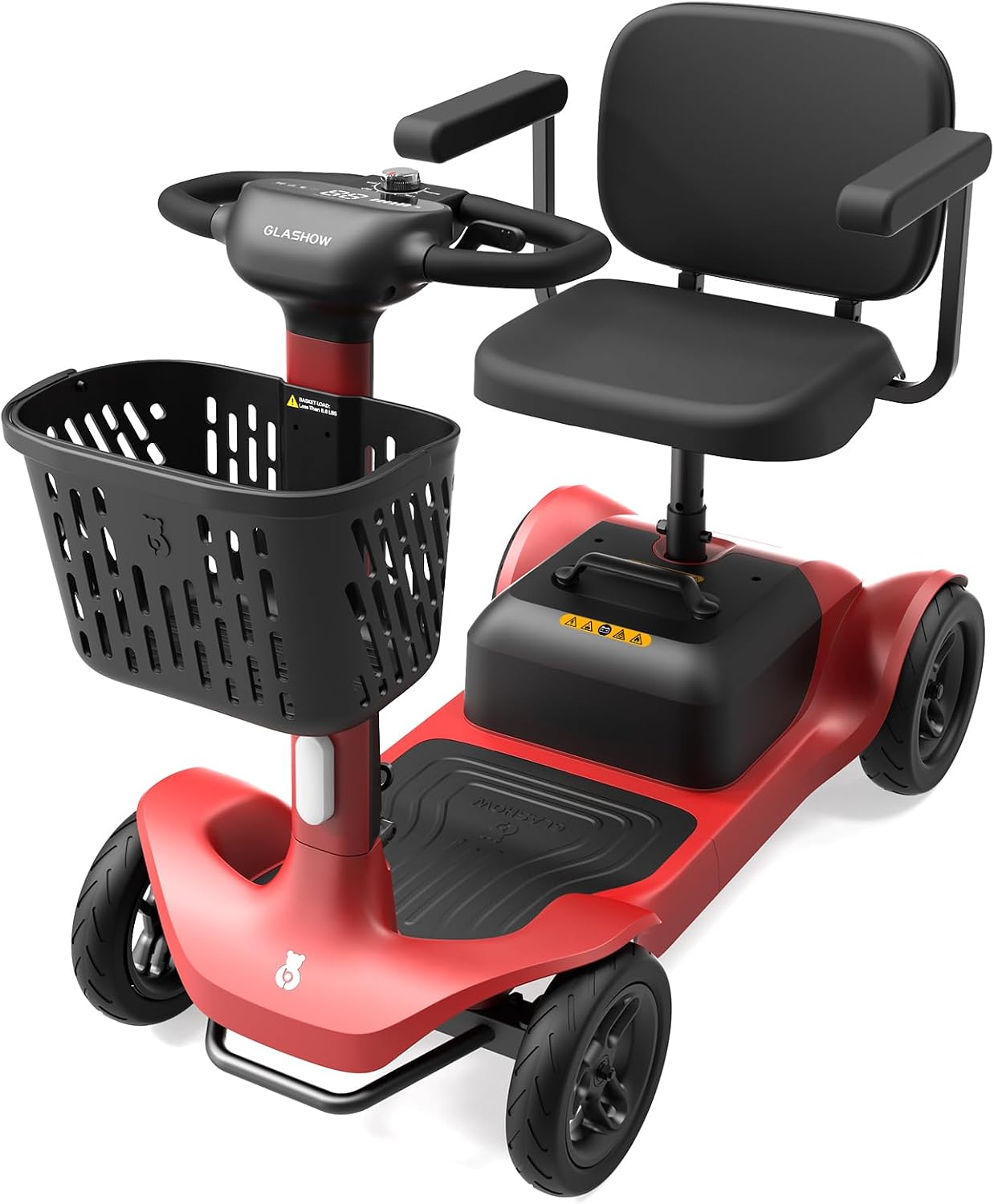
- Rated ~25 mi range
- 10″ wheels
- 4-wheel stability
- 265 lb limit
The Greenbelt is what makes Boise, and it asks for two things: range to make the most of a 29-mile path, and big wheels for the crushed-stone stretch and for Boise’s real winters. This has the longest rated range here and the largest wheels, at 10 inches, on a stable four-wheel base. A cold battery gives you less than its rating, so buying long is buying sensibly. Check the 265 lb limit first: it is the lowest of the four. If your riding is mostly city errands rather than the trail, the more comfortable Buzzaround below is a fair alternative.
On Medicare or Idaho Medicaid? Read the funding section before you pay out of pocket.
The Greenbelt: 29 miles, and the mile and a half to plan around
For a scooter, a long, flat, shaded, riverside path is close to ideal, and Boise has one running through the heart of the city. You can join it at parks all along the river and ride for miles without a road crossing. That is the good news, and it is very good.
- Ride the paved reaches through town. The central sections through Boise are the smooth ones. Save the Barber Park stretch for a day you feel like testing it, not for the trip home with the shopping.
- Shade is real here, and useful. The cottonwoods over the path matter in a dry high-desert summer; the Greenbelt is cooler than the streets a block away.
- Join at a park with parking. If the nearest paved reach is not near your home, driving to a riverside park and riding from there is how many people use it.
The fares, and what we could not pin down
Now what we could not pin down, because we would rather flag a gap than invent a number.
- The reduced fare for older adults and Medicare cardholders is published, and it is half the standard. VRT lists a reduced single ride at 75 cents, a reduced all-day pass at $1.25 and a reduced 31-day pass at $21 for riders 65 and over and Medicare cardholders. The page does not give a separate figure for youth or for other disability categories, so ring VRT on 208-345-7433 if you fall outside the 65-and-over or Medicare route, and ask how to get the reduced-fare ID.
- The ACCESS paratransit fare is not published either. VRT runs a paratransit service called ACCESS for people who cannot use the fixed-route or on-demand buses because of a disability, and all its vehicles carry wheelchairs, but the fare is not on the page. Ask on the same call.
- Reduced fares need a qualification check. VRT says to contact customer service to see if you qualify, so this is a phone call, not a turn-up-and-ride discount.
Four seasons, and a dry one
- Summer: ride the morning and use the shade. High-desert heat is dry, which fools people into under-hydrating. Carry water; the cottonwood canopy over the Greenbelt is your friend.
- Winter: the pavement gets icy, and a cold battery underdelivers. Expect real range to fall short of the rating in the cold, store and charge indoors, and pick your days: bright and clear beats gray and freezing.
- Big wheels earn their keep twice here, on the crushed-stone Greenbelt stretch, and on winter ice. It is the same argument both times.
Renting vs. buying a mobility scooter in Boise
Boise is a fast-growing city that a lot of people move to in retirement, so both answers get used here.
- Keeps costing you. A travel scooter runs roughly $100 to $200 a week depending on model and city (Scootaround), so a month of regular use is several hundred dollars.
- You hand it back, and it never becomes yours.
- Not fitted or sized to you; you take whatever model is free, and whatever range is free.
- Reasonable for a summer visit built around the Greenbelt.
- Pays for itself fast. A one-time purchase; after a few weeks of what renting costs you are ahead, and you keep the scooter.
- The Greenbelt rewards owning: a machine sized and charged for a long river ride whenever the morning is good.
- It pairs with a $1.50 bus for the parts of the valley the trail does not reach.
- Spread the cost. Many scooters offer monthly payments at checkout or through your card.
Bottom line: buy if you live here. A scooter with the range and wheels for the Greenbelt, plus a cheap bus for the rest, covers Boise well: just buy the wheels that can also handle the crushed-stone mile and a winter street.
How to pay: Medicare and Idaho Medicaid
If you are 65 or older, Medicare is your route. Part B may cover a scooter if a doctor confirms you need it to move around your home and you can operate one safely, through a supplier that accepts Medicare (Medicare.gov).
Idaho expanded Medicaid, voters approved it at the ballot box in 2018 and it took effect in 2020, so unlike some states in this guide there is no coverage gap trapping low-income adults: Idaho covers adults up to 138% of the federal poverty level. Idaho Medicaid can pay for medically necessary equipment such as a power wheelchair or scooter when a doctor documents the need and it is supplied through an enrolled provider. Start with your primary care provider or your health plan, and ask specifically about durable medical equipment and which suppliers they will authorize.
Because these programs work through approved suppliers, a scooter bought on Amazon is a separate out-of-pocket purchase, which is why many buyers who do not qualify, or cannot wait out an authorization, choose one for the lower price and immediate delivery. Confirm current criteria directly, as they change.
Comparing options across the state? Our Idaho mobility scooter guide covers statewide Medicaid and Medicare details, the best models for the local climate and terrain, and how the picture changes from city to city.
Who needs mobility support in Boise
15.3% of Boise residents are 65 or older (36,110 people out of 235,701) a little below the national 16.8% and Idaho’s 16.6%. On disability, Boise reports 12.1%, below the national 13.0% and Idaho’s 13.8% (U.S. Census Bureau, ACS 2023, 5-year).
Boise is, by these numbers, a younger and healthier city than the state around it: the usual pattern, and here it is pronounced. Idaho’s older and more disabled residents are spread across its small towns and rural counties, an hour or more from the kind of paved path and fixed-route bus that Boise takes for granted. For a reader in Boise, that is quietly good news: you are in the part of Idaho with the Greenbelt, the buses and the flat riverside miles. It is worth remembering when a relative in a small town asks what their options are, because the honest answer is that they have fewer than you do.
Best mobility scooters for Boise (2026)
Picks weighted for a long river path, a crushed-stone stretch, dry-summer heat and real winter ice. Specs are per manufacturer listings; confirm current details and price on Amazon.
| Model | Wheels | Max rider | Rated range | Owner rating |
|---|---|---|---|---|
| Glashow S1 Folding ★ Top pick | 10″ (4-wheel) | 265 lb | ~25 mi | 4.4★ (46) |
| Golden Buzzaround EX Most comfortable | 9″ (4-wheel) | 330 lb | Shorter | 4.7★ (verified) |
| Pride Go-Go Sport | 3-wheel | 325 lb | Shorter | 4.4★ (109) |
| Aotedor Lightweight | 7″ | 300 lb | Shortest | 4.5★ (277) |
4.4★ (46 ratings) · 10″ wheels · rated ~25 mi range · 265 lb limit
Why Boise: the longest range for a 29-mile path and the biggest wheels for the crushed-stone stretch and winter ice. The one that suits the trail that defines this city. Check the 265 lb limit.
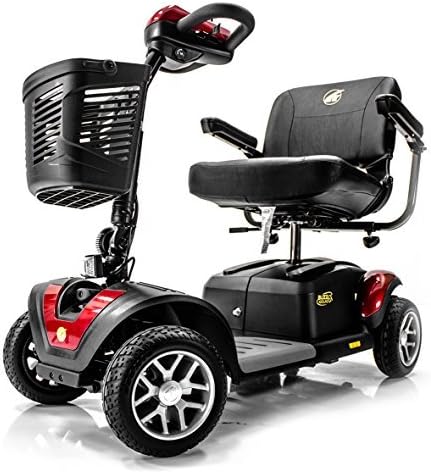
4.7★ (verified owners) · 9″ wheels · up to 330 lb
Why Boise: the comfortable all-rounder if your riding is mostly city errands rather than long trail miles: highest owner rating, 330 lb, real service network. A touch less range, which a 29-mile path and a cold battery both notice.
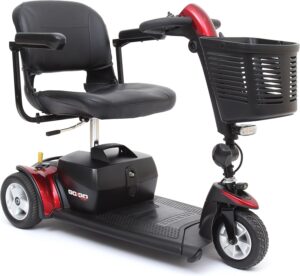
4.4★ (109 ratings) · compact · up to 325 lb
Why Boise: 325 lb and it breaks down for a car trunk, useful for driving to a riverside park and riding from there. Four wheels feel steadier than three on the trail and on ice.
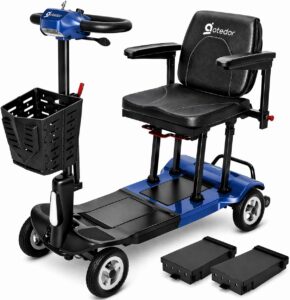
4.5★ (277 ratings) · folds compact · up to 300 lb
Why Boise: the easiest to fold into a car and the most owner-reviewed, fine on the paved reaches. But the smallest wheels of the four, which is the wrong end of the crushed-stone stretch and winter ice.
Watch: the Golden Buzzaround EX reviewed
An independent walkthrough of the Golden Buzzaround EX, the comfortable alternative in the comparison above, showing the four-wheel frame, seat, controls and how it comes apart to transport.
Video: Golden Buzzaround EX review (YouTube). Polaris Mobility is not affiliated with the reviewer.
Compare more 4-wheel models · full catalog
Boise mobility scooter FAQ
Can you ride a mobility scooter on the Boise River Greenbelt?
Yes, and it is a 29-mile tree-lined pathway along both sides of the Boise River, listed as wheelchair accessible. The one thing to know is the surface: it is mostly paved, but “most of the trail is paved except for a 1.5-mile section from Barber Park downstream,” which is crushed stone. That stretch is fine on big pneumatic wheels but slow and jarring on small solid ones, and soft after rain, so plan your outings to stay on the paved reaches through town unless your wheels can handle it.
How much is the bus in Boise?
On Valley Regional Transit a single ride is $1.50, an all-day pass is $2.50 and a 31-day pass is $42. Reduced fares are available for youth aged 6 to 18, older adults 65 and over, people with disabilities and Medicare cardholders, but VRT does not publish the reduced dollar amounts on its fare page, so call VRT on 208-345-7433 to confirm the reduced single, day and 31-day prices and how to get the reduced-fare ID. VRT also runs a paratransit service called ACCESS for people who cannot use the fixed-route buses, though its fare is not published either. Ask on the same call.
Does Idaho Medicaid cover a mobility scooter?
Idaho expanded Medicaid, voters approved it in 2018 and it took effect in 2020, so it covers adults up to 138% of the federal poverty level and there is no coverage gap. Idaho Medicaid can pay for medically necessary equipment such as a power wheelchair or scooter when a doctor documents the need and an enrolled provider supplies it. Start with your primary care provider or your health plan and ask specifically about durable medical equipment. If you are 65 or older, Medicare is your route regardless.
What is the best mobility scooter for Boise?
Our top pick is the Glashow S1 Folding, because the Greenbelt defines riding here and it asks for range and big wheels: this has the longest rated range of the four for a 29-mile path, and the biggest wheels at 10 inches for the crushed-stone stretch from Barber Park and for winter ice. Check its 265 lb weight limit first, the lowest here. If your riding is mostly city errands rather than the trail, the Golden Buzzaround EX is the more comfortable choice, with 330 lb capacity and the highest owner rating, at the cost of a little range.