
Mobility Scooters in Boston
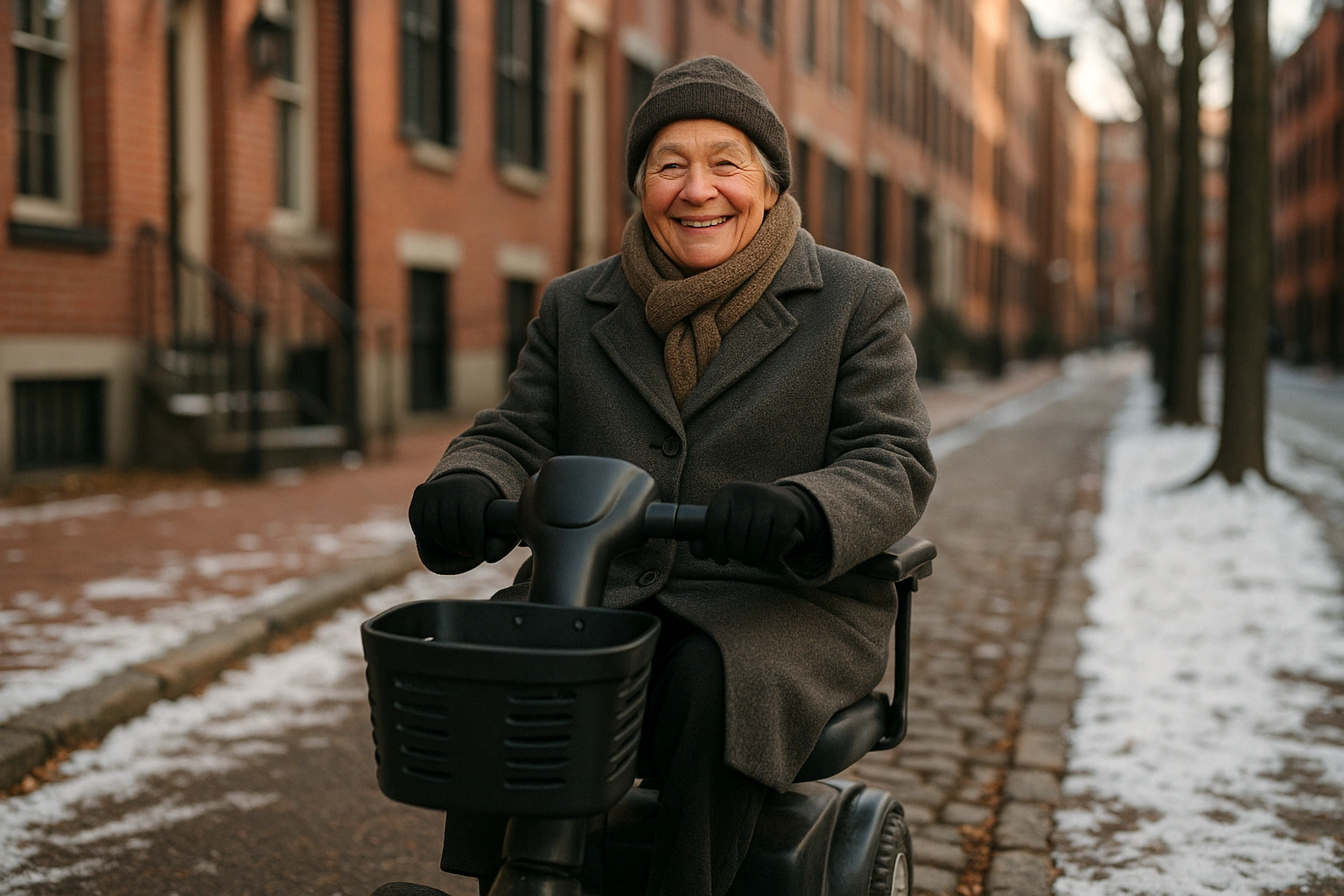
Looking for a mobility scooter in Boston, to buy, to rent, or to get covered by insurance? Boston has two challenges you will not find in a newer city: its historic brick and cobblestone sidewalks, which are uneven and jarring on small wheels, and hard Nor’easter winters on narrow old streets. Get the wheels and the winter plan right and the rest follows. This guide covers our top pick, renting vs. buying, riding on brick and through snow, the MBTA and The RIDE, Medicare and MassHealth, and the models that fit the city. Polaris Mobility earns a commission on qualifying Amazon purchases through links on this page.
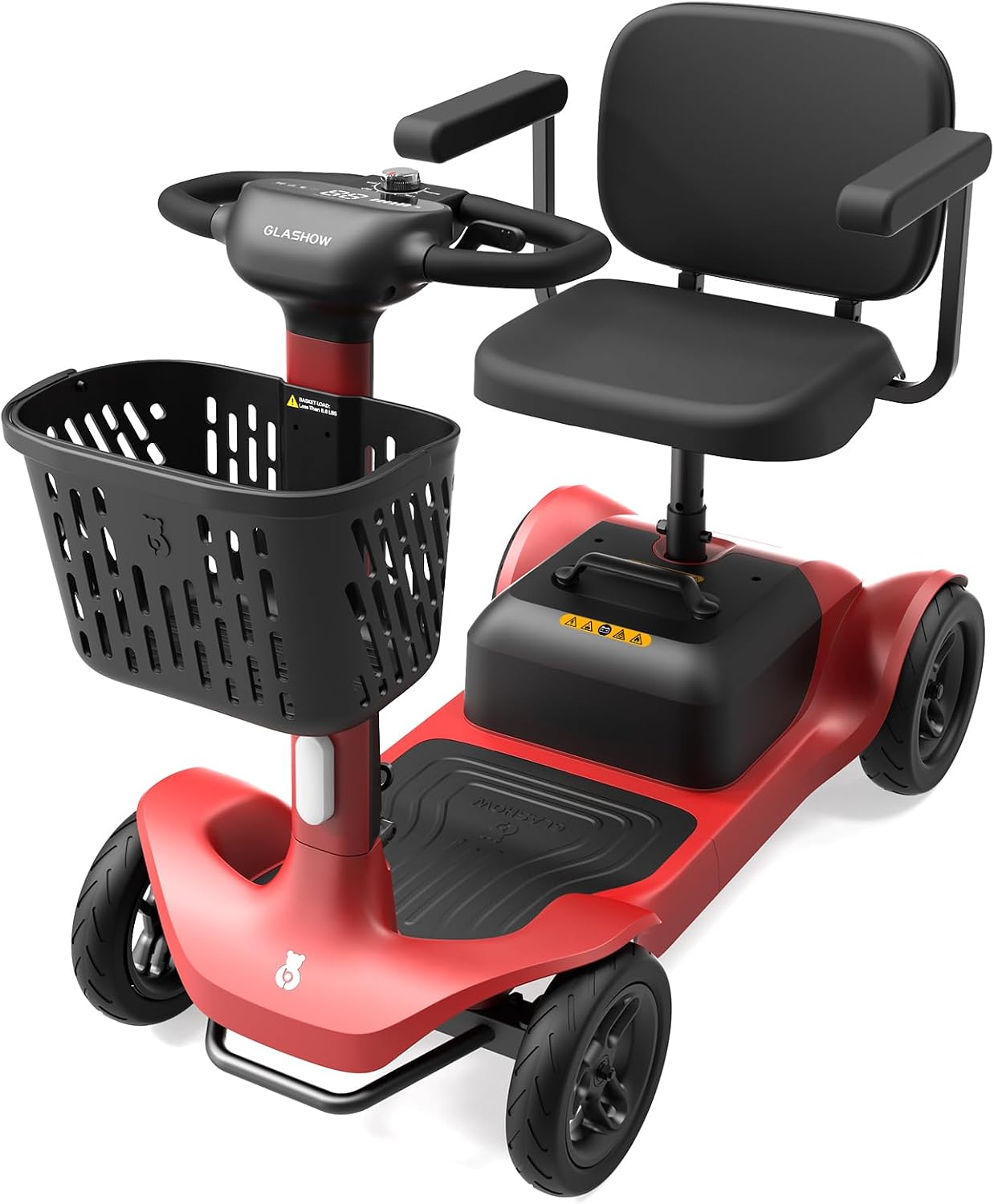
- 10″ wheels, best on brick
- Rated ~25 mi range
- Folds to bring indoors
- ★ 4.4 rating
The best fit for Boston’s streets: the biggest wheels here soak up brick, cobblestone and curb lips that jar a small-wheeled scooter, the longest range covers the distance a cold day shortens, and four wheels stay stable. It folds, so you can bring it indoors to store and charge through the winter. Want an established brand with a service network instead? See the Golden Buzzaround EX in the comparison below.
Bought this way it is out-of-pocket; see how Medicare and MassHealth coverage works further down.
Renting vs. buying a mobility scooter in Boston
Delivery services such as Scootaround and Cloud of Goods will drop a scooter at a Boston hotel or your home for a visit, an event or a recovery. For regular use, though, renting adds up fast and buying is usually cheaper within a season, and the scooter is fitted to you and always ready. Here is the comparison:
- Keeps costing you. A travel scooter runs about $100 to $195 a week depending on the city (Scootaround), so a month of regular use is several hundred dollars.
- You hand it back, and it never becomes yours.
- Not fitted or sized to you; you take whatever model is free.
- Delivery windows, deposits and return deadlines to plan around.
- Pays for itself fast. A one-time purchase; after a few weeks of what renting costs you are ahead, and you keep the scooter.
- Always charged, sized to you and ready at home.
- Spread the cost. Many scooters can be paid in monthly installments at checkout: Amazon Monthly Payments (no credit check) or Pay Over Time with Affirm on orders over $50 (Amazon).
- Comes with a manufacturer warranty and keeps resale value.
Bottom line: rent for a short trip; if you or a family member will use a scooter most weeks, buying is cheaper within a month or two, and monthly installments keep it from being a big upfront hit.
Brick, cobblestone and Nor’easter winters
Boston’s two big challenges are its old sidewalks and its winters:
- Bigger wheels change everything on brick. Larger pneumatic-style wheels ride over brick joints, cobblestones and curb lips that catch and jolt small wheels. Go slowly on historic sidewalks, learn the smoother routes you use most, and cross cobblestone stretches straight on.
- Winter is hard here. Nor’easters dump heavy snow, and narrow old sidewalks are often half-cleared. Store and charge the scooter indoors because cold cuts battery range, stick to plowed and salted routes, and stay off ice.
- Mind the curb cuts. Some historic areas have steep, worn or missing curb ramps; plan routes that use the good ones, and use The RIDE for trips a scooter cannot make safely.
- Salt corrodes. Wipe the scooter down and dry it after riding on salted, slushy pavement, and keep the battery contacts clean.
Getting around Boston: the MBTA and The RIDE
The MBTA, the “T”, runs Boston’s buses and one of the oldest subway systems in the country. Buses are accessible and many stations have elevators, but because the system is so old, some stations are still not step-free, so check before you travel. The RIDE is the MBTA’s door-to-door paratransit for people whose disability prevents them from using the T (MBTA):
- The RIDE costs $3.35 per one-way ADA trip for each registered customer or guest, and its vehicles carry both wheelchair and scooter users.
- Seniors ride at half price on Standard and Premium RIDE trips, and income-eligible riders aged 18–64 also qualify for reduced fares.
- How to apply: complete an application and in-person assessment; eligibility usually lasts three years.
Wheelchair-accessible places in Boston
OpenStreetMap volunteers have tagged more than 700 features across Boston and Cambridge as wheelchair-accessible, including 113 restaurants, 60 fast-food spots, 50 cafés, and dozens of banks and pharmacies. A few from the map: CVS Pharmacy, Dunkin’, Walgreens and Mama Gina’s. Tags are volunteer-maintained, so confirm current access (and a cleared, step-free winter entrance) with each venue before visiting.
Accessibility data © OpenStreetMap contributors.
Who needs mobility support in Boston
Boston is a young, student-heavy city, so its senior share sits below the state and national figures. It has about 664,000 residents, roughly 12.7% aged 65 and older (about 84,000 seniors), and about 12.1% report a disability. Massachusetts overall is older, at 17.5% aged 65+, and the wider metro adds many more (U.S. Census Bureau, ACS 2019–2023 5-year estimates).
Best mobility scooters for Boston (2026)
Picks that suit historic brick sidewalks and hard winters: bigger wheels first for the cobblestone and curb lips, four-wheel stability, enough range for a cold day, and a fold to bring indoors. Small-wheel and three-wheel models are jarred more by brick and are best kept for smooth, cleared routes and indoor use. Specs are per manufacturer listings; confirm current details and price on Amazon.
| Model | Wheels | Max rider | Top speed | Owner rating |
|---|---|---|---|---|
| Glashow S1 Folding ★ Top pick | 10″ (4-wheel) | 265 lb | 6.2 mph | 4.4★ (46) |
| Golden Buzzaround EX | 9″ (4-wheel) | 330 lb | 5.0 mph | 4.7★ (verified) |
| Aotedor Lightweight | 7″ | 300 lb | 3.7 mph | 4.5★ (277) |
| Pride Go-Go Sport | 3-wheel | 325 lb | 4.7 mph | 4.4★ (109) |
4.4★ (46 ratings) · 10″ wheels · rated ~25 mi range
Why Boston: the biggest wheels here ride over brick, cobblestone and curb lips, the longest range covers cold-shortened days, and it folds to store indoors.
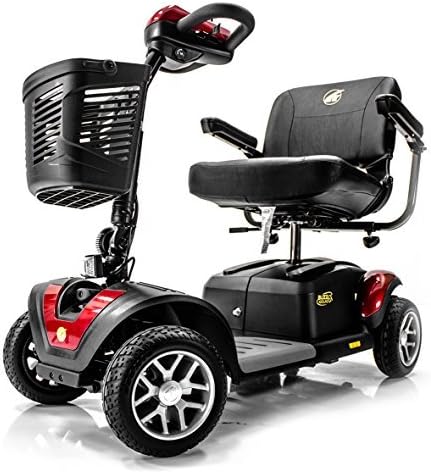
4.7★ (verified owners) · 9″ wheels · up to 330 lb
Why Boston: the highest owner rating here, a comfortable stable ride, and a brand service network for winter upkeep; its 9″ wheels handle brick reasonably well.
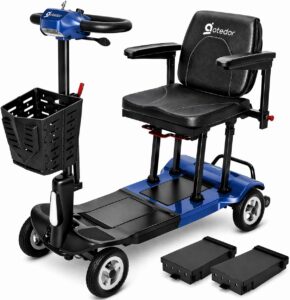
4.5★ (277 ratings) · folds compact · up to 300 lb
Why Boston: light to lift and easy to store in a small apartment; best on the smoother, newer sidewalks, as its 7″ wheels are jarred more on cobblestone.
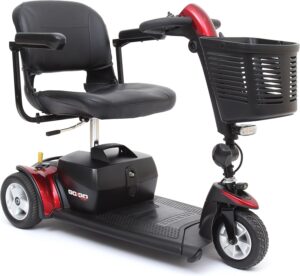
4.4★ (109 ratings) · compact · up to 325 lb
Why Boston: a tight turning circle for narrow shops and clinics and transfers onto accessible T stations; keep it to smoother, cleared routes.
How to pay: Medicare and MassHealth
If a scooter is medically necessary, insurance may cover most of the cost, but the rules are strict.
Medicare (Part B). Medicare covers a power scooter as durable medical equipment and pays 80% of the approved amount after your Part B deductible. You need a face-to-face exam and written order from a Medicare-enrolled doctor, must buy from a Medicare-approved supplier that accepts assignment, and the scooter must be needed to get around inside your home, not only outdoors (Medicare.gov). For most Boston seniors this is the main route.
MassHealth. Massachusetts expanded Medicaid, and MassHealth is one of the more generous state programs; it covers medically necessary durable medical equipment, including power mobility devices, with a physician’s order and prior authorization (MassHealth). Many older Bostonians are dual-eligible for Medicare and MassHealth. Start with your doctor and a Medicare- or MassHealth-enrolled DME supplier rather than a retail purchase; the Amazon models above are usually bought out of pocket for the lower price and immediate delivery.
Comparing options across the state? Our Massachusetts mobility scooter guide covers statewide Medicaid and Medicare details, the best models for the local climate and terrain, and how the picture changes from city to city.
Watch: the Golden Buzzaround EX reviewed
An independent walkthrough of the Golden Buzzaround EX, the stability-and-service pick above, showing the seat, tiller, disassembly and driving.
Video: Golden Buzzaround EX review by Marc’s Mobility (YouTube). Polaris Mobility is not affiliated with the reviewer.
Compare more 4-wheel models · full catalog
Boston mobility scooter FAQ
What kind of mobility scooter is best for Boston’s brick sidewalks?
One with the biggest wheels you can get. Larger pneumatic-style wheels ride over brick joints, cobblestones and curb lips that jar and slow a small-wheeled scooter, so a model like the Glashow S1 with 10-inch wheels is a better fit for Beacon Hill, the North End and Back Bay than a compact travel scooter. Go slowly on historic sidewalks and learn the smoother routes.
How do I use a mobility scooter through a Boston winter?
Store and charge it indoors, since cold cuts battery range; wipe off road salt and slush; and stick to plowed, salted paths, because narrow old sidewalks are often half-cleared and no standard scooter handles deep snow or ice. Use The RIDE or an accessible T station for trips too snowy to ride.
How much does The RIDE cost in Boston?
The RIDE is $3.35 per one-way ADA trip for each registered customer or guest, and seniors ride at half price on Standard and Premium trips. Its vehicles carry scooter and wheelchair users, and eligibility usually lasts three years after an application and assessment.
Does Medicare or MassHealth cover a mobility scooter?
Yes, if it is medically necessary. Medicare Part B pays 80% after your deductible when a Medicare-enrolled doctor prescribes it for use inside your home and you buy from an approved supplier. MassHealth, which expanded Medicaid and is relatively generous, also covers medically necessary power mobility with a physician’s order and prior authorization, and many older Bostonians are dual-eligible.