
Mobility Scooters in Buffalo
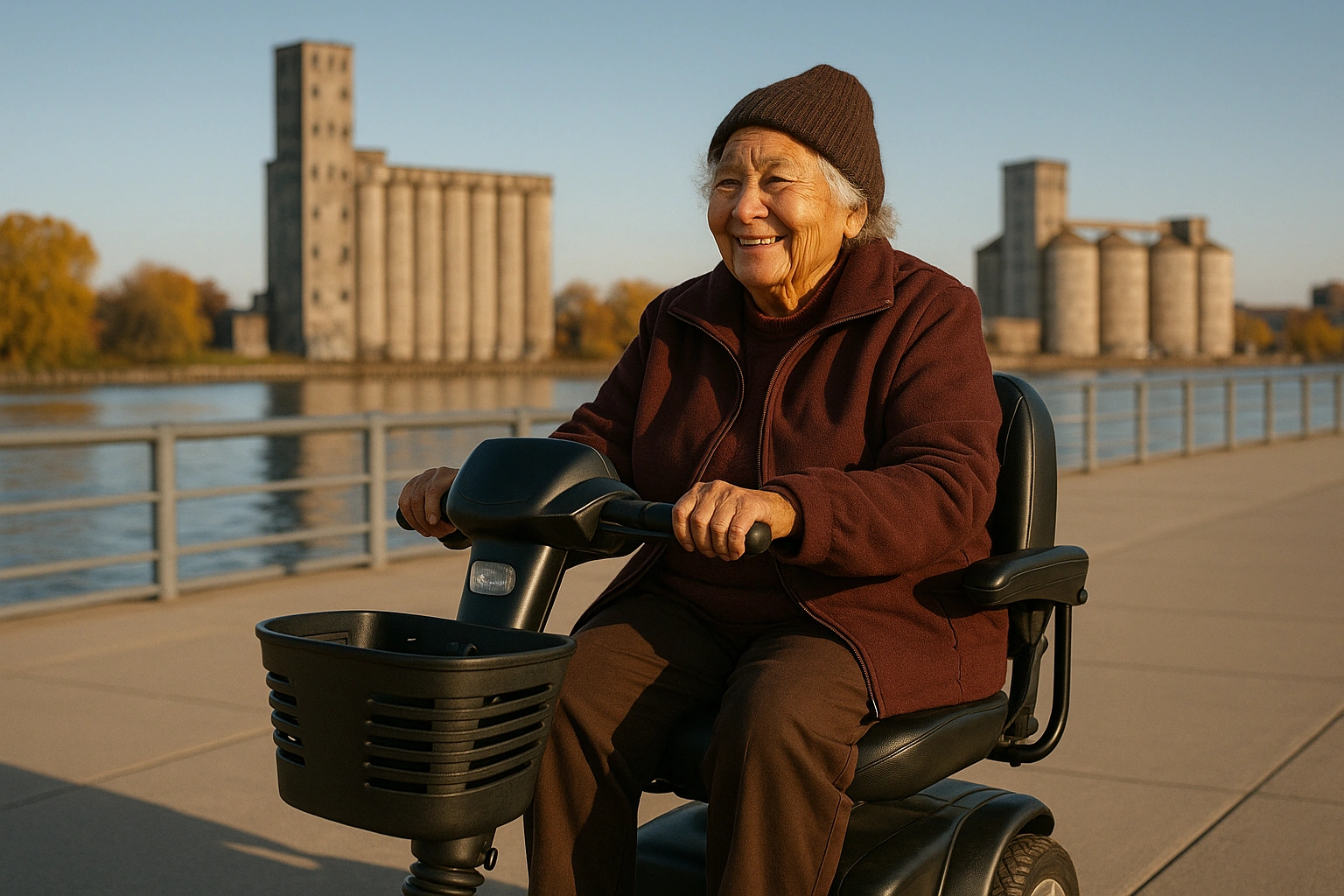
Looking for a mobility scooter in Buffalo, to buy or to rent? You already know about the snow, and this guide will not soften it. What gets missed is what Buffalo has the rest of the year: America’s oldest coordinated system of public parks and parkways, designed by the men who built Central Park, and built so you can travel from one park to the next without leaving the green. Add a Metro Rail that is free at every above-ground station, a half-fare program that now runs all day rather than off-peak only, and this is a better scooter city than its reputation suggests. It is also a city where one in six residents reports a disability, well above the state and the country. Below: our top pick, the parkways, the snow, fares, funding, and the models that fit Buffalo. Polaris Mobility earns a commission on qualifying Amazon purchases through links on this page.
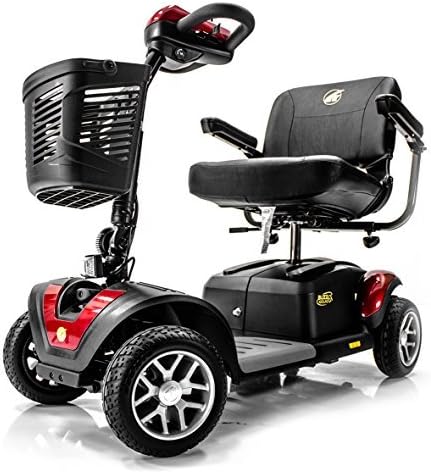
- Up to 330 lb, highest here
- Stable 4-wheel base
- Real brand service network
- ★ 4.7 rating
One in six Buffalonians reports a disability, and that is a wider range of people and needs than a scooter lineup usually has to serve. So the weight limit matters here more than it does elsewhere: this carries up to 330 lb, against 265 lb for the Glashow, and it pairs that with the best seat and the highest owner rating in this comparison. The riding suits it too: the Olmsted parkways are flat, smooth, designed green corridors, not rough ground that needs an extra inch of wheel. Want the biggest wheels and longest range, and a frame that folds for winter storage? See the Glashow S1 below.
On Medicare or New York Medicaid? Read the funding section before you pay out of pocket.
The parkways: a green network built 150 years early
- Start at Delaware Park. At 350 acres it is the centrepiece and the only true “park” Olmsted created in the Buffalo system, originally known simply as “The Park” and renamed in 1896. It is big enough for a real outing and flat enough to be an easy first one.
- Use the parkways as routes, not just scenery. They were laid out as connections. Riding a parkway between two parks is usually calmer and more predictable than the parallel street.
- Check surfaces as you go. A design from the 1870s has been repaved many times since, and quality varies park to park. Learn two or three routes properly rather than assuming the whole network rides the same.
The rail is free above ground
- Half fare, and now all day. Seniors 65 and older, people with disabilities, and members of the Community Care program through Erie or Niagara County qualify for the half-fare program, $1.00 against the $2.00 standard. It used to be restricted to off-peak hours (9am–3pm, after 6pm on weekdays, all day at weekends and on holidays), but NFTA has expanded half fare to be in effect throughout the day.
- The card costs $2. Apply by mailing the Reduced Fare Application to NFTA-Metro at 181 Ellicott Street, Buffalo, NY 14203; they take the photo for the card at their locations. The Reduced Fare Information Line is (716) 855-6611.
- PAL, the Paratransit Access Line, is the door-to-door ADA service, at $3.00 each way. Eligibility is functional: you must be unable to board, ride or get off a Metro bus or train, or unable to travel to and from the stop. The application has to be certified by a qualifying healthcare professional. Reservations (716) 855-7239, customer service (716) 855-7268.
The snow, honestly
- Lake effect is the planning problem. Because the bands are narrow and local, a citywide forecast tells you less here than almost anywhere. Check the band, not the city, before you go out.
- Winter is for the free rail, not the scooter. Store and charge indoors, wait for cleared dry pavement, and wipe road salt off the frame after every outing: salt is what quietly destroys a scooter in this climate, not cold.
- The rest of the year is the reward. Buffalo summers are pleasant and the parkway network is at its best. The season is shorter than in the south, so the case for owning rather than renting is about using it hard for eight months, not twelve.
Renting vs. buying a mobility scooter in Buffalo
For regular use, renting adds up quickly and buying is usually cheaper within a season, even allowing for a winter when the scooter sits indoors.
- Keeps costing you. A travel scooter runs roughly $100 to $200 a week depending on model and city (Scootaround), so a month of regular use is several hundred dollars.
- You hand it back, and it never becomes yours.
- Not fitted or sized to you; you take whatever model is free.
- Delivery windows, deposits and return deadlines to plan around.
- Pays for itself fast. A one-time purchase; after a few weeks of what renting costs you are ahead, and you keep the scooter.
- Always charged, sized to you and ready by the door.
- Spread the cost. Many scooters offer monthly payments at checkout or through your card, so it need not be one big hit.
- Comes with a manufacturer warranty and keeps resale value.
Bottom line: rent for a visit; buy if you live here. A season ticket to the parkways from April to November pays for itself, and the scooter goes in a cupboard for the worst of the winter.
How to pay: Medicare and New York Medicaid
If you are 65 or older, Medicare is your route. Part B may cover a scooter if a doctor confirms you need it to move around your home and you can operate one safely, through a supplier that accepts Medicare (Medicare.gov).
That matters more in Buffalo than the state average suggests. With one in six residents reporting a disability, a much larger share of this city depends on the public route to equipment than in most places, and the route exists here, which is not true everywhere in this guide.
Because these programs work through approved suppliers, a scooter bought on Amazon is a separate out-of-pocket purchase, which is why many Buffalo buyers who do not qualify choose one for the lower price and immediate delivery. Confirm current criteria directly, as they change.
Who needs mobility support in Buffalo
The age numbers here are ordinary and the disability numbers are not. About 13.8% of Buffalo residents are 65 or older (roughly 38,200 people out of 276,000) below New York State’s 17.4% and the national 16.8% (U.S. Census Bureau, ACS 2023).
Then look at disability: 16.5% of Buffalo residents report one, against 12.2% across New York State and 13.0% nationally. That is roughly one in six people in the city, and it is far above both benchmarks. Need in Buffalo is not mainly a story about age: it is a story about a working-age population living with disability in a post-industrial city, which is exactly why the free surface rail, the all-day half fare and the $3 PAL trip matter so much here.
Best mobility scooters for Buffalo (2026)
Picks that suit a flat network of designed green parkways, a free surface rail line and four months of serious snow: capacity and comfort first, with wheel size and a folding frame useful for the cold end of the year. Specs are per manufacturer listings; confirm current details and price on Amazon.
| Model | Wheels | Max rider | Top speed | Owner rating |
|---|---|---|---|---|
| Golden Buzzaround EX ★ Top pick | 9″ (4-wheel) | 330 lb | 5.0 mph | 4.7★ (verified) |
| Glashow S1 Folding | 10″ (4-wheel) | 265 lb | 6.2 mph | 4.4★ (46) |
| Aotedor Lightweight | 7″ | 300 lb | 3.7 mph | 4.5★ (277) |
| Pride Go-Go Sport | 3-wheel | 325 lb | 4.7 mph | 4.4★ (109) |
4.7★ (verified owners) · 9″ wheels · up to 330 lb
Why Buffalo: the highest weight capacity here at 330 lb, which matters in a city where one in six people reports a disability, plus the best seat for long parkway afternoons and a real service network.
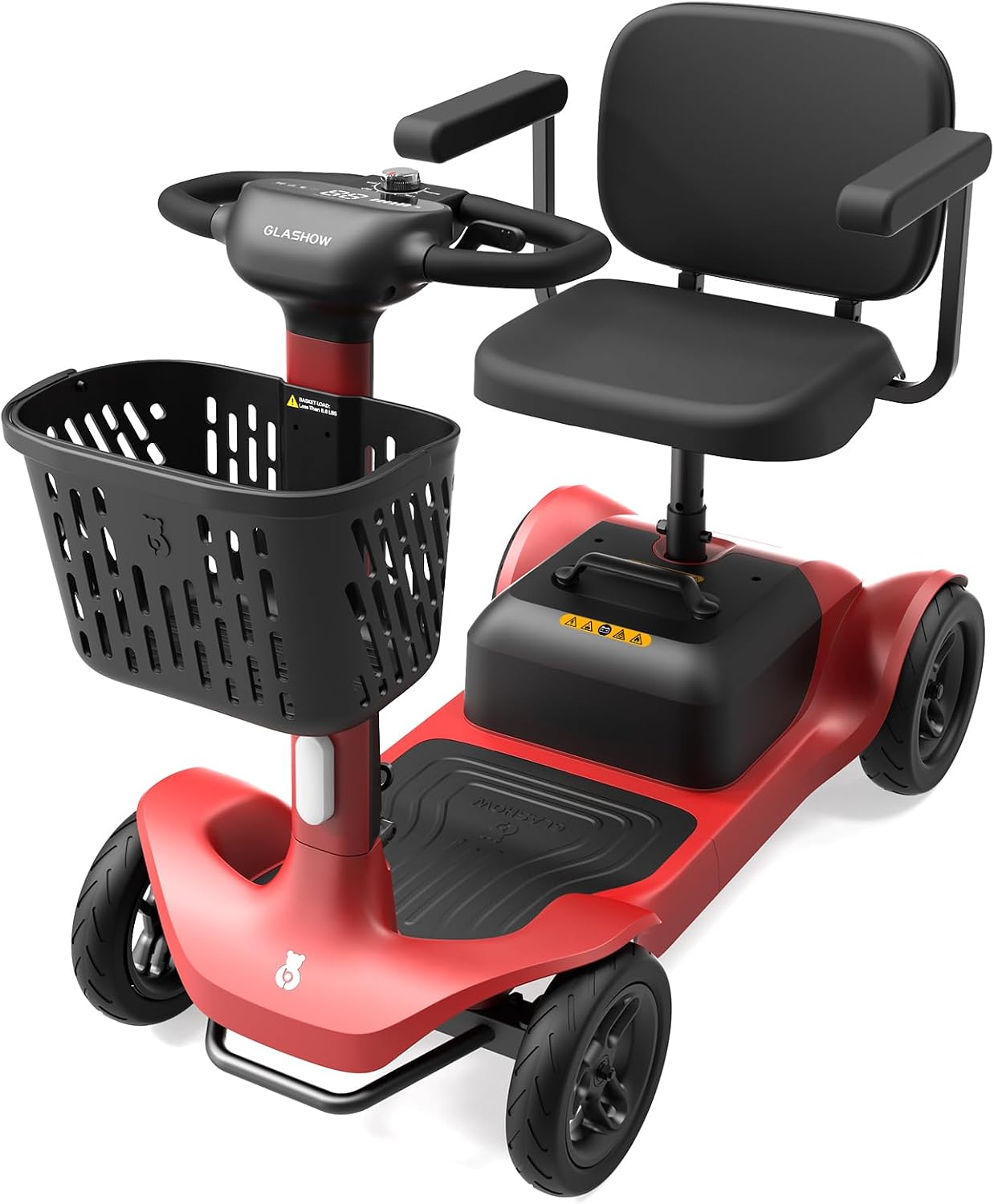
4.4★ (46 ratings) · 10″ wheels · rated ~25 mi range · 265 lb limit
Why Buffalo: the range to link parks along the parkways, the biggest wheels for cold, patched pavement, and it folds into a cupboard for the months the scooter cannot go out. Check the 265 lb limit against your needs.
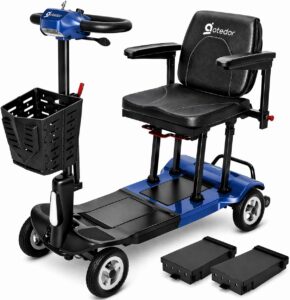
4.5★ (277 ratings) · folds compact · up to 300 lb
Why Buffalo: light to lift into a car and simple to roll onto the free surface rail: a good downtown errand runner, though its small wheels are the wrong tool for cold, broken pavement.
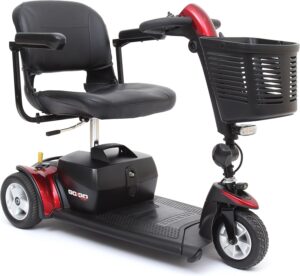
4.4★ (109 ratings) · compact · up to 325 lb
Why Buffalo: a tight turning circle for shops, the market and a busy rail car. Four wheels feel steadier over parkway distance and on cold pavement.
Watch: our top pick in action
An independent walkthrough of the Golden Buzzaround EX, our top pick above, showing the four-wheel frame, seat, controls and how it comes apart to transport.
Video: Golden Buzzaround EX review (YouTube). Polaris Mobility is not affiliated with the reviewer.
Compare more 4-wheel models · full catalog
Buffalo mobility scooter FAQ
Is Buffalo a good city for a mobility scooter?
Better than its reputation, for about eight months of the year. Buffalo has America’s oldest coordinated system of public parks and parkways, designed by Olmsted and Vaux so you can travel between the six main parks without leaving green space, and the Metro Rail is free at every above-ground station. The limit is the snow: roughly 85 to 95 inches a year, more than half of it lake effect, so from December the scooter lives indoors.
Is the Metro Rail free in Buffalo?
Above ground, yes. The standard NFTA fare is $2.00 per ride on both bus and rail, but Metro Rail service is free at all above-ground stations, which is the surface stretch along Main Street through downtown. If you are 65 or older or have a disability, the half-fare program brings the paid fare to $1.00, and NFTA has expanded half fare to run all day rather than off-peak only. The reduced-fare card costs $2.
What is PAL, and how long does approval take?
PAL is the Paratransit Access Line, Buffalo’s door-to-door ADA paratransit, at $3.00 each way. Eligibility is functional: you must be unable to board, ride or get off a Metro bus or train, or unable to travel to and from a stop, and the application must be certified by a qualifying healthcare professional. NFTA must notify you in writing within 21 days, and if no decision is made in that time you may use the service until eligibility is determined or denied. Reservations are on (716) 855-7239.
Where is the best place to ride a mobility scooter in Buffalo?
The Olmsted parks and the parkways that connect them. Delaware Park, at 350 acres, is the centrepiece and the only true park Olmsted created in the Buffalo system, and it is flat enough for an easy first outing. The parkways were laid out specifically as green connections between the six main parks, so they make calmer routes than the parallel streets. Surfaces vary after 150 years of repaving, so learn a few routes well.
What is the best mobility scooter for Buffalo?
The parkways are flat and smooth, so rough-ground ability matters less here than capacity and comfort. Our top pick is the Golden Buzzaround EX, which carries up to 330 lb against the Glashow’s 265 lb, worth weighing in a city where one in six residents reports a disability, with the best seat, the highest owner rating and a real service network. The Glashow S1 is the alternative if you want the longest rated range, the biggest wheels and a frame that folds away for winter.