
Mobility Scooters in California
Looking for a mobility scooter in California, to buy, to rent, or to understand what the state offers? California is home to nearly six million residents aged 65 and over, and its size and variety mean the answer changes from city to city. This statewide guide does four things the individual city guides cannot: it compares every California city we cover on the numbers that matter, explains whether a scooter is street-legal here, walks you through how to get Medi-Cal or Medicare to pay, and points you to the local resources beyond a scooter. Then it links you straight to your own city’s detailed guide. Polaris Mobility earns a commission on qualifying Amazon purchases through links on this page.
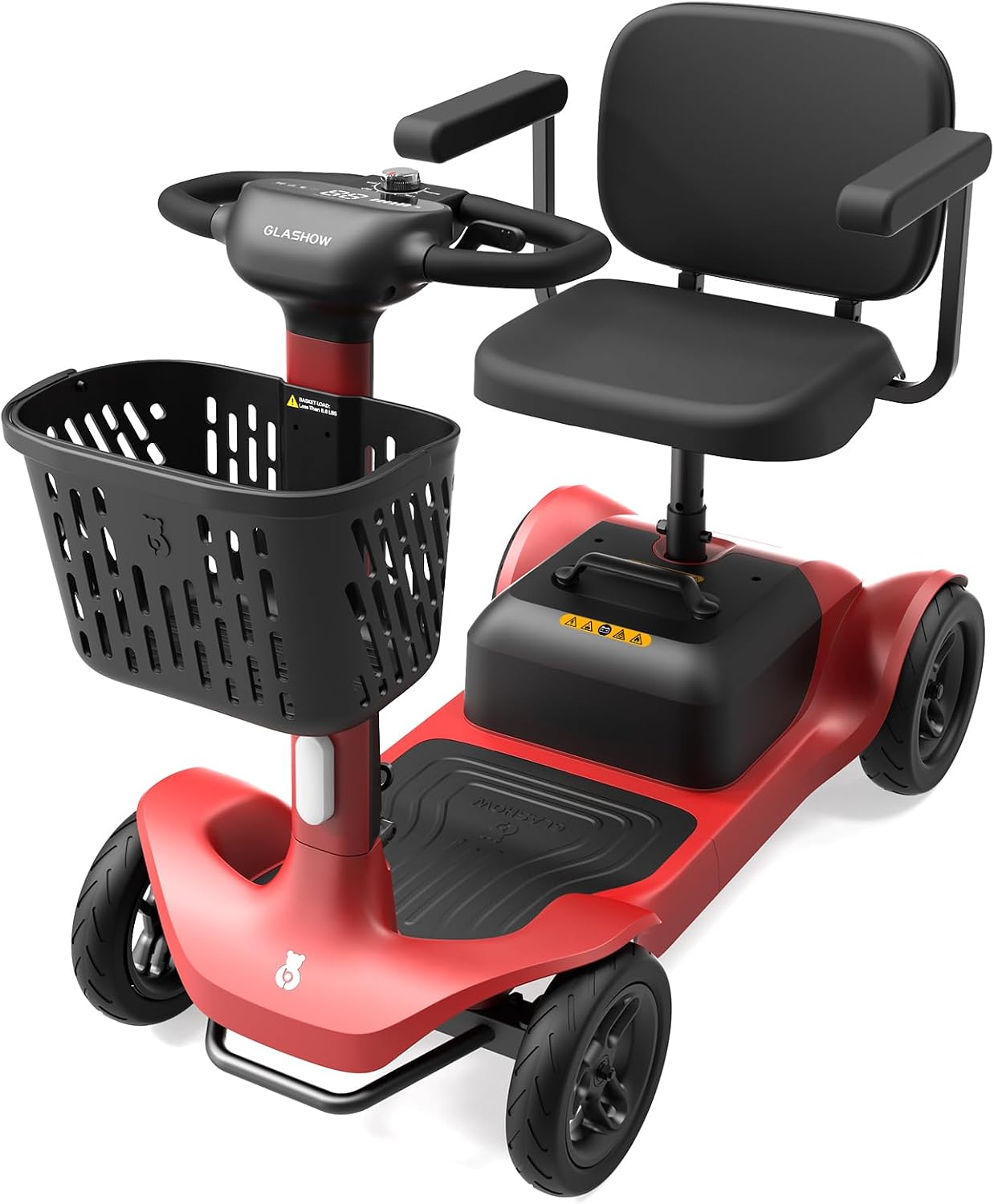
- Rated ~25 mi range
- 10″ wheels
- Up to 265 lb
- Folds for a car
If we had to name one scooter for the whole state, it is the Glashow S1. California is a place of long paved trails and lots of trains, so a scooter with the longest range of our four that also folds to board a train earns its keep almost everywhere, in a climate you can ride much of the year. Two honest caveats: its 265 lb weight limit is the lowest of the four; and the best choice genuinely depends on your city. In a dense, working-class city with cheap transit, the light, foldable Aotedor often wins on value; where daily need is high, the comfortable, higher-capacity Buzzaround steps up. The table below shows which we picked for each city, and why is in each guide.
On Medicare or Medi-Cal? Read the funding steps below: California covers power mobility for eligible residents.
Compare California’s cities at a glance
| City | 65 or older | Disability | Our top pick |
|---|---|---|---|
| Anaheim | 12.6% | 9.9% | Aotedor |
| Bakersfield | 10.8% | 11.0% | Glashow |
| Chula Vista | 12.9% | 10.2% | Glashow |
| Fontana | 9.4% | 9.1% | Aotedor |
| Fremont | 13.6% | 6.9% | Glashow |
| Fresno | 12.1% | 14.2% | Aotedor |
| Irvine | 10.5% | 6.1% | Glashow |
| Los Angeles | 13.8% | 11.1% | Buzzaround |
| Modesto | 14.4% | 13.6% | Glashow |
| Moreno Valley | 9.6% | 10.5% | Glashow |
| Oakland | 14.3% | 11.7% | Glashow |
| Oceanside | 15.9% | 12.2% | Buzzaround |
| Rancho Cucamonga | 13.8% | 9.4% | Glashow |
| Riverside | 11.7% | 10.8% | Aotedor |
| Sacramento | 14.1% | 12.4% | Glashow |
| San Bernardino | 10.2% | 12.8% | Glashow |
| San Diego | 14.2% | 10.0% | Buzzaround |
| San Francisco | 17.2% | 11.2% | Buzzaround |
| San Jose | 14.1% | 9.6% | Buzzaround |
| Santa Ana | 11.1% | 8.5% | Aotedor |
| Santa Clarita | 13.1% | 9.5% | Buzzaround |
Reading it: the higher-disability cities: Fresno (14.2%), Modesto (13.6%), San Bernardino (12.8%) (have the broadest everyday need, while the youngest) Irvine (6.1%) and Fremont (6.9%), sit well below the national 13.0%. San Francisco has the oldest population on the list (17.2% aged 65+). The top pick follows each city’s terrain and demographics, not a formula, the reasoning is in every guide.
Is a mobility scooter street-legal in California?
Where to ride, by region
- American River Parkway (Sacramento), about 32 paved miles along the river, one of the longest urban trails in the country.
- Kern River Parkway (Bakersfield): roughly 30 flat, paved miles through the city.
- Santa Ana River Trail (Anaheim, Santa Ana): a 30-mile paved Class I path from the mountains to the sea at Huntington Beach.
- Bayshore Bikeway (Chula Vista, San Diego): 24 flat, paved miles around San Diego Bay.
A mild state, ridable most of the year
How to get Medi-Cal or Medicare to pay for it
- See your doctor for a face-to-face exam. They must examine and document that you have real difficulty getting around inside your home, even with a cane or walker. That in-home need is the standard the program uses, so describe your daily trouble plainly.
- Get a written order (prescription). The doctor writes an order naming the device, your diagnosis and why it is medically necessary, and confirming you can operate it safely (or have someone who can help).
- Use an enrolled DME supplier. You must get the scooter from a supplier enrolled with Medi-Cal or Medicare. Using a non-enrolled shop means no payment, even with a valid prescription, so confirm before you order.
- Let the supplier file for prior authorization. The supplier submits the paperwork; the program reviews it and approves eligible devices. With Medicare you then pay 20% of the approved amount after your Part B deductible; Medi-Cal may cover more.
One honest note: because the programs judge in-home need, a scooter bought mainly for the trails or errands is often a separate, out-of-pocket purchase, which is where an affordable model bought online makes sense. Criteria change, so confirm the current rules with Medicare or your Medi-Cal plan.
Other help in California
Renting vs. buying a mobility scooter in California
In a state you can ride much of the year, an owned scooter does real work, and buying within a couple of months is usually cheaper than renting.
- Keeps costing you. A travel scooter runs roughly $100 to $200 a week depending on model (Scootaround), so a month of regular use is several hundred dollars.
- You hand it back, and it never becomes yours.
- Not fitted or sized to you.
- Reasonable for a short visit: a theme park, a convention, a family trip.
- Pays for itself fast. A one-time purchase; after a few weeks of what renting costs you are ahead, and you keep the scooter.
- It is ready whenever you are, and the mild climate means that is much of the year.
- It folds down for a car trunk, or a train, a trail or a clinic.
- And it may be funded. If your need is medical, Medi-Cal or Medicare may cover an approved device.
Bottom line: if you live in California, buy: then read your city’s guide to match the model to your streets, trails and transit. Check first whether Medi-Cal or Medicare will fund it.
Who needs mobility support in California
15.3% of Californians are 65 or older (5,994,486 people out of 39,242,785) a little below the national 16.8%, because California skews younger than most states. Its disability rate, 11.3%, is also below the national 13.0%. But in a state this large, those modest proportions still mean roughly six million seniors, plus millions more living with a disability.
As the city table shows, proportions swing widely, from Irvine’s 6.1% disability rate to Fresno’s 14.2%. What holds across the state is the count, and the funding: California’s expanded Medi-Cal opens a door that stays shut in many other states, and a dependable scooter turns errands and outings back into easy, everyday trips.
Best mobility scooters for California (2026)
Picks weighted for range on California’s long paved trails, an easy fold for its trains, and value. Specs are per manufacturer listings; confirm current details and price on Amazon, and see your city guide for the local fit.
| Model | Wheels | Max rider | Top speed | Owner rating |
|---|---|---|---|---|
| Glashow S1 Folding ★ Top pick | 10″ (4-wheel) | 265 lb | 6.2 mph | 4.4★ (46) |
| Golden Buzzaround EX Most comfortable | 9″ (4-wheel) | 330 lb | 5.0 mph | 4.7★ (verified) |
| Aotedor Lightweight Best on a budget | 7″ | 300 lb | 3.7 mph | 4.5★ (277) |
| Pride Go-Go Sport | 3-wheel | 325 lb | 4.7 mph | 4.4★ (109) |
4.4★ (46 ratings) · 10″ wheels · rated ~25 mi range · 265 lb limit
Why California: the longest range of the four for the state’s long paved river and bay trails, on bigger 10″ wheels, and it folds for a car or a train. Check the 265 lb limit, the lowest here.
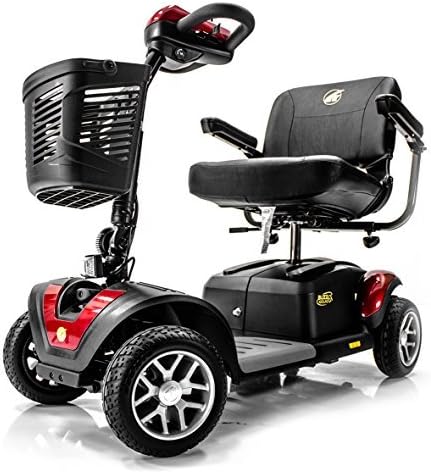
4.7★ (verified owners) · 9″ wheels · up to 330 lb
Why California: the highest rating and capacity here and four-wheel stability, the comfortable step up where daily need is high, from the Central Valley to the Inland Empire.
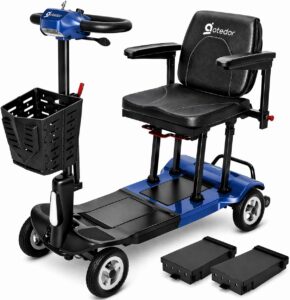
4.5★ (277 ratings) · folds compact · up to 300 lb
Why California: the cheapest and most owner-reviewed here, light to lift onto a bus or train: the value pick in dense, working-class cities like Santa Ana, Anaheim and Fresno.
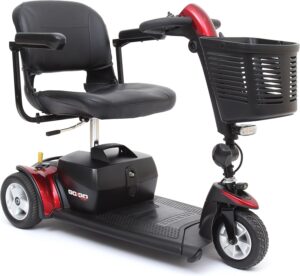
4.4★ (109 ratings) · compact · up to 325 lb
Why California: a tight turning circle for a walkable downtown or indoor use, and easy to bring along. Four wheels are steadier out on the trails.
Watch: the Buzzaround EX, our comfortable alternative
An independent walkthrough of the Golden Buzzaround EX, our comfortable, higher-capacity alternative to the Glashow, showing the four-wheel frame, seat, controls and how it comes apart to transport.
Video: Golden Buzzaround EX review (YouTube). Polaris Mobility is not affiliated with the reviewer.
Still choosing? Our guide to the best four-wheel scooters ranks the stable models side by side, the full scooter catalogue lists every model we cover, and the city guide index links every city we have written.
California mobility scooter FAQ
Is a mobility scooter street-legal in California?
Yes, and the rules are light. A mobility scooter used because of a disability is treated under California law as a pedestrian device, not a motor vehicle, so you do not need a driver’s license, DMV registration or mandatory insurance. You may use sidewalks and pedestrian paths with ordinary care and a walking pace in crowds, plus paved bike paths and low-speed streets. A few cities add their own sidewalk rules, so check locally if in doubt.
How do you get Medi-Cal or Medicare to pay for a scooter in California?
Through your doctor, in four steps. First, a face-to-face exam that documents real difficulty moving around inside your home even with a cane or walker. Second, a written order naming the device and the medical need. Third, buy from a supplier enrolled with Medi-Cal or Medicare, a non-enrolled shop means no payment. Fourth, the supplier files for prior authorization and the program reviews it; with Medicare you then pay 20% after the Part B deductible. Because the standard is in-home need, a scooter bought mainly for the trails is usually an out-of-pocket purchase.
What is the best mobility scooter in California?
Across the state, our overall pick is the Glashow S1 Folding, because California has long paved trails and a lot of trains, so range and an easy fold matter almost everywhere: the S1 has the longest range of the four, 10-inch wheels, and it folds for a car or a train. Check its 265 lb limit first, the lowest of the four. But the best choice depends on your city: the light, foldable Aotedor wins on value in dense, working-class cities, and the comfortable, higher-capacity Buzzaround EX steps up where daily need is high. The city table above shows our pick for each.
Where can you ride a mobility scooter in California?
It depends on your region. The coast has mild weather all year and long paved bay and river trails; the Central Valley is flat with long river parkways such as the 32-mile American River Parkway and the 30-mile Kern River Parkway, though summers are hot and winter brings tule fog; the Inland Empire and deserts are hot and spread-out with paved rail-trails; and the Bay Area and foothills add hills and strong transit. Each city guide covers the specific trails and surfaces near you.
Which California cities have a detailed guide?
We have written full guides for Anaheim, Bakersfield, Chula Vista, Fontana, Fremont, Fresno, Irvine, Los Angeles, Modesto, Moreno Valley, Oakland, Oceanside, Rancho Cucamonga, Riverside, Sacramento, San Bernardino, San Diego, San Francisco, San Jose, Santa Ana and Santa Clarita: each with local trails, transit fares, paratransit rules and a top pick. The full city index lists every city we cover, and it grows each week.