
Best Mobility Scooters for Arthritis

Looking for a mobility scooter for arthritis? Arthritis is one of the leading causes of disability in older adults, and it shapes what a scooter needs in very specific ways: painful, stiff hands struggle with fiddly controls; sore hips and knees make getting on and off hard; and tender joints feel every jolt. So the right scooter for arthritis is not the fastest or the longest-range: it is the one that is gentlest to operate, most comfortable to sit in, and easiest to get in and out of. This guide explains exactly what to look for, names an honest top pick, walks through how Medicare or Medicaid may pay for a medically necessary scooter, and answers the common questions.
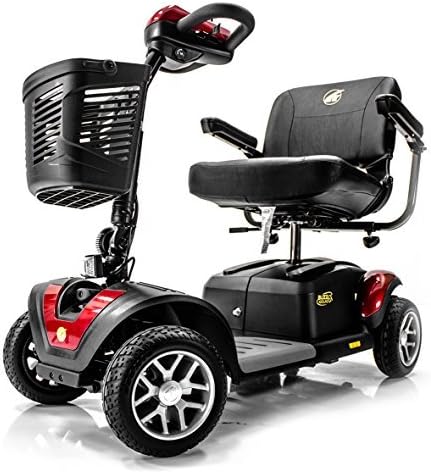
- Padded, swivel seat
- Flip-up armrests
- Wraparound tiller
- ★ 4.7 owner rating
For arthritis, comfort and easy operation matter more than anything else, and that is where the Golden Buzzaround EX leads our four. It has a padded seat that swivels so you can turn to the side to get on and off without twisting sore hips, flip-up, height-adjustable armrests to push up from, a wraparound tiller with a light thumb paddle that arthritic hands can work without a tight grip, and the highest owner rating of the four. If your hands are badly affected, ask a supplier about a one-hand or paddle-lever tiller too. The longer-range Glashow and value-priced Aotedor are alternatives if range or budget matters more.
Diagnosed with arthritis? Read the funding steps below: a scooter can be covered when it is medically necessary.
What to look for in a scooter for arthritis
- Easy, low-effort controls. A tight throttle or a small knob hurts arthritic hands. Look for a wraparound (delta) tiller and a light thumb or finger paddle you can press without gripping: and, if your hands are badly affected, a one-hand or lever control.
- A padded, adjustable seat with armrests. Sitting aggravates hips and the spine, so a cushioned seat, flip-up armrests to lean and push on, and an adjustable height and angle all help.
- A smooth ride. Jolts and vibration set off tender joints, so bigger wheels, some suspension, and a gentle, controllable speed beat a fast, hard-riding scooter.
- Easy to get on and off. A seat that swivels to the side lets you sit and stand without twisting; sturdy armrests give you something to push up from.
- Four wheels for stability. With sore joints you do not want to think about balance, a stable four-wheel base is reassuring.
The Buzzaround EX ticks most of these out of the box, and any of our four can take an added seat cushion. The point is to choose for your hands and joints, not for top speed.
Controls your hands can actually use
The single biggest arthritis issue is the tiller. Standard scooters use a wig-wag paddle: you push one side with your thumb to go forward, the other to reverse. For most people with hand arthritis this is workable because it needs pressure, not a grip. But if grip and pinch are painful, ask a mobility supplier about a one-handed tiller, a lever throttle, or a padded, oversized paddle before you buy. It is worth trying the control in person if you can. A comfortable, low-effort throttle is the difference between a scooter you use every day and one that sits in the garage.
Comfort and getting on and off
Arthritis is worst when you first move after sitting, so the seat and the getting-on matter as much as the ride. Look for a swivel seat that turns 45 to 90 degrees, so you can sit down and stand up facing sideways rather than twisting your hips and knees. Flip-up armrests let you get on from the side and give you a firm push-up point. A padded seat, or a gel cushion added on top, cuts the ache of sitting, and a backrest you can angle eases the lower back. Test that your feet reach the deck comfortably without cramping stiff knees.
Will Medicare or Medicaid pay for a scooter for arthritis?
- See your doctor for a face-to-face exam. They must examine and document that your arthritis gives you real difficulty getting around inside your home, even with a cane or walker. That in-home need is the standard the program uses, so describe your daily trouble plainly (stairs, distances, flare-ups).
- Get a written order (prescription). The doctor writes an order naming the device, your diagnosis and why it is medically necessary, and confirming you can operate it safely.
- Use an enrolled supplier. Get the scooter from a supplier enrolled with Medicare, your Medicaid program or the VA. A non-enrolled shop means no payment, even with a valid prescription.
- Let the supplier file for authorization. The supplier submits the paperwork; the program reviews and approves eligible devices. With Medicare you then pay 20% of the approved amount after your Part B deductible; Medicaid may cover more.
One honest note: coverage is judged on in-home need, so a scooter bought mainly to get out and about is often a separate, out-of-pocket purchase, but with arthritis, an in-home case is frequently genuine. Confirm the current rules with Medicare, your state Medicaid, or the VA.
Renting vs. buying with arthritis
Arthritis is usually a long-term condition, so an owned scooter, fitted to you, does far more good over time, and buying within a couple of months is cheaper than renting.
- Keeps costing you. A travel scooter runs roughly $100 to $200 a week (Scootaround), so a month is several hundred dollars.
- Not fitted to your hands, seat height or comfort.
- Reasonable only for a trip or a one-off event.
- Fitted to you: the controls, seat and cushion set up for your joints.
- Ready every day, including on flare-up days when walking is hardest.
- It comes apart for a car trunk, for appointments and days out.
- And it may be funded if your arthritis makes it medically necessary.
Best mobility scooters for arthritis (2026)
Ranked for comfort, easy controls and stability, the things arthritis actually needs. Specs are per manufacturer listings; confirm current details and price on Amazon.
| Model | Wheels | Max rider | Top speed | Owner rating |
|---|---|---|---|---|
| Golden Buzzaround EX ★ Top pick | 9″ (4-wheel) | 330 lb | 5.0 mph | 4.7★ (verified) |
| Glashow S1 Folding Most range | 10″ (4-wheel) | 265 lb | 6.2 mph | 4.4★ (46) |
| Aotedor Lightweight Best on a budget | 7″ | 300 lb | 3.7 mph | 4.5★ (277) |
| Pride Go-Go Sport | 3-wheel | 325 lb | 4.7 mph | 4.4★ (109) |
4.7★ (verified owners) · padded swivel seat · flip-up armrests
Why arthritis: the most comfortable of the four: padded swivel seat to get on and off without twisting, adjustable armrests to push up from, a wraparound tiller light on the hands, and four-wheel stability.
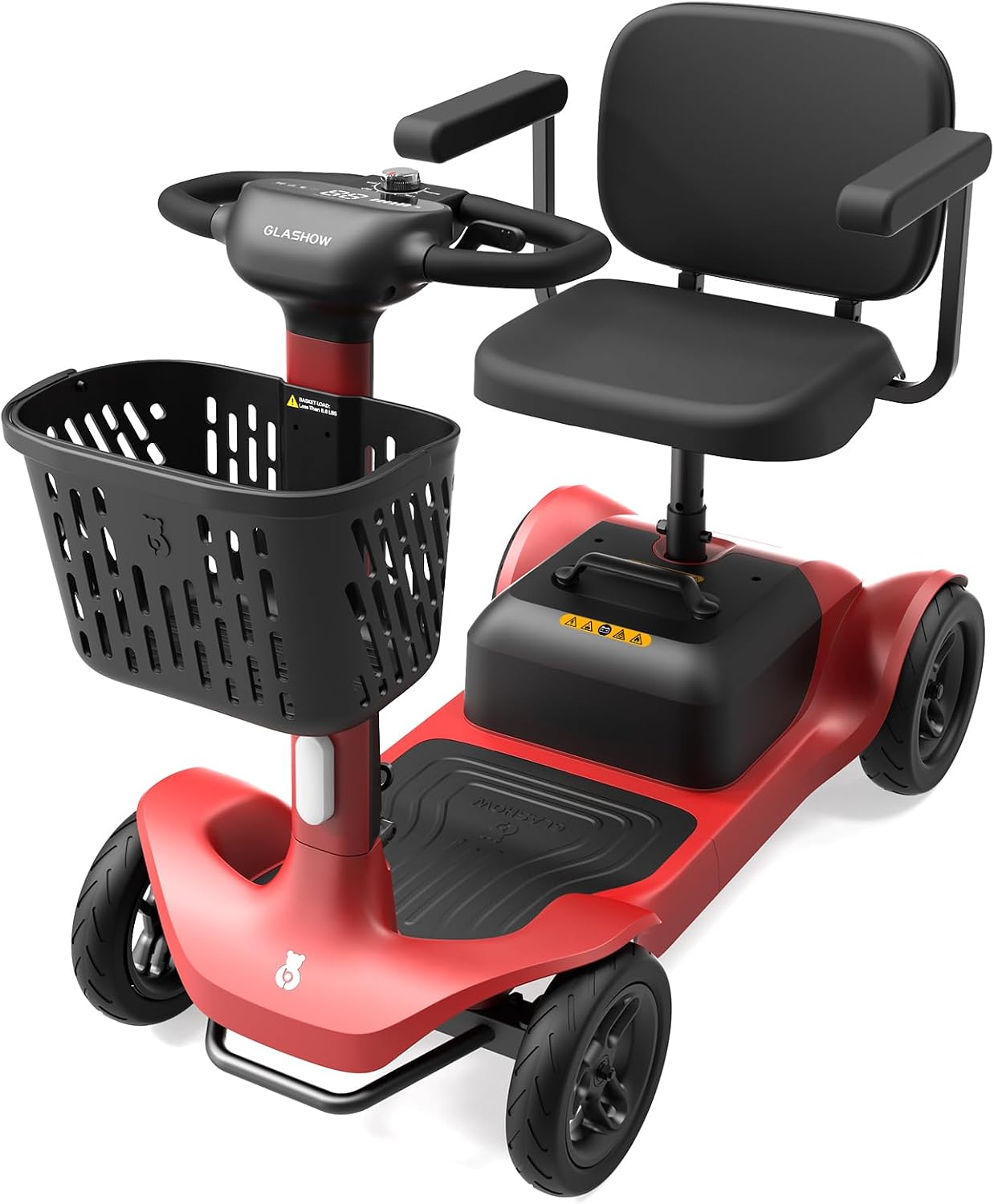
4.4★ (46 ratings) · 10″ wheels · folds flat
Why arthritis: bigger 10″ wheels give a smoother, gentler ride over bumps, and the longest range of the four means fewer worries about being stranded. Check the 265 lb limit, the lowest here.
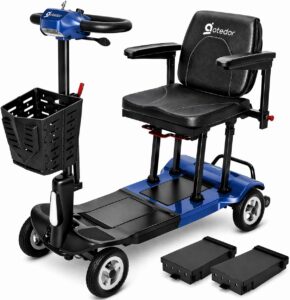
4.5★ (277 ratings) · folds compact · up to 300 lb
Why arthritis: the cheapest and most owner-reviewed here, and light enough that a family member can lift it, the value pick. Add a gel cushion for comfort on longer rides.
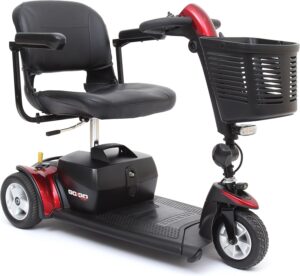
4.4★ (109 ratings) · compact · up to 325 lb
Why arthritis: a tight turning circle for indoors and a comfortable seat, though three wheels are a little less steady than four for confidence with sore joints.
Watch: the Buzzaround EX, our top pick
An independent walkthrough of the Golden Buzzaround EX, our top pick for arthritis, showing the swivel seat, armrests, tiller and how it comes apart to transport.
Video: Golden Buzzaround EX review (YouTube). Polaris Mobility is not affiliated with the reviewer.
Still choosing? Our guide to the best four-wheel scooters ranks the stable models side by side, the full scooter catalogue lists every model we cover, and the city guide index links local guides with funding details for your area.
Arthritis mobility scooter FAQ
What is the best mobility scooter for arthritis?
Our pick is the Golden Buzzaround EX, because arthritis calls for comfort and easy operation above all: it has a padded seat that swivels so you can get on and off without twisting sore hips, flip-up adjustable armrests to push up from, a wraparound tiller with a light thumb paddle that arthritic hands can work without gripping, and four-wheel stability. If range matters more, the Glashow S1 has bigger, smoother wheels; if budget is tight, the value-priced Aotedor works with a gel cushion added.
What scooter controls are easiest for arthritic hands?
Most scooters use a wig-wag paddle tiller (you press one side with your thumb to go, the other to reverse), which works for many people because it needs pressure, not a grip. If pinch and grip are painful, ask a mobility supplier about a one-handed tiller, a lever throttle or an oversized padded paddle before buying, and try the control in person if you can. A wraparound (delta) tiller, as on the Buzzaround EX, is generally the most comfortable to reach and hold.
Does Medicare cover a mobility scooter for arthritis?
It can. Arthritis is a diagnosed condition that often limits how you move around your home, which is exactly the standard Medicare uses. Your doctor examines and documents that you have real difficulty getting around inside your home even with a cane or walker, writes an order, and an enrolled supplier files for approval. With Medicare you then pay 20% of the approved amount after your Part B deductible; Medicaid or the VA may cover more. Because coverage is judged on in-home need, a scooter bought mainly for getting out and about is usually an out-of-pocket purchase.
Is a three-wheel or four-wheel scooter better for arthritis?
Four wheels are usually the better choice for arthritis. They give a more stable, reassuring base, which matters when sore joints make you less confident on your feet, and they handle uneven ground and slopes more steadily. A three-wheel scooter has a tighter turning circle for indoors, which some people prefer, but for most arthritis riders the extra stability of four wheels wins. All of our four-wheel picks pair that stability with a comfortable seat.
How do you get on and off a scooter with stiff, painful joints?
Choose a scooter with a seat that swivels to the side, so you can sit down and stand up facing sideways rather than twisting your hips and knees. Flip-up armrests let you approach from the side and give you a firm point to push up from, and a seat at the right height, roughly level with your knees when standing, makes the transfer easiest. Take it slowly, lock the scooter before you move, and use the armrests to steady yourself. A physiotherapist can suggest the best technique for your joints.