
Best Mobility Scooters for COPD
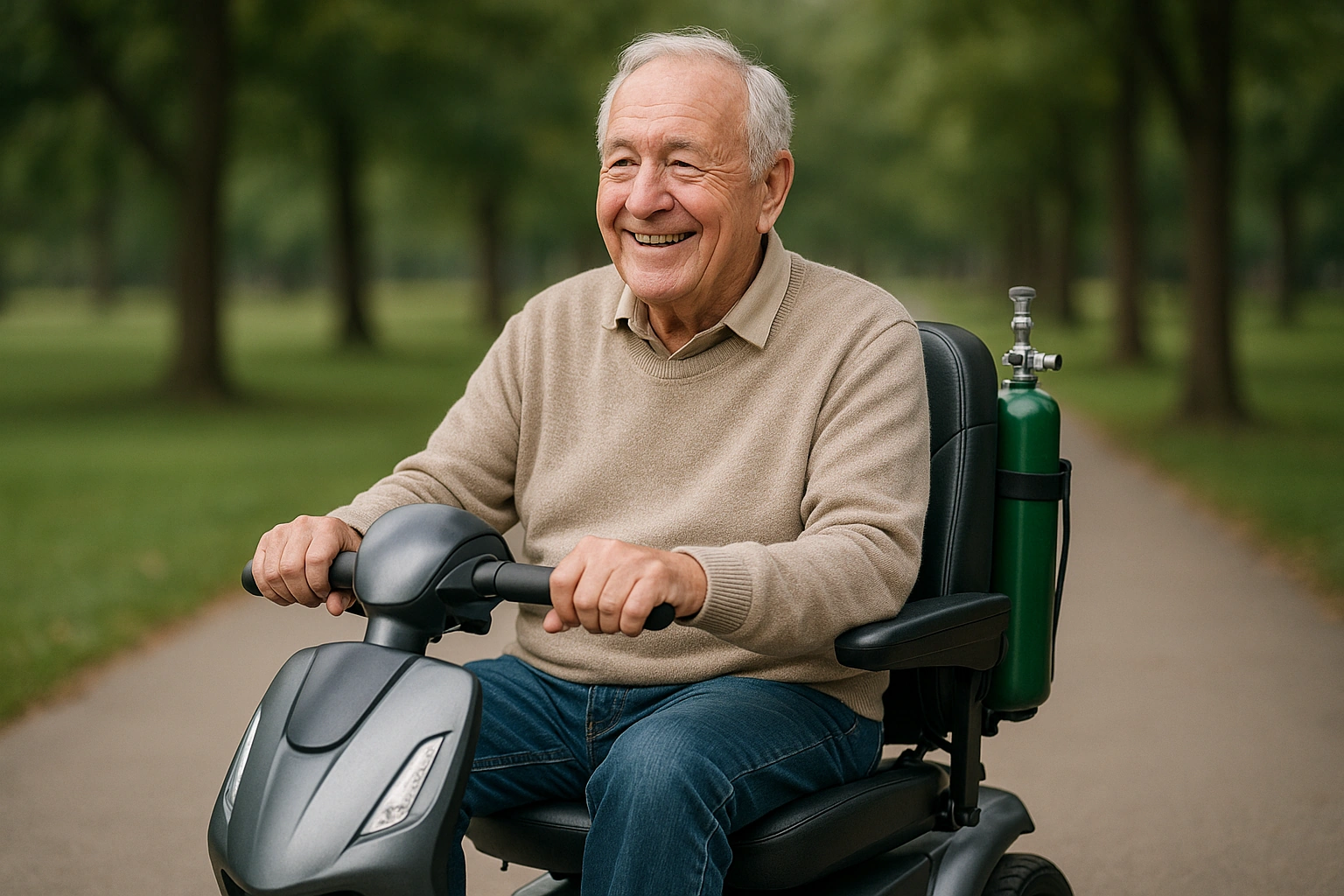
Looking for a mobility scooter for COPD? Chronic obstructive pulmonary disease turns everyday walking into breathless, exhausting work, and a scooter is one of the most useful tools for keeping your independence without over-taxing your lungs. But COPD shapes the choice in particular ways: you need enough range that you are never stranded and forced to walk, a way to carry oxygen safely if you use it, and a scooter that takes no physical effort to drive. This guide explains what to look for, names an honest top pick, covers carrying oxygen, walks through how Medicare or Medicaid may pay, and answers the common questions.
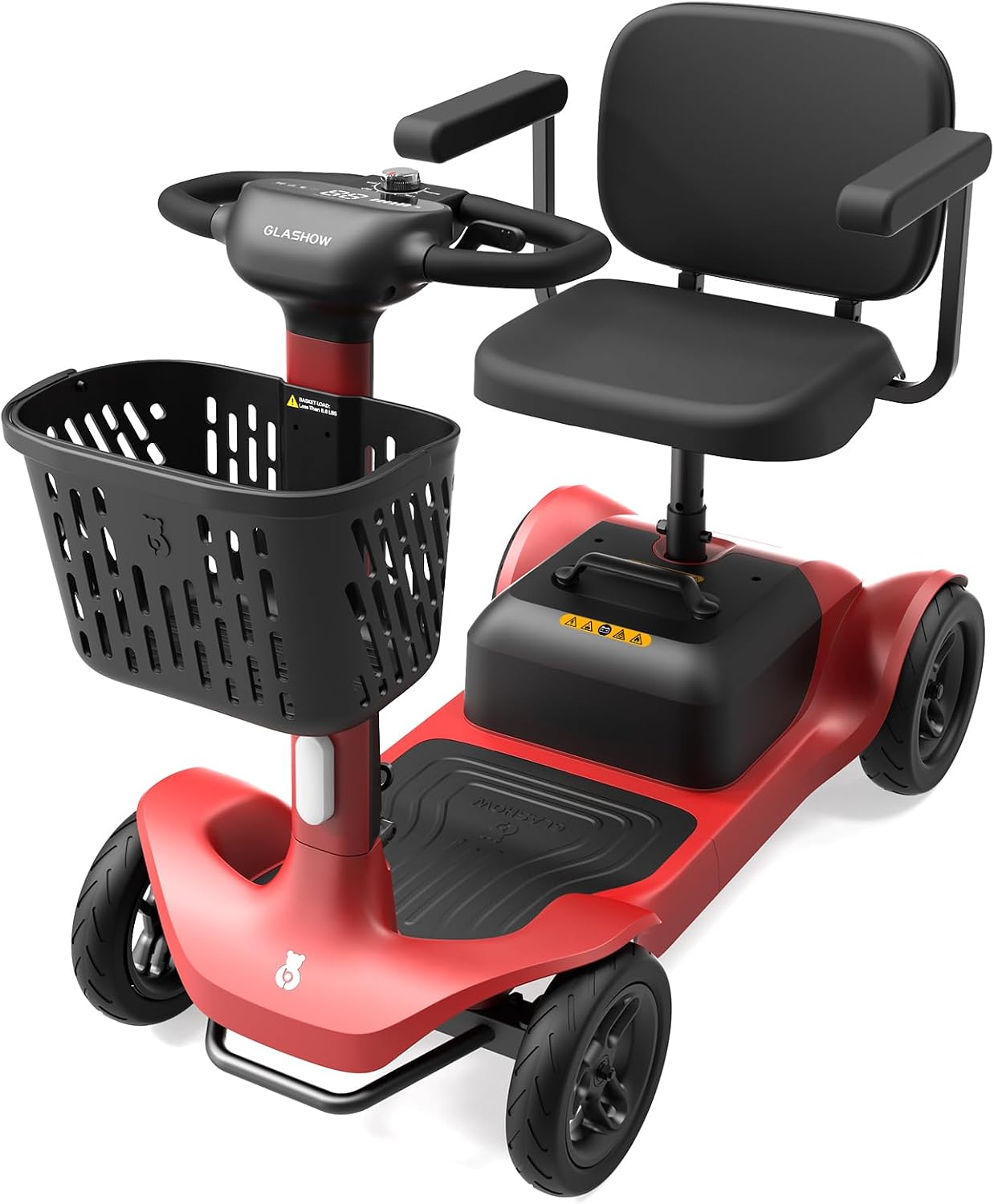
- Up to ~25 mi range
- 10″ wheels
- Folds flat
- Rear basket
For COPD, the danger is being stranded: a flat battery or too little range means walking, which is exactly what you cannot safely do. So range comes first, and the Glashow S1 has the longest of our four (rated around 25 miles), so you can go out and back without a second thought. It folds flat for the car, and a soft oxygen bag straps to the seat back to carry a portable tank or concentrator. If you prefer a rigid oxygen-tank holder and a plusher seat, the Buzzaround EX is the strong alternative (Golden offers a dedicated tank holder), and the Aotedor is the value choice.
Diagnosed with COPD? Read the funding steps below: a scooter can be covered when it is medically necessary.
What to look for in a scooter for COPD
- Plenty of range. The worst COPD scenario is a flat battery far from home, because the alternative is walking. Choose the longest range you can, charge fully every night, and plan trips well within it.
- A safe way to carry oxygen. If you use supplemental oxygen, you need to carry a portable tank or concentrator securely (a soft strap-on bag on the seat back, or a dedicated rigid tank holder) with the tubing kept clear of the wheels.
- Effortless driving. Every scooter spares you the walking, but a light throttle and an easy tiller mean even the driving takes nothing out of you.
- A basket for essentials. Carrying bags adds exertion; a front basket or rear box lets the scooter do the carrying.
- Flat-route friendly. Hills mean both battery drain and, if you have to help, exertion, so favor flat, paved routes and a scooter with comfortable low-speed control.
Range and oxygen are the two COPD-specific priorities. Match the scooter to how far you go and whether you carry oxygen, and the rest follows.
Carrying oxygen on a mobility scooter
Many people with COPD use supplemental oxygen, and a scooter makes carrying it far easier than walking with a trolley. You have two good options. A soft oxygen cylinder bag straps to almost any scooter’s seat back or tiller and holds a small portable tank; it is cheap, universal and works on the folding Glashow and Aotedor. Or a rigid oxygen-tank holder, like the accessory Golden offers for the Buzzaround, clamps a tank firmly upright behind the seat. Whichever you use, keep the tubing routed clear of the wheels and the steering, secure the tank so it cannot fall, and if you use a portable oxygen concentrator, make sure it is stable and its vents are not blocked. Never smoke or ride near open flame with oxygen.
Will Medicare or Medicaid pay for a scooter for COPD?
- See your doctor for a face-to-face exam. They must examine and document that your COPD gives you real difficulty getting around inside your home, even with a cane or walker. That in-home need is the standard the program uses, so describe your breathlessness and how far you can go plainly.
- Get a written order (prescription). The doctor writes an order naming the device, your diagnosis and why it is medically necessary, and confirming you can operate it safely.
- Use an enrolled supplier. Get the scooter from a supplier enrolled with Medicare, your Medicaid program or the VA. A non-enrolled shop means no payment, even with a valid prescription.
- Let the supplier file for authorization. The supplier submits the paperwork; the program reviews and approves eligible devices. With Medicare you then pay 20% of the approved amount after your Part B deductible; Medicaid may cover more.
One honest note: coverage is judged on in-home need, so a scooter bought mainly to get out and about is often a separate, out-of-pocket purchase, but with COPD, an in-home case is frequently genuine. Confirm the current rules with Medicare, your state Medicaid, or the VA.
Renting vs. buying with COPD
COPD is a long-term condition, so an owned scooter, set up with your oxygen carry and fitted to you, does far more good over time, and buying within a couple of months is cheaper than renting.
- Keeps costing you. A travel scooter runs roughly $100 to $200 a week (Scootaround), so a month is several hundred dollars.
- Not set up to carry your oxygen or fitted to you.
- Reasonable only for a trip or a one-off event.
- Set up for you: oxygen carry, basket and seat arranged your way.
- Ready every day, so you never have to walk further than you safely can.
- It comes apart for a car trunk, for appointments and days out.
- And it may be funded if your COPD makes it medically necessary.
Best mobility scooters for COPD (2026)
Ranked for range, carrying oxygen and effortless use, the things COPD actually needs. Specs are per manufacturer listings; confirm current details and price on Amazon.
| Model | Wheels | Max rider | Range (rated) | Owner rating |
|---|---|---|---|---|
| Glashow S1 Folding ★ Top pick | 10″ (4-wheel) | 265 lb | ~25 mi | 4.4★ (46) |
| Golden Buzzaround EX Oxygen holder | 9″ (4-wheel) | 330 lb | ~13 mi | 4.7★ (verified) |
| Aotedor Lightweight Best on a budget | 7″ | 300 lb | ~10 mi | 4.5★ (277) |
| Pride Go-Go Sport | 3-wheel | 325 lb | ~11 mi | 4.4★ (109) |
4.4★ (46 ratings) · ~25 mi range · 10″ wheels · folds flat
Why COPD: the longest range of the four, so you are never stranded and forced to walk; a soft oxygen bag straps to the seat back, and it folds flat for the car. Check the 265 lb limit, the lowest here.
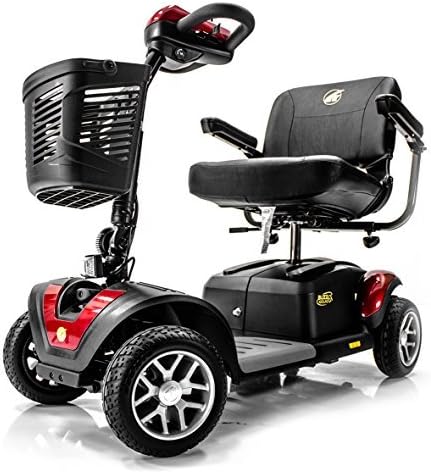
4.7★ (verified owners) · padded seat · up to 330 lb
Why COPD: Golden offers a dedicated rigid oxygen-tank holder for it, plus the plushest seat and highest capacity of the four: the choice if carrying a tank securely matters more than maximum range. Comes apart for a car trunk.
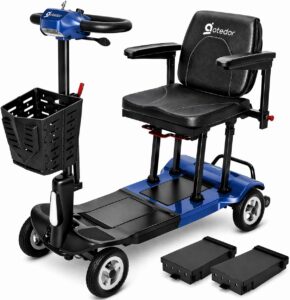
4.5★ (277 ratings) · folds compact · up to 300 lb
Why COPD: the cheapest and most owner-reviewed here, light and foldable so a family member can load it, the value pick. Its shorter range means keeping trips closer to home.
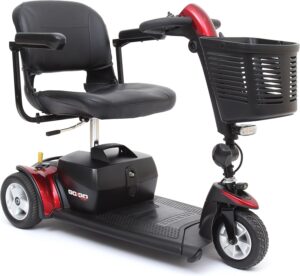
4.4★ (109 ratings) · compact · up to 325 lb
Why COPD: compact and easy indoors with a comfortable seat; three wheels turn tighter but are a little less steady than four for a laden ride.
Watch: the Buzzaround EX, our oxygen-holder pick
An independent walkthrough of the Golden Buzzaround EX, our alternative pick for riders who carry an oxygen tank, showing the seat, basket, controls and how it comes apart to transport.
Video: Golden Buzzaround EX review (YouTube). Polaris Mobility is not affiliated with the reviewer.
Still choosing? Our guide to the best four-wheel scooters ranks the stable models side by side, the full scooter catalogue lists every model we cover, and the city guide index links local guides with funding details for your area.
COPD mobility scooter FAQ
What is the best mobility scooter for COPD?
Our pick is the Glashow S1, because the biggest COPD risk is being stranded far from home, and the Glashow has the longest range of our four (rated around 25 miles), so you can go out and back without having to walk any distance. It folds flat for the car, and a soft oxygen bag straps to the seat back. If carrying an oxygen tank securely matters more than maximum range, the Golden Buzzaround EX has a dedicated rigid tank holder and a plusher seat, and the value-priced Aotedor keeps trips closer to home.
Can you carry an oxygen tank on a mobility scooter?
Yes. You have two good options: a soft oxygen cylinder bag that straps to almost any scooter’s seat back and holds a small portable tank, or a rigid oxygen-tank holder (Golden offers one for the Buzzaround EX) that clamps a tank firmly upright behind the seat. Route the tubing clear of the wheels and steering, secure the tank so it cannot fall, keep a portable concentrator’s vents clear, and never smoke or ride near open flame while using oxygen.
Does Medicare cover a mobility scooter for COPD?
It can. COPD limits how far you can move around your home before you are breathless, which is the standard Medicare uses. Your doctor examines and documents that in-home difficulty, writes an order, and an enrolled supplier files for approval. With Medicare you then pay 20% of the approved amount after your Part B deductible; Medicaid or the VA may cover more. Your oxygen equipment is covered separately: the scooter is its own durable medical equipment claim. Because coverage is judged on in-home need, a scooter for getting out and about is usually out of pocket.
How much range do you need with COPD?
More than you think, because the cost of running out is walking, the one thing to avoid. Work out your longest regular round trip, then choose a scooter rated for well beyond it, since real-world range is less than the rating once you account for cold, hills, your weight and the battery ageing. The Glashow S1, rated around 25 miles, gives the most headroom of our four; charge it fully every night and plan trips with a comfortable margin so a low battery is never a worry.
Should you avoid hills with a mobility scooter if you have COPD?
Favor flat routes where you can. Hills drain the battery faster, cutting into your range, and if the scooter ever struggles you do not want to be pushing or walking, which is exactly what COPD makes dangerous. A four-wheel scooter with good low-speed control handles gentle slopes fine, but plan your trips along flat, paved paths, keep a charged battery, and save the steepest routes for the car. The city guides note which local trails are flat.