
Mobility Scooters in Louisville

Looking for a mobility scooter in Louisville, to buy or to rent? Louisville has something most American cities do not: a former railroad bridge, converted for people on foot and on wheels, with a quarter-mile ramp at each end built long precisely so the climb is gradual. You can ride it across the Ohio River into Indiana and back. Waterfront Park says plainly that it allows personal mobility scooters and motorized wheelchairs, which matters, because the posted rules also say “no motorized vehicles, including electric scooters”, and that wording has turned plenty of people around at the gate who had every right to be there. This guide sorts that out, gives you the fares as they changed in March 2026, tells you what TARC3 paratransit really costs, and explains why Kentucky’s Medicaid rules are being rewritten right now. Polaris Mobility earns a commission on qualifying Amazon purchases through links on this page.
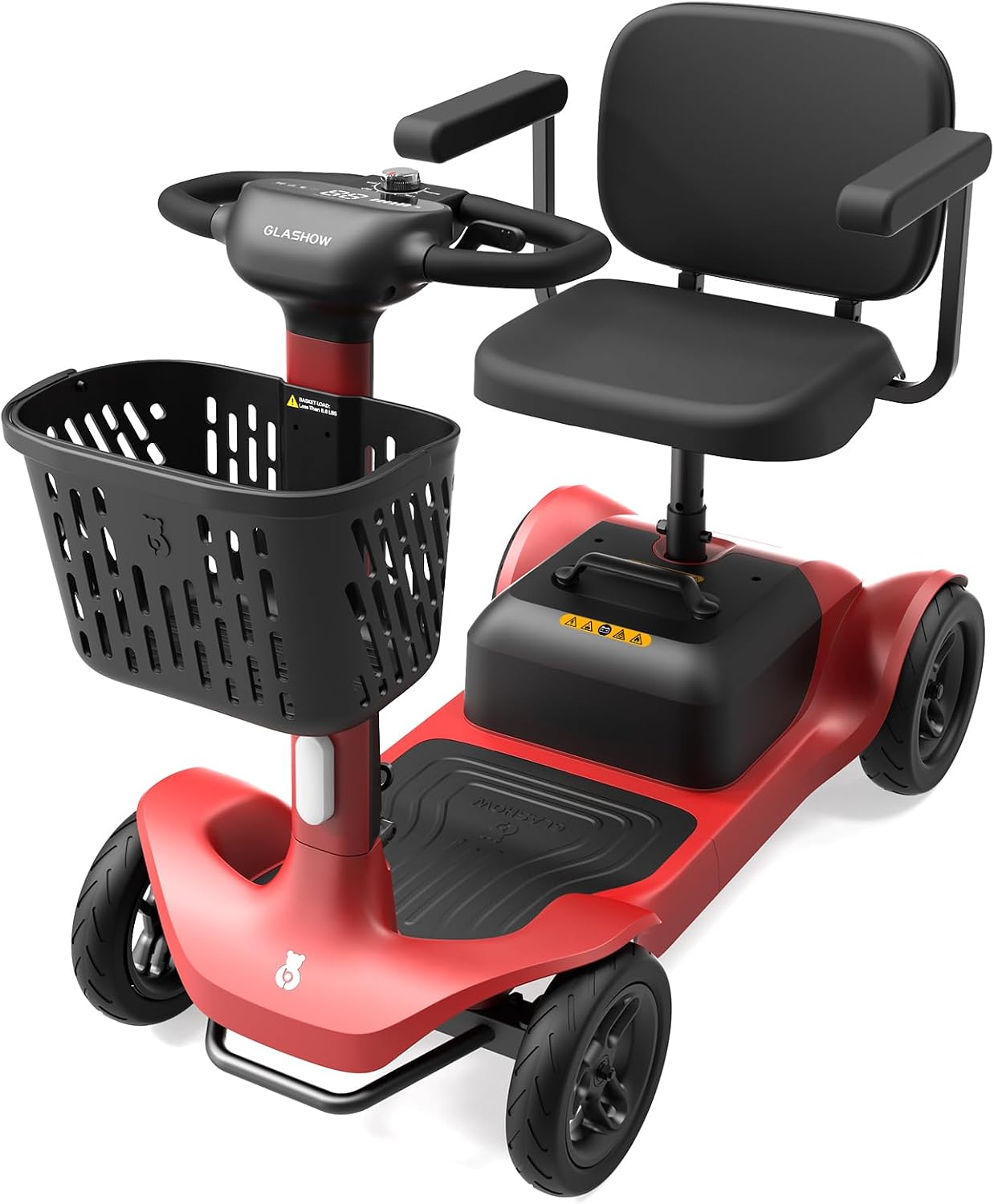
- Rated ~25 mi range
- 10″ wheels
- 6.2 mph
- 265 lb limit
Louisville gives you somewhere real to go under your own power, and the Big Four is a genuine outing rather than a stroll: two quarter-mile ramps and a half-mile bridge, and you will want to come back again. That is range and a motor that will pull a sustained ramp without complaint: the longest rated range here and the biggest wheels. Check this first: the 265 lb limit is the lowest of the four on this page. If that is close for you, buy the Buzzaround below at 330 lb instead: a ramp is exactly where an over-loaded scooter tells you the truth.
On Medicare or Kentucky Medicaid? Read the funding section before you pay out of pocket.
The Big Four Bridge: yes, your scooter is allowed
Now the part that makes this worth the trip. The Big Four Bridge crosses the Ohio River connecting Waterfront Park to Jeffersonville, Indiana. The bridge itself is about half a mile (2,562 ft), and each ramp is a quarter of a mile (1,181 ft). That ramp length is the whole point: to lift you to the deck of a railroad bridge, they built a long elliptical spiral rather than a short steep climb. Length is what buys you a gentle gradient. It is the difference between a bridge you look at and a bridge you cross.
- It is a real ride, so plan the battery. A quarter-mile ramp up, half a mile across, and the same back is a couple of miles before you have gone anywhere in Jeffersonville. That is a pleasure, not a warning, but it is why range is the spec we lead on for this city.
- The Indiana side took a year longer. The city opened the elliptical ramp and the bridge to pedestrians and bicycles on 6 February 2013; Jeffersonville built their ramp in 2014 to complete it. Both ends have a ramp now.
- Service animals are welcome, though other pets are not. Also no skateboards or in-line skates, and no events or gatherings.
- Lights run daily from twilight until 1 a.m. Waterfront Park does not publish the bridge’s opening hours on that page, so check before a late ride.
The $1 fare, and the $5 door you go through to get it
TARC raised fares this year. The current structure took effect on 2 March 2026, approved on 24 February after a public engagement process.
| Fare | Standard | Reduced (65+, disabled, Medicare) |
|---|---|---|
| Cash single ride | $2.25 exact change | $1.00 |
| MyTARC single ride | $2.25 stored value (transfers within 2 hrs) | $1.00 |
| 24-hour pass | $5.00 | Not listed |
| 7-day pass | $25.00 | Not listed |
| 30-day pass | $75.00 | Not listed |
| TARC3 paratransit | $4.50 one way · $9.00 round trip | |
Getting the $1 fare costs $5 and a trip downtown. Reduced fares are for pre-approved passengers only: youth 6–17, citizens with disabilities, Medicare cardholders and citizens aged 65 and over. Seniors show proof of age or government-issued ID; Medicare cardholders show a Medicare ID. Everyone must get a MyTARC photo ID card, and it is issued at exactly one place: the TARC Customer Service kiosk at 1000 W. Broadway, Louisville, KY 40203, Monday to Friday, 8:00 a.m. to 5:00 p.m., with a $5.00 initial fee (TARC).
Sit with that for a second, because it is the quiet catch. To get the fare that exists because you have difficulty getting around, you must first get yourself to one downtown office, on a weekday, during working hours. If you could easily do that, you might not need the card. Go once, get it done, and take someone with you if that helps, but know the trip is coming.
TARC3: a disability is not automatically a yes
That sentence catches people out, and it is worth understanding rather than resenting. ADA paratransit is not a benefit awarded for having a diagnosis: it is for people who functionally cannot use the fixed-route bus. Plenty of people with serious conditions can use a bus and are told so. It is why the interview and the functional assessment exist.
- Apply through ADARide.com, or call 877.232.7433.
- Trip reservations: (502) 560-0333. TARC does not state on that page how far ahead you must book. Ask when you call, and do not assume same-day.
- Where it goes: “A paratransit vehicle will travel to any metro destination within three-fourth of a mile of a regular, non-express TARC bus route during comparable days and times.” That is the ADA minimum corridor: if your destination sits more than three-quarters of a mile from a bus route, TARC3 does not have to take you there.
- If you are refused, that is not the end of the road, but it does mean your own wheels stop being optional.
Renting vs. buying a mobility scooter in Louisville
Run the numbers against TARC3 rather than against the bus, because TARC3 is the honest comparison for anyone who needs door-to-door.
- Keeps costing you. A travel scooter runs roughly $100 to $200 a week depending on model and city (Scootaround), so a month of regular use is several hundred dollars.
- You hand it back, and it never becomes yours.
- Not fitted or sized to you; you take whatever model is free.
- Delivery windows, deposits and return deadlines to plan around.
- Pays for itself fast. A one-time purchase; after a few weeks of what renting costs you are ahead, and you keep the scooter.
- At $9.00 a round trip on TARC3, two outings a week is about $72 a month, every month, forever.
- Spread the cost. Many scooters offer monthly payments at checkout or through your card, so it need not be one big hit.
- No eligibility interview, no functional assessment, no three-quarter-mile corridor.
Bottom line: rent for Derby; buy if you live here. And if TARC3 has turned you down (which, per TARC’s own wording, happens to people with real disabilities) then your own scooter plus a $1 bus fare is the plan, not the fallback.
How to pay: Medicare, and a Medicaid program being rewritten right now
If you are 65 or older, Medicare is your route. Part B may cover a scooter if a doctor confirms you need it to move around your home and you can operate one safely, through a supplier that accepts Medicare (Medicare.gov). If that is you, the fight described below is not about your coverage. Read it anyway if you have family under 65 who depend on Medicaid.
What one executive order does, another can undo. Governor Matt Bevin submitted the Kentucky HEALTH waiver in August 2016, seeking to require adults aged 19–64 to complete at least 20 hours a week of community engagement to keep coverage; Kentucky became the first state approved for work requirements and premiums, but litigation stopped it and it never took effect. In December 2019, one of Governor Andy Beshear’s first acts was an executive order rescinding his predecessor’s; his administration terminated the waiver, and he later relaunched kynect.
Here is what we will not do, and it matters. You will read elsewhere that work requirements only ever apply to “able-bodied adults without dependents”, so anyone with a disability is safe. We cannot confirm that from Kentucky’s own record. The original version of HB 695 did contain that phrase, and the enacted version removed it. The official bill record does not publish the age ranges, the disability exemptions, or an effective date. Anyone telling you with confidence that you are exempt is reading a summary, not the statute.
So: if you are under 65 and on Kentucky Medicaid, do not assume. Ask directly whether the community engagement requirement applies to you, what documentation you would need, and by when. The relevant federal deadline being cited is 1 January 2027. Administrative complexity is not a footnote here: it is the mechanism by which eligible people lose coverage, which is precisely what the Governor said in his veto.
Kentucky is worth comparing with Oklahoma on this one point, because the contrast is exact. Oklahomans put Medicaid expansion into their state constitution by ballot, so their legislature cannot undo it alone. Kentucky’s came by executive order, and its terms are now being set by a legislature that overrides the governor with a simple majority. Same benefit; very different foundations.
Kentucky Medicaid can pay for medically necessary equipment such as a power wheelchair or scooter when a doctor documents the need and it is supplied through an enrolled provider. Because these programs work through approved suppliers, a scooter bought on Amazon is a separate out-of-pocket purchase. Confirm current criteria directly, in this state, more than most, they change.
Comparing options across the state? Our Kentucky mobility scooter guide covers statewide Medicaid and Medicare details, the best models for the local climate and terrain, and how the picture changes from city to city.
Who needs mobility support in Louisville
15.9% of Louisville residents are 65 or older (99,755 people out of 627,210) a shade under the national 16.8% and below Kentucky’s 17.0% (U.S. Census Bureau, ACS 2023, 5-year).
The disability figures are where Kentucky demands attention. 14.7% of Louisville residents report a disability, already above the national 13.0%. Across Kentucky it is 17.7%: nearly five points above the national rate, and three points above Louisville’s own. The city is not the problem; the state carries one of the heavier disability burdens in the country, and it is doing so while rewriting the rules of the program that covers a large share of those people. For a reader in Louisville, the practical upshot is that you are in the part of Kentucky with the buses, the paratransit and the ramped bridge. Much of the state is not.
Best mobility scooters for Louisville (2026)
Picks that suit a two-mile bridge outing with a sustained ramp at each end, flat riverfront park paths, and Ohio Valley humidity. Specs are per manufacturer listings; confirm current details and price on Amazon.
| Model | Wheels | Max rider | Top speed | Owner rating |
|---|---|---|---|---|
| Glashow S1 Folding ★ Top pick | 10″ (4-wheel) | 265 lb | 6.2 mph | 4.4★ (46) |
| Golden Buzzaround EX If 265 lb is close | 9″ (4-wheel) | 330 lb | 5.0 mph | 4.7★ (verified) |
| Pride Go-Go Sport | 3-wheel | 325 lb | 4.7 mph | 4.4★ (109) |
| Aotedor Lightweight | 7″ | 300 lb | 3.7 mph | 4.5★ (277) |
4.4★ (46 ratings) · 10″ wheels · rated ~25 mi range · 265 lb limit
Why Louisville: the longest rated range and biggest wheels here, for a city that actually gives you distance to cover on protected paved path. Check the 265 lb limit first: a quarter-mile ramp punishes an overloaded scooter.
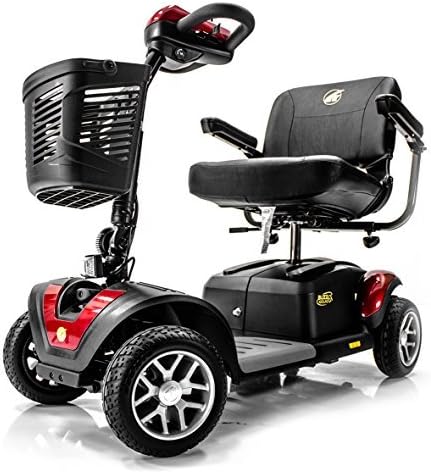
4.7★ (verified owners) · 9″ wheels · up to 330 lb
Why Louisville: 330 lb of capacity and the highest owner rating here, with a real service network. If you are anywhere near the Glashow’s limit, this is the one that will still climb the ramp in three years.
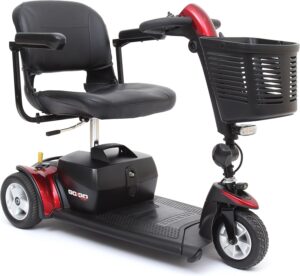
4.4★ (109 ratings) · compact · up to 325 lb
Why Louisville: 325 lb and it comes apart for a car trunk: useful when the bridge is on the other side of town from you. Four wheels feel steadier on a long ramp.
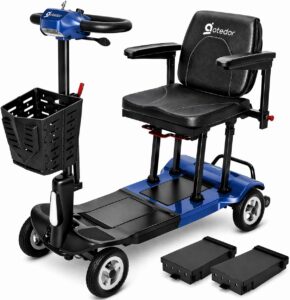
4.5★ (277 ratings) · folds compact · up to 300 lb
Why Louisville: the easiest to fold and carry, but the shortest legs and the smallest wheels: the least suited of the four to a two-mile bridge run. Best if your riding is errands and indoors.
Watch: the Golden Buzzaround EX reviewed
An independent walkthrough of the Golden Buzzaround EX, the higher-capacity alternative in the comparison above, showing the four-wheel frame, seat, controls and how it comes apart to transport.
Video: Golden Buzzaround EX review (YouTube). Polaris Mobility is not affiliated with the reviewer.
Compare more 4-wheel models · full catalog
Louisville mobility scooter FAQ
Can you take a mobility scooter on the Big Four Bridge?
Yes. Waterfront Park’s own page states: “We do allow personal mobility scooters and motorized wheelchairs.” The posted rules also ask visitors not to use motorized vehicles including electric scooters, mopeds, motorcycles and cars: that ban is aimed at rental stand-up e-scooters and mopeds, not at mobility devices, and the two statements sit on the same official page. The bridge is about half a mile (2,562 ft) long and each ramp is a quarter of a mile (1,181 ft), built long so the climb to the deck is gradual. It connects Waterfront Park to Jeffersonville, Indiana. Service animals are welcome; other pets are not.
How much is the bus for seniors in Louisville?
One dollar. TARC’s reduced local fare is $1.00 for citizens aged 65 and over, people with disabilities and Medicare cardholders, against a standard cash fare of $2.25 exact change. The current fare structure took effect on 2 March 2026 after approval on 24 February. To use the reduced fare you must be pre-approved and carry a MyTARC photo ID card, which is issued only at the TARC Customer Service kiosk at 1000 W. Broadway, Louisville, KY 40203, Monday to Friday 8:00 a.m. to 5:00 p.m., with a $5.00 initial fee. Standard passes are $5.00 for 24 hours, $25 for 7 days and $75 for 30 days; TARC does not list reduced pass prices on its fare page.
How much does TARC3 paratransit cost in Louisville?
$4.50 one way and $9.00 for a round trip: four and a half times the $1.00 reduced bus fare, and double the $2.25 standard cash fare. TARC3 travels to any metro destination within three-quarters of a mile of a regular, non-express TARC bus route during comparable days and times. Apply through ADARide.com or call 877.232.7433; trip reservations are on (502) 560-0333.
Does having a disability qualify you for TARC3?
Not automatically. TARC states plainly that “Having a disability does not necessarily qualify you for ADA paratransit service.” Eligibility is assessed by TARC staff using information from you and your doctor, with more gathered by phone or in a personal interview, and sometimes a free functional assessment carried out at Spalding University’s School of Occupational Therapy. ADA paratransit is for people who functionally cannot use the fixed-route bus, rather than for anyone holding a diagnosis.
Are there Medicaid work requirements in Kentucky?
Kentucky is actively rewriting these rules, so check your own status rather than relying on any summary. House Bill 695 of 2025 was vetoed on 26 March 2025 and overridden the next day, House 80–20 and Senate 29–7; as enacted it requires the Cabinet to submit a waiver application to CMS within 90 days to establish a mandatory community engagement waiver program. On 14 April 2026 the General Assembly overrode Governor Beshear’s line-item vetoes of House Bill 2 along party lines, writing Medicaid changes into state law including a requirement to show three months of compliance with work requirements before becoming eligible. Beshear said he vetoed that part because “it imposes a more strict requirement than currently in place… It also will likely result in the loss of Medicaid eligibility.” Kentucky’s official bill record does not publish the age ranges, disability exemptions or an effective date, and the enacted HB 695 removed the original “able-bodied… without dependents” wording, so do not assume you are exempt. If you are 65 or over you are on Medicare and this does not govern your coverage.
What is the best mobility scooter for Louisville?
Our top pick is the Glashow S1 Folding. Louisville gives you somewhere genuinely worth riding (the Big Four Bridge is a two-mile outing with a quarter-mile ramp at each end), and that rewards the longest rated range and the biggest wheels of the four here. The one thing to check first is its 265 lb weight limit, the lowest on this page; a sustained ramp is exactly where an overloaded scooter struggles, so if you are near that figure buy the Golden Buzzaround EX at 330 lb instead.