
Mobility Scooters in Mesa

Looking for a mobility scooter in Mesa, to buy or to rent? Mesa shares a transit system with Phoenix and does not share Phoenix’s population. 17.2% of Mesa residents are 65 or older (87,514 people) against 11.9% in Phoenix. Same Valley Metro, same buses, same rules, and a city half again as old. That matters because of one figure we did verify: an ADA Paratransit trip costs $4, and a 1-Day pass on the bus and light rail also costs $4. In the Valley, one door-to-door trip costs exactly what a whole day of unlimited everything else costs. This guide covers what that means, the ID that unlocks the reduced fare, desert heat, and the models that suit a very large, very flat, very hot suburb. Polaris Mobility earns a commission on qualifying Amazon purchases through links on this page.
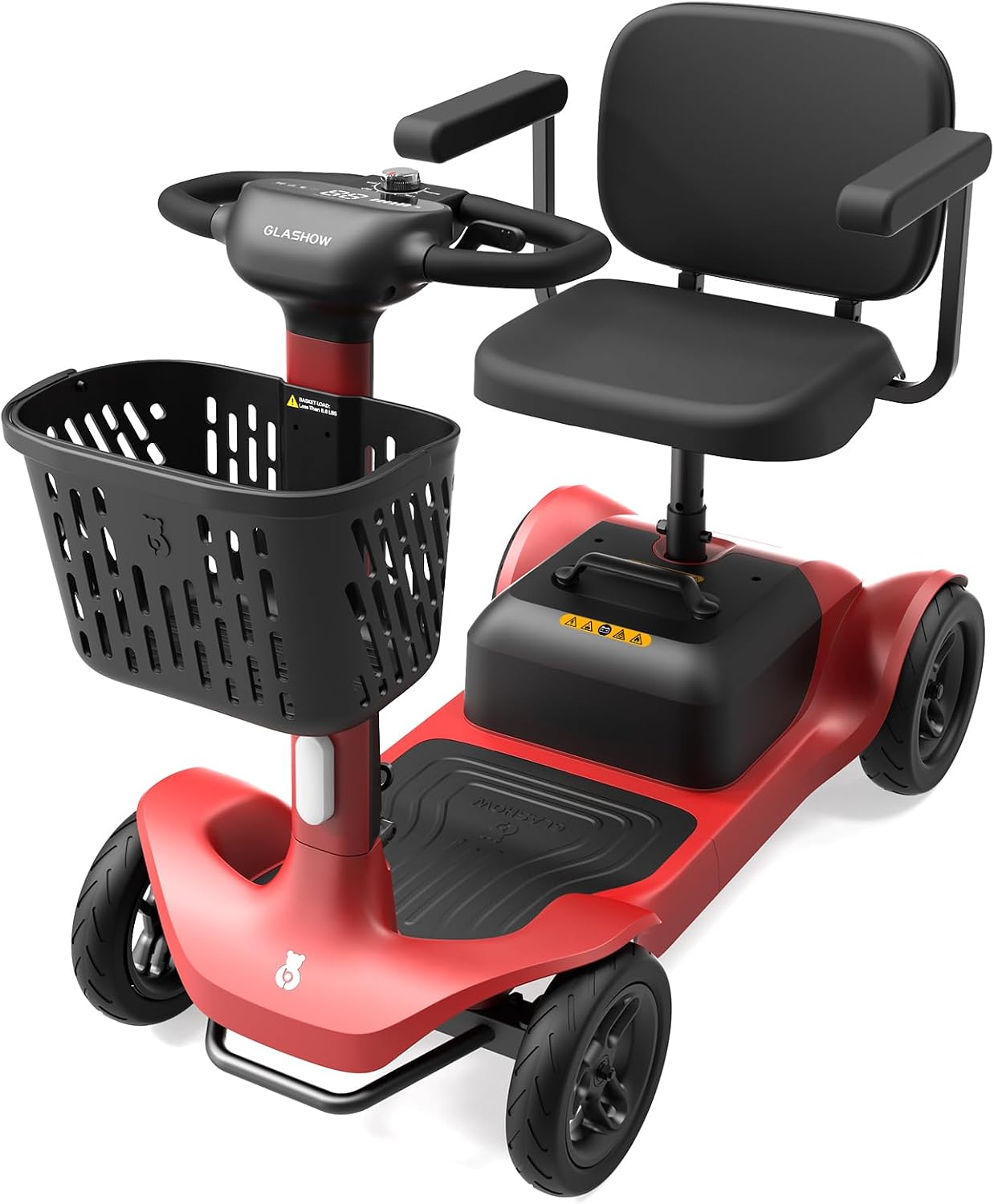
- Rated ~25 mi range
- 10″ wheels
- 6.2 mph
- 265 lb limit
Mesa is large, flat and spread out, and the desert decides your day. Two things follow. You need range, because Mesa distances are suburban and a $4 van trip costs what a whole day of transit costs. And you need to treat that range as a margin, not a target: a hot afternoon and a low battery are a bad combination a long way from shade. This has the longest rated range and the biggest wheels of the four. Check the 265 lb limit first; it is the lowest here, and if it is close, take the Buzzaround at 330 lb.
On Medicare or AHCCCS? Read the funding section before you pay out of pocket.
The same network, a very different city
Advice written for “the Phoenix area” is written for the average of those two cities, and Mesa is not the average. A network planned around a young, working, car-owning median lands differently in a city where one resident in six is over 65. That is not a complaint about Valley Metro: it is a reason to read the fare rules as they apply to you rather than to the Valley.
Four dollars is four dollars
Put that in a week. Two round trips on the van, a doctor and a shop, is $16. The same $16 buys four days of unlimited travel on everything else in the Valley. The van is not a rip-off; door-to-door service genuinely costs more to run. But if you are one of the 87,514 people here over 65, that ratio is the argument for owning the thing that gets you to a bus stop under your own power.
- The good part, and it is genuinely good: on ADA Paratransit, personal care attendants ride free. If someone travels with you to help, they are not a second fare.
- The reduced fare needs a card. Valley Metro’s reduced fare program covers seniors 65 and over, people with disabilities, Medicare cardholders and youth aged 6–18, and you must carry a Valley Metro Reduced Fare ID card. You download and complete an application; seniors and youth can take it to a Valley Metro photo ID site (Valley Metro).
- What we could not verify, and will not guess: the exact amount of the reduced fare. Valley Metro’s fare pages would not load for us while writing this, so we are not going to print a number we have not seen. Ring (602) 716-2100 and ask what a reduced 1-Ride, 1-Day and 31-Day cost today, and while you have them, ask what changed in the July 2026 service changes.
- Smart Fare caps exist. Valley Metro says that with Smart Fare “you’ll never pay more than the Smart Fare daily, weekly and monthly fare”, i.e. it stops charging once you hit the pass price. Worth setting up if you ride most days.
The desert is the timetable
- Ride early. Not “before it gets hot”, before the ground gets hot. Pavement holds heat long after the air starts to cool in the evening.
- Range is a margin. Plan to turn round at a third of your rated range, not a half. A flat battery on a Mesa arterial in July is not an inconvenience.
- Heat is hard on batteries. Store and charge the scooter indoors, never in a parked car or a hot garage if you can help it, and expect a battery that bakes all summer to give you less every year.
- The machine will burn you. A dark vinyl seat, metal armrests and a tiller left in the sun get hot enough to hurt. Park in shade, cover the seat, check before you sit.
- Carry more water than you think is reasonable, and tell someone your route.
Renting vs. buying a mobility scooter in Mesa
Mesa has a large winter-visitor population, so this question genuinely has two answers here rather than one.
- Keeps costing you. A travel scooter runs roughly $100 to $200 a week depending on model and city (Scootaround), so a month of regular use is several hundred dollars.
- You hand it back, and it never becomes yours.
- Not fitted or sized to you; you take whatever model is free.
- But: if you are here for a few weeks in the winter, there is nothing to ship, nothing to store, and no battery cooking in an Arizona garage while you are gone.
- Pays for itself fast. A one-time purchase; after a few weeks of what renting costs you are ahead, and you keep the scooter.
- It is the alternative to a $4 van trip: the fare that costs a whole day of everything else.
- Sized to you, charged, and ready at six in the morning when the riding is good.
- Spread the cost. Many scooters offer monthly payments at checkout or through your card.
Bottom line: if Mesa is home, buy, the arithmetic is not close. If you come for six weeks in February, rent, and spend the difference on not having to store a battery through a Mesa August.
How to pay: Medicare and AHCCCS
If you are 65 or older, Medicare is your route, and in a city with 87,514 residents over 65, it is the main one. Part B may cover a scooter if a doctor confirms you need it to move around your home and you can operate one safely, through a supplier that accepts Medicare (Medicare.gov). Read that test carefully: it is about moving around your home, not about crossing Mesa. That gap between what Medicare funds and what this city’s geography demands is worth understanding before you apply.
Arizona’s Medicaid is AHCCCS, and it is unlike other states’ programs for reasons of history: Congress enacted Medicaid in 1965 and Arizona did not join until 1 October 1982, the last state in, entering as mandatory managed care from the start rather than adding it later. For people who are 65 or over, or have a physical disability, and need long-term services, the relevant program is usually ALTCS, the Arizona Long Term Care System, implemented on 1 January 1989 for those who are elderly or physically disabled. AHCCCS can pay for medically necessary equipment such as a power wheelchair or scooter when a doctor documents the need and an enrolled provider supplies it. Ask AHCCCS directly about ALTCS eligibility and covered services rather than relying on a summary, including ours.
Because these programs work through approved suppliers, a scooter bought on Amazon is a separate out-of-pocket purchase. Confirm current criteria directly, as they change.
Comparing options across the state? Our Arizona mobility scooter guide covers statewide Medicaid and Medicare details, the best models for the local climate and terrain, and how the picture changes from city to city.
Who needs mobility support in Mesa
17.2% of Mesa residents are 65 or older (87,514 people out of 507,478) above the national 16.8% and far above Phoenix’s 11.9%. On disability, Mesa reports 13.0%: exactly the national figure, and below Arizona’s pattern of an older, more disabled state (U.S. Census Bureau, ACS 2023, 5-year).
Hold those two together and Mesa comes into focus: a lot of older people, in ordinary health, in a very large flat suburb. That is a population that does not need much: until distance is the thing that beats them. Nobody in Mesa is stopped by a hill. They are stopped by the fact that the pharmacy is two miles away, it is 41 degrees, and a door-to-door trip costs the same as a day pass. That is a solvable problem, and the solution has a battery in it.
Best mobility scooters for Mesa (2026)
Picks weighted for suburban distance, extreme heat and a flat grid where nothing is close. Specs are per manufacturer listings; confirm current details and price on Amazon.
| Model | Wheels | Max rider | Rated range | Owner rating |
|---|---|---|---|---|
| Glashow S1 Folding ★ Top pick | 10″ (4-wheel) | 265 lb | ~25 mi | 4.4★ (46) |
| Golden Buzzaround EX If 265 lb is close | 9″ (4-wheel) | 330 lb | Shorter | 4.7★ (verified) |
| Pride Go-Go Sport | 3-wheel | 325 lb | Shorter | 4.4★ (109) |
| Aotedor Lightweight | 7″ | 300 lb | Shortest | 4.5★ (277) |
4.4★ (46 ratings) · 10″ wheels · rated ~25 mi range · 265 lb limit
Why Mesa: the longest rated range and biggest wheels, which is what a very large flat suburb asks for. In this heat, plan on two-thirds of any rating. Check the 265 lb limit.
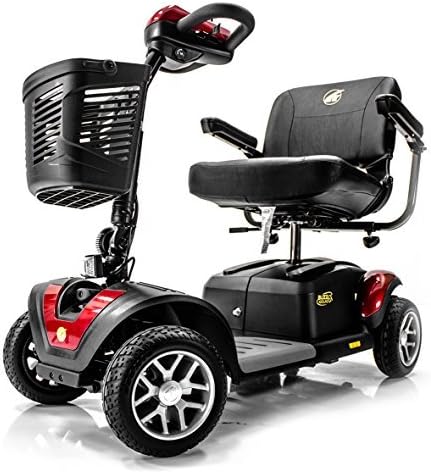
4.7★ (verified owners) · 9″ wheels · up to 330 lb
Why Mesa: 330 lb, the highest owner rating here, a comfortable seat for long hot mornings and a real service network in a metro this size.
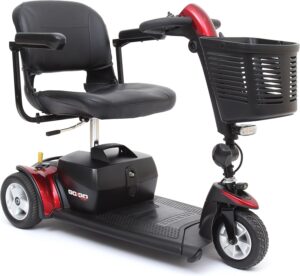
4.4★ (109 ratings) · compact · up to 325 lb
Why Mesa: 325 lb and it comes apart for a car trunk: useful for winter visitors and for anyone whose family drives them to the far side of the Valley.
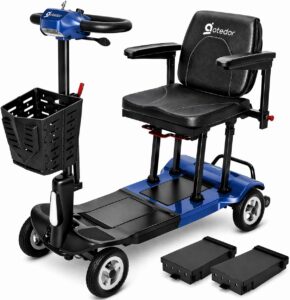
4.5★ (277 ratings) · folds compact · up to 300 lb
Why Mesa: the most owner ratings and the easiest to carry indoors, which is where a battery should live here. The shortest legs of the four, though: the wrong end of a two-mile errand.
Watch: the Golden Buzzaround EX reviewed
An independent walkthrough of the Golden Buzzaround EX, the higher-capacity alternative in the comparison above, showing the four-wheel frame, seat, controls and how it comes apart to transport.
Video: Golden Buzzaround EX review (YouTube). Polaris Mobility is not affiliated with the reviewer.
Compare more 4-wheel models · full catalog
Mesa mobility scooter FAQ
How much does Dial-a-Ride paratransit cost in Mesa?
Valley Metro’s ADA Paratransit one-way fare is $4, and personal care attendants ride free. Put that next to the fixed-route fares: a 1-Ride on local bus or light rail is $2 and a 1-Day pass is $4. So a single door-to-door trip costs exactly what a whole day of unlimited buses and trains costs, and you need a second one to get home. Two round trips a week works out at about $16, which is four days of unlimited travel on everything else.
How do I get Valley Metro’s reduced fare in Mesa?
You need a Valley Metro Reduced Fare ID card. The program covers seniors aged 65 and over, people with disabilities, Medicare cardholders and youth aged 6–18. You download and complete an application, and seniors and youth can take it to a Valley Metro photo ID site. One honest caveat: we could not verify the current reduced fare amounts (Valley Metro’s fare pages would not load while we were writing), so ring (602) 716-2100 and ask what a reduced 1-Ride, 1-Day and 31-Day cost today, and what changed in the July 2026 service changes.
Is Mesa different from Phoenix for a scooter user?
Demographically, very. 17.2% of Mesa residents are 65 or older (87,514 people) against 11.9% in Phoenix, though both cities share the same Valley Metro network, fares and Dial-a-Ride. Advice written for “the Phoenix area” is written for the average of the two, and Mesa is not the average: one resident in six here is over 65. Mesa reports 13.0% of residents with a disability, exactly the national rate.
How do you ride a mobility scooter in Mesa’s heat?
Move your life to the morning, and treat range as a margin rather than a target. Plan to turn round at a third of your rated range, not a half. Store and charge the scooter indoors rather than in a parked car or a hot garage, because heat is hard on batteries and one that bakes all summer gives you less every year. Check the seat, armrests and tiller before you sit on them; a dark seat in Arizona sun gets hot enough to burn. Carry more water than seems reasonable and tell someone your route.
What is the best mobility scooter for Mesa?
Our top pick is the Glashow S1 Folding. Mesa is large, flat and spread out, so nothing here is a hill problem: it is a distance problem, made sharper by a $4 van trip costing what a whole day of transit costs. This has the longest rated range and the biggest wheels of the four. In desert heat, plan on using about two-thirds of any rated range. Check its 265 lb weight limit first, the lowest here; if you are near it, the Golden Buzzaround EX takes 330 lb and has the highest owner rating.