
Mobility Scooters in Milwaukee

Looking for a mobility scooter in Milwaukee, to buy or to rent? Milwaukee has one of the best setups for a scooter rider in the Midwest, and one genuinely unusual advantage you will not find in most of this guide. The Oak Leaf Trail runs more than 135 miles through Milwaukee County, mostly asphalt. The Hop streetcar is free and you roll straight on. And on funding, Wisconsin does something no other state manages: it never expanded Medicaid, yet it is the only non-expansion state with no coverage gap. The catch is the lake, which hands Milwaukee a mild summer and 52 inches of snow in exchange. This guide covers our top pick, the trail, the free streetcar, fares, BadgerCare, and the models that fit Milwaukee. Polaris Mobility earns a commission on qualifying Amazon purchases through links on this page.
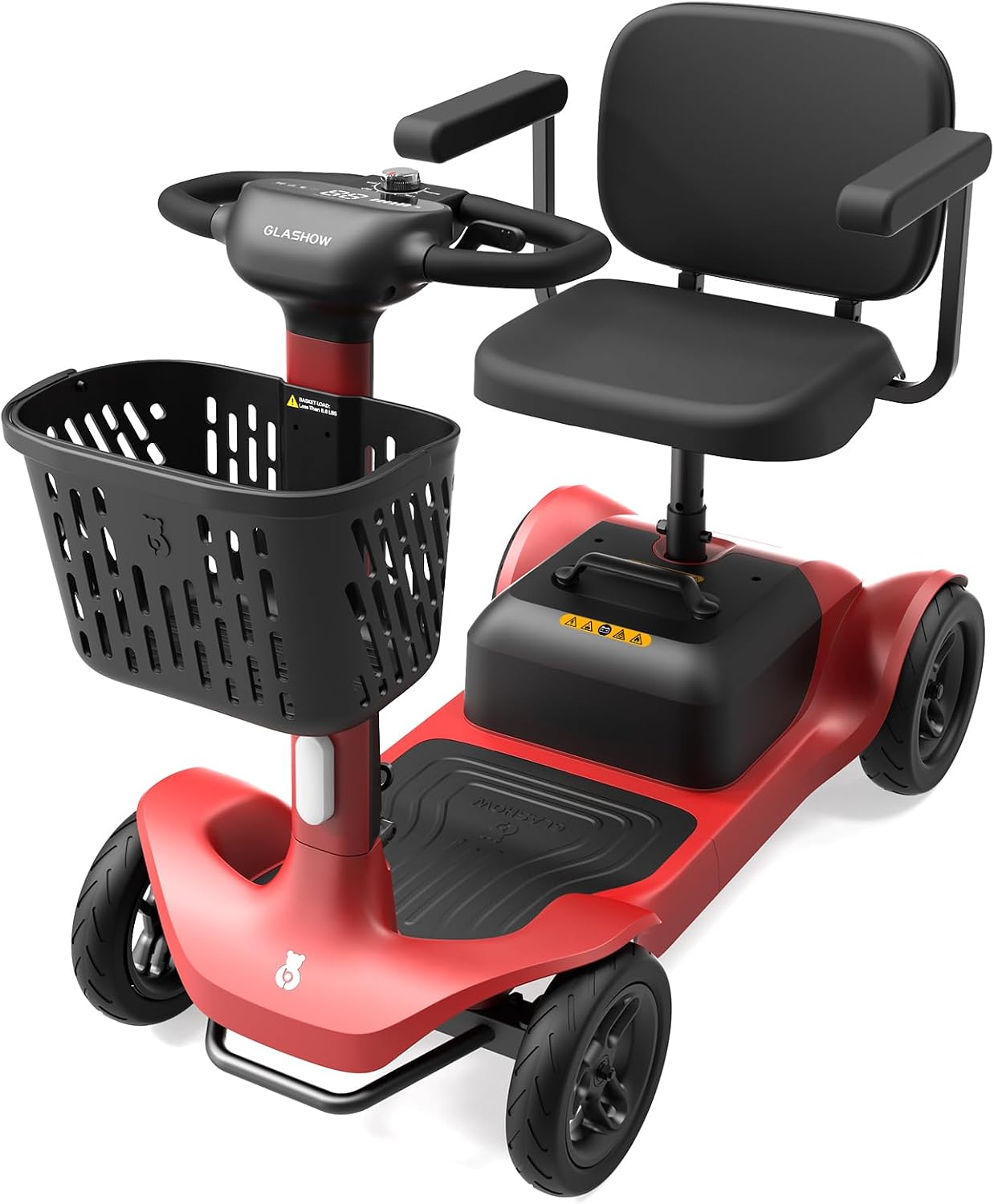
- 10″ wheels
- Rated ~25 mi range
- Folds for the car
- ★ 4.4 rating
Milwaukee gives you 135 miles of trail and then takes four months of it away. That combination suits this scooter: the longest rated range in this comparison to make the Oak Leaf worth riding properly, the biggest wheels for cold, patchy shoulder-season pavement, and a frame that folds, which matters more here than in warm cities, because from December it lives indoors, and you drive it to a dry trailhead rather than riding through slush. Want the most comfortable seat and a brand service network instead? See the Golden Buzzaround EX below.
On Medicare or BadgerCare Plus? Read the funding section before you pay out of pocket.
The Oak Leaf Trail: more than 135 miles
- Think branches, not a loop. It is a network of seven branch lines, so the way to use it is to pick one branch and a trailhead, ride out and back inside your battery range, and learn a few segments well rather than trying to see all of it.
- The lakefront branch is the one to start with: flat, scenic and close to the museums and downtown, so a first outing has somewhere to stop.
- Check the surface where branches connect. “Mostly asphalt” is not “all asphalt”, and connections between branches vary. If a stretch turns to gravel, that is where small wheels start working hard.
The Hop is free, and you roll straight on
That is a rare combination: free and step-free. It connects the central downtown districts, which makes it the obvious way to cross the middle of the city on the days you do not want to ride the whole way, and in a Milwaukee January there are a lot of those days.
Bus fares, caps and Transit Plus
- Buses. A standard MCTS ride is $2.75, but if you are 65 or older or have a disability you pay $1.25. Fares cap automatically on the same payment method: for reduced-fare riders, $4 a day, $16.50 a week and $49.50 a month: once you hit a cap, the rest of your rides and transfers in that period are free (MCTS).
- The WisGo card replaced the old M•Card and is what the capping runs on. It costs $2 for regular riders, but reduced-fare riders get their first card free. Transfers work within a 90-minute window.
- Transit Plus is the door-to-door paratransit, at $4.00 for a one-way van trip. Since early 2026 riders can pay onboard with a Transit Plus WisGo card.
- Applying: the application and the medical verification form can now be submitted online, which saves a trip. Call (414) 343-1700 to register, weekdays 8:00 a.m. to 4:30 p.m.
- Eligibility is functional. It is for people whose condition prevents them using fixed-route buses: including where an environmental barrier makes getting to or from the stop impossible on your own, which is worth knowing if the obstacle is your street rather than the bus.
The lake gives, and the lake takes
- Summer is the reward. An 81°F average high means you can ride the middle of the day for months, which riders in Phoenix, Austin or Houston simply cannot. Make the most of the long season on the Oak Leaf.
- Winter is for the free streetcar, not the scooter. Store and charge it indoors, wait for cleared dry pavement, stay off snow and ice, and wipe road salt off the frame after outings: salt is what quietly destroys a scooter in this climate.
- Watch the shoulder seasons. Late fall and early spring are the deceptive ones: dry-looking pavement can carry ice in the shade. That is where bigger wheels and a slower pace earn their keep.
Renting vs. buying a mobility scooter in Milwaukee
With a 135-mile trail system on your doorstep and a long, mild summer, the maths favors owning. For regular use, renting adds up quickly and buying is usually cheaper within a season.
- Keeps costing you. A travel scooter runs roughly $100 to $200 a week depending on model and city (Scootaround), so a month of regular use is several hundred dollars.
- You hand it back, and it never becomes yours.
- Not fitted or sized to you; you take whatever model is free.
- Delivery windows, deposits and return deadlines to plan around.
- Pays for itself fast. A one-time purchase; after a few weeks of what renting costs you are ahead, and you keep the scooter.
- Always charged, sized to you and ready by the door.
- Spread the cost. Many scooters offer monthly payments at checkout or through your card, so it need not be one big hit.
- Comes with a manufacturer warranty and keeps resale value.
Bottom line: rent for a festival weekend; buy if you or a family member will use a scooter most weeks. A scooter you own gets stored indoors over winter and comes back out in April, which a rental never does.
How to pay: BadgerCare, and the gap Wisconsin does not have
Why that matters on this page: in most non-expansion states covered in this guide there are tens or hundreds of thousands of people who earn too much for Medicaid and too little for subsidies, and for them a funded scooter is simply out of reach. In Wisconsin there is a route for everyone: either BadgerCare Plus or a subsidized plan. BadgerCare Plus can cover medically necessary equipment when a doctor documents the need and it comes through an enrolled provider. Income limits were last updated on 1 February 2026, so check current figures.
If you are 65 or older, Medicare is still your main route. Part B may cover a scooter if a doctor confirms you need it to move around your home and you can operate one safely, through a supplier that accepts Medicare (Medicare.gov).
Because these programs work through approved suppliers, a scooter bought on Amazon is a separate out-of-pocket purchase, which is why many Milwaukee buyers choose one for the lower price and immediate delivery. Confirm current criteria directly, as they change.
Comparing options across the state? Our Wisconsin mobility scooter guide covers statewide Medicaid and Medicare details, the best models for the local climate and terrain, and how the picture changes from city to city.
Who needs mobility support in Milwaukee
Milwaukee is a young city inside an old state, and the gap between the two is the story. About 11.8% of city residents are 65 or older (roughly 67,000 people out of 570,000) well under Wisconsin’s 18.0%, which is older than the national 16.8% (U.S. Census Bureau, ACS 2023).
But look at disability rather than age and it flips: 13.2% of Milwaukee residents report a disability against 12.0% across Wisconsin. A younger city reporting more disability than its older state is a real signal: need here is not simply a function of age, and the free streetcar, the $1.25 fare and the $49.50 monthly cap are doing more work than the age numbers alone would suggest.
Best mobility scooters for Milwaukee (2026)
Picks that suit a long asphalt trail network, a mild summer, a hard winter and a free step-free streetcar: range and wheel size first, comfort close behind. Specs are per manufacturer listings; confirm current details and price on Amazon.
| Model | Wheels | Max rider | Top speed | Owner rating |
|---|---|---|---|---|
| Glashow S1 Folding ★ Top pick | 10″ (4-wheel) | 265 lb | 6.2 mph | 4.4★ (46) |
| Golden Buzzaround EX | 9″ (4-wheel) | 330 lb | 5.0 mph | 4.7★ (verified) |
| Aotedor Lightweight | 7″ | 300 lb | 3.7 mph | 4.5★ (277) |
| Pride Go-Go Sport | 3-wheel | 325 lb | 4.7 mph | 4.4★ (109) |
4.4★ (46 ratings) · 10″ wheels · rated ~25 mi range
Why Milwaukee: the range to ride an Oak Leaf branch properly, the biggest wheels for cold shoulder-season pavement, and it folds to store indoors through a real winter.
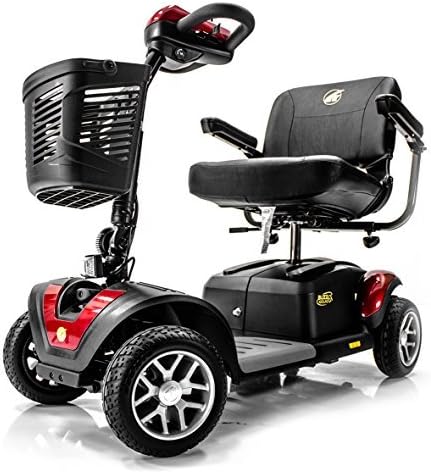
4.7★ (verified owners) · 9″ wheels · up to 330 lb
Why Milwaukee: comfort for long lakefront afternoons in that mild summer, the highest owner rating and weight capacity here, and a real service network behind it.
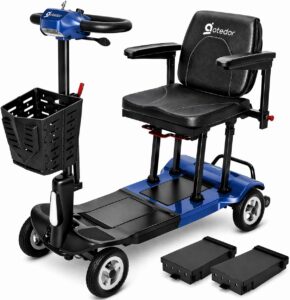
4.5★ (277 ratings) · folds compact · up to 300 lb
Why Milwaukee: light to lift into a car and effortless to roll onto the free Hop: a good downtown errand runner, though small wheels are the wrong tool for cold, broken pavement.
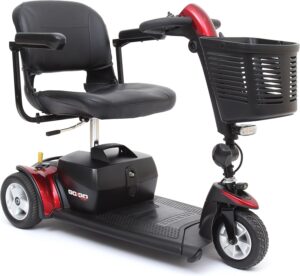
4.4★ (109 ratings) · compact · up to 325 lb
Why Milwaukee: a tight turning circle for the Public Market, indoor venues and a busy Hop car. Four wheels feel steadier over trail distance and on cold pavement.
Watch: a four-wheel travel scooter in action
An independent walkthrough of the Golden Buzzaround EX, the comfort alternative in the comparison above, showing the four-wheel frame, seat, controls and how it comes apart to transport.
Video: Golden Buzzaround EX review (YouTube). Polaris Mobility is not affiliated with the reviewer.
Compare more 4-wheel models · full catalog
Milwaukee mobility scooter FAQ
Is Milwaukee a good city for a mobility scooter?
For eight months of the year, yes, and unusually so. The Oak Leaf Trail gives you more than 135 miles of mostly asphalt path across Milwaukee County, The Hop streetcar is free with roll-on roll-off access, and the summer is mild, with a July average high of 81°F. Winter is the limit: about 52 inches of snow a year, so from December the scooter lives indoors and you lean on the streetcar and buses.
Is The Hop streetcar free, and can I take a scooter on it?
Yes to both. The Hop costs nothing to ride, with no fare, card or pass, and its five 67-foot streetcars are built for roll-on, roll-off access for wheelchairs, strollers and bikes, so a scooter boards without a ramp or a lift. It connects the central downtown districts, which makes it the easiest way to cross the middle of the city in bad weather.
What does it cost to use Milwaukee transit with a mobility scooter?
If you are 65 or older or have a disability, an MCTS bus ride is $1.25 rather than $2.75, and fares cap automatically at $4 a day, $16.50 a week and $49.50 a month on the same payment method, after which rides and transfers are free. Reduced-fare riders get their first WisGo card free. Transit Plus door-to-door paratransit is $4.00 for a one-way van trip; register on (414) 343-1700, and the application and medical form can be submitted online.
Does Medicaid pay for a mobility scooter in Wisconsin?
Wisconsin is a genuinely unusual case. It never expanded Medicaid, yet it is the only non-expansion state with no coverage gap: a Section 1115 waiver, extended through December 2029, covers adults 19 to 64 without dependent children through BadgerCare Plus up to 100% of the federal poverty level, and those between 100% and 138% qualify for subsidized Marketplace coverage instead. BadgerCare Plus can cover medically necessary equipment through an enrolled provider when a doctor documents the need. If you are 65 or older, Medicare Part B is the usual route.
What is the best mobility scooter for Milwaukee?
For a long asphalt trail network and a hard winter, range, wheel size and a folding frame matter most. Our top pick is the Glashow S1 for its 10-inch wheels, roughly 25-mile rated range and folding frame, which stores indoors from December. The Golden Buzzaround EX is the comfort alternative with the highest owner rating and a service network, and a lightweight model is easiest to lift and roll onto the free Hop.