
Mobility Scooters in Nashville

Looking for a mobility scooter in Nashville, to buy or to rent? Nashville is a city of two halves for anyone on wheels. Its greenways are genuinely excellent: miles of smooth, paved, ADA-accessible path along the Cumberland River, plus one of the longest pedestrian bridges in the world. Its sidewalks are the weak point, with gaps that force you into detours, and Nashville knows it, which is why voters approved the largest capital program in the city’s history, including 86 miles of new sidewalks. That work has started but will take years, so this guide is honest about what is good today and what you still plan around. It covers our top pick, renting vs. buying, the greenways, Music City with a scooter, transit, TennCare, and the models that fit Nashville. Polaris Mobility earns a commission on qualifying Amazon purchases through links on this page.
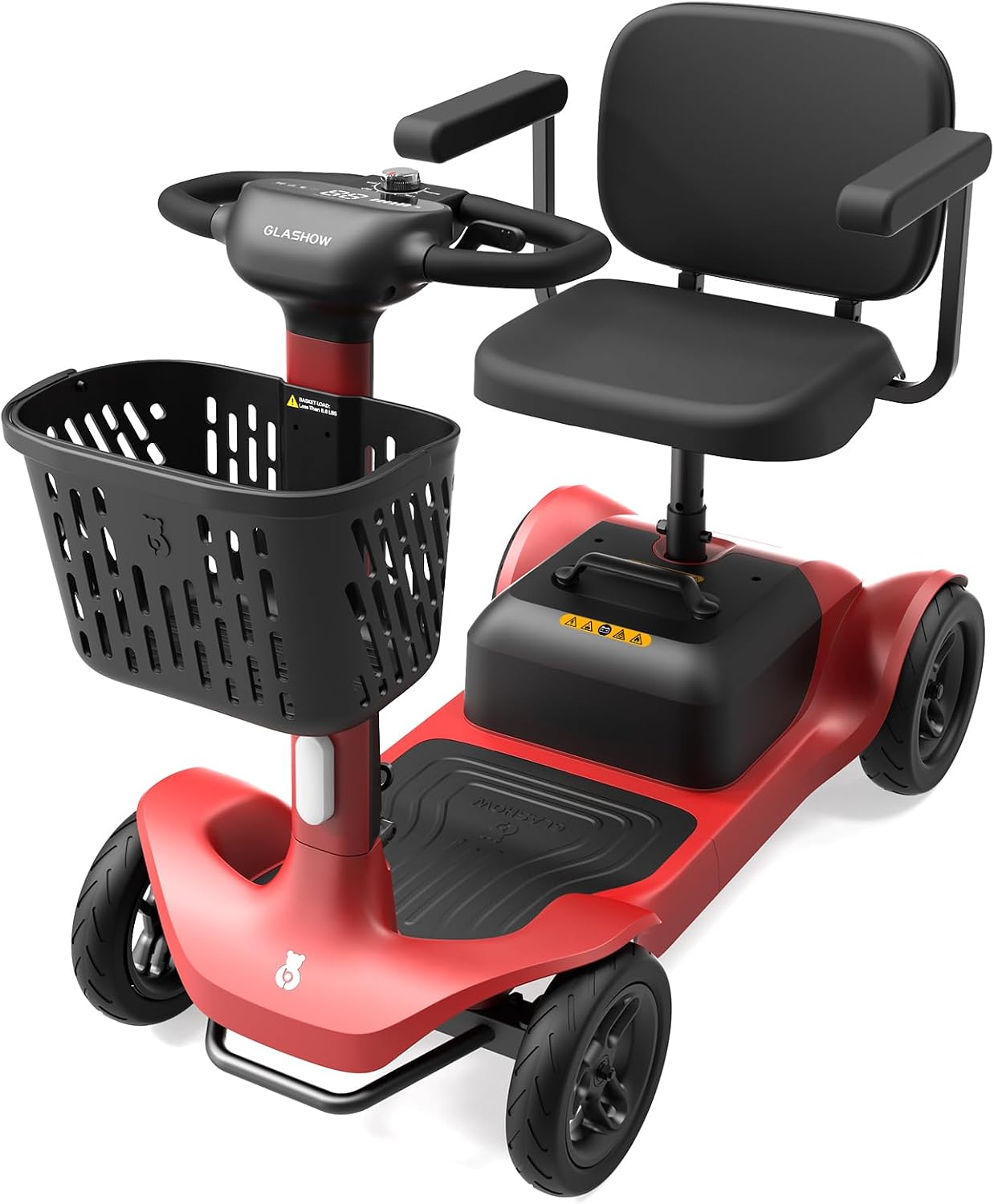
- 10″ wheels
- Rated ~25 mi range
- Folds for the car
- ★ 4.4 rating
Nashville asks a scooter to do two different jobs, and wheel size answers both. The sidewalk network still has gaps and uneven joints, where the biggest wheels here ride over what smaller ones catch on. Then the greenways run for miles, where the longest rated range in this comparison lets you actually use them. It also folds into a car, which matters in a city where you will drive to a trailhead more often than roll to one. Want maximum seat comfort and a brand service network for long Opry and Broadway days instead? See the Golden Buzzaround EX below.
On Medicare or TennCare? Read the funding section before you pay out of pocket.
Renting vs. buying a mobility scooter in Nashville
Nashville draws a lot of visitors who need a scooter for a few days of music and museums, so the rental market here is well developed. For regular use, though, renting adds up quickly and buying is usually cheaper within a season.
- Keeps costing you. A travel scooter runs roughly $100 to $200 a week depending on model and city (Scootaround), so a month of regular use is several hundred dollars.
- You hand it back, and it never becomes yours.
- Not fitted or sized to you; you take whatever model is free.
- Delivery windows, deposits and return deadlines to plan around.
- Pays for itself fast. A one-time purchase; after a few weeks of what renting costs you are ahead, and you keep the scooter.
- Always charged, sized to you and ready by the door.
- Spread the cost. Many scooters offer monthly payments at checkout or through your card, so it need not be one big hit.
- Comes with a manufacturer warranty and keeps resale value.
Where to rent locally
Nashville has real local mobility shops alongside the national delivery services, which helps if you want to try a model before buying. All-Star Medical stocks wheelchairs and mobility devices at its Hermitage and Franklin locations, Wheelchair and Scooter Rentals of Nashville and Mobility Equipment of Tennessee serve the city and the Music City Center, and Scootaround (1-888-441-7575) and Cloud of Goods deliver to hotels, an Airbnb or your home. Confirm current rates and delivery areas directly.
Bottom line: rent for a visit or a festival; buy if you or a family member will use a scooter most weeks: it is cheaper within a month or two.
The sidewalks: the honest weak point, and the $3.1 billion answer
- It is real, and it is early. In the first year the city launched $163 million of projects, took delivery of new buses, cut the ribbon on a bus line jump lane, and broke ground on the first sidewalk funded by the program. The Chestnut Complete Street is expected to finish by the end of 2026.
- What that means for you today. Do not plan a route on the assumption that a sidewalk runs the whole way, in much of Nashville it does not yet. Check your route in advance, keep to the greenways and the built-out downtown core for longer rides, and treat the sidewalk network as improving rather than finished.
The greenways: where to ride today
- The Cumberland River Greenway runs 6.6 miles one way, from the Country Music Hall of Fame north to Rhodes Park, with a 3.5-mile downtown stretch along the water. Pick a segment and turn back well within your battery range.
- The John Seigenthaler Pedestrian Bridge is the connector that makes it all work: 0.59 miles and 3,150 feet across the Cumberland, one of the longest pedestrian bridges in the world, linking downtown to East Nashville car-free with a skyline view the whole way.
Music City with a scooter
The reason many people come to Nashville is the music, and the big venues handle scooters well:
- Country Music Hall of Fame and Museum: elevators reach every floor, including each level of the CMA Theater, with ramps and automatic doors throughout.
- Grand Ole Opry: accessible seating on both the main floor and the balcony, and one guest may sit with you in the accessible area.
- Old Town Trolley tours: most trolleys have motorized lifts that take manual wheelchairs, electric wheelchairs or mobility scooters.
- Visiting from out of state? Tennessee honours non-expired disability placards and plates from other states and countries, so you do not need a temporary permit for your stay (Scootaround).
- Broadway is the exception. The honky-tonk strip is crowded, loud and narrow inside, and the bars are old buildings. Go early in the day if you want to see it on a scooter, and expect some venues not to work for you.
A mild winter and a hard summer
- Summer: ride early or in the evening, carry water, and use shade: the greenways are tree-lined, which helps a great deal. Humidity makes upper-80s feel considerably worse, and there is little relief overnight.
- Winter: mostly rideable. The hazard is not snow depth but the occasional ice storm, so wait for dry pavement afterwards rather than picking through it.
- Storms: this is tornado country and Nashville has seen serious flooding. Check the forecast before a long greenway outing, since the Cumberland paths sit on a floodplain by design.
Getting around: WeGo and AccessRide
- Buses. WeGo runs the network. Adults pay $2 for a two-hour pass or $4 all day, but if you are 65 or older or have a disability the fare is 85 cents: among the cheapest reduced fares of any big city in this guide. You need the discount card: seniors 65+ get a permanent one, the application costs $3.00, and it must be submitted in person at the WeGo Central ticketing office, 400 Dr. Martin L. King Jr. Blvd.
- AccessRide is the door-to-door paratransit across Davidson County, at $3.70 a trip, running 4:45 a.m. to 1 a.m. seven days a week including holidays. Book one to seven days ahead, by 4:30 p.m. on weekdays or 2:30 p.m. at weekends and on holidays. Call 615-880-3970 to schedule, or 615-880-3596 for an eligibility specialist (WeGo).
- A detail worth knowing: AccessRide says it will make every attempt to accommodate wheelchairs, scooters and other mobility devices, and it strongly recommends your device have working brakes and be in clean, safe, good working order. If your scooter’s brakes are neglected, sort them out before you rely on paratransit.
- Eligibility is functional. Having a disability does not qualify you automatically; you must show that it prevents you from using the fixed-route buses.
Who needs mobility support in Nashville
Nashville is a young city inside an ordinary-aged state. About 12.5% of residents are 65 or older (roughly 85,700 people out of 684,000) well below Tennessee’s 16.8%, which sits exactly at the national average of 16.8% (U.S. Census Bureau, ACS 2023). The sharper number is disability: 11.0% in Nashville against 15.0% across Tennessee and 13.0% nationally. The people who most need mobility support in this state are disproportionately outside the city, in the smaller towns and rural counties where sidewalks and paratransit are thinner than anything described above.
Best mobility scooters for Nashville (2026)
Picks that suit a city with gap-toothed sidewalks, long smooth greenways, a mild winter and a punishing summer: wheel size and range first, comfort close behind. Specs are per manufacturer listings; confirm current details and price on Amazon.
| Model | Wheels | Max rider | Top speed | Owner rating |
|---|---|---|---|---|
| Glashow S1 Folding ★ Top pick | 10″ (4-wheel) | 265 lb | 6.2 mph | 4.4★ (46) |
| Golden Buzzaround EX | 9″ (4-wheel) | 330 lb | 5.0 mph | 4.7★ (verified) |
| Aotedor Lightweight | 7″ | 300 lb | 3.7 mph | 4.5★ (277) |
| Pride Go-Go Sport | 3-wheel | 325 lb | 4.7 mph | 4.4★ (109) |
4.4★ (46 ratings) · 10″ wheels · rated ~25 mi range
Why Nashville: the biggest wheels for uneven sidewalk joints and gaps, the longest rated range for the Cumberland and Shelby Bottoms greenways, and it folds into the car you will drive to the trailhead.
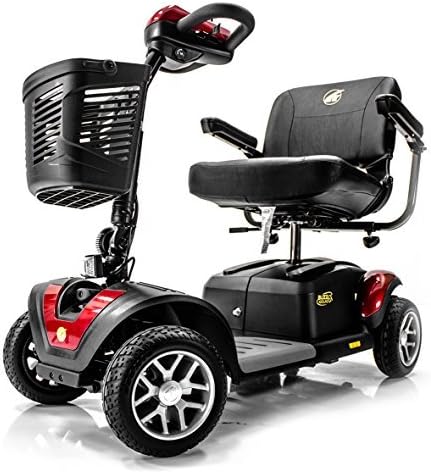
4.7★ (verified owners) · 9″ wheels · up to 330 lb
Why Nashville: the comfort choice for a long day at the Opry or the Hall of Fame, the highest owner rating and weight capacity here, and a real brand service network behind it.
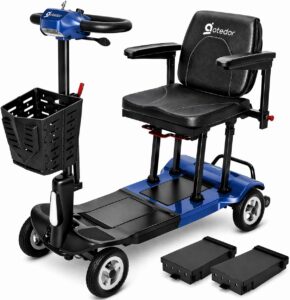
4.5★ (277 ratings) · folds compact · up to 300 lb
Why Nashville: the easiest to lift into a car trunk and the most nimble in a crowded venue, but the small wheels are the wrong answer to a broken sidewalk, so pair it with driving to smooth ground.
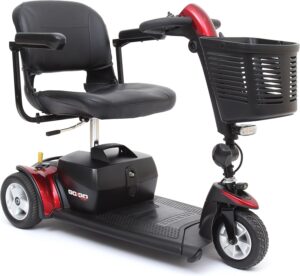
4.4★ (109 ratings) · compact · up to 325 lb
Why Nashville: a tight turning circle for museum floors and packed venues. Four wheels feel steadier over greenway distance and on uneven pavement.
How to pay: Medicare, TennCare and out of pocket
If you are 65 or older, Medicare is your route, and it works the same in Nashville as anywhere. Part B may cover a scooter if a doctor confirms you need it to move around your home and you can operate one safely, through a supplier that accepts Medicare (Medicare.gov).
Tennessee also runs TennCare under a financing arrangement no other state has. Approved on January 8, 2021 and often called a block grant, it is more precisely an aggregate cap: instead of the federal government reimbursing a share of whatever the state actually spends, federal funding is limited to a target based on Tennessee’s own per-enrollee costs, and that cap rebases in 2026 on actual 2021 to 2024 costs (Sycamore Institute). It did not change who is eligible, and it does not prevent the state expanding coverage later if lawmakers choose to.
Because all of these programs work through approved suppliers, a scooter bought on Amazon is a separate out-of-pocket purchase, which is why many Nashville buyers, especially those caught in the coverage gap, choose one for the lower price and immediate delivery. Confirm current criteria directly, as they change.
Comparing options across the state? Our Tennessee mobility scooter guide covers statewide Medicaid and Medicare details, the best models for the local climate and terrain, and how the picture changes from city to city.
Watch: a compact travel scooter in action
An independent walkthrough of the Pride Go-Go Sport, the compact three-wheel option in the comparison above, showing the seat, tiller, disassembly and driving.
Video: Pride Go-Go Sport review by Marc’s Mobility (YouTube). Polaris Mobility is not affiliated with the reviewer.
Compare more 4-wheel models · full catalog
Nashville mobility scooter FAQ
Is Nashville a good city for a mobility scooter?
It is mixed, and worth knowing which half you are in. The greenways are excellent: over five miles of paved ADA-accessible trail at Shelby Bottoms, a 6.6-mile Cumberland River Greenway, and a car-free pedestrian bridge into East Nashville. The sidewalks are the weak point, with gaps that force detours, though voters approved 86 miles of new sidewalks in 2024 and construction has begun. Winter is mild and rideable; the summer humidity is the harder season.
Where is the best place to ride a mobility scooter in Nashville?
The Shelby Bottoms Greenway is the standout, with over five miles of paved, ADA-accessible trail through a 950-acre riverside preserve. The Cumberland River Greenway runs 6.6 miles from the Country Music Hall of Fame north to Rhodes Park, and the John Seigenthaler Pedestrian Bridge crosses the river car-free in just over half a mile. Stay off Shelby Bottoms’ primitive trails, which are unpaved.
What does it cost to use Nashville transit with a mobility scooter?
If you are 65 or older or have a disability, WeGo buses cost 85 cents a trip once you have the discount card, which is permanent for seniors and costs $3.00 to apply for in person at 400 Dr. Martin L. King Jr. Blvd. Adults otherwise pay $2 for two hours or $4 all day. AccessRide door-to-door paratransit is $3.70 a trip, runs 4:45 a.m. to 1 a.m. every day, and is booked one to seven days ahead on 615-880-3970.
Does Medicaid pay for a mobility scooter in Tennessee?
Often not. Tennessee has not expanded Medicaid, so non-disabled adults without dependent children are generally ineligible for TennCare at any income, and parents qualify only up to about 83% of the federal poverty level, leaving well over 100,000 Tennesseans in the coverage gap. If you qualify through an aged or disabled category, TennCare can cover medically necessary equipment through an enrolled provider. If you are 65 or older, Medicare Part B is the usual route instead.
What is the best mobility scooter for Nashville?
For gap-toothed sidewalks and long smooth greenways, wheel size and range matter most. Our top pick is the Glashow S1 for its 10-inch wheels, roughly 25-mile rated range and folding frame. The Golden Buzzaround EX is the comfort alternative with the highest owner rating and a service network, and a lightweight model is easiest to lift and most nimble in a crowded venue, though small wheels struggle on broken pavement.