
Mobility Scooters in Pittsburgh
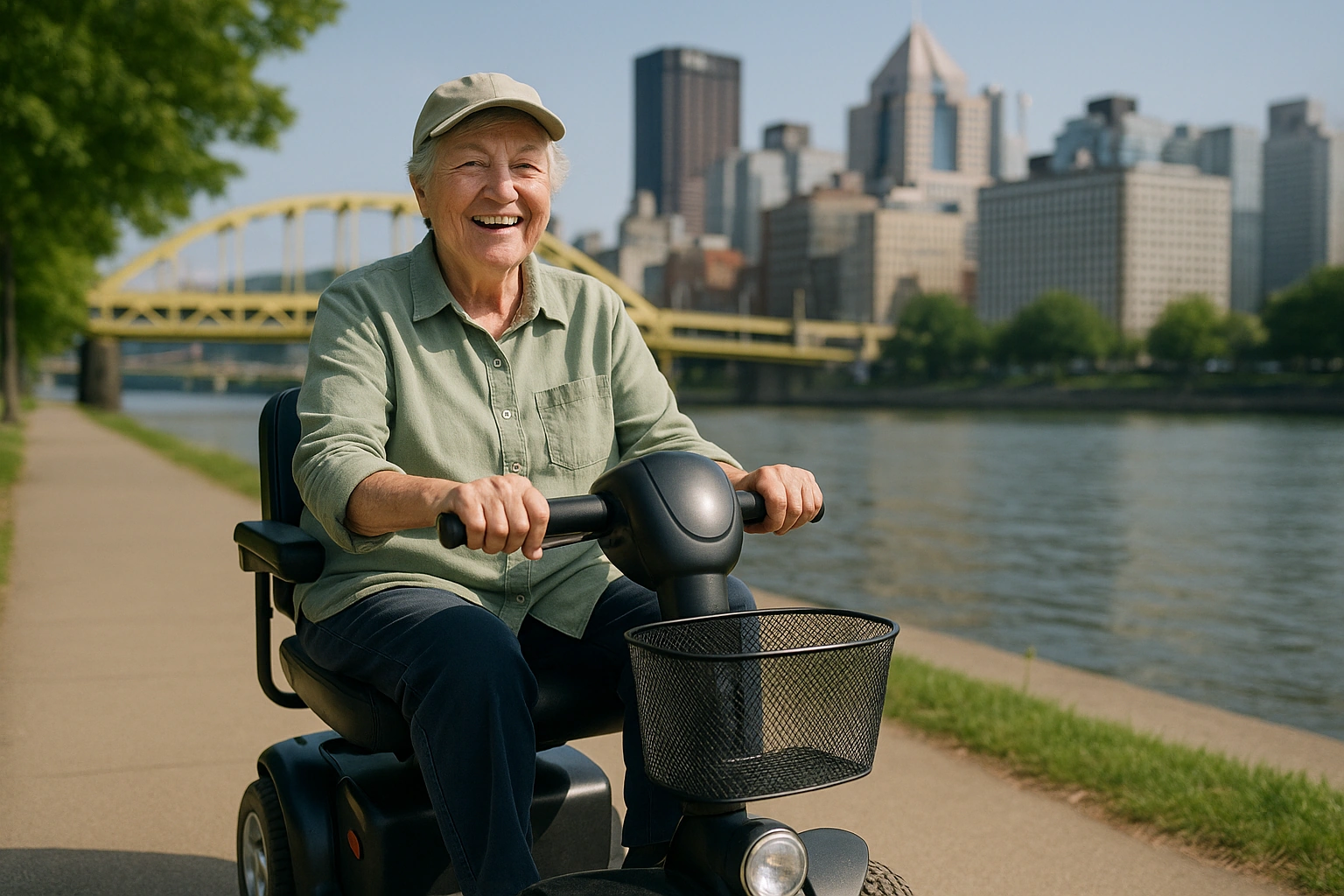
Looking for a mobility scooter in Pittsburgh, to buy or to rent? Pittsburgh is a hilly, three-rivers city with cold, snowy winters, so getting around takes some planning. But it has a wonderful equalizer: the flat, 33-mile Three Rivers Heritage Trail, which is accessible despite the hills all around it. Pennsylvania’s Medicaid is expanded, too. This guide covers our top pick, renting vs. buying, the hills and the winter, the riverfront trail, transit, how to pay, and the models that fit Pittsburgh. Polaris Mobility earns a commission on qualifying Amazon purchases through links on this page.
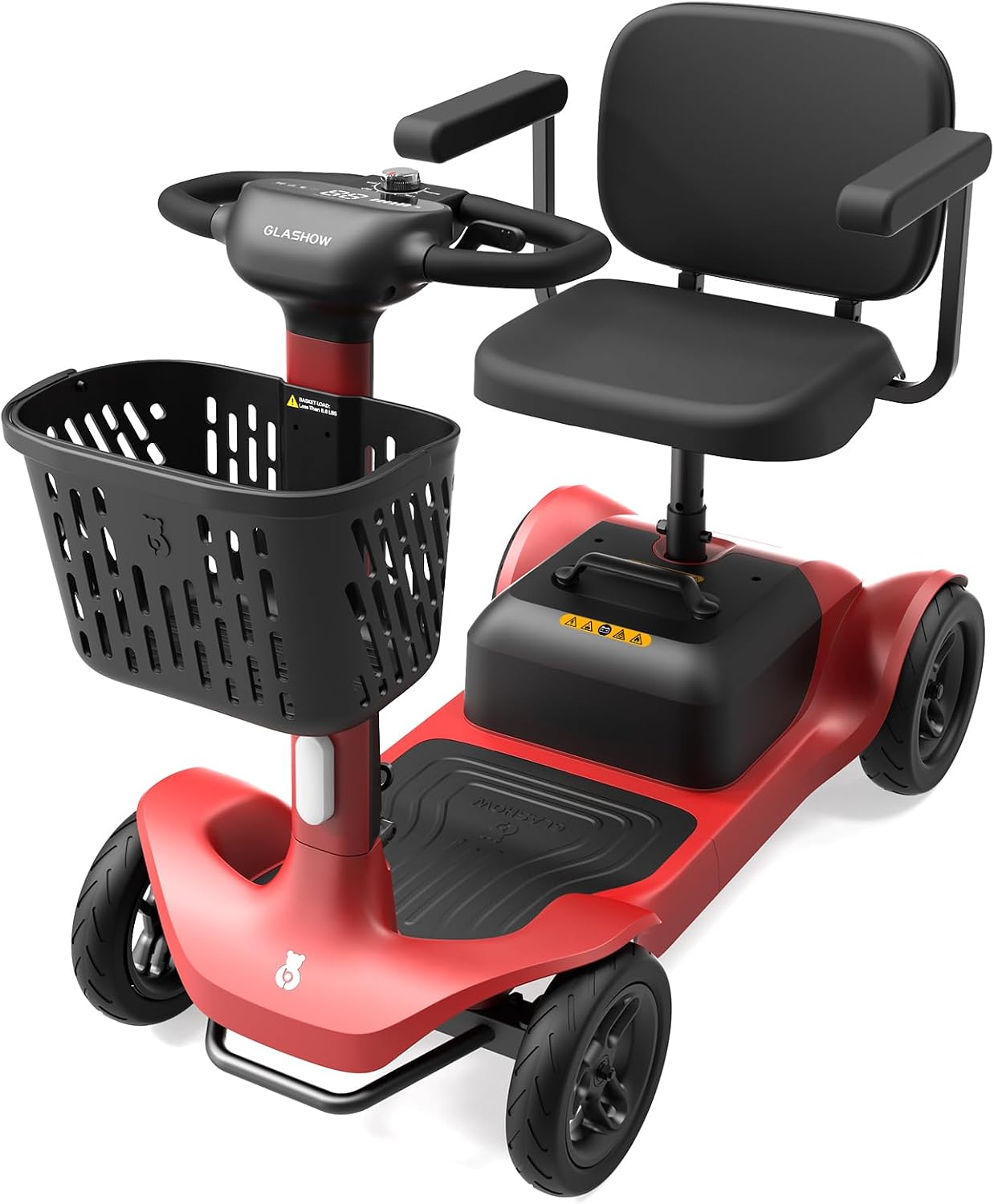
- Rated ~25 mi range
- 10″ wheels, 4-wheel
- Folds to bring indoors
- ★ 4.4 rating
The best fit for a cold city with a long riverfront trail: the biggest wheels here for winter pavement, the longest range so a cold-drained battery still gets you home, and enough to ride miles of the flat river trail, and four wheels for stability. It folds, so you can lift it into a warm car and bring it indoors to store and charge, which a Pittsburgh winter demands. Prefer an established brand with a service network and the highest owner rating? See the Golden Buzzaround EX in the comparison below.
If you qualify, Pennsylvania’s Medical Assistance may cover a scooter. See the funding section first.
Renting vs. buying a mobility scooter in Pittsburgh
Delivery services such as Scootaround will drop a scooter at a Pittsburgh hotel or your home for a visit, an event or a recovery. For regular use, renting adds up quickly and buying is usually cheaper within a season. Here is how they compare:
- Keeps costing you. A travel scooter runs roughly $100 to $200 a week depending on model and city (Scootaround), so a month of regular use is several hundred dollars.
- You hand it back, and it never becomes yours.
- Not fitted or sized to you; you take whatever model is free.
- Delivery windows, deposits and return deadlines to plan around.
- Pays for itself fast. A one-time purchase; after a few weeks of what renting costs you are ahead, and you keep the scooter.
- Always charged, sized to you and ready by the door.
- Spread the cost. Many scooters offer monthly payments at checkout or through your card, so it need not be one big hit.
- Comes with a manufacturer warranty and keeps resale value.
Bottom line: rent for a short visit; buy if you or a family member will use a scooter most weeks: it is cheaper within a month or two. And if you might qualify for Medical Assistance (below), start there first.
Hills, rivers and a winter
Getting around: PRT and ACCESS
Pittsburgh Regional Transit (PRT) runs the buses and the T light rail:
- PRT buses are low-floor with ramps and securement areas, so a scooter boards directly, and the T light rail serves downtown and the South Hills.
- ACCESS is the shared-ride, door-to-door paratransit that has served Allegheny County since 1979. It is aimed at people with disabilities who cannot independently use the regular buses, and at older adults aged 65 and over, seven days a week (Pittsburgh Regional Transit).
- How to apply: eligibility is based on your functional ability to use the bus; request an ACCESS application at 412-562-5353. An ACCESS half-fare card also offers reduced fares on regular PRT service.
Wheelchair-accessible places in Pittsburgh
OpenStreetMap volunteers have tagged more than 100 destinations across central Pittsburgh as wheelchair-accessible, including 53 restaurants, 22 cafés and several banks and shops, with the map still filling in across the neighborhoods. Tags are volunteer-maintained, so confirm current step-free access, and a cleared winter entrance, with each venue before visiting.
Accessibility data © OpenStreetMap contributors.
Who needs mobility support in Pittsburgh
About 15.1% of Pittsburgh residents are 65 or older, below Pennsylvania’s notably older 19.1% and near the U.S. figure of 16.8% (U.S. Census Bureau, ACS 2023), and roughly 14.2% report a disability. Pittsburgh and western Pennsylvania have long had one of the oldest populations in the country, so getting around safely, through hills and a hard winter, is a daily question for a great many residents.
Best mobility scooters for Pittsburgh (2026)
Picks that suit a cold, hilly city with a long flat trail: big wheels and four-wheel stability for winter pavement, range for the riverfront trail and a cold battery drop, and a fold to bring indoors. Specs are per manufacturer listings; confirm current details and price on Amazon.
| Model | Wheels | Max rider | Top speed | Owner rating |
|---|---|---|---|---|
| Glashow S1 Folding ★ Top pick | 10″ (4-wheel) | 265 lb | 6.2 mph | 4.4★ (46) |
| Golden Buzzaround EX | 9″ (4-wheel) | 330 lb | 5.0 mph | 4.7★ (verified) |
| Aotedor Lightweight | 7″ | 300 lb | 3.7 mph | 4.5★ (277) |
| Pride Go-Go Sport | 3-wheel | 325 lb | 4.7 mph | 4.4★ (109) |
4.4★ (46 ratings) · 10″ wheels · rated ~25 mi range
Why Pittsburgh: the biggest wheels and longest range here for winter pavement and miles of the river trail, and it folds to store and charge indoors.
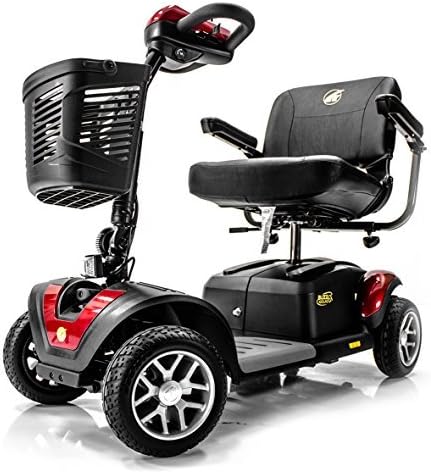
4.7★ (verified owners) · 9″ wheels · up to 330 lb
Why Pittsburgh: the highest owner rating here and a real brand service network for the repairs a hard winter brings, on a stable, comfortable four-wheel frame.
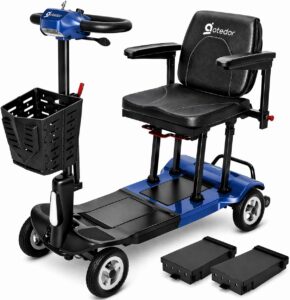
4.5★ (277 ratings) · folds compact · up to 300 lb
Why Pittsburgh: light to lift into a warm car and easy to store indoors: a good choice for downtown and milder days, though its small wheels are not for deep snow.
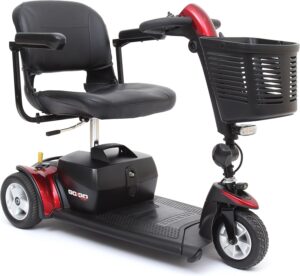
4.4★ (109 ratings) · compact · up to 325 lb
Why Pittsburgh: a tight turning circle for downtown, the Strip District shops and clinics on the coldest days. Four wheels are steadier outside over distance.
How to pay: Medicaid, Medicare and out of pocket
Medicare (Part B) may cover a scooter if a doctor confirms you need it to move around your home and you can operate one safely, through a supplier that accepts Medicare (Medicare.gov). Because these programs work through approved suppliers, a scooter bought on Amazon is a separate out-of-pocket purchase, which is why many Pittsburgh buyers who do not qualify choose one for the lower price and immediate delivery. Confirm current criteria directly, as they change.
Comparing options across the state? Our Pennsylvania mobility scooter guide covers statewide Medicaid and Medicare details, the best models for the local climate and terrain, and how the picture changes from city to city.
Watch: a compact travel scooter in action
An independent walkthrough of the Pride Go-Go Sport, the compact three-wheel option above, showing the seat, tiller, disassembly and driving.
Video: Pride Go-Go Sport review by Marc’s Mobility (YouTube). Polaris Mobility is not affiliated with the reviewer.
Compare more 4-wheel models · full catalog
Pittsburgh mobility scooter FAQ
Where is the best place to ride a mobility scooter in Pittsburgh?
The Three Rivers Heritage Trail is the standout: a 33-mile paved trail along the Allegheny, Monongahela and Ohio rivers that is flat, wide and accessible despite the hilly city around it, with skyline and bridge views throughout. Accessibility varies by segment, so check the Friends of the Riverfront accessibility guide before you go.
Can a mobility scooter handle Pittsburgh’s hills?
Not the steepest ones. Pittsburgh is one of the hilliest cities in the country, and no consumer scooter can safely climb or descend its steepest streets; the historic inclines up Mount Washington are cable cars not built for scooters. Ride the flat areas and the river trail, and use accessible PRT buses or a car for the big hills.
Does Pennsylvania Medicaid cover a mobility scooter?
It can. Pennsylvania expanded Medicaid as Medical Assistance, which can pay for a medically necessary power scooter or wheelchair when a doctor documents the need and it is supplied through an enrolled provider. Start with your primary care provider before buying out of pocket.
What is the best mobility scooter for Pittsburgh?
For a cold, hilly city with a long flat trail, big wheels, four-wheel stability and range matter most. Our top pick is the Glashow S1 for its wheels and range; the Golden Buzzaround EX is the choice for the highest rating and a service network, and a lightweight or three-wheel model is best kept for downtown and indoor use.