
Mobility Scooters in Portland

Shopping for a mobility scooter in Portland, to buy or to rent? Portland’s weather is the thing to plan around: it is the rain, not snow, that defines the year here, with long stretches of drizzle and damp pavement and only rare ice. The upside is a mild city with a beautiful, flat, car-free riverfront loop that is a joy to ride, a MAX light-rail system built low-floor and accessible, and the Oregon Health Plan, which can help pay. This guide covers our top pick, renting vs. buying, riding in the wet, transit, funding, and the models that fit Portland. Polaris Mobility earns a commission on qualifying Amazon purchases through links on this page.
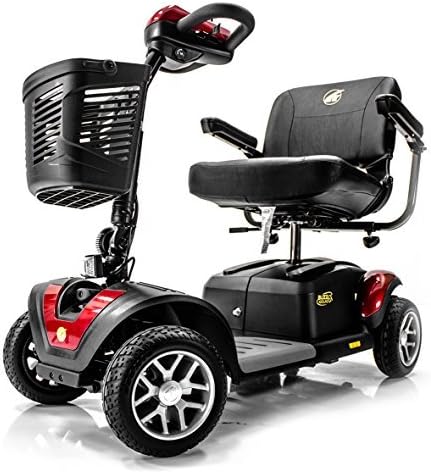
- Stable 4-wheel base
- Up to 330 lb
- Real brand service network
- ★ 4.7 rating
The best fit for a wet, gently hilly city: four wheels give the steadiest footing on damp pavement and Portland’s moderate grades, the comfortable seat suits longer riverfront days, and it carries the highest owner rating here with a real service network behind it if you ever need help. Want the longest range and the biggest wheels for the price? See the Glashow S1 in the comparison below.
If you qualify, the Oregon Health Plan may cover a scooter. See the funding section first.
Renting vs. buying a mobility scooter in Portland
Delivery services such as Scootaround will drop a scooter at a Portland hotel or your home for a visit, an event or a recovery. For regular use, renting adds up quickly and buying is usually cheaper within a season. Here is how they compare:
- Keeps costing you. A travel scooter runs roughly $100 to $200 a week depending on model and city (Scootaround), so a month of regular use is several hundred dollars.
- You hand it back, and it never becomes yours.
- Not fitted or sized to you; you take whatever model is free.
- Delivery windows, deposits and return deadlines to plan around.
- Pays for itself fast. A one-time purchase; after a few weeks of what renting costs you are ahead, and you keep the scooter.
- Always charged, sized to you and ready by the door.
- Spread the cost. Many scooters offer monthly payments at checkout or through your card, so it need not be one big hit.
- Comes with a manufacturer warranty and keeps resale value.
Bottom line: rent for a short visit; buy if you or a family member will use a scooter most weeks: it is cheaper within a month or two. And with the Oregon Health Plan, check whether you qualify for coverage before you pay out of pocket.
Riding in Portland’s rain
- Keep the scooter dry. Store and charge it indoors, and use a breathable cover when it sits outside. Mobility scooters handle light rain, but they are not meant to be soaked or left standing in the wet: wipe the seat and tiller dry before and after.
- Brake earlier when it is wet. Damp pavement lengthens stopping distance. Take painted crosswalk lines, metal plates, bridge grates and wet fallen leaves slowly and straight on, they get slick.
- Dress for it and stay visible. A rain poncho that clears the tiller, plus lights or reflective tape, matters on gray Portland afternoons when the light goes early.
Portland is gently hilly rather than steep downtown, but the west side climbs quickly toward the hills; keep steady climbs to what your scooter is rated for, and use MAX or the streetcar for the bigger grades.
Getting around: MAX, the streetcar and LIFT
Portland is one of the more transit-friendly big cities for a scooter rider:
- MAX light rail runs five lines across the metro and out to the airport, built low-floor for level, roll-on boarding (TriMet): a good way to cover distance and skip the hills. TriMet buses and the Portland Streetcar are accessible too.
- LIFT is TriMet’s door-to-door paratransit for people who cannot use the regular buses and trains because of a disability. The fare is $2.50 one way, a personal-care attendant rides free, and children six and under ride free with an adult. Service covers within 3/4 of a mile of the bus and MAX lines (TriMet LIFT).
- How to apply: LIFT eligibility includes an in-person interview and a short physical assessment at the Mobility Center; call 503-962-8200, option 4.
Wheelchair-accessible places in Portland
Portland’s flat downtown core and the riverfront parks are broadly step-free, and the city and Travel Portland publish accessibility guidance for getting around and visiting attractions (Travel Portland). Many restaurants, cafes and shops in the Pearl District and along the transit mall are level-entry, and MAX puts much of the city within a step-free ride. Access varies building by building, especially in older storefronts, so it is worth calling ahead to confirm entrances and restrooms before a visit.
Who needs mobility support in Portland
Portland itself is a relatively young city (about 14.2% of residents are 65 or older), but Oregon as a whole is notably older, at 18.6%, above the U.S. figure of 16.8% (U.S. Census Bureau, ACS 2023). About 13.2% of Portlanders report a disability. As the metro’s older suburbs and the wider state age, demand for safe, independent mobility keeps rising, and a city this flat downtown and this well served by accessible transit is a good place to meet it.
Best mobility scooters for Portland (2026)
Picks that suit a wet, gently hilly city with a long riding season on flat riverfront paths: steady four-wheel footing on damp pavement, range for the distances, and a fold to bring indoors out of the rain. Specs are per manufacturer listings; confirm current details and price on Amazon.
| Model | Wheels | Max rider | Top speed | Owner rating |
|---|---|---|---|---|
| Golden Buzzaround EX ★ Top pick | 9″ (4-wheel) | 330 lb | 5.0 mph | 4.7★ (verified) |
| Glashow S1 Folding | 10″ (4-wheel) | 265 lb | 6.2 mph | 4.4★ (46) |
| Aotedor Lightweight | 7″ | 300 lb | 3.7 mph | 4.5★ (277) |
| Pride Go-Go Sport | 3-wheel | 325 lb | 4.7 mph | 4.4★ (109) |
4.7★ (verified owners) · 9″ wheels · up to 330 lb
Why Portland: the steadiest footing on damp pavement and moderate grades, the highest owner rating here, and a real brand service network behind it.
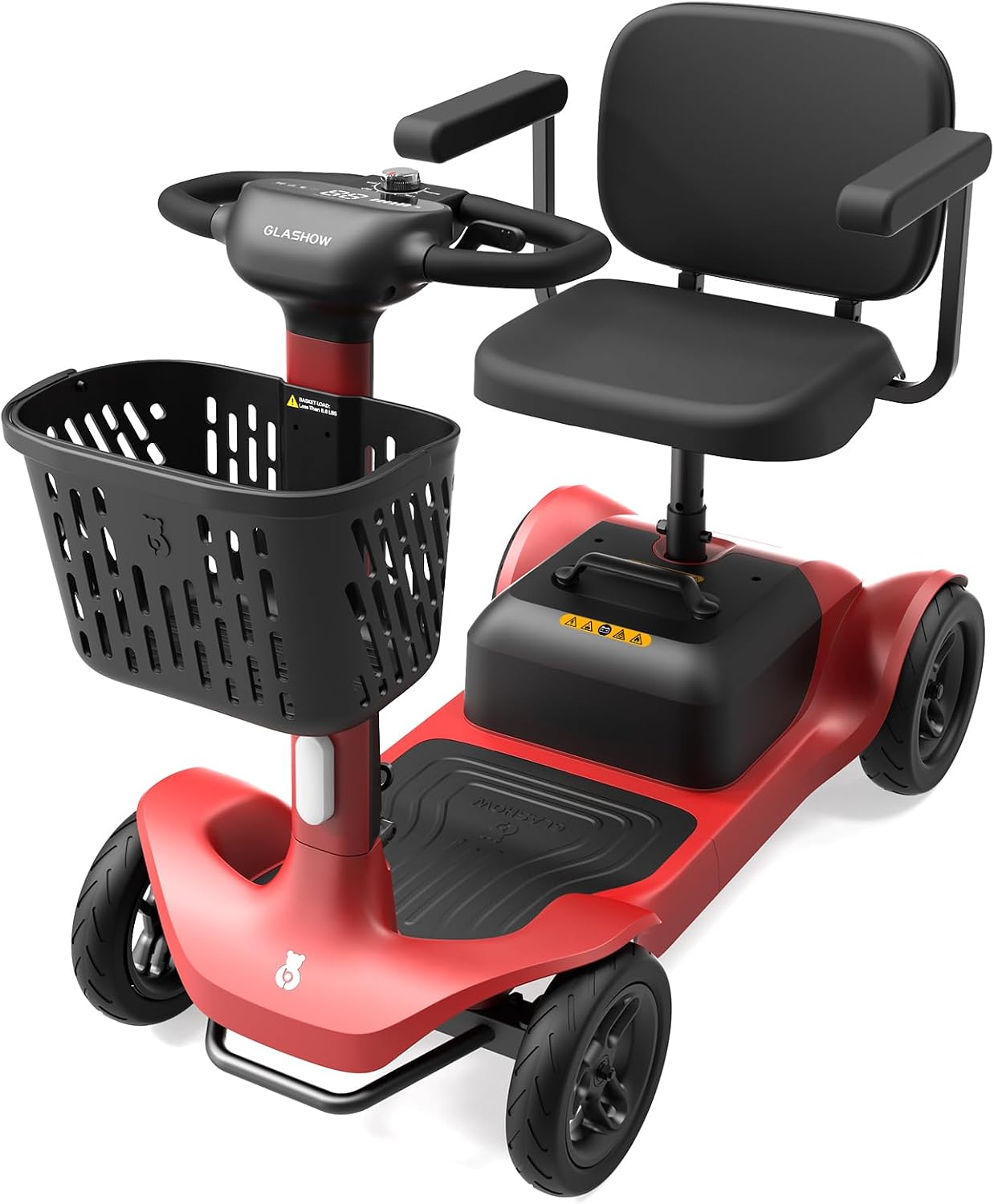
4.4★ (46 ratings) · 10″ wheels · rated ~25 mi range
Why Portland: the biggest wheels and longest range for the price, good for long riverfront days, and it folds to lift into a car and store indoors.
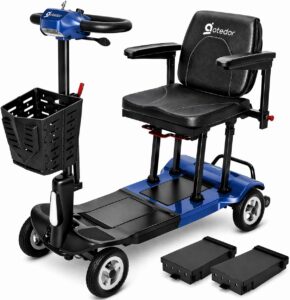
4.5★ (277 ratings) · folds compact · up to 300 lb
Why Portland: light to lift into a car and easy to store in a downtown apartment, and it rolls onto MAX or the streetcar: ideal for a flat-core rider who mixes scooting and transit.
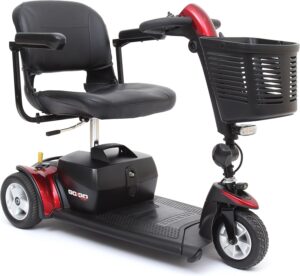
4.4★ (109 ratings) · compact · up to 325 lb
Why Portland: a tight turning circle for indoor markets and the streetcar. Four wheels feel steadier on wet pavement and hold a line better on grades.
How to pay: Oregon Health Plan, Medicare and out of pocket
Medicare (Part B) may cover a scooter if a doctor confirms you need it to move around your home and you can operate one safely, through a supplier that accepts Medicare (Medicare.gov). Because these programs work through approved suppliers, a scooter bought on Amazon is a separate out-of-pocket purchase, which is why many Portland buyers who do not qualify choose one for the lower price and immediate delivery. Confirm current criteria directly, as they change.
Comparing options across the state? Our Oregon mobility scooter guide covers statewide Medicaid and Medicare details, the best models for the local climate and terrain, and how the picture changes from city to city.
Watch: our top pick in action
An independent walkthrough of the Golden Buzzaround EX, our top pick above, showing the four-wheel frame, seat, controls and how it comes apart to transport.
Video: Golden Buzzaround EX review (YouTube). Polaris Mobility is not affiliated with the reviewer.
Compare more 4-wheel models · full catalog
Portland mobility scooter FAQ
Can you use a mobility scooter in Portland’s rain?
Yes, with care. Portland’s winters are wet rather than icy, and mobility scooters handle light rain fine: the key is to keep the scooter dry between rides, store and charge it indoors, and brake earlier on damp pavement. Take painted lines, metal plates and wet leaves slowly, dress in a poncho that clears the tiller, and add lights for gray afternoons. Snow and ice are rare here, so moisture is the main thing to manage.
Is Portland transit accessible with a mobility scooter?
Yes. MAX light rail is low-floor for level, roll-on boarding across all five lines and out to the airport, and TriMet buses and the Portland Streetcar are accessible too. For door-to-door trips, TriMet’s LIFT paratransit costs $2.50 one way, with a personal-care attendant riding free.
Does the Oregon Health Plan cover a mobility scooter?
It can. The Oregon Health Plan, Oregon’s expanded Medicaid, covers a medically necessary power wheelchair or scooter when a doctor documents the need and it is supplied through an enrolled provider, and it will not deny a power wheelchair simply because you have a caregiver. Start with your primary care provider or coordinated-care organization before buying out of pocket.
What is the best mobility scooter for Portland?
For a wet, gently hilly city, steady four-wheel footing and range matter most. Our top pick is the Golden Buzzaround EX for its stability, highest rating and service network; the Glashow S1 offers the biggest wheels and longest range for the price, and a lightweight model is easiest to lift into a car and roll onto MAX.