
Mobility Scooters in Providence

Looking for a mobility scooter in Providence, to buy or to rent? Providence is the smallest city in this guide, and that is its advantage. With about 190,000 people packed into a compact core, this is one of the few American cities where a scooter can genuinely be your transport rather than a supplement to a car. Two more things set it apart: Rhode Island is small enough to run one transit agency for the entire state, and a qualifying low-income senior here rides free for two years. The catch is the hills, which are real and which this guide will not pretend away. Below: our top pick, the East Bay Bike Path, the hills, RIPTA fares, funding, and the models that fit Providence. Polaris Mobility earns a commission on qualifying Amazon purchases through links on this page.
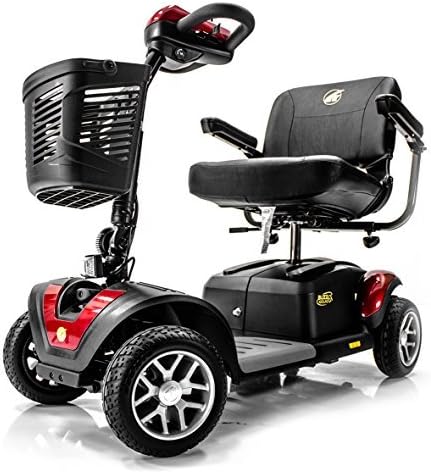
- Stable 4-wheel base
- Up to 330 lb
- Real brand service network
- ★ 4.7 rating
Providence is a hill city, and on grades what matters is a planted four-wheel base and brakes you trust, not top speed. That is why this is the pick here, the same reasoning we use in San Francisco and Seattle: the widest, most stable stance in this comparison, the highest weight capacity, the highest owner rating, and a real service network. Distances are short in a city this compact, so range is the one thing you do not need to buy. Want the biggest wheels and the longest range for the full 14.5-mile bike path instead? See the Glashow S1 below.
On Medicare or Medicaid? Read the funding section before you pay out of pocket.
The hills are real
- Go around, not up. The compact core means a flatter route usually exists a block or two over. It is worth learning two or three of them rather than taking a grade on faith.
- Downhill is the underrated danger. Going down a steep street is harder on a scooter than going up: you are relying entirely on the brakes and the wheelbase. Take descents slowly, straight, and never at an angle.
- The flat parts are genuinely good. Downtown, the riverfront and India Point are level and walkable, and because the city is small, a lot of daily life fits inside them.
The East Bay Bike Path: 14.5 miles from your doorstep
- It follows an old railway, so most of it is flat: it traces the former Providence and Bristol Railroad, which is exactly why the surface and the gradients are so consistent.
- But the hills are at the Providence end. The northern section is the hilly part: there is a large hill where the path leaves the alignment beside Veterans Memorial Parkway to join the old rail right-of-way, and a steep downhill toward the waterfront after the second parking lot. If you want the easy riding, start further south and work back.
- Eight parks, one path. India Point in Providence, Bold Point and Squantum Woods in East Providence, Haines and Veteran’s Memorial in Barrington, Burr’s Hill in Warren, and Colt State Park and Independence Park in Bristol, so there is always somewhere to stop and turn around.
- More is coming. The path’s northern tip is due to link up with the Blackstone Bikeway, currently under construction.
One agency for the whole state, and a free pass
- Over the income line? You still get something. Seniors and people with disabilities above the means test get a Limited Day Pass, which is a reduced fare during off-peak hours. And regardless of income, seniors and people with disabilities can board at half fare during off-peak hours on a “Valid Off Peak” card.
- The card costs $10 in 2026 and is valid for two years.
- You do not have to come to Providence for it. RIPTA publishes a 2026 Community Site Visit schedule: customer service staff travel to communities around the state every month to process photo ID passes, so rural and urban residents alike can apply locally with valid documentation.
- Paying otherwise: the standard $2 fare buys an hour of unlimited rides rather than a single trip, and a monthly pass is $70. With the Wave card’s Earn As You Go, you never pay more than a day pass in a day or a monthly pass in a calendar month.
- RIde is the paratransit program, and you must be certified for it to buy that fare. ADA rules cap paratransit fares at twice the regular fare, which puts the ceiling at $4 against RIPTA’s $2 base. Call RIPTA on 401-784-9500 for current RIde fares and eligibility.
Cold, snowy, and wet all year
- Summer is comfortable. A July average around 74°F means long, easy riding on the bike path without the heat planning that Texas or Florida demands. Thunderstorms are frequent, so check the sky before a long run down the bay.
- Winter: store and charge indoors, wait for cleared dry pavement, and wipe road salt off the frame. Salt is what quietly kills scooters in New England.
- Wet is the year-round issue. On a hill city, wet leaves and wet brick are a worse combination than either alone. Slow down on descents when the ground is damp, which here is often.
Renting vs. buying a mobility scooter in Providence
In a city this compact, a scooter you own gets used nearly every day, which is exactly when buying wins. For regular use, renting adds up quickly and buying is usually cheaper within a season.
- Keeps costing you. A travel scooter runs roughly $100 to $200 a week depending on model and city (Scootaround), so a month of regular use is several hundred dollars.
- You hand it back, and it never becomes yours.
- Not fitted or sized to you; you take whatever model is free.
- Delivery windows, deposits and return deadlines to plan around.
- Pays for itself fast. A one-time purchase; after a few weeks of what renting costs you are ahead, and you keep the scooter.
- Always charged, sized to you and ready by the door.
- Spread the cost. Many scooters offer monthly payments at checkout or through your card, so it need not be one big hit.
- Comes with a manufacturer warranty and keeps resale value.
Bottom line: rent for a visit; buy if you live here. In a city where the shops, the river and the bike path are all within a few flat miles, a scooter earns its cost quickly, and pairs with a free or half-fare bus pass for the hills.
How to pay: Medicare and Rhode Island Medicaid
If you are 65 or older, Medicare is your route. Part B may cover a scooter if a doctor confirms you need it to move around your home and you can operate one safely, through a supplier that accepts Medicare (Medicare.gov).
Worth noting that the same agency setting Medicaid policy, EOHHS, is the one that sets the 200% income threshold for the free bus pass, so if you qualify for one, it is worth checking the other in the same conversation.
Because these programs work through approved suppliers, a scooter bought on Amazon is a separate out-of-pocket purchase, which is why many Providence buyers who do not qualify choose one for the lower price and immediate delivery. Confirm current criteria directly, as they change.
Comparing options across the state? Our Rhode Island mobility scooter guide covers statewide Medicaid and Medicare details, the best models for the local climate and terrain, and how the picture changes from city to city.
Who needs mobility support in Providence
Providence is a college city inside an old state. Only 11.5% of residents are 65 or older (about 21,900 people out of 190,000) against Rhode Island’s 18.3%, well above the national 16.8% (U.S. Census Bureau, ACS 2023). Brown, RISD and the other colleges pull the city’s average age down sharply while the state around it is one of the older ones in the country.
Disability tells the truer story here: 13.7% of Providence residents report a disability, above both Rhode Island’s 13.6% and the national 13.0%. A young city with an above-average disability rate is a city where need is not about age, which is precisely why an income-tested free bus pass, rather than an age-based one, is the tool this state reaches for.
Best mobility scooters for Providence (2026)
Picks that suit a small, hilly city with a flat waterfront and a long paved bike path leaving from it: stability and brakes first, range last. Specs are per manufacturer listings; confirm current details and price on Amazon.
| Model | Wheels | Max rider | Top speed | Owner rating |
|---|---|---|---|---|
| Golden Buzzaround EX ★ Top pick | 9″ (4-wheel) | 330 lb | 5.0 mph | 4.7★ (verified) |
| Glashow S1 Folding | 10″ (4-wheel) | 265 lb | 6.2 mph | 4.4★ (46) |
| Aotedor Lightweight | 7″ | 300 lb | 3.7 mph | 4.5★ (277) |
| Pride Go-Go Sport | 3-wheel | 325 lb | 4.7 mph | 4.4★ (109) |
4.7★ (verified owners) · 9″ wheels · up to 330 lb
Why Providence: the most planted four-wheel base for grades and wet descents, the highest owner rating and weight capacity here, and a service network behind it.
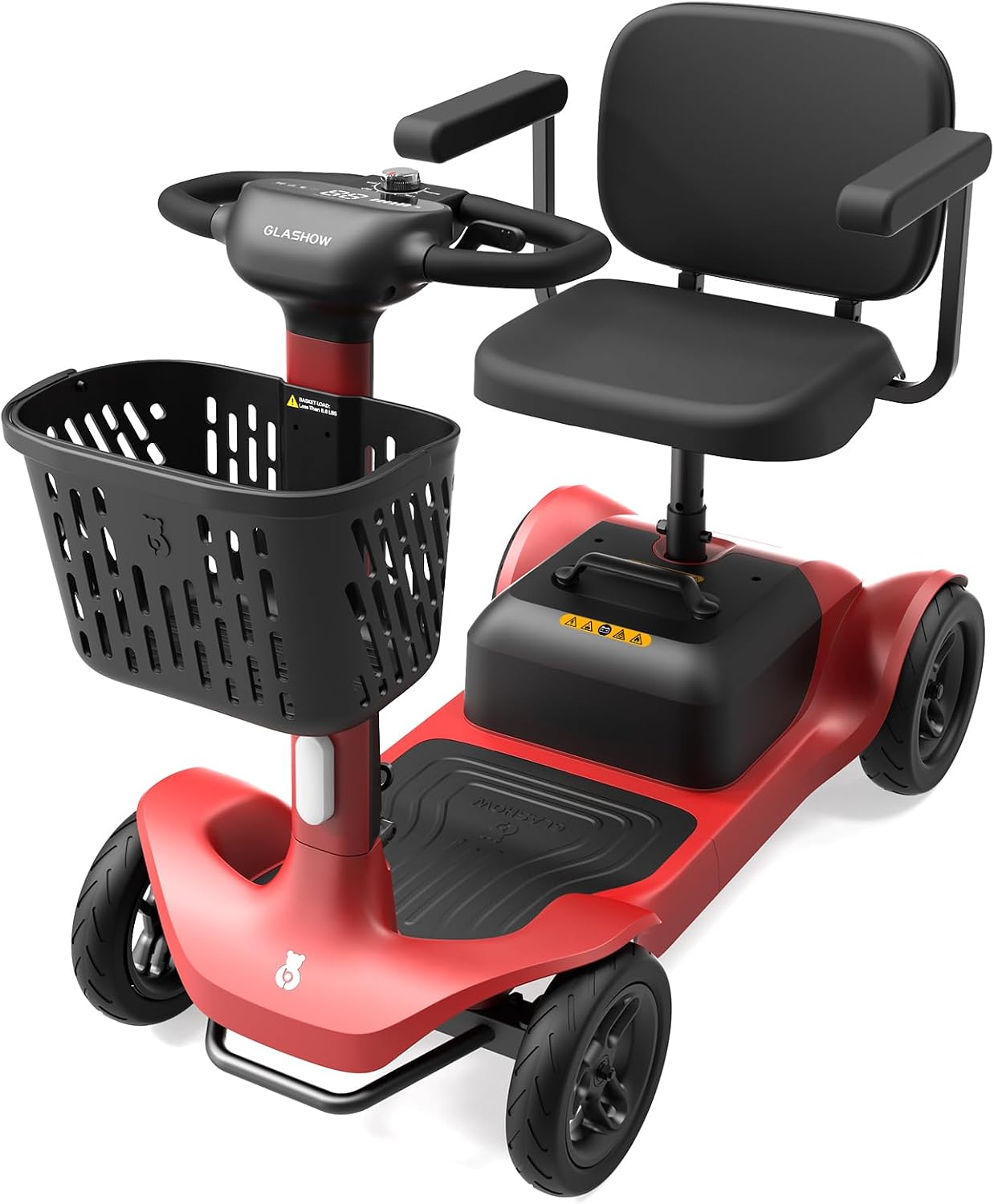
4.4★ (46 ratings) · 10″ wheels · rated ~25 mi range
Why Providence: the range to ride the East Bay path to Bristol and back, the biggest wheels for cold New England pavement, and it folds to store indoors over winter.
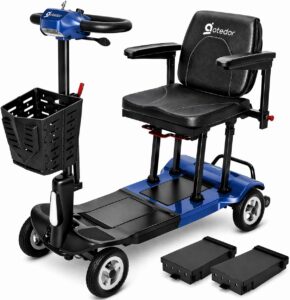
4.5★ (277 ratings) · folds compact · up to 300 lb
Why Providence: light to lift onto a bus and easy to store in a small apartment: fine for the flat downtown core, but the least suited of these to a wet hill.
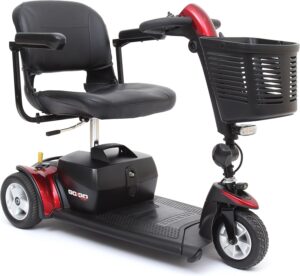
4.4★ (109 ratings) · compact · up to 325 lb
Why Providence: a tight turning circle for narrow old streets and small shops. On a hill city, though, four wheels are the steadier choice.
Watch: our top pick in action
An independent walkthrough of the Golden Buzzaround EX, our top pick above, showing the four-wheel frame, seat, controls and how it comes apart to transport.
Video: Golden Buzzaround EX review (YouTube). Polaris Mobility is not affiliated with the reviewer.
Compare more 4-wheel models · full catalog
Providence mobility scooter FAQ
Is Providence a good city for a mobility scooter?
Yes, with one caveat. It is small and compact, so unlike most American cities a scooter can actually be your transport rather than a supplement to a car, and the 14.5-mile East Bay Bike Path starts right in the city at India Point Park. The caveat is the hills: Providence is built on them, College Hill especially, and no consumer scooter climbs the steepest streets. Ride the flat ground and use the bus for the climbs.
Do seniors ride free in Providence?
Qualifying low-income seniors do. Under RIPTA’s Reduced Fare Bus Pass Program, low-income seniors aged 65 and over and low-income people with disabilities ride free for two years on a Valid All Day photo ID card, with the means test set at 200% of the federal poverty level. Above that threshold you get a reduced fare during off-peak hours instead, and regardless of income, seniors and people with disabilities can ride at half fare off-peak. The card costs $10 in 2026 and lasts two years.
Where is the best place to ride a mobility scooter in Providence?
The East Bay Bike Path: 14.5 miles of paved rail trail, ten feet wide, from India Point Park across the Seekonk River and southeast to Bristol along Narragansett Bay, connecting eight parks. Because it follows an old railway most of it is flat. Note that the hilly part is the northern end nearest Providence, including a large hill near Veterans Memorial Parkway and a steep downhill toward the waterfront, so for the easiest riding start further south.
Does Rhode Island transit work outside Providence?
Yes. Rhode Island is small enough that RIPTA runs public transit for the whole state, so a pass works statewide rather than stopping at a county line. RIPTA also runs 2026 Community Site Visits, where staff travel to communities around the state each month to process photo ID bus passes, so you do not have to come to Providence to apply.
What is the best mobility scooter for Providence?
On a small hill city, stability and brakes matter more than range, because distances are short. Our top pick is the Golden Buzzaround EX for its planted four-wheel base, 330 lb capacity, highest owner rating and real service network. The Glashow S1 is the alternative if you plan to ride the full East Bay Bike Path and want the longest rated range and biggest wheels.