
Mobility Scooters in Salt Lake City

Looking for a mobility scooter in Salt Lake City, to buy or to rent? This city is built to a plan almost no other American city uses, and it changes the arithmetic of your day. Salt Lake’s blocks are 660 feet square, ten acres each, and its streets are 132 feet wide. So when somebody tells you it is “just two blocks”, they mean a quarter of a mile. And every time you cross a road, you are exposed for 132 feet: about 24 seconds on the slowest scooter on this page, about 15 on the fastest. In Salt Lake City, top speed is not a toy specification: it is how long you spend in the road. This guide covers the grid, UTA’s $8-a-week ceiling and the two things it pointedly does not cover, and what happened after Utahns voted for Medicaid and their legislature said no. Polaris Mobility earns a commission on qualifying Amazon purchases through links on this page.
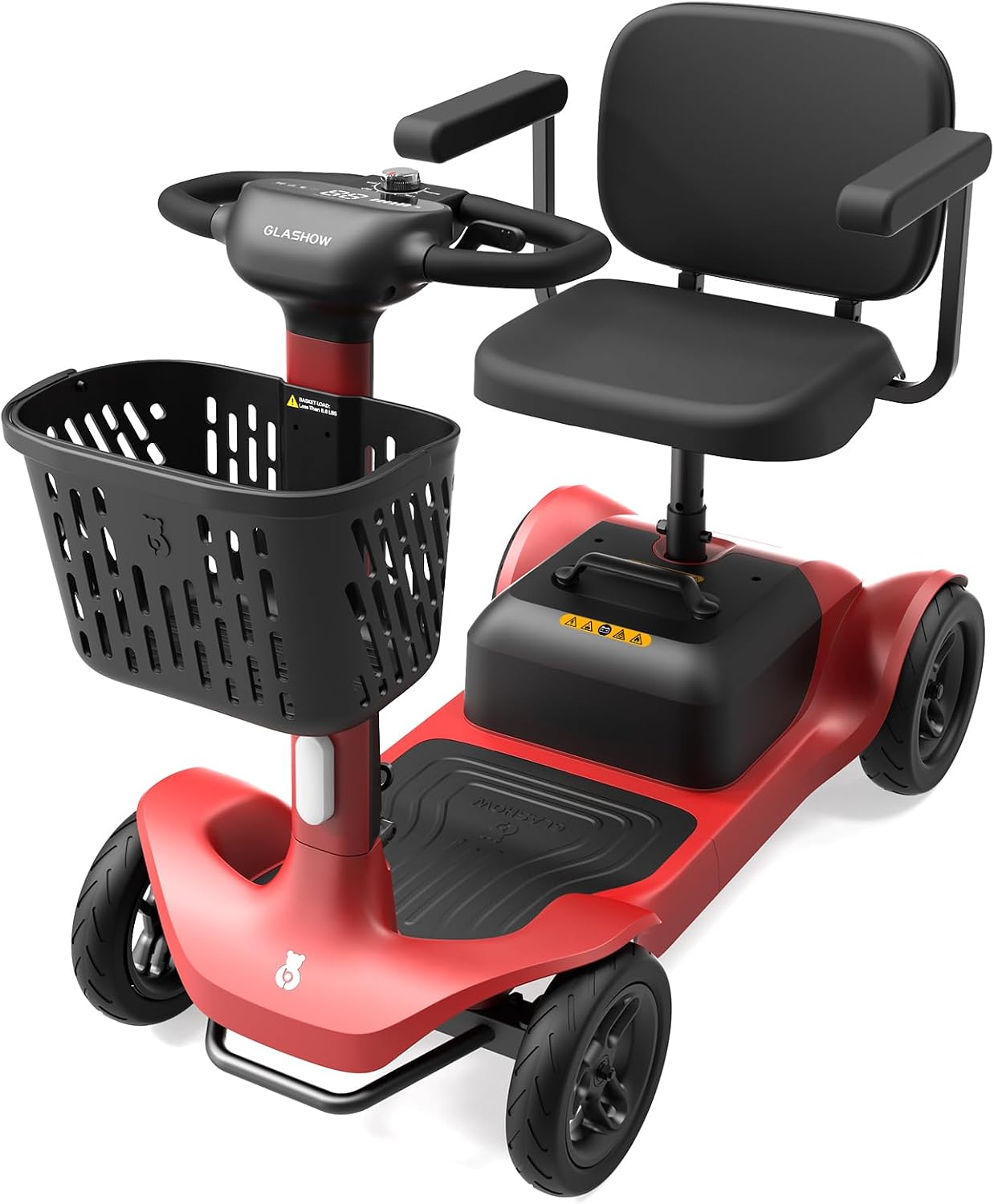
- 6.2 mph, fastest here
- Rated ~25 mi range
- 10″ wheels
- 265 lb limit
Two specs matter in this city and this has both. Speed: at 6.2 mph you are across a 132-foot Salt Lake street in about 15 seconds; at 3.7 mph it takes about 24. Nine seconds does not sound like much until you are the one in the road. Range: eight blocks make a mile here, so ordinary errands cover real distance, and this is rated furthest. Check the 265 lb limit first: it is the lowest of the four. If you are near it, take the Buzzaround below: at 5.0 mph it still crosses in about 18 seconds, which is the second-best number here.
On Medicare or Utah Medicaid? Read the funding section before you pay out of pocket.
Six hundred and sixty feet: the grid you have to live in
None of that was about you. But you inherit it, and here is what it means in practice on a scooter.
- A block is one-eighth of a mile. Eight blocks to the mile. “Two blocks” is a quarter mile; “just down the street” can be half a mile. When a receptionist tells you the pharmacy is three blocks away, they have described a 1,980-foot journey.
- The addresses are a map, and that is genuinely useful. Salt Lake addresses are coordinates from a single origin, a number and a direction. Once you understand that, you can compute a distance before you set off rather than discovering it halfway.
- 132 feet is a long time in the road. Run the numbers for the scooters on this page and the spread is real.
| Scooter | Top speed | Time to cross a 132-ft Salt Lake street |
|---|---|---|
| Glashow S1 | 6.2 mph | about 15 seconds |
| Golden Buzzaround EX | 5.0 mph | about 18 seconds |
| Pride Go-Go Sport | 4.7 mph | about 19 seconds |
| Aotedor Lightweight | 3.7 mph | about 24 seconds |
Our arithmetic, from the published 132-foot street width and each manufacturer’s stated top speed. It assumes you are moving at full speed the whole way, which you will not always be.
Eight dollars a week, unless you need the van
Eight dollars a week is your whole local transit bill, however much you ride. That is the number to hold onto, because it changes what owning a scooter is for here: not to escape fares, but to cover the ground between the stops on a grid where the stops are far apart.
- Who qualifies: seniors 65 and over and people with disabilities (with Medicare or healthcare-professional verification) get a card valid five years. Low-income riders, at or below 200% of the federal poverty guidelines, about $31,920 for a household of one, or membership of a participating program, get one valid a year. Youth 6–18 also qualify. You must fill in an application; apply at reducedfaresuta.com.
- Sort the card out now, not later. UTA states: “Starting April 12, 2026, qualified riders can pay reduced fare only with a Reduced Fare FAREPAY Card.” There is no longer a way to flash an ID and pay less: no card, no discount.
The Free Fare Zone, and the trap inside it
Now read this twice. UTA states: “If you use an electronic fare card (FAREPAY, Eco Pass, Ed Pass, etc.) within the Free Fare Zone, you must tap on and off. If you do not tap off, you will be charged for the trip.” That is the quiet catch: the very card that gets you the $1 fare will bill you for a free ride if you forget to tap off at the end of it. If you carry a FAREPAY card, tap off: even downtown, even though the ride is free.
Two more things worth knowing. Leave the zone and you need proof of payment, and board outside it and you need proof of payment too. And UTA publishes the zone as a map rather than a list of streets: we are not going to invent boundaries for you, so look at the map before you plan a free trip around it.
Renting vs. buying a mobility scooter in Salt Lake City
With transit capped at $8 a week, the case for buying is not about beating the fare. It is about the 660 feet between you and the next thing.
- Keeps costing you. A travel scooter runs roughly $100 to $200 a week depending on model and city (Scootaround), so a month of regular use is several hundred dollars: more than ten times UTA’s weekly ceiling.
- You hand it back, and it never becomes yours.
- Not fitted or sized to you; you take whatever model is free, and here that may mean whatever speed is free.
- Delivery windows, deposits and return deadlines to plan around.
- Pays for itself fast. A one-time purchase; after a few weeks of what renting costs you are ahead, and you keep the scooter.
- You choose the speed you cross the road at. On this grid that is a safety decision, not a preference.
- It covers the block that transit cannot. $8 a week gets you across the valley; your scooter gets you the 660 feet at each end.
- Spread the cost. Many scooters offer monthly payments at checkout or through your card.
Bottom line: buy if you live here, and buy the faster one. An $8 weekly cap plus your own scooter is a genuinely cheap way to move around Salt Lake City, and if you are refused paratransit, or cannot stomach an uncapped, undiscounted fare for it, your own machine stops being a convenience.
How to pay: Medicare, and the expansion Utahns had to vote for twice
If you are 65 or older, Medicare is your route. Part B may cover a scooter if a doctor confirms you need it to move around your home and you can operate one safely, through a supplier that accepts Medicare (Medicare.gov).
It took three years and a fight to get to that sentence. In November 2018, Utah voters passed Proposition 3, the Utah Decides Healthcare Act, with 53% of the vote, requiring Medicaid for adults up to 138% of the poverty level. Three months later, on 11 February 2019, Governor Gary Herbert signed Senate Bill 96, which repealed and replaced what the voters had passed: a partial expansion covering roughly 70,000 people instead of about 150,000, with a work, volunteer or education requirement attached. The first phase, from 1 April 2019, reached only adults below the poverty line.
Then it came back. On 23 December 2019, in the state’s words, “the Centers for Medicare and Medicaid Services (CMS) authorized the Utah Department of Health (UDOH) to implement a full Medicaid expansion in the state”. And on 10 August 2021, “CMS withdrew approval of Utah’s Community Engagement (CE) requirement”, the work requirement, and it “has been removed from policy and rulemaking”. Utahns ended up with what they voted for in 2018: 138% of the poverty level, and no work test.
Why that matters if you are reading this from another state: Utah’s expansion arrived as a statute passed by ballot, and a legislature can repeal a statute, which this one did, within a hundred days. Oklahomans, voting in June 2020, put their expansion into the state constitution instead, where their legislature cannot reach it alone. And Kentucky is currently moving in the opposite direction from Utah, writing community engagement requirements into law over its governor’s veto. Same country, three different answers.
Utah Medicaid can pay for medically necessary equipment such as a power wheelchair or scooter when a doctor documents the need and it is supplied through an enrolled provider. Because these programs work through approved suppliers, a scooter bought on Amazon is a separate out-of-pocket purchase. Confirm current criteria directly, as they change.
Comparing options across the state? Our Utah mobility scooter guide covers statewide Medicaid and Medicare details, the best models for the local climate and terrain, and how the picture changes from city to city.
Who needs mobility support in Salt Lake City
Utah is young and, by these measures, unusually well. 12.2% of Salt Lake City residents are 65 or older (24,921 people out of 203,888) against Utah’s 11.6% and a national 16.8%. On disability, 12.1% of Salt Lake City residents report one, against just 10.3% across Utah and 13.0% nationally (U.S. Census Bureau, ACS 2023, 5-year).
Those are low numbers on both counts: Utah reports a smaller share of residents with a disability than the country as a whole by nearly three points. The city runs a little above its state on disability and a little above it on age, which is the usual pattern: people who need services live where the services are. But the honest reading for a reader here is that you are in a minority in a young state, and minorities have to ask for things twice. The grid was not designed for you, the fare cap does not extend to your van, and the Medicaid expansion took a ballot, a repeal and a federal decision to arrive.
Best mobility scooters for Salt Lake City (2026)
Picks weighted for 132-foot crossings, 660-foot blocks and a valley that gets real winters. Specs are per manufacturer listings; confirm current details and price on Amazon.
| Model | Wheels | Max rider | Top speed | Owner rating |
|---|---|---|---|---|
| Glashow S1 Folding ★ Top pick | 10″ (4-wheel) | 265 lb | 6.2 mph | 4.4★ (46) |
| Golden Buzzaround EX If 265 lb is close | 9″ (4-wheel) | 330 lb | 5.0 mph | 4.7★ (verified) |
| Pride Go-Go Sport | 3-wheel | 325 lb | 4.7 mph | 4.4★ (109) |
| Aotedor Lightweight | 7″ | 300 lb | 3.7 mph | 4.5★ (277) |
4.4★ (46 ratings) · 10″ wheels · rated ~25 mi range · 265 lb limit
Why Salt Lake City: the fastest here, which on 132-foot streets is a safety spec, and the longest rated range for a grid where eight blocks make a mile. Check the 265 lb limit before anything else.
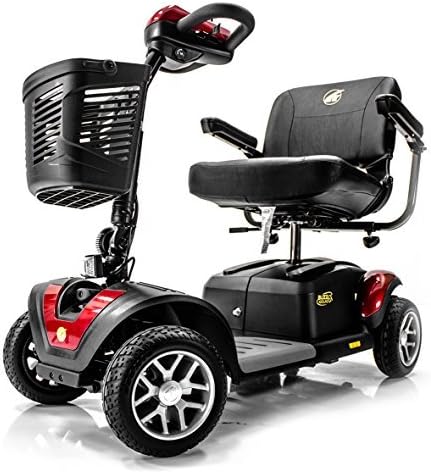
4.7★ (verified owners) · 9″ wheels · up to 330 lb
Why Salt Lake City: 330 lb of capacity and the highest owner rating here, and at 5.0 mph it still clears a 132-foot street in about 18 seconds, the second-fastest crossing of the four.
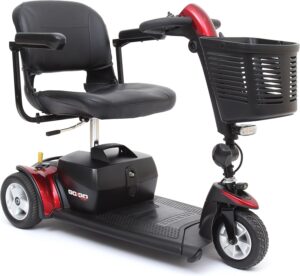
4.4★ (109 ratings) · compact · up to 325 lb
Why Salt Lake City: 325 lb and it comes apart for a car trunk, useful in a valley where you will drive to some things. About 19 seconds across a street, the middle of the pack.
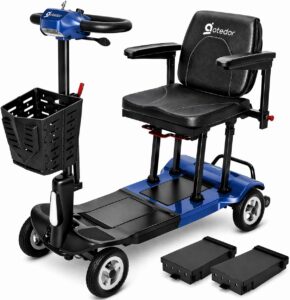
4.5★ (277 ratings) · folds compact · up to 300 lb
Why Salt Lake City: the most owner ratings and the easiest to lift onto TRAX, but at 3.7 mph it is about 24 seconds across a 132-foot street, the longest exposure of the four. Best if your riding is indoors and downtown.
Watch: the Golden Buzzaround EX reviewed
An independent walkthrough of the Golden Buzzaround EX, the higher-capacity alternative in the comparison above, showing the four-wheel frame, seat, controls and how it comes apart to transport.
Video: Golden Buzzaround EX review (YouTube). Polaris Mobility is not affiliated with the reviewer.
Compare more 4-wheel models · full catalog
Salt Lake City mobility scooter FAQ
Why are Salt Lake City’s blocks and streets so big, and does it matter on a scooter?
The city is laid out on a grid of 660-foot by 660-foot blocks, ten acres each, with streets 132 feet wide, including 20 feet for footways on both sides. The dimensions come from the Plat of Zion, drawn in 1833 under Joseph Smith: the blocks were sized so a family could keep a homestead and garden, and the streets were made wide enough to carry irrigation ditches. It matters a great deal on a scooter. A block is one-eighth of a mile, so “two blocks” is a quarter mile, and every crossing is 132 feet of road: roughly 15 seconds at 6.2 mph, 18 at 5.0 mph, 19 at 4.7 mph, and about 24 seconds at 3.7 mph, by our arithmetic from the published street width and each maker’s stated top speed.
How much is transit for seniors in Salt Lake City?
With a Reduced Fare FAREPAY Card a trip is $1.00 against a regular fare of $2.50, and charges are capped at $2 per day and $8 per week on local bus, UTA On Demand, S-Line and TRAX; on premium services such as FrontRunner, Ski Bus and Express Bus the reduced maximums are $4 a day and $16 a week. Seniors 65 and over qualify, as do people with disabilities with Medicare or healthcare-professional verification, both cards last five years, plus low-income riders at or below 200% of federal poverty guidelines. You must apply, at reducedfaresuta.com. Note that from April 12, 2026, UTA states qualified riders “can pay reduced fare only with a Reduced Fare FAREPAY Card.”
Is UTA paratransit covered by the $8 weekly fare cap?
No. UTA states plainly that “Paratransit service is not part of the fare capping system” and “Paratransit service is not eligible for the discount.” So both of the things that make UTA cheap, the $1.00 reduced fare and the $8 weekly ceiling, stop at the service for people who cannot use the bus. There is a Paratransit Punch Card valid for 10 rides, but UTA does not publish the paratransit fare on its main fare pages, so call and confirm the price before you budget.
Is TRAX free in downtown Salt Lake City?
Inside the Free Fare Zone, yes: “You may ride for free on TRAX or fixed-route bus” as long as you enter and exit within the zone’s boundaries, and on a bus you simply tell the operator you intend to stay in the zone. Two catches. If you leave the zone, or board outside it, you need proof of payment. And if you carry an electronic fare card, UTA warns: “If you use an electronic fare card (FAREPAY, Eco Pass, Ed Pass, etc.) within the Free Fare Zone, you must tap on and off. If you do not tap off, you will be charged for the trip.” So tap off even when the ride is free. UTA publishes the zone as a map rather than a list of streets, so check the map before planning around it.
Does Utah Medicaid cover a mobility scooter, and is there a work requirement?
Utah Medicaid covers adults aged 19 through 64 with annual income up to 138% of the federal poverty level ($17,608 for an individual or $36,156 for a family of four, a maximum of $1,769 a month for one person), and it can pay for medically necessary equipment such as a power wheelchair or scooter when a doctor documents the need and an enrolled provider supplies it. There is no work requirement: the state says “Adult Expansion Medicaid members do not need to register for work and do not need to complete the assessment, training programs, or job searches,” after CMS withdrew approval of Utah’s Community Engagement requirement on August 10, 2021. Eligibility questions: 1-866-435-7414.
What is the best mobility scooter for Salt Lake City?
Our top pick is the Glashow S1 Folding, for two reasons specific to this grid. It is the fastest of the four at 6.2 mph, which puts you across a 132-foot Salt Lake street in about 15 seconds rather than about 24, on streets this wide, speed is a safety specification. And it has the longest rated range, which matters where eight blocks make a mile. Check its 265 lb weight limit first, the lowest here; if you are near it, the Golden Buzzaround EX takes 330 lb, has the highest owner rating, and still crosses in about 18 seconds.