
Mobility Scooters in Seattle

Looking for a mobility scooter in Seattle, to buy or to rent? Seattle rarely freezes, but it is wet much of the year and it is one of the hilliest cities in the country, so a scooter here is about rain and grades, not snow. The upside is real: Seattle has one of the most accessible transit systems anywhere (every Link light-rail station is step-free), and Washington’s Medicaid is one of the few that actually covers a mobility scooter. This guide covers our top pick, renting vs. buying, riding the hills and rain, Link and Metro Access, how to pay, and the models that fit Seattle. Polaris Mobility earns a commission on qualifying Amazon purchases through links on this page.
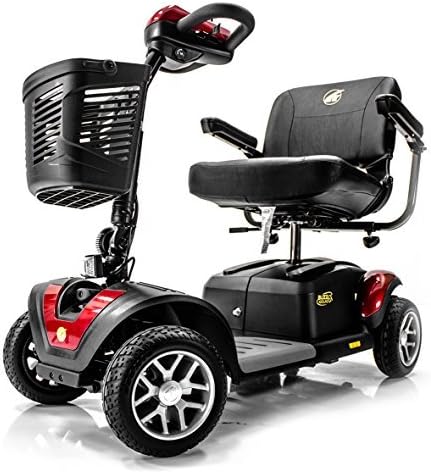
- 4 wheels, stable on wet slopes
- Up to 330 lb
- ★ 4.7 owner rating
- Real service network
The best fit for a wet, hilly city: four wheels for a steadier stance on damp, sloping pavement, a comfortable frame for longer sits, and an established brand with a real service network for the repairs Seattle’s rain and grades bring. No travel scooter conquers Seattle’s steepest blocks, save those for Link and the buses, but for everyday flatter routes this is the dependable pick. Want maximum range and the biggest wheels for the wettest days? See the Glashow S1 in the comparison below.
If you qualify, Washington’s Apple Health may cover a scooter. See the funding section first.
Renting vs. buying a mobility scooter in Seattle
Delivery services such as Scootaround will drop a scooter at a Seattle hotel or your home for a visit, a cruise departure or a recovery. For regular use, renting adds up quickly and buying is usually cheaper within a season. Here is how they compare:
- Keeps costing you. A travel scooter runs roughly $100 to $200 a week depending on model and city (Scootaround), so a month of regular use is several hundred dollars.
- You hand it back, and it never becomes yours.
- Not fitted or sized to you; you take whatever model is free.
- Delivery windows, deposits and return deadlines to plan around.
- Pays for itself fast. A one-time purchase; after a few weeks of what renting costs you are ahead, and you keep the scooter.
- Always charged, sized to you and ready by the door.
- Spread the cost. Many scooters offer monthly payments at checkout or through your card, so it need not be one big hit.
- Comes with a manufacturer warranty and keeps resale value.
Bottom line: rent for a short trip or a cruise out of the Seattle terminal; buy if you or a family member will use a scooter most weeks: it is cheaper within a month or two. And if you might qualify for Apple Health coverage (below), start there before you pay out of pocket.
Riding a scooter in Seattle: rain and hills
Seattle’s winter is mild and it rarely snows, so the everyday challenges here are different from a cold-weather city:
- Keep it dry. Frequent rain is hard on a scooter’s electronics. Use a tiller and controller cover, dry the scooter and charge it under cover, and store it indoors. Do not leave it out in the weather.
- Watch wet traction. Painted crosswalk lines, metal plates, wet leaves and moss get slick in the rain; slow down, take them straight and avoid hard turns on wet slopes.
- Respect the hills. Seattle is one of the hilliest cities in the U.S. Travel scooters handle moderate grades but not the steepest downtown or Queen Anne blocks; plan flatter routes, keep the battery well charged (hills drain it fast), descend slowly, and use Link or the buses for the big climbs.
- Rare snow is worse here. When it does snow or ice over, Seattle’s hills become impassable and the city is not built to clear them: simply stay off the scooter on those days and use accessible transit.
Getting around Seattle: Link, Metro and Access
Seattle is a genuine bright spot for step-free travel, which matters a great deal in a hilly city:
- Link is expanding fast. The 1 Line reached Lynnwood in 2024, the 2 Line opened on the Eastside in 2024, and the full cross-lake 2 Line connection linking Bellevue and the Eastside directly to Seattle is completing in 2026: steadily widening step-free rail access across the region.
- King County Metro buses are low-floor with ramps and securement areas, so scooters board directly.
- Metro Access is the door-to-door paratransit for people who cannot independently use the regular bus and rail. The fare is $1.75 one way (or a $63 monthly pass); one companion rides for the same fare, and a certified personal-care attendant rides free (King County Metro).
- How to apply for Access: submit an application with a healthcare professional’s verification and attend an in-person functional evaluation; you will hear back within about 21 days. Call 206-553-3000.
Wheelchair-accessible places in Seattle
OpenStreetMap volunteers have tagged more than 600 destinations across Seattle as wheelchair-accessible, including 149 restaurants, 95 cafés, fitting for the city that made coffee its own, 44 quick-service spots and 30 pubs. A few from the map: Uptown Espresso, Mighty-O Donuts and neighborhood Wells Fargo branches. Tags are volunteer-maintained, so confirm current step-free access with each venue before visiting.
Accessibility data © OpenStreetMap contributors.
Who needs mobility support in Seattle
Seattle is a young city: only about 12.8% of residents are 65 or older, roughly one in eight, below Washington’s 16.3% and the U.S. figure of 16.8% (U.S. Census Bureau, ACS 2023). But the need is still large in absolute terms in a metro this size, and it climbs sharply in the surrounding suburbs and on the Olympic and Kitsap peninsulas. About 10.0% of Seattle residents report a disability, rising to 13.3% statewide. Nationally, Statistics from the CDC show mobility is the most common disability among older adults.
Best mobility scooters for Seattle (2026)
Picks that suit a wet, hilly city: four-wheel stability for damp, sloping pavement, enough range to climb without draining flat, and sealed, weather-tolerant builds. Specs are per manufacturer listings; confirm current details and price on Amazon.
| Model | Wheels | Max rider | Top speed | Owner rating |
|---|---|---|---|---|
| Golden Buzzaround EX ★ Top pick | 9″ (4-wheel) | 330 lb | 5.0 mph | 4.7★ (verified) |
| Glashow S1 Folding | 10″ (4-wheel) | 265 lb | 6.2 mph | 4.4★ (46) |
| Aotedor Lightweight | 7″ | 300 lb | 3.7 mph | 4.5★ (277) |
| Pride Go-Go Sport | 3-wheel | 325 lb | 4.7 mph | 4.4★ (109) |
4.7★ (verified owners) · 9″ wheels · up to 330 lb
Why Seattle: the highest owner rating here, four-wheel stability on wet slopes and a real service network for the repairs a rainy, hilly city brings.
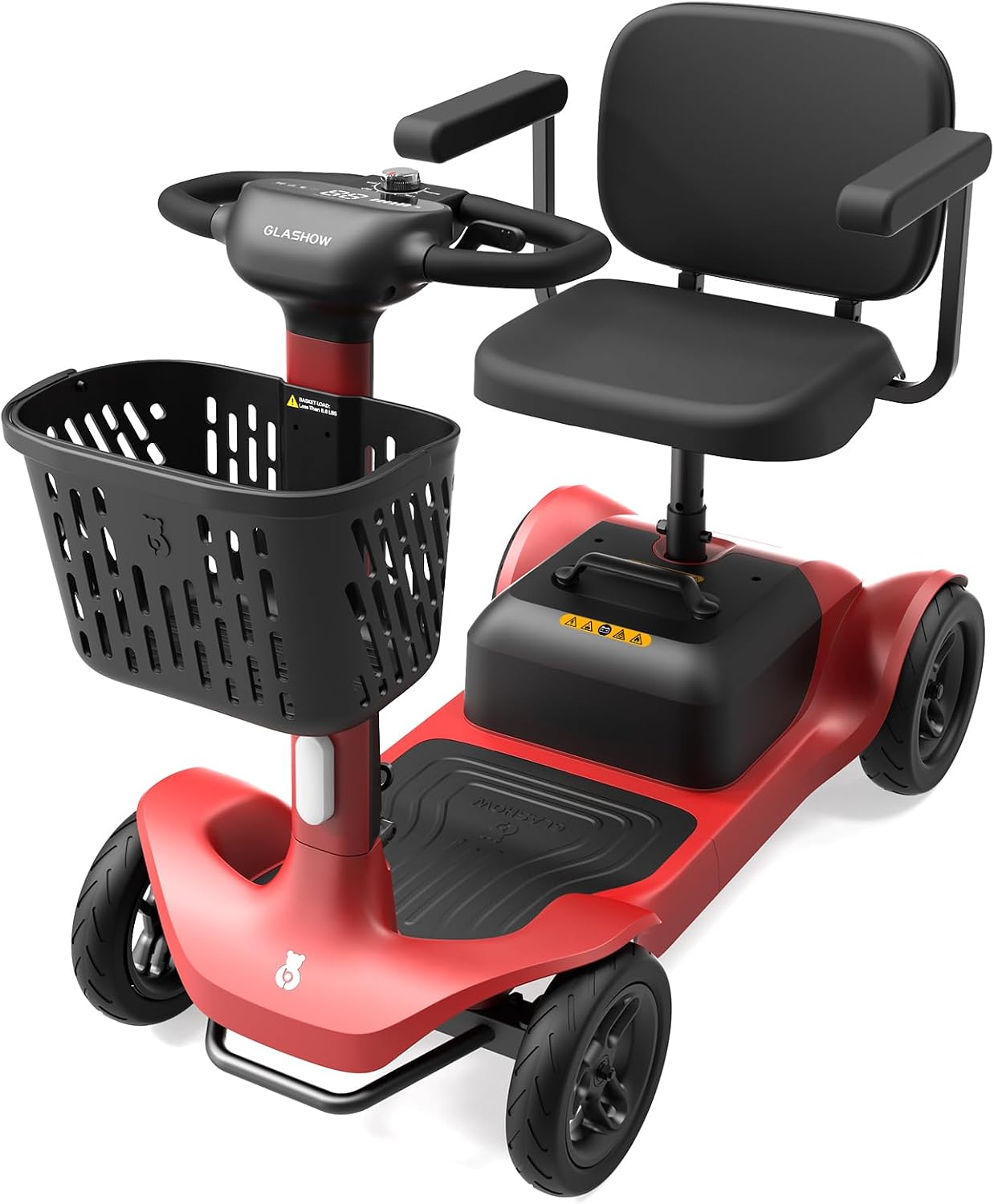
4.4★ (46 ratings) · 10″ wheels · rated ~25 mi range
Why Seattle: the biggest wheels and longest range here to climb the hills without running flat, and it folds to lift into a car and store indoors out of the rain.
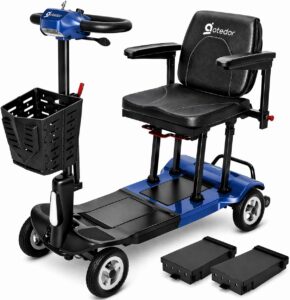
4.5★ (277 ratings) · folds compact · up to 300 lb
Why Seattle: light to lift into a car and take on Link, and easy to store indoors in a small apartment: best kept to flatter neighborhoods, as its small wheels are not for the steep grades.
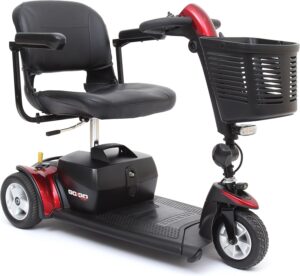
4.4★ (109 ratings) · compact · up to 325 lb
Why Seattle: a tight turning circle for Pike Place, indoor markets and clinics on the wettest days. Four wheels are steadier once you are out on a slope.
How to pay: Apple Health, Medicare and out of pocket
Medicare (Part B) may cover a scooter if a doctor confirms you need it to move around your home and you can safely operate one, but it requires a face-to-face exam and a supplier that accepts Medicare, not a retail Amazon purchase (Medicare.gov). Because these programs work through approved suppliers, a scooter bought on Amazon is a separate out-of-pocket purchase, which is why many Seattle buyers who do not qualify choose one for the lower price and immediate delivery. Confirm current criteria directly, as they change.
Watch: the Golden Buzzaround EX reviewed
An independent walkthrough of the Golden Buzzaround EX, our top pick above, showing the seat, tiller, disassembly and driving.
Video: Golden Buzzaround EX review by Marc’s Mobility (YouTube). Polaris Mobility is not affiliated with the reviewer.
Compare more 4-wheel models · full catalog
Seattle mobility scooter FAQ
Does Washington Medicaid cover a mobility scooter?
Yes, in the right circumstances. Washington Apple Health covers a three- or four-wheel power scooter for adults when it is medically necessary and the doctor certifies you are unlikely to need a standard power wheelchair within two years. You request it through your primary care provider. Washington is one of the few state Medicaid programs that covers scooters specifically, so it is worth asking before you buy out of pocket.
Can a mobility scooter handle Seattle’s hills?
On moderate grades, yes, but not the steepest blocks. Travel scooters climb gentle-to-moderate hills, and a four-wheel model with good range and brakes handles most everyday routes; keep the battery well charged, descend slowly, and use Link light rail or the buses for the big climbs. Plan flatter routes where you can.
Is Seattle’s transit accessible with a mobility scooter?
Very. Every Link light-rail station has elevators and level boarding, so you roll straight onto the train, and King County Metro buses are low-floor with ramps. For door-to-door trips, Metro Access paratransit costs $1.75 one way for certified riders. That combination lets a scooter user skip Seattle’s steepest hills.
What is the best mobility scooter for Seattle?
For a wet, hilly city, four-wheel stability, enough range to climb without draining flat, and a weather-tolerant build matter most. Our top pick is the Golden Buzzaround EX for its stability, high owner rating and service network; the Glashow S1 is the choice for the most range and the biggest wheels, and a lightweight or three-wheel model is best kept for flatter neighborhoods and indoor use.