
Mobility Scooters in Tucson
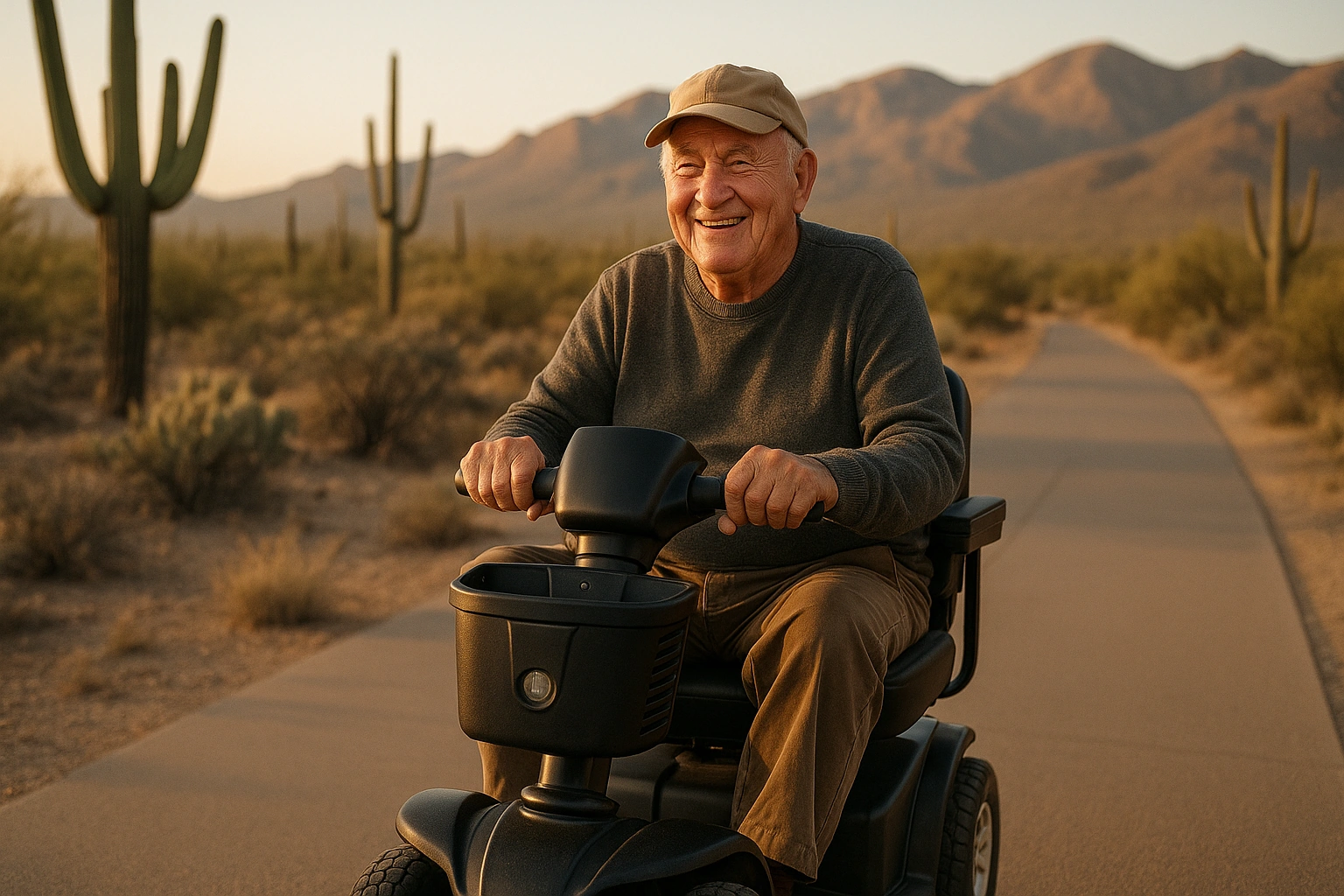
Looking for a mobility scooter in Tucson, to buy or to rent? Tucson hands you two things almost no other American city does, and one of them is dangerous. The good one: more than 138 miles of completed paved, car-free shared-use path called The Loop, with a 53.9-mile continuous circuit: no traffic, no curbs, no arguing with drivers. The other: 68 days a year when the temperature reaches 100°F or higher, and this year the first of them arrived on 19 March. This guide covers both honestly: the rule on The Loop that reads like it bans your scooter and does not, why the bus and the paratransit van have been free here since 2020, how Arizona’s Medicaid ended up unlike anyone else’s, and the models that suit a desert. Polaris Mobility earns a commission on qualifying Amazon purchases through links on this page.
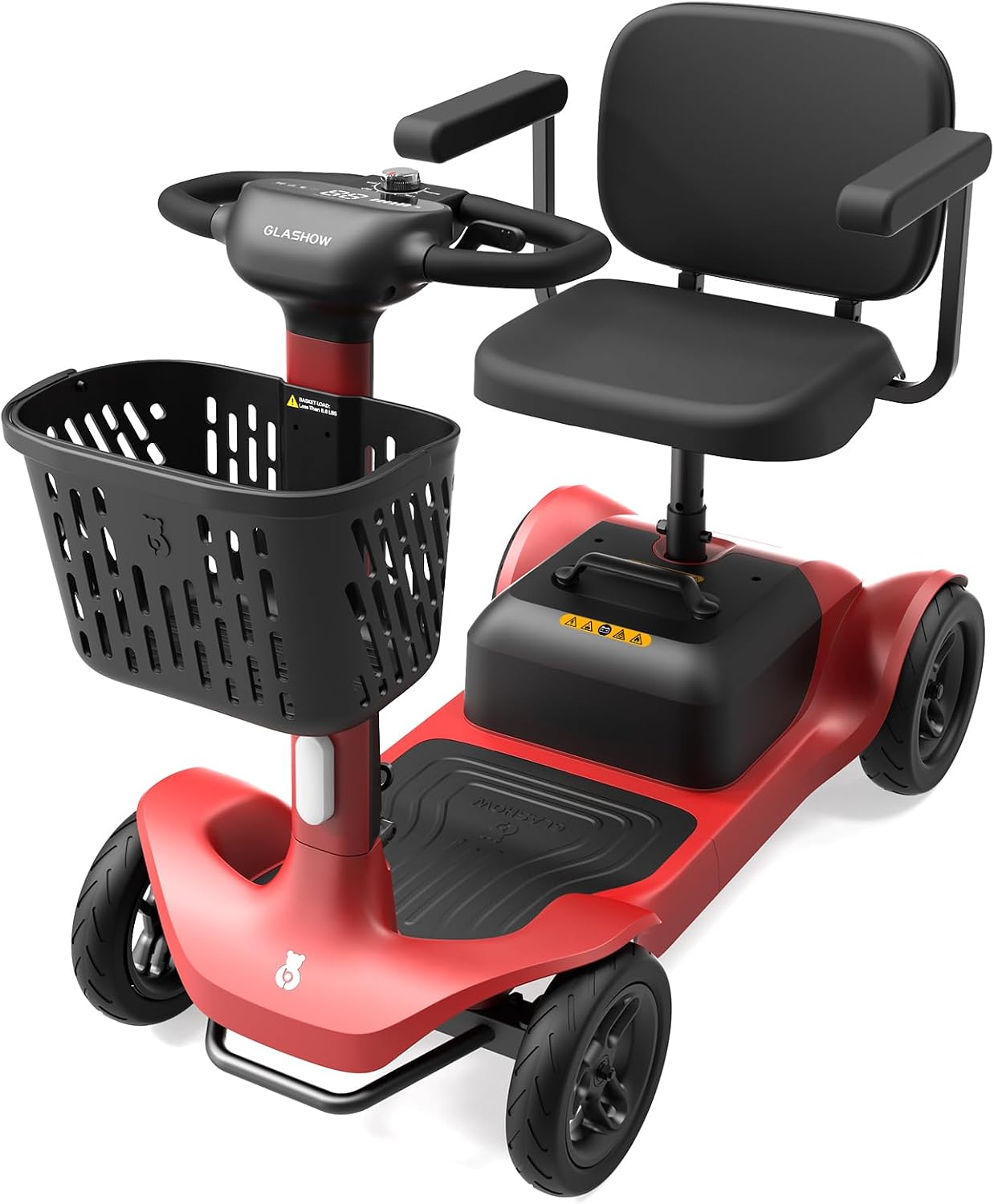
- Rated ~25 mi range
- 10″ wheels
- 6.2 mph
- 265 lb limit
In Tucson, range is not a convenience, it is a safety margin. On a desert path there is often no shade, no shop and no shortcut: if the battery dies six miles out at ten in the morning, that is not an inconvenience, it is a medical problem. So buy the longest rated range here, and then plan never to use the last third of it. That is also why the biggest wheels help on a hot, gritty surface. Check first: the 265 lb limit is the lowest of the four: if you are near it, take the Buzzaround below at 330 lb.
On Medicare or AHCCCS? Read the funding section before you pay out of pocket.
The Loop: the sign says no motorized devices. It does not mean you.
And it is worth going. The Chuck Huckelberry Loop is a system of paved, shared-use paths with short segments of buffered bike lanes, connecting the Cañada del Oro, Rillito, Santa Cruz and Pantano River Parks with the Julian Wash and Harrison Road Greenway. Pima County states that “more than 138 miles of paved pathways and bike lanes have already been completed with additional trails to come”, and the complete circuit is 53.9 miles. It runs through unincorporated Pima County, Marana, Oro Valley, Tucson and South Tucson, and connects parks, trailheads, bus and bike routes, workplaces, restaurants, schools, hotels, shopping and entertainment.
Take a second on what that means for a scooter rider, because it is not something a city can retrofit cheaply. No curb cuts to hunt for. No driveways to cross. No truck turning across you. No pavement that runs out. Just pavement, going somewhere, for as far as you have battery. Pima County does not publish the path width on that page, so we are not going to invent a number, but the surface and the absence of cars are the point.
Sixty-eight days a year: the part that can hurt you
Heat is the Tucson hazard the brochures skip, and for someone on a scooter it is a genuinely different risk than it is for a walker. You are sitting still on a dark machine on dark pavement, in the sun, not generating a breeze, often further from a door than you meant to be. Older bodies also feel thirst less reliably, which is exactly the wrong safety feature to have in a desert.
- Ride at dawn. Not “early”, dawn. The Loop at six in the morning is one of the great pleasures available to anyone on wheels in America. The same path at three in the afternoon in July is somewhere you can get into real trouble.
- Treat range as your margin, not your target. Plan the ride so that a dead battery still leaves you within easy reach of shade and a road. Turn around at a third, not at a half.
- Heat is hard on lithium batteries. Do not store the scooter in a parked car, and do not leave it charging or sitting in direct sun. A battery cooked all summer gives you less range every year: which, per the point above, is a safety issue and not just an annoyance.
- The machine gets hot enough to burn. A vinyl seat, metal armrests and a tiller left in the sun will scald bare skin. Park in shade, throw a light cloth over the seat, and check before you sit.
- Carry more water than feels silly, and tell someone your route. On a shadeless stretch of path, “someone will come along” is a plan, not a good one.
- Monsoon season brings its own problem. Do not ride through running water in a wash, and get off the path when a storm builds: those river parks are next to actual rivers when it rains.
Free since 2020, including the paratransit van
Tucson’s buses, streetcar and disability transport have been free since March 2020. That is six years, and it has been tested: facing a potential $68 million budget shortfall, the City Council took up a proposal to reimpose fares and voted it down 5–2 in March 2026. Elsewhere in this guide you will find free transit that is a rolling 45-to-90-day pilot with no end date, which is a nervous way to live. Tucson’s is a six-year-old policy that the council keeps being asked to end and keeps declining to end. Those are not the same thing, and if you are deciding whether to rely on it, the difference matters.
Do confirm before you build a routine on it. A policy defended for six years is still a policy, not a law, and the shortfall that prompted the March 2026 vote has not evaporated. But as of now, the honest answer to “what does the bus cost in Tucson” is: nothing.
Renting vs. buying a mobility scooter in Tucson
Free transit changes this sum, and so does the heat. What you are buying here is the ability to go at six in the morning, from your own door, without arranging anything.
- Keeps costing you. A travel scooter runs roughly $100 to $200 a week depending on model and city (Scootaround), so a month of regular use is several hundred dollars.
- You hand it back, and it never becomes yours.
- Not fitted or sized to you; you take whatever model is free.
- You cannot know how the battery has been treated, and in this climate, that is the whole machine.
- Pays for itself fast. A one-time purchase; after a few weeks of what renting costs you are ahead, and you keep the scooter.
- Dawn rides are only possible on your own machine. Nothing delivers at 5:30 a.m.
- You control the battery’s life: where it is stored, how it is charged, whether it bakes in a car. In Tucson that is the difference between a scooter that lasts and one that does not.
- Spread the cost. Many scooters offer monthly payments at checkout or through your card.
Bottom line: rent for a February visit; buy if you live here. With free buses and a free paratransit van, an owned scooter plus Sun Tran covers Tucson about as cheaply as an American city can be covered, and the scooter is what gets you onto The Loop at first light, which is the reason to be here at all.
How to pay: Medicare, and the state that joined Medicaid seventeen years late
If you are 65 or older, Medicare is your route. Part B may cover a scooter if a doctor confirms you need it to move around your home and you can operate one safely, through a supplier that accepts Medicare (Medicare.gov).
What followed is a program the voters kept having to rescue. In 2001, Proposition 204 expanded Arizona Medicaid at the ballot box to cover childless adults up to 100% of the federal poverty level. Then the recession came: in 2011, enrolment for those very Proposition 204 childless adults was frozen to reduce budget deficits, and in 2012 the State Legislature cut 21.7% of the AHCCCS budget. In 2013, Governor Jan Brewer (a Republican, over the objections of many in her own party) signed the AHCCCS Restoration Plan to restore that coverage and implement ACA expansion. On 1 January 2014 coverage for childless adults was restored and eligibility expanded to 133% of FPL. By October 2016, an additional 400,000 members were enrolled thanks to Proposition 204.
AHCCCS can pay for medically necessary equipment such as a power wheelchair or scooter when a doctor documents the need and it is supplied through an enrolled provider. Because these programs work through approved suppliers, a scooter bought on Amazon is a separate out-of-pocket purchase, which is why many Tucson buyers who do not qualify choose one for the lower price and immediate delivery. Confirm current criteria directly, as they change.
Comparing options across the state? Our Arizona mobility scooter guide covers statewide Medicaid and Medicare details, the best models for the local climate and terrain, and how the picture changes from city to city.
Who needs mobility support in Tucson
Tucson reverses the usual pattern in this guide, and in a way worth understanding. 15.8% of Tucson residents are 65 or older (85,989 people out of 543,348), which is below both the national 16.8% and Arizona’s notably old 18.6%. Arizona is a retirement state; Tucson itself is a university city and skews younger than the state around it (U.S. Census Bureau, ACS 2023, 5-year).
But on disability the direction flips. 15.5% of Tucson residents report a disability, against 13.6% across Arizona and 13.0% nationally. So Tucson is younger than its state and more disabled than it. Elsewhere it is common for the state to carry the heavier disability burden while the city has the transit; here the city carries both the burden and the infrastructure. Which is, at least, the right way round: the 138 miles of car-free path and the free paratransit van are where the people who need them actually live.
Best mobility scooters for Tucson (2026)
Picks that suit long car-free desert path, no shade, and a battery that has to survive a Sonoran summer. Specs are per manufacturer listings; confirm current details and price on Amazon.
| Model | Wheels | Max rider | Top speed | Owner rating |
|---|---|---|---|---|
| Glashow S1 Folding ★ Top pick | 10″ (4-wheel) | 265 lb | 6.2 mph | 4.4★ (46) |
| Golden Buzzaround EX If 265 lb is close | 9″ (4-wheel) | 330 lb | 5.0 mph | 4.7★ (verified) |
| Pride Go-Go Sport | 3-wheel | 325 lb | 4.7 mph | 4.4★ (109) |
| Aotedor Lightweight | 7″ | 300 lb | 3.7 mph | 4.5★ (277) |
4.4★ (46 ratings) · 10″ wheels · rated ~25 mi range · 265 lb limit
Why Tucson: the longest rated range here, and on a shadeless desert path range is your margin for error rather than your itinerary. Biggest wheels for hot, gritty surfaces. Check the 265 lb limit before anything else.
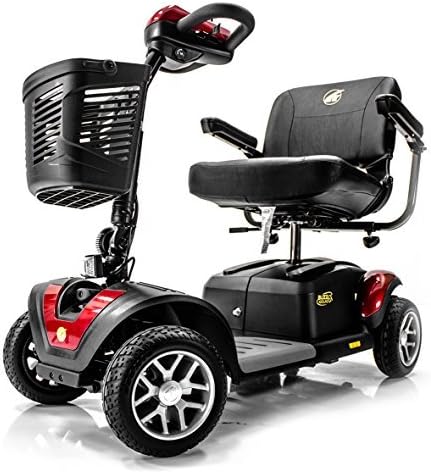
4.7★ (verified owners) · 9″ wheels · up to 330 lb
Why Tucson: 330 lb capacity, the highest owner rating here, and a real manufacturer service network: worth having where the climate is hard on batteries and you may need a warranty honoured.
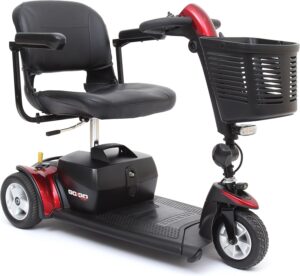
4.4★ (109 ratings) · compact · up to 325 lb
Why Tucson: 325 lb and it comes apart for a car trunk, which is how most people reach a Loop trailhead that is not near their house. Four wheels feel steadier over long distances.
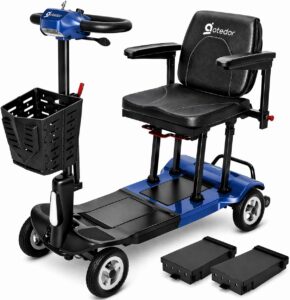
4.5★ (277 ratings) · folds compact · up to 300 lb
Why Tucson: easiest to lift and store indoors out of the sun, but the shortest legs of the four: the least suited to a long desert path, and the most likely to leave you short. Best for errands and indoor use.
Watch: the Golden Buzzaround EX reviewed
An independent walkthrough of the Golden Buzzaround EX, the higher-capacity alternative in the comparison above, showing the four-wheel frame, seat, controls and how it comes apart to transport.
Video: Golden Buzzaround EX review (YouTube). Polaris Mobility is not affiliated with the reviewer.
Compare more 4-wheel models · full catalog
Tucson mobility scooter FAQ
Can you ride a mobility scooter on The Loop in Tucson?
Yes. Pima County’s rule reads “No motorized vehicles or devices allowed (ADA accessibility and official vehicles are exempt)”: the exemption in the brackets is what covers your mobility scooter or power wheelchair, and the ban is aimed at motorcycles and ATVs. Be aware that the County lists permitted users as “on foot, bikes, skates, and horses” and never mentions mobility devices by name on that page, so it is worth knowing the exact wording of the exemption. The Loop is more than 138 miles of completed paved, car-free shared-use path, with a 53.9-mile continuous circuit.
How hot does Tucson actually get, and can I ride in it?
Tucson’s normal is 68 days a year with a high of 100°F or above, based on the National Weather Service’s 1991–2020 normal period, and the record is 112 such days set in 2024. The normal first 100°F day is 18 May, but the earliest on record is 19 March 2026, this year, in records going back to 1895. For a scooter rider the practical answer is to ride at dawn rather than “early”, treat your range as a safety margin and turn back at a third rather than a half, keep the battery out of parked cars and direct sun, and check the seat and armrests before sitting on them because they will burn you.
Is the bus free in Tucson?
Yes, and so is the paratransit. Sun Tran states that “Sun Tran, Sun Link, Sun Van, Sun On Demand, Sun Express and Sun Shuttle rides continue to remain fare free at the direction of the Mayor and Council”: Sun Van being the door-to-door disability service. Transit has been free here since March 2020, and in March 2026 the City Council voted 5–2 against a proposal to reimpose fares despite a potential $68 million budget shortfall. No end date is stated and no fare table is posted, but a policy is not a law, so confirm before you build a routine on it.
Does AHCCCS cover a mobility scooter in Arizona?
AHCCCS can pay for medically necessary equipment such as a power wheelchair or scooter when a doctor documents the need and it is supplied through an enrolled provider. If you are 65 or over or have a physical disability and need long-term services, the relevant program is usually ALTCS, the Arizona Long Term Care System, implemented on 19 December 1988 for people with developmental disabilities and 1 January 1989 for those who are elderly or physically disabled. Ask AHCCCS directly about ALTCS eligibility and covered services rather than relying on a summary.
Why is Arizona’s Medicaid different from other states?
Because it started seventeen years late and started differently. Congress enacted Medicaid in 1965; Arizona did not join until 1 October 1982, the last state to do so, and a 1981 federal waiver let it enter as mandatory managed care from day one rather than adding managed care later. Governor Bruce Babbitt signed Senate Bill 1001 on 18 November 1981 creating AHCCCS. Voters later expanded it themselves through Proposition 204 in 2001, covering childless adults to 100% of the federal poverty level; enrolment for that group was frozen in 2011 and the Legislature cut 21.7% of the AHCCCS budget in 2012, before Governor Jan Brewer signed the AHCCCS Restoration Plan in 2013 and coverage was restored and expanded to 133% of FPL on 1 January 2014.
What is the best mobility scooter for Tucson?
Our top pick is the Glashow S1 Folding, because in a desert city range is a safety margin rather than a convenience, on a shadeless path a dead battery six miles out on a hot morning is a medical problem, not an inconvenience. It has the longest rated range and the biggest wheels of the four here; buy it and plan never to use the last third of the range. Its 265 lb weight limit is the lowest on this page, so if you are near that figure buy the Golden Buzzaround EX at 330 lb, which also has the highest owner rating and a real service network.