
Mobility Scooters in Vancouver

Looking for a mobility scooter in Vancouver, to buy, to rent, or to get help paying for one? Vancouver is the one big Canadian city where winter is not about snow: it is mild and very wet, so rain, not cold, is your main planning problem, and unlike the flat Prairies, parts of the city are genuinely hilly. That mix, plus a fully accessible SkyTrain, shapes what you should buy and how you use it. This guide covers our top pick, renting vs. buying, riding in the rain and on hills, TransLink and HandyDART, how B.C. funding works, and the models that fit the city. Polaris Mobility earns a commission on qualifying Amazon purchases through links on this page.
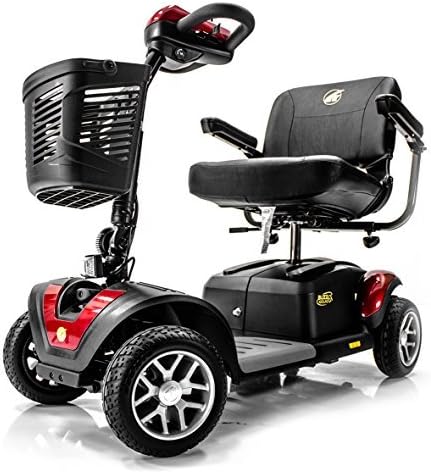
- 4-wheel stability
- Up to 330 lb
- ★ 4.7 rating
- Brand service network
The safest all-round choice for a wet, hilly city: four wheels for stability on slopes and slick pavement, a comfortable, dependable ride with solid brakes for going down Vancouver’s hills, and an established brand with a B.C. dealer and service network. If you take longer or steeper trips and want more range, see the Glashow S1 in the comparison below.
Bought this way it is out-of-pocket; see how B.C. funding works further down.
Renting vs. buying a mobility scooter in Vancouver
Delivery services such as Scootaround will drop a scooter at a Vancouver hotel or your home for a visit, an event or a recovery. For regular use, though, renting adds up fast and buying is usually cheaper within a season, and because Vancouver’s mild climate makes year-round riding realistic, an owned scooter earns its keep quickly. Here is the real comparison:
- Keeps costing you. A travel scooter runs roughly $100 to $200 a week depending on model and city (Scootaround), so a month of regular use is several hundred dollars.
- You hand it back, and it never becomes yours.
- Not fitted or sized to you; you take whatever model is free.
- Delivery windows, deposits and return deadlines to plan around.
- Pays for itself fast. A one-time purchase; after a few weeks of what renting costs you are ahead, and with mild weather you can ride it most of the year.
- Always charged, sized to you and ready by the door.
- Spread the cost. Many scooters can be paid in monthly installments at checkout or through your card’s equal-monthly-payments plan, so it need not be one big hit.
- Comes with a manufacturer warranty and keeps resale value.
Bottom line: rent for a short trip; if you or a family member will use a scooter most weeks, buying is cheaper within a month or two, and if you are on assistance, the B.C. programs below may help with a medically essential device.
Rain, hills and the odd snow day: riding in Vancouver
Vancouver’s challenges are the opposite of the Prairies’. Two things dominate: water and slopes.
- Rain is the constant. Water can damage a scooter’s motor, controller and battery. Use a tiller and control-panel cover, wipe the scooter dry after every wet outing, store and charge it indoors, and avoid deep puddles where you cannot see the pavement. A rider poncho or a scooter canopy keeps you going in the drizzle.
- Respect the hills. Vancouver’s slopes drain a battery quickly and lean on the brakes. Choose a scooter with enough power and range, check your model’s rated incline, take hills straight on rather than at an angle, and go slowly downhill on wet pavement.
- The rare snow or ice day. Because snow is uncommon here, the city and its hills handle it poorly and it lingers on side streets. On those few days, stay in or use HandyDART rather than risk an icy slope.
- The upside: mild temperatures mean the battery keeps most of its range and you can ride most of the year, the trade-off for all that rain.
Getting around Vancouver: TransLink and HandyDART
TransLink runs Metro Vancouver’s buses and the SkyTrain, and the automated SkyTrain is fully accessible: every station has elevators or ramps, a real advantage over older subway systems. HandyDART is the door-to-door, shared-ride service for people who cannot use conventional transit without assistance (TransLink):
- Low, flat fare. All bus and HandyDART trips are charged a single 1-Zone fare at all times, and its vehicles accommodate wheelchairs, walkers and other mobility aids with door-to-door help.
- Eligibility covers people with a physical, sensory or cognitive disability who cannot use conventional transit without assistance.
- How to apply: complete the application with a section filled out by your doctor and two photos, and mail it to the Access Transit Customer Care Office; applications are processed within about 10 days. Help with the form: 604-953-3680.
Wheelchair-accessible places in Vancouver
OpenStreetMap volunteers have tagged more than 1,000 features across Vancouver as wheelchair-accessible, including 191 restaurants, 129 cafés, 99 fast-food spots, 60 banks and 26 pharmacies. A few from the map: London Drugs, Vancity, Scotiabank, Blenz Coffee and Shoppers Drug Mart. Tags are volunteer-maintained, so confirm current access (and a step-free, covered entrance for the rain) with each venue before visiting.
Accessibility data © OpenStreetMap contributors.
Who needs mobility support in Vancouver
Vancouver is older than most of Canada: a mild climate and coastal setting make it a retirement draw. In the 2021 census, about 17% of the city’s residents were aged 65 and older, roughly 112,600 people, while British Columbia, at 20.3%, has the highest senior share of any province: above the national figure of 19.0% (Statistics Canada, 2021 Census). That makes accessible, all-weather getting-around a daily question for a large share of the city. Nationally, Statistics Canada counts about 3.13 million Canadians with a mobility-related disability (Canadian Survey on Disability, 2022).
Best mobility scooters for Vancouver (2026)
Picks that suit a wet, hilly, mild city: four-wheel stability and dependable brakes for slopes and slick pavement, enough power and range for the climbs, and options that come indoors easily to dry off. Specs are per manufacturer listings; confirm current details and price on Amazon.
| Model | Wheels | Max rider | Top speed | Owner rating |
|---|---|---|---|---|
| Golden Buzzaround EX ★ Top pick | 9″ (4-wheel) | 330 lb | 5.0 mph | 4.7★ (verified) |
| Glashow S1 Folding | 10″ (4-wheel) | 265 lb | 6.2 mph | 4.4★ (46) |
| Aotedor Lightweight | 7″ | 300 lb | 3.7 mph | 4.5★ (277) |
| Pride Go-Go Sport | 3-wheel | 325 lb | 4.7 mph | 4.4★ (109) |
4.7★ (verified owners) · 9″ wheels · up to 330 lb
Why Vancouver: four-wheel stability and dependable brakes for wet slopes, a comfortable ride, and a B.C. service network for upkeep.
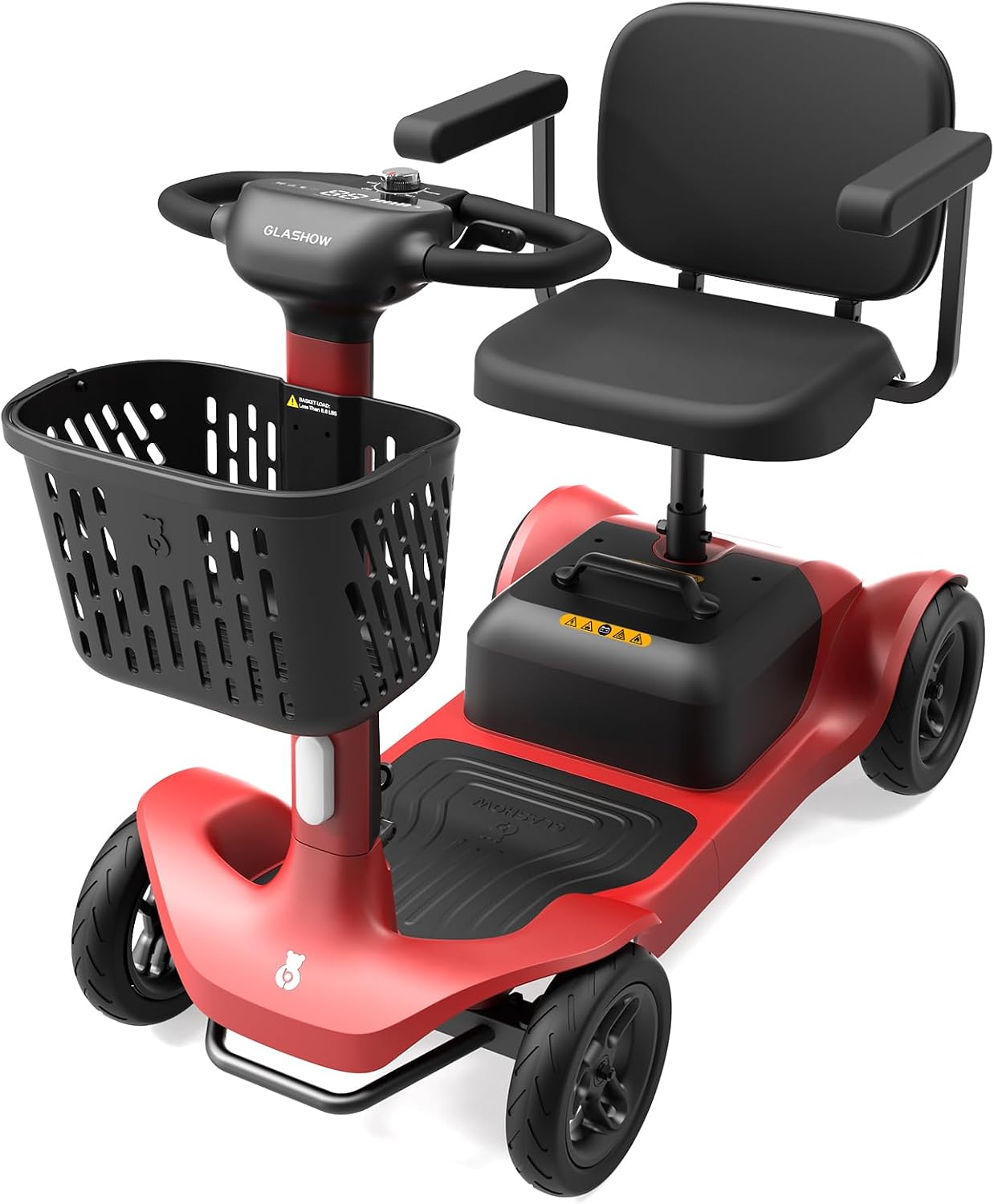
4.4★ (46 ratings) · 10″ wheels · rated ~25 mi range
Why Vancouver: the longest range and biggest wheels here for longer, hillier trips, and it folds to bring indoors to dry off.
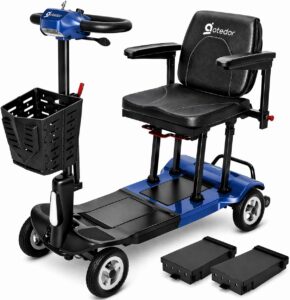
4.5★ (277 ratings) · folds compact · up to 300 lb
Why Vancouver: light to lift and easy to bring indoors to dry: best on the flatter neighbourhoods and for drive-then-ride trips; its smaller motor is less suited to the steepest hills.
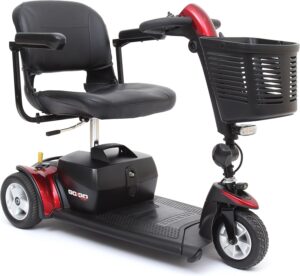
4.4★ (109 ratings) · compact · up to 325 lb
Why Vancouver: a tight turning circle for shops, cafes and the SkyTrain; keep it to flatter routes, as four wheels are steadier on wet slopes.
How to pay: British Columbia funding options
British Columbia does not have a single province-wide device program like Ontario’s, so help with a scooter is narrower and mostly tied to income or disability assistance:
- Disability and income assistance (BCEA). People on assistance may receive the least expensive appropriate medical equipment as a health supplement when it is medically essential to achieve or maintain basic mobility and no other resource is available; power wheelchairs and scooters are assessed against those tests (Province of B.C.).
- Persons with Disabilities (PWD) transportation supplement. People with the PWD designation receive a monthly transportation supplement that can help with getting around.
- Red Cross Health Equipment Loan Program (HELP) lends mobility equipment short-term through B.C. communities, and charities such as the Kinsmen Foundation of B.C. offer direct funding.
Important: if you are not on assistance, a scooter is generally an out-of-pocket purchase in B.C., and a scooter bought on Amazon is out of pocket in every case. If a funded device is your goal, start with your assistance worker or an occupational therapist for an assessment; many British Columbians simply buy a travel scooter for the lower price and immediate delivery. Confirm current coverage directly, as the rules change.
Watch: the Golden Buzzaround EX reviewed
An independent walkthrough of the Golden Buzzaround EX, our Vancouver top pick, showing the seat, tiller, disassembly and driving.
Video: Golden Buzzaround EX review by Marc’s Mobility (YouTube). Polaris Mobility is not affiliated with the reviewer.
Compare more 4-wheel models · full catalog
Vancouver mobility scooter FAQ
Can I use a mobility scooter in Vancouver rain?
Yes, with care, since rain is the norm here. No scooter is waterproof, so use a tiller and control cover, wipe it dry after each outing, store and charge it indoors, and avoid deep puddles. A rider poncho or scooter canopy keeps you going in the drizzle, and the mild temperatures mean you can ride most of the year.
Does British Columbia help pay for a mobility scooter?
Mainly for people on assistance. Through B.C. Employment and Assistance, the least expensive appropriate equipment may be provided when it is medically essential and no other resource exists, and people with the PWD designation get a monthly transportation supplement. The Red Cross HELP program lends equipment short-term. If you are not on assistance, a scooter is generally out of pocket, and an Amazon purchase is out of pocket in every case.
How much does HandyDART cost, and is the SkyTrain accessible?
HandyDART charges a single 1-Zone fare for all trips and offers door-to-door service for people who cannot use conventional transit without assistance; apply with a section completed by your doctor and two photos. The SkyTrain is fully accessible (every station has elevators or ramps), so many riders combine it with the bus and keep HandyDART for door-to-door trips.
What is the best mobility scooter for Vancouver?
For a wet, hilly city, four-wheel stability, dependable brakes and enough power for slopes matter most. Our top pick is the Golden Buzzaround EX for stability and a B.C. service network; the Glashow S1 is the choice for more range and bigger wheels on longer, hillier trips, and a lightweight or three-wheel model is best kept for flatter routes and indoor use.