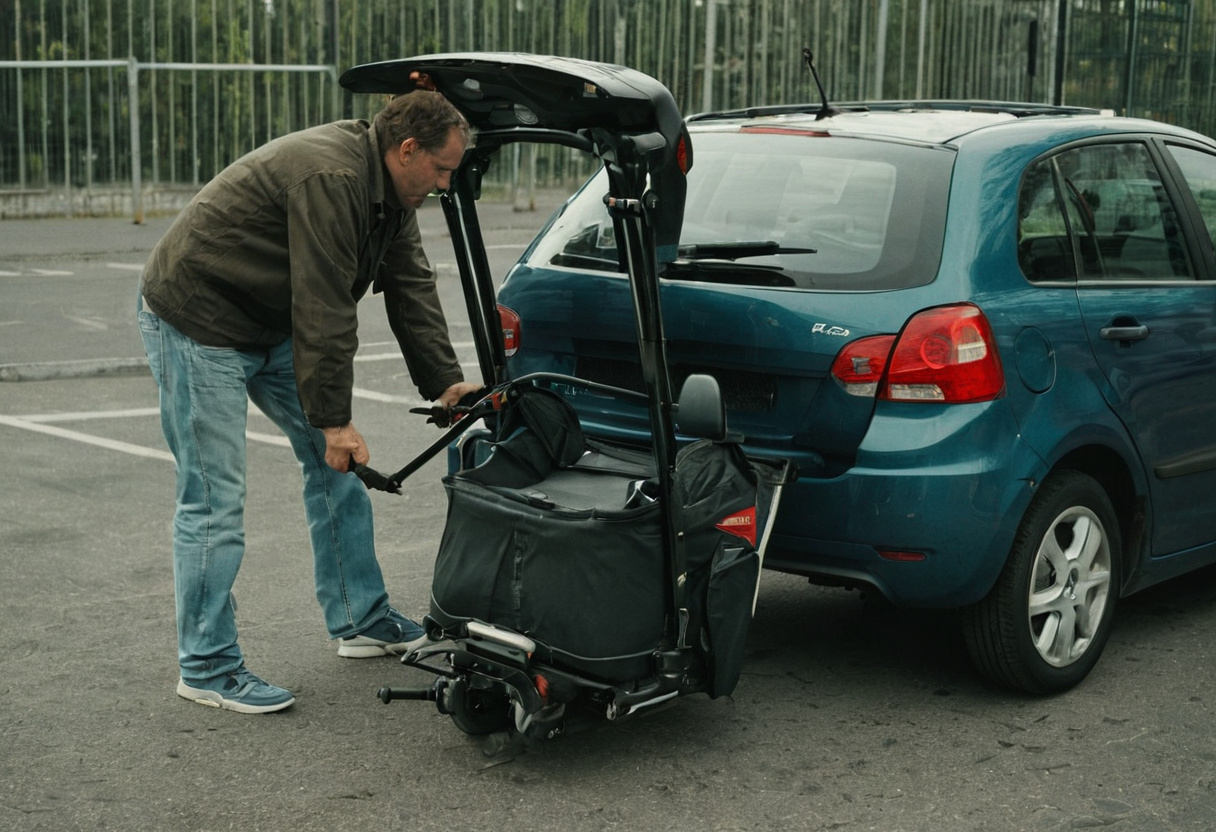
A folding mobility scooter boards a US flight when its removable lithium pack is rated at 300 watt-hours or less, the FAA PackSafe cap, and the pack rides in the cabin rather than the hold. On their label figures, the SuperHandy Passport (88.8 Wh per pack) and the Aotedor T550 (269 Wh per pack) clear that cap; the Glashow S1 and Metro Mobility run lead-acid or gel packs the cap does not govern, and the Ecomobi MS01F publishes no voltage. Each of the seven models is checked below against cruise cabin doors, Amtrak and VIA Rail limits, and the Air Canada and WestJet rulebooks.
Disclosure: Polaris Mobility earns a commission on qualifying Amazon purchases made through links on this page. Prices were recorded on September 19, 2026; each Amazon listing shows the live figure.
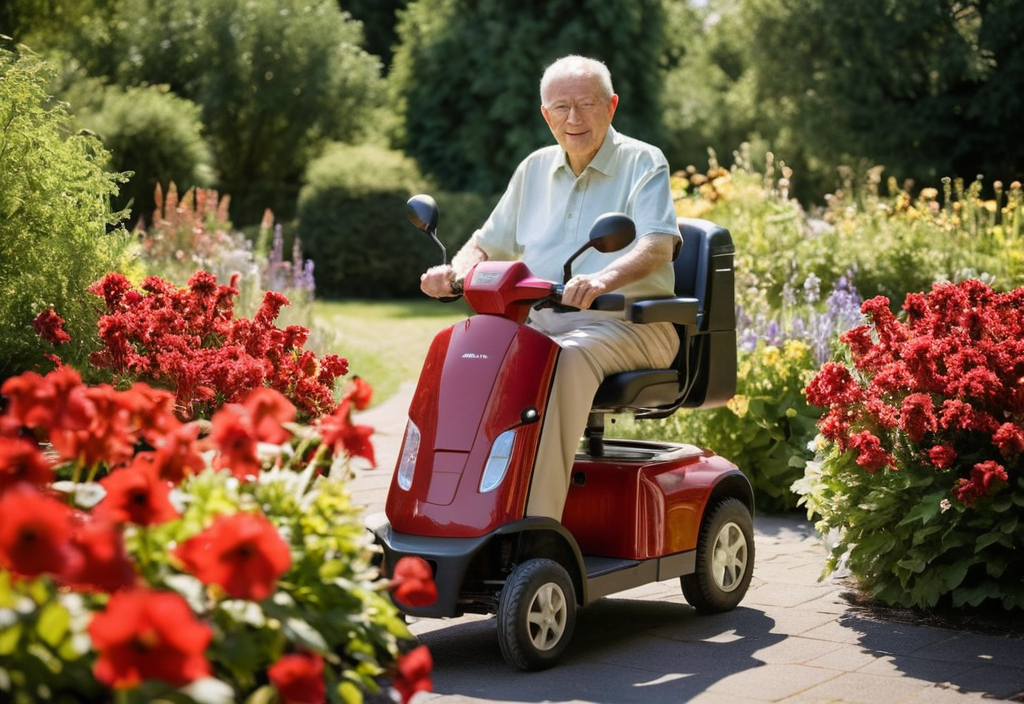
Which folding mobility scooters can you take on a plane in the US and Canada?
The FAA limits a lithium-ion scooter battery to 300 Wh, with one spare up to 300 Wh or two spares up to 160 Wh each, all in carry-on baggage, so cabin eligibility comes down to the volts and amp-hours printed on the pack, not to “airline approved” in a listing title: no government or carrier page cited here describes an approval program for scooter models.
The SuperHandy Passport ships with two removable 44.4 V, 2 Ah lithium-ion packs, which is 88.8 Wh per pack by multiplication (the same scooter is listed elsewhere at 48 V, 2 Ah, or 96 Wh); either figure sits under the 160 Wh per-spare limit, so both packs travel in the cabin.
Budget folders often print a watt-hour figure that disagrees with their own volts times amp-hours, and the printed figure is the one a screening agent reads. On that SuperHandy pair each pack clears the 300 Wh cap and the second fits the one-spare allowance; that reading of two installed packs as battery plus spare is an interpretation of the FAA text, so confirm it when you call the airline.
The Ecomobi MS01F lists a removable 12 Ah lithium battery and a 24 V 350 W motor but no pack voltage, so no watt-hour figure can be computed, and the maker’s “Airline-Friendly Battery” line has no number behind it.
The other four sit outside the lithium cap. A sealed lead-acid pack sits outside the lithium watt-hour rule altogether, which is why several budget folders avoid the limit by not using lithium at all. Metro Mobility’s M1 page (the model the Amazon Foldable matches on weight and pack size) describes 24 V dual 12 Ah gel batteries. Drive lists 12 V x 12 Ah for the Scout and Pride lists two 12 Ah batteries at 9 lb each for the Go-Go Ultra X, with no chemistry stated. Air Canada’s tariff accepts mobility aids with spillable or non-spillable batteries at no charge, provided the terminals are insulated.
Verified data
- Lithium-ion scooter battery cap: 300 Wh; spares: one up to 300 Wh or two up to 160 Wh each, carry-on only. FAA PackSafe, 2024
- SuperHandy Passport pack: 44.4 V x 2 Ah = 88.8 Wh (maker page: 48 V x 2 Ah = 96 Wh). Amazon listing, 2026
- Air Canada CRJ cargo door: 42 in wide by 32 in high. Air Canada domestic tariff, 2026
- Part 382 liability basis: original purchase price; Part 254 baggage caps do not apply. 14 CFR 382.131, 2026
- Carnival: 22 in entry doorway; scooters wider than 21 in need a 32 in accessible stateroom. Carnival, 2026
- VIA Rail scooter width limit: 21 in; wheelchair lift capacity: 600 lb. VIA Rail, 2026
How to check a scooter battery’s watt-hours before you book
Watt-hours equal volts multiplied by amp-hours, so a pack labeled 44.4 V and 2 Ah, the Passport’s listing figures, works out to 88.8 Wh, and the arithmetic takes a minute for any pack whose label prints both numbers. Three points decide whether the result holds up at the counter:
- The label beats the listing. The Passport’s listing says 44.4 V and SuperHandy’s page says 48 V, a gap that changes nothing at 88.8 or 96 Wh but would matter near the 160 or 300 Wh lines. An amp-hour figure without volts, the Ecomobi’s 12 Ah, cannot be converted at all.
- Two packs are two batteries. The FAA permits a maximum of one spare not exceeding 300 Wh or two spares not exceeding 160 Wh each, carried and not checked, so a dual-pack scooter travels as one battery plus one spare.
- Protect the terminals at home. The FAA accepts retail packaging, tape over the terminals, a battery case or a battery sleeve, and PackSafe adds that each removed pack goes in a protective pouch, in carry-on baggage only.
Airline approved mobility scooters compared: weight, folded size, battery, price
The SuperHandy Passport is the lightest model here at 35 lb with a 275 lb rider capacity, listed at $567.99 on September 19, 2026, and the cheapest lithium model that passes the FAA cap, while the Metro Mobility Foldable at $469.99 is the cheapest scooter on the page but rides on gel packs with a 60 lb heaviest piece.
| Model | Amazon price, Sep 19, 2026 | FAA 300 Wh cap | Wh per pack | Pack | Weight (heaviest piece) | Folded or separated size, in |
|---|---|---|---|---|---|---|
| SuperHandy Passport | $567.99 | Passes | 88.8 | 2 x 44.4 V 2 Ah lithium-ion, removable | 35 lb, folds whole | 24 x 22.4 x 16.5 folded |
| Aotedor T550 | $1,399.00 | Passes | 269 label (259 computed) | 2 x 25.9 V 10 Ah lithium-ion, removable | 36 lb listing, 37.58 lb manual, folds whole | 40.15 x 17.71 x 15.74 folded |
| Ecomobi MS01F | $549.99 | Unknown | not published | 12 Ah lithium-ion, removable, voltage not stated | 41 lb | 37 x 19 x 36 unfolded; no folded size published |
| Drive Medical Scout 4-Wheel | $849.00 | Not a lithium pack | 288 computed | 2 x 12 V 12 Ah, chemistry not stated by Drive | 94 lb, five pieces, heaviest 39 lb (dealer figure) | 42.5 x 20.5 x 35 assembled |
| Pride Go-Go Ultra X | $1,193.00 | Not stated | 288 computed | 2 x 12 Ah at 9 lb each (24 V system), chemistry not stated by Pride | 95.75 lb, five pieces, heaviest 29.5 lb (front section) | 40.25 long x 19.25 wide |
| Metro Mobility Foldable | $469.99 | No (gel) | 288 computed | 2 x 12 V 12 Ah gel (maker’s M1 page) | 101 lb, heaviest piece 60 lb | 46 x 22 x 20 folded |
| Glashow S1 | $899.99 | No (lead-acid) | 480 computed | 24 V 20 Ah lead-acid, detachable | 96.9 lb, heaviest piece 58.4 lb | 38.98 x 21.65 x 16.93 folded |
Folded size decides the aircraft, and Air Canada’s domestic tariff prints the door numbers: a CRJ cargo door measures 42 in wide by 32 in high, a Dash 8 door 49 by 59 in, a Boeing 737 door 48 by 35 in, an Airbus A220 door 46.4 by 33 in, an Embraer E75 or E90 door 43.3 by 35.4 in, and an A319, A320 or A321 door 71.5 by 46.9 in, and the aid has to pass through upright. Every folded model clears a CRJ door: the Passport at 16.5 in high, the Aotedor at 15.74 in, the Glashow at 16.93 in, the Metro at 20 in. The Scout at 35 in assembled height and the Ecomobi at 36 in do not clear the 32 in CRJ opening or the 33 in A220 opening in one piece; the Scout goes through as five pieces, while the Ecomobi listing publishes no folded height.
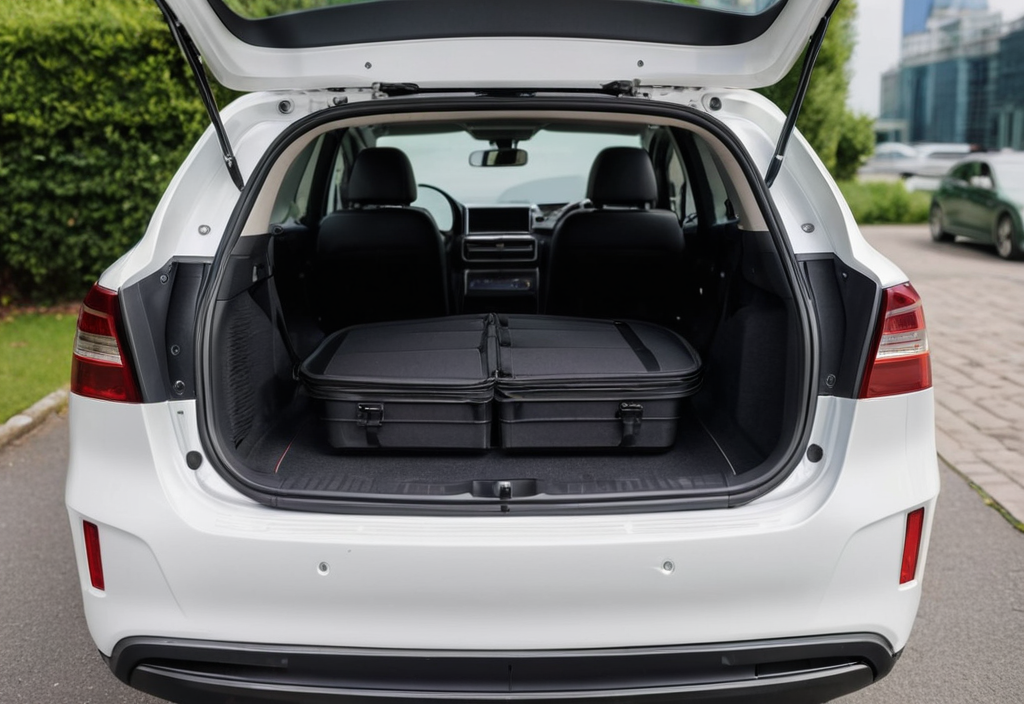
What US airlines owe you under 14 CFR Part 382 when you fly with a scooter
A US carrier may not charge for carrying a mobility scooter, because 14 CFR 382.31 bars charges for any facility, equipment or service that Part 382 requires, and the same part sets out obligations the DOT strengthened in a rule effective January 16, 2025.
- Priority stowage (382.125). The airline must give mobility aids priority for stowage in the baggage compartment over other cargo and baggage and return them as close as possible to the aircraft door. Under 382.125(e) the airline must tell a passenger checking a scooter, in writing, of the right to file a claim if it is mishandled.
- Condition on return (382.130). If a checked scooter is not returned in the condition received, there is a rebuttable presumption that the airline mishandled it, and an act of God is not a defense. On mishandling, the carrier owes written notice of the right to a loaner scooter and to a preferred repair vendor.
- Liability (382.131). The Part 254 baggage limits do not apply; compensation is calculated on the original purchase price, so a $1,399.00 Aotedor is valued at what you paid.
- Fare difference (382.132). If the scooter will not fit the preferred aircraft and the passenger buys a costlier same-day flight on the same airline, the carrier reimburses the difference on request, within 30 days.
One caveat: on August 4, 2026 the DOT extended its enforcement discretion, so enforcement of 382.125(e), 382.130(a) and 382.132 is delayed until April 30, 2027. The no-charge rule, priority stowage, the loaner obligation and the purchase-price basis are not on the delayed list.
Flying with a mobility scooter on Air Canada and WestJet
Air Canada’s domestic tariff asks passengers with disabilities to reserve at least 48 hours ahead, a traveler with an electric wheelchair on a Dash 8, Q400, CRJ or Beech aircraft must give that notice and arrive one hour before normal check-in, and WestJet sets no hour figure, relying on Canada’s ATPDR, which oblige a carrier to provide any listed service requested at least 48 hours before departure.
Air Canada accepts the aid at no charge if it fits through the cargo door and inside the compartment upright with the terminals insulated, and on damage waives its normal liability limit, pays the repair cost or replacement value, and obtains a temporary replacement.
WestJet carries a passenger’s own scooter free of charge, in addition to the checked baggage included with the fare. Its restricted-items page says a lithium battery designed to be removed without tools may have to come out before the aid is checked, and removed packs must be protected from short circuit and travel in the cabin. On the Boeing 787-9 WestJet caps a mobility aid at 300 lb bulk-loaded or 500 lb container-loaded.
CATSA permits the lithium battery that runs the device plus one spare of up to 300 Wh at the checkpoint, one spare only. A passenger may stay seated, and officers inspect the scooter, run explosive trace detection and do a physical search. Behind both airlines, the ATPDR require no charge for any required service, the aid accepted as priority baggage, disassembled, reassembled and returned on arrival without delay, refusal only for compartment size, airworthiness or lift capacity, and on damage a temporary replacement plus a repair or same-model replacement at the carrier’s expense.
Gate-checking a folding scooter: what comes off, what stays on, what TSA does
A folding scooter with a removable lithium pack reaches the aircraft in two parts, pack in the carry-on and frame checked at the gate, because TSA states that mobility devices pass the checkpoint but are not permitted into the aircraft cabin.
- At home: pull the lithium pack. The FAA requires lithium-ion batteries removed from this type of device, terminals protected, each battery in a protective pouch, carried in carry-on only: both 44.4 V packs on the Passport, both 25.9 V packs on the Aotedor. The non-lithium packs stay in their boxes and the airline handles them at the counter.
- At check-in: say where the pack is. The FAA requires the passenger to advise the airline of the battery location, and the airline to notify the pilot-in-command
- At the checkpoint: stay seated if you need to. A TSA officer inspects any item that cannot fit through the X-ray, screens the seat cushion and non-removable pouches, and tests for traces of explosives; a passenger aged 75 or older may remain seated and get a hand swab.
- At the gate: strip the loose parts. Delta asks passengers to detach and carry aboard all removable parts, such as the seat cushion, armrests or footrests, and states that wheelchairs take priority over other carry-on items.
- In the hold: upright, or the battery comes out. TSA notes that the airline may remove the battery and package it separately if the device cannot be stowed upright, the case for an unfolded 35 in Scout behind a 32 in CRJ door.
Lift weight on its own is covered in the guide to lightweight mobility scooters one person can lift, and rental-car loading between flights in the guide to mobility scooters that fit in a car trunk.
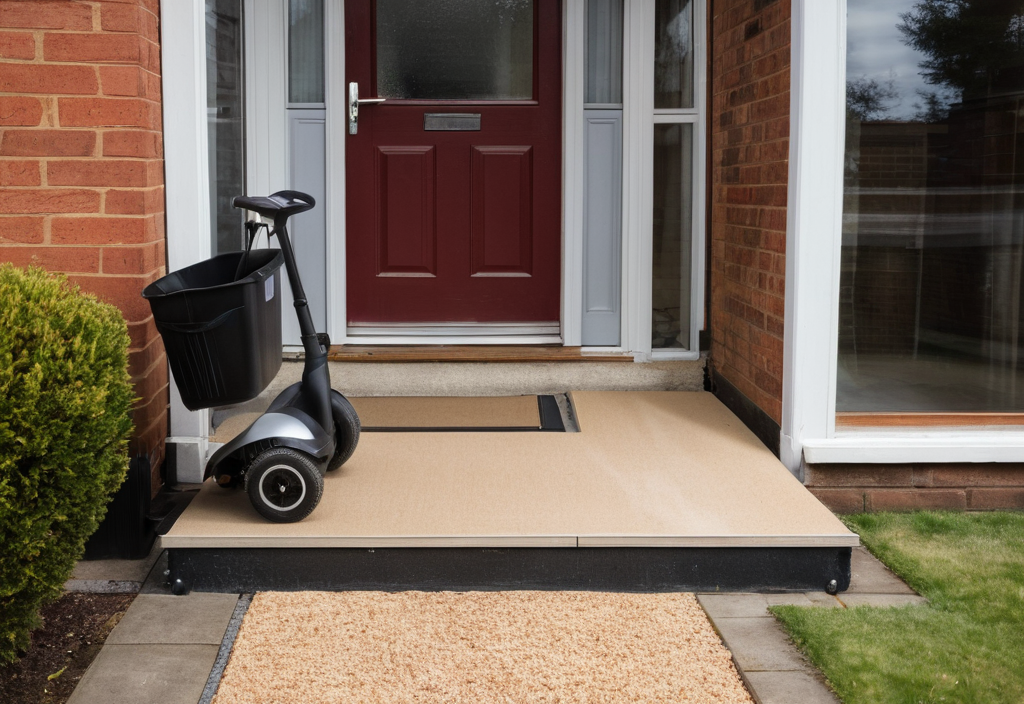
Cruise cabins and trains: door widths and weight limits that decide the model
Royal Caribbean expects a scooter to fit through a 23 in door in a standard stateroom, with 32 in doors in accessible staterooms, and Carnival’s threshold is tighter at 22 in for the entry doorway, with any scooter wider than 21 in required to book a fully accessible stateroom, so overall width, not weight, decides whether a standard cabin will do. Royal Caribbean requires the scooter stored and recharged inside the stateroom; Carnival may measure scooters at check-in. Five of the seven models pass Carnival’s 21 in line:
| Model | Published width, in | Carnival standard cabin (21 in max) | Royal Caribbean standard door (23 in) | VIA Rail scooter limit (21 in) | Amtrak (27.5 in) |
|---|---|---|---|---|---|
| Aotedor T550 | 17.71 | Fits | Fits | Fits | Fits |
| Ecomobi MS01F | 19 | Fits | Fits | Fits | Fits |
| Pride Go-Go Ultra X | 19.25 | Fits | Fits | Fits | Fits |
| Drive Medical Scout 4-Wheel | 19.7 (Drive) or 20.5 (Amazon) | Fits | Fits | Fits | Fits |
| Metro Mobility Foldable | 20 | Fits | Fits | Fits | Fits |
| Glashow S1 | 21.65 | Accessible stateroom required | Fits | Over the limit | Fits |
| SuperHandy Passport | 24 (unfolded, listing) | Accessible stateroom required | Over the limit | Over the limit | Fits |
Amtrak accepts a wheeled mobility device up to 48 in long and 27.5 in wide when occupied, with at least 2 in of ground clearance, at 600 lb or less occupied, which every model here meets. VIA Rail draws a harder line: a three-wheel scooter may measure 42 in long by 21 in wide with a 36 in turning radius, a small four-wheel scooter 43 by 21 in with a 50.5 in turning radius, and the wheelchair lift handles 600 lb; most four-wheel scooters travel only in baggage cars. On VIA’s figures the Go-Go Ultra X, at 40.25 by 19.25 in, fits the three-wheel envelope, the case for choosing among 3-wheel travel mobility scooters for a rail trip; the Glashow at 21.65 in and the Passport at 24 in exceed the 21 in width for either class.
The video below is a third-party test of ten folding scooters, embedded for its fold-mechanism footage and not produced by Polaris Mobility.
Frequently asked questions
Can you take a folding mobility scooter on a plane?
Yes, when its removable lithium pack is rated at 300 Wh or less and travels in the cabin with the terminals protected, per the FAA PackSafe rule. The folded frame goes in the hold, and a US airline may not charge for it under 14 CFR 382.31.
What is the lithium battery limit for a mobility scooter on a plane?
The FAA limits a lithium-ion scooter battery to 300 Wh and allows one spare up to 300 Wh or two spares up to 160 Wh each, all in the cabin. CATSA in Canada permits the device battery plus one spare of up to 300 Wh.
Do airlines charge to check a mobility scooter?
No. A US carrier may not charge for a service Part 382 requires, and carrying a scooter is one of them. Air Canada’s tariff accepts battery mobility aids at no charge, and WestJet carries a passenger’s own scooter free on top of the baggage allowance.
Can you take a mobility scooter on Air Canada or WestJet?
Yes. Air Canada asks for reservations at least 48 hours ahead and requires the aid to fit through the cargo door upright with its terminals insulated. WestJet carries the scooter free and sends a tool-free removable lithium pack into the cabin.
Which folding mobility scooter fits through a cruise cabin door?
The Aotedor T550 at 17.71 in is the narrowest model here, and the Ecomobi, Go-Go Ultra X, Scout and Metro measure 19 to 20.5 in, under Carnival’s 21 in threshold. The Glashow S1 at 21.65 in needs an accessible stateroom on Carnival; the 24 in Passport needs one on both lines.