Cold does three specific things to a mobility scooter, and only one of them is the battery. Range falls once temperatures drop below freezing, so treat the rated figure as optimistic all winter. Ice is the real danger, more than cold or snow, because a scooter has no way to grip it. And what actually kills the electronics over a season is not the cold but water, slush and road salt reaching them.
- The U.S. FDA’s MAUDE database holds about 375 mobility-scooter adverse-event reports (vs ~1,556 for power wheelchairs), with only 2 scooter recalls, so serious device failures are rare.
- Most incidents involve tips, falls and curbs rather than mechanical failure, which is why stability, visibility and safe riding habits matter most.
Sources: U.S. FDA MAUDE adverse-event database.
Cold weather is hard on a mobility scooter in three specific ways: it drains the battery, it makes snow and ice a real hazard, and it lets moisture and road salt into the electronics. Get those three right and a scooter will carry you through a Northern winter safely. Here is what actually matters, and the models best suited to it.
Cold weather and your battery
Every scooter battery, lithium or sealed lead-acid alike, loses range in the cold, and you should expect noticeably shorter trips once temperatures drop below freezing. Plan for it rather than get caught out. Three habits make the biggest difference:
- Store and charge indoors at room temperature. A battery kept in an unheated garage will underperform and age faster.
- Never charge a battery that is below freezing: bring it inside and let it warm up first, then charge.
- Keep it topped up. A fully charged battery resists cold far better than a half-empty one, and you never want to be stranded with a flat pack in the cold.
If your regular winter trips are long, favor a model with generous rated range so the cold-weather drop still leaves you a comfortable margin.
MOVEMAGIC 30 Miles Long Range 4 Wheel Electric Mobility Scooter

Rating: 4.6/5 ⭐⭐⭐⭐⭐
Price: current price on Amazon
Foldable design perfect for indoor storage with 30-mile range and 720Wh lithium battery. Features dual baskets and FSA/HSA eligibility for convenient winter mobility.
Cons: May require frequent charging in cold weather
Buy on AmazonTraction on snow and ice
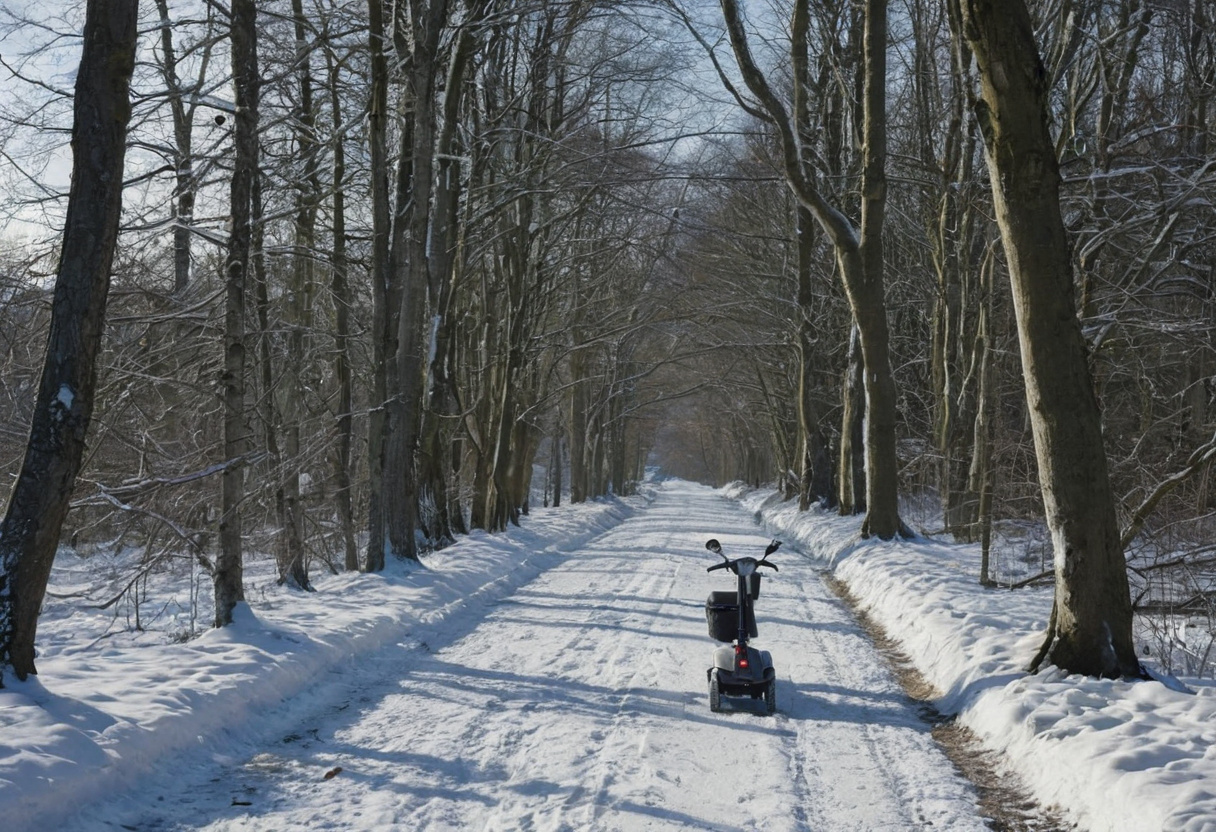
Ice is the single biggest winter danger, more than cold or snow. A scooter has no way to grip glare ice, so the rule is simple: avoid ice entirely where you can, and where you cannot, slow right down and take the gentlest line. For packed snow and slush, what helps is deep-treaded or pneumatic (air-filled) tires, decent ground clearance, and a stable four-wheel base that resists sliding when you turn. If winter riding is a regular thing for you, our guide to the best four-wheel scooters ranks the most stable models. Keep speed low, avoid slopes when they are slick, and never ride in an active snowstorm.
All Terrain Heavy-Duty 4 Wheel Mobility Scooter

Rating: 5/5 ⭐⭐⭐⭐⭐
Price: current price on Amazon
Heavy-duty all-terrain scooter built for challenging weather conditions with superior traction control and sturdy construction for winter reliability.
Cons: Higher price point and increased weight
Buy on AmazonKeeping moisture and salt out
Water, slush and road salt are what actually kill scooter electronics over a winter, not the cold itself. Protect the vulnerable parts:
- Use a weatherproof cover when parked outdoors, one that extends below the deck to shield the battery compartment and connectors.
- Keep the tiller and controls dry; wipe them down after a wet ride.
- Apply dielectric grease to electrical connectors to keep moisture and corrosion out.
- Rinse road salt off the frame and wheels periodically, and dry the scooter before storing it.
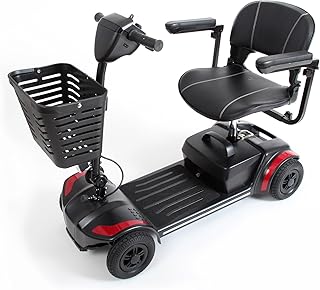
Journey Adventure Mobility Scooter
Rating: 4.7/5 ⭐⭐⭐⭐⭐
Price: current price on Amazon
Lightweight electric travel scooter perfect for winter weather with enhanced weatherproofing features. Ideal for seniors who need reliable transportation in challenging conditions.
Cons: Limited range in extreme cold temperatures
Buy on AmazonWinter storage
Where a scooter spends the night matters as much as how you ride it. Store it indoors and, ideally, off a cold concrete floor: a rubber mat or a sheet of wood underneath keeps the battery warmer and drier. Keep it charged over the winter, and if you are putting it away for a long cold spell, follow the manufacturer’s storage-charge guidance. A model that folds or comes apart is much easier to bring inside and to load into a warm car for appointments.
MIHAYO 4 Wheel Foldable Mobility Scooter

Rating: 4.6/5 ⭐⭐⭐⭐⭐
Price: current price on Amazon
Ultra-lightweight 8lb design with 25-mile range and 600WH battery system. Compact foldable frame ideal for winter storage and seasonal transportation needs.
Cons: Light weight may reduce stability in windy conditions
Buy on AmazonRiding safely in winter
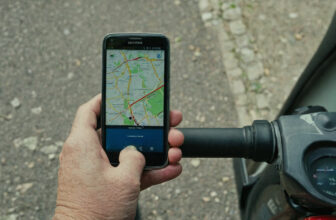
Winter daylight is short, so visibility comes first: fit lights and add reflective tape or a flag so drivers see you in gloom and glare. Beyond that, ride defensively: plan routes along cleared, gritted paths, avoid untreated shortcuts, carry a charged phone, and tell someone your route on longer trips. Serious scooter incidents are rare and usually come from tips, curbs and falls rather than the machine failing (see the safety figures above), and winter simply raises those odds, so a slower, more cautious ride is the whole game. Check your city’s sidewalk-clearing rules, too; many of our city guides note local winter-transit and paratransit options for the days it is safest to leave the scooter at home.
Lightweight Folding Mobility Scooter
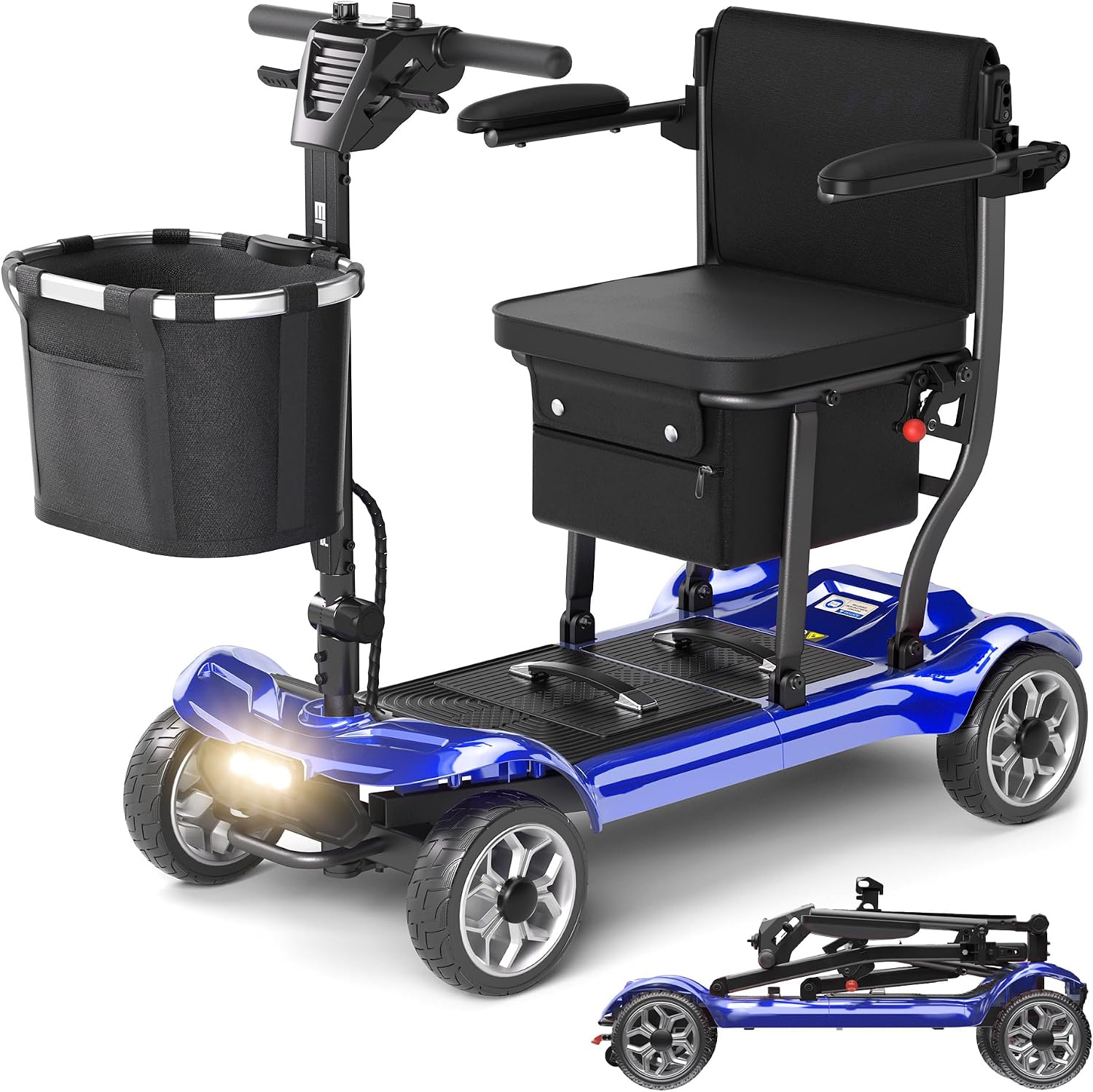
Rating: 5/5 ⭐⭐⭐⭐⭐
Price: current price on Amazon
Ultra-portable 47lb design with removable 24V lithium battery perfect for winter indoor storage. Includes storage basket and charger for complete mobility solution.
Cons: Smaller battery capacity limits range in cold weather
Buy on AmazonWinter mobility scooter FAQ
How much range do you lose in the cold?
Expect a meaningful drop once it is below freezing, and how much depends on the battery, the temperature and the terrain. The safe approach is to treat your rated range as optimistic in winter, keep the battery fully charged and stored warm, and plan trips with plenty of margin so a cold-weather drop never leaves you stranded.
Can you use a mobility scooter in the snow?
In light, fresh snow on a cleared path, yes, but slowly, with good treaded or pneumatic tires and a stable four-wheel base. Deep snow, slush and especially ice are a different matter: avoid ice altogether, keep speed low, steer clear of slopes, and don’t ride in an active storm. When conditions are bad, use accessible transit instead.
Should you store a mobility scooter outside in winter?
No. Cold shortens battery life and moisture damages the electronics. Store it indoors, off a cold floor, keep it charged, and use a weatherproof cover if it must sit outside briefly. Bringing it inside is the single best thing you can do for it over winter.