
Mobility Scooters in San Francisco
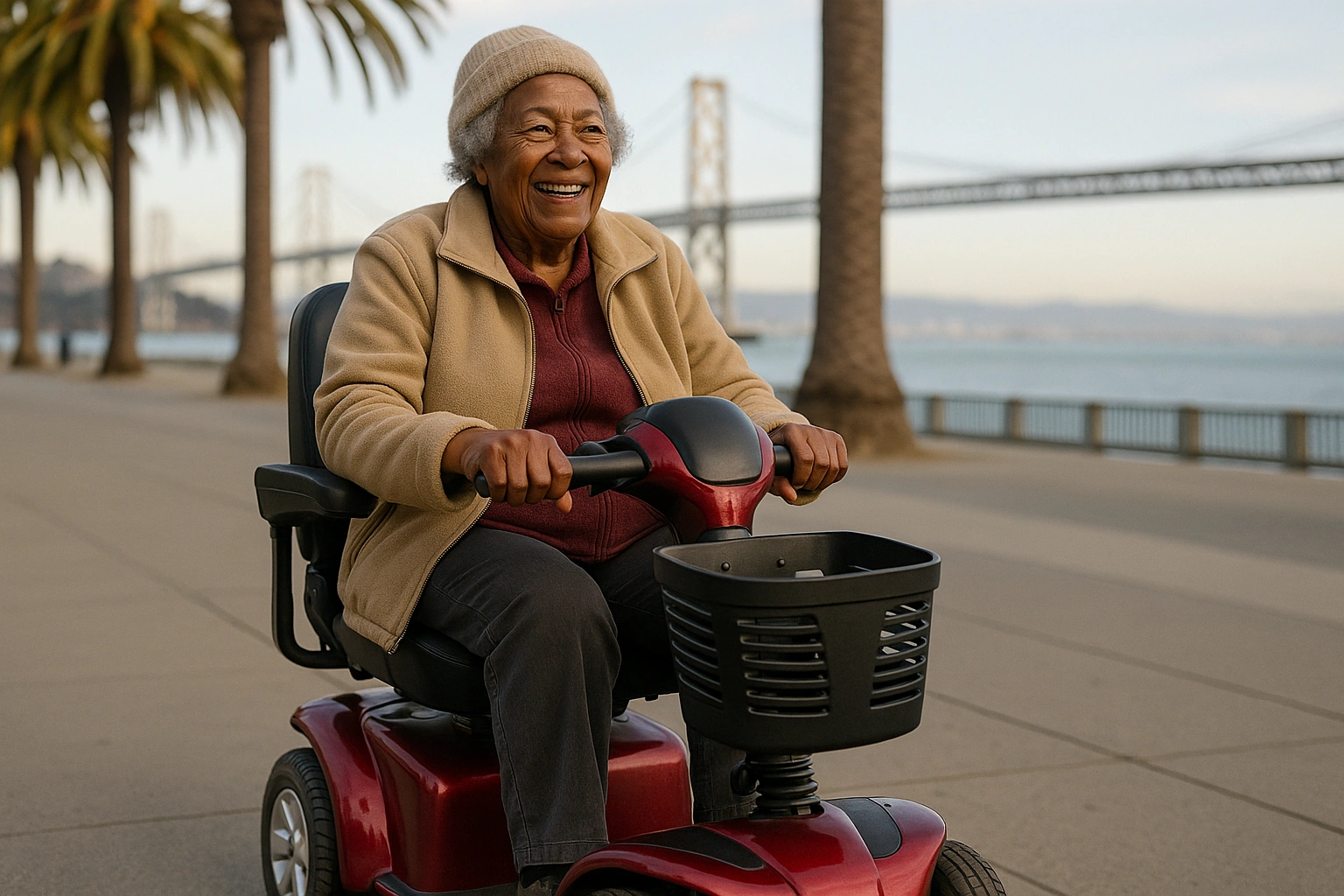
Looking for a mobility scooter in San Francisco, to buy or to rent? SF has one of the mildest climates in the country, so heat and snow are not the issue here. The hills are. San Francisco has some of the steepest streets in the country, and no consumer scooter can safely climb or descend them, so the real skill is knowing where to ride and letting the city’s excellent accessible transit handle the rest. This guide covers our top pick, renting vs. buying, the hills and the flat routes, BART and Muni, SF Paratransit, how to pay, and the models that fit the city. Polaris Mobility earns a commission on qualifying Amazon purchases through links on this page.
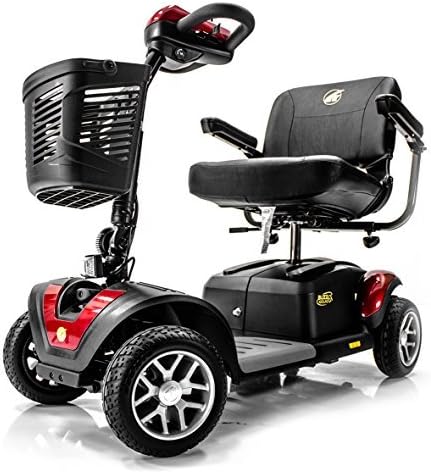
- ★ 4.7 owner rating
- 4 wheels, stable
- Good brakes for grades
- Disassembles for the trunk
The best fit for a hilly city where you stick to the flats and lean on transit: four wheels for a steady, low-tip stance on the moderate grades you will meet, reliable braking, a comfortable seat, and a real service network. It comes apart to fit in a trunk for a taxi or paratransit car, and pairs neatly with BART and Muni for getting across the city. For the most range and the biggest wheels, see the Glashow S1 in the comparison below.
If you qualify, California’s Medi-Cal may cover a scooter. See the funding section first.
Renting vs. buying a mobility scooter in San Francisco
For a few days of sightseeing, a rental makes sense: services such as Scootaround deliver to SF hotels for touring the flat waterfront and downtown. For regular use, renting adds up quickly and buying is usually cheaper within a season. Here is how they compare:
- Keeps costing you. A travel scooter runs roughly $100 to $200 a week depending on model and provider (Scootaround), so a month of regular use is several hundred dollars.
- You hand it back, and it never becomes yours.
- Not fitted or sized to you; you take whatever model is free.
- Delivery windows, deposits and return deadlines to plan around.
- Pays for itself fast. A one-time purchase; after a couple of weeks of what renting costs you are ahead, and you keep the scooter.
- Always charged, sized to you and ready by the door.
- Spread the cost. Many scooters offer monthly payments at checkout or through your card, so it need not be one big hit.
- Comes with a manufacturer warranty and keeps resale value.
Bottom line: rent for a sightseeing trip; buy if you or a family member will use a scooter most weeks: it is cheaper within a month or two. And if you might qualify for Medi-Cal (below), start there first.
The hills, and where to ride instead
The good news is that a huge amount of the city is flat and wonderful on a scooter. The trick is choosing your routes:
- Map the level routes. A local resource, On the Level SF, maps step-free, low-grade paths through the city’s hills: a genuinely useful tool for planning a route that stays flat.
- Let transit take the hills. Use BART and Muni Metro to cross the city and skip the climbs entirely (see below).
- Mild, but damp and foggy. SF rarely gets hot or freezes, but it is often cool, windy and wet. Keep the scooter dry and covered, dress for the fog, and slow down on wet, slick pavement.
Getting around: BART, Muni and SF Paratransit
SF’s accessible transit is a real asset for a scooter user, and the way to beat the hills:
- Watch for elevator outages. As in any older system, elevators go out of service. Check status by calling 311 in San Francisco, or BART’s elevator line at 510-834-LIFT, before you rely on one.
- Skip the cable cars. The historic cable cars have steps and are not set up for scooters or wheelchairs: use the modern Muni Metro, the F-line streetcars and the buses instead.
- SF Paratransit is the door-to-door service for people who cannot use Muni’s accessible buses and trains. The SF Access van fare is $2.85 one way, and there is a paratransit-taxi option too (SFMTA).
- How to apply: eligibility follows the ADA; contact the Mobility Management Center at 415-351-7000.
Finding accessible places in San Francisco
San Francisco is one of the most accessibility-minded cities in the country, and major venues (museums, the Ferry Building, downtown shops and restaurants) are step-free by law. Because grade is the real obstacle here, the most useful planning tool is a level-route map rather than a list of venues: On the Level SF shows which paths stay flat, and the flat districts above are where accessible destinations cluster most thickly. Always confirm a step-free entrance with a venue before visiting.
Who needs mobility support in San Francisco
San Francisco is older than people expect for a tech city: about 17.2% of residents are 65 or older, above both California’s 15.3% and the U.S. figure of 16.8% (U.S. Census Bureau, ACS 2023). Long-established communities in Chinatown, the Richmond and the Sunset are home to many older residents, and about 11.2% of San Franciscans report a disability. In a city defined by its hills, getting around safely is a daily reality for a large population.
Best mobility scooters for San Francisco (2026)
Picks that suit a hilly, transit-heavy city where you ride the flats: four-wheel stability and reliable brakes for the grades you will meet, a design that comes apart or folds to pair with BART, Muni and taxis, and a weather-tolerant build for the fog and damp. Specs are per manufacturer listings; confirm current details and price on Amazon.
| Model | Wheels | Max rider | Top speed | Owner rating |
|---|---|---|---|---|
| Golden Buzzaround EX ★ Top pick | 9″ (4-wheel) | 330 lb | 5.0 mph | 4.7★ (verified) |
| Glashow S1 Folding | 10″ (4-wheel) | 265 lb | 6.2 mph | 4.4★ (46) |
| Aotedor Lightweight | 7″ | 300 lb | 3.7 mph | 4.5★ (277) |
| Pride Go-Go Sport | 3-wheel | 325 lb | 4.7 mph | 4.4★ (109) |
4.7★ (verified owners) · 9″ wheels · up to 330 lb
Why SF: the highest owner rating here, four-wheel stability and good brakes for the moderate grades, and it disassembles to pair with BART, Muni and taxis.
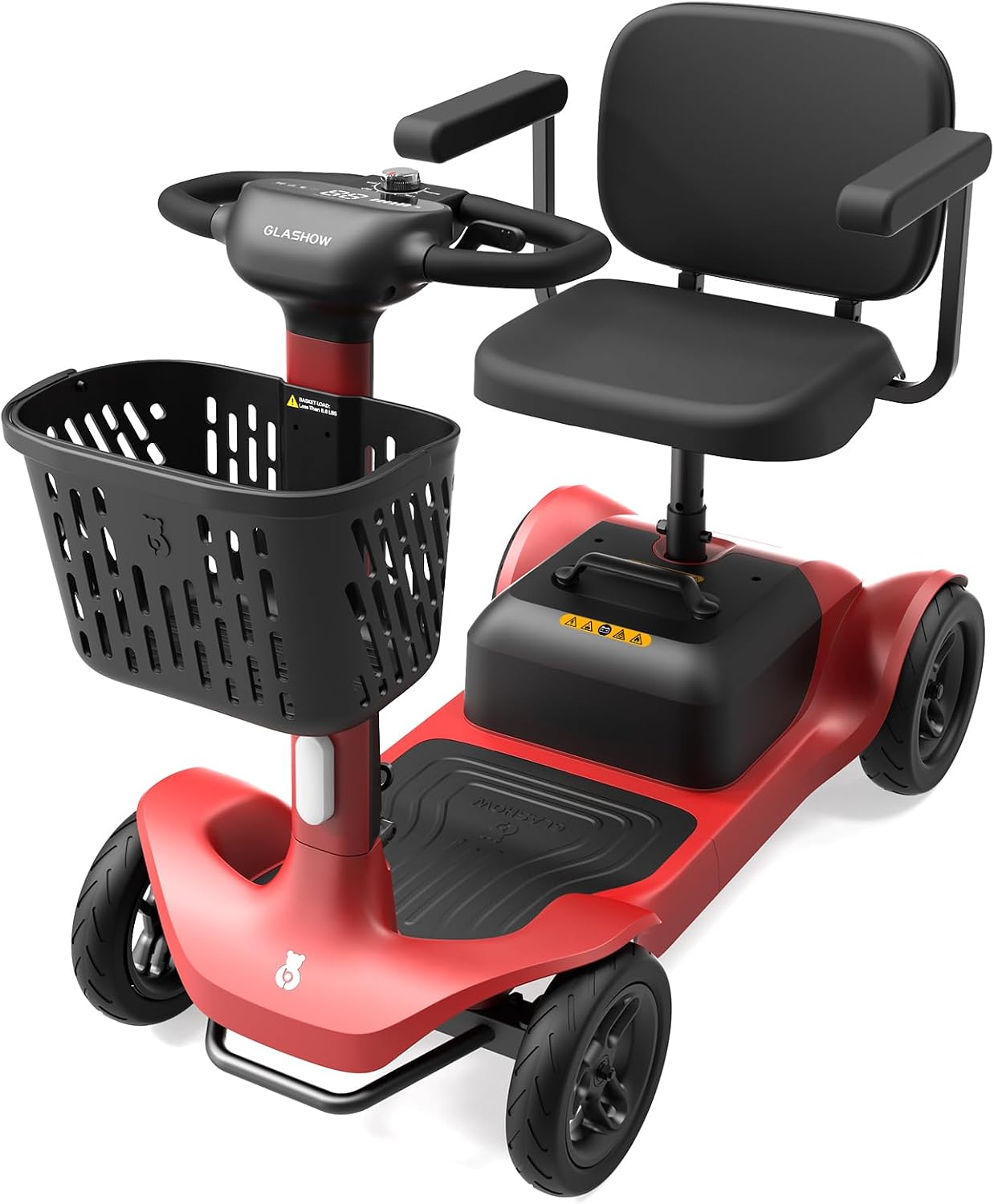
4.4★ (46 ratings) · 10″ wheels · rated ~25 mi range
Why SF: the longest range here for the full length of the Embarcadero or a day in Golden Gate Park, on big wheels, and it folds for the car.
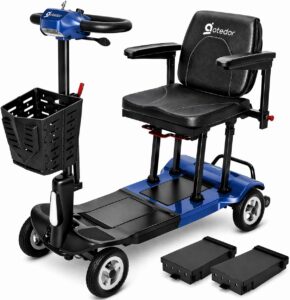
4.5★ (277 ratings) · folds compact · up to 300 lb
Why SF: the easiest to fold onto BART or Muni and into a taxi, and to store in a small apartment: strong if most trips pair a scooter with the train.
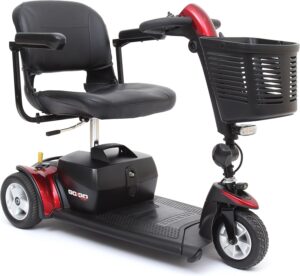
4.4★ (109 ratings) · compact · up to 325 lb
Why SF: a tight turning circle for crowded downtown sidewalks and Metro platforms. Four wheels give a steadier stance on the grades.
How to pay: Medi-Cal, Medicare and out of pocket
Medicare (Part B) may cover a scooter if a doctor confirms you need it to move around your home and you can operate one safely, through a supplier that accepts Medicare (Medicare.gov). Because these programs work through approved suppliers, a scooter bought on Amazon is a separate out-of-pocket purchase, which is why many SF buyers who do not qualify choose one for the lower price and immediate delivery. Confirm current criteria directly, as they change.
Comparing options across the state? Our California mobility scooter guide covers statewide Medicaid and Medicare details, the best models for the local climate and terrain, and how the picture changes from city to city.
Watch: the Golden Buzzaround EX reviewed
An independent walkthrough of the Golden Buzzaround EX, our top pick above, showing the seat, tiller, disassembly and driving.
Video: Golden Buzzaround EX review by Marc’s Mobility (YouTube). Polaris Mobility is not affiliated with the reviewer.
Compare more 4-wheel models · full catalog
San Francisco mobility scooter FAQ
Can a mobility scooter handle San Francisco’s hills?
Not the steep ones. San Francisco has blocks steeper than 30%, and no consumer scooter can safely climb or descend grades like that. The right approach is to ride the many flat areas (the Embarcadero, Golden Gate Park, SoMa and downtown) plan level routes with a tool like On the Level SF, and use BART and Muni to cross the hills. Do not take a scooter up or down the steepest streets.
Is San Francisco transit accessible with a mobility scooter?
Yes, and it is the key to getting around the hills. Every BART station and every underground Muni Metro station has an elevator, so you roll straight onto the train, and Muni buses have ramps. Check elevator status at 311 or BART’s 510-834-LIFT line first. The historic cable cars, however, have steps and are not accessible.
Does Medi-Cal cover a mobility scooter in California?
It can. California expanded Medi-Cal, and it can pay for a medically necessary power scooter or wheelchair when a doctor documents the need and it is supplied through an enrolled provider. Start with your primary care provider or managed-care plan before buying out of pocket.
What is the best mobility scooter for San Francisco?
For a hilly, transit-heavy city where you ride the flats, four-wheel stability, reliable brakes and a design that comes apart to pair with BART and taxis matter most. Our top pick is the Golden Buzzaround EX for its stability, high rating and trunk-friendly disassembly; the Glashow S1 offers the most range for the waterfront, and a lightweight model is easiest to fold onto the train.