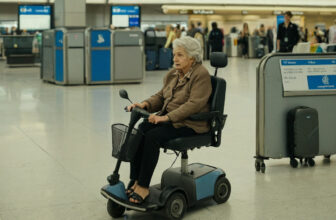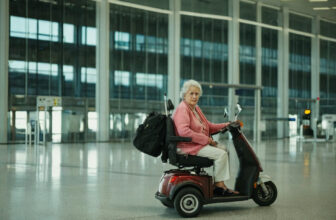
In a city the smallest capable mobility scooter usually wins, so measure your doorways, elevator, and thresholds before you shortlist anything. Three wheels turn more sharply for hallways and crowded aisles, four wheels hold steadier on broken pavement. Two city-specific questions decide the rest: where the scooter will live and charge in a small apartment, and whether your building and your local rules allow it there and on the sidewalk.
Picking a scooter that fits your building and your block
In a city, the smallest capable scooter usually wins. Look first at turning radius: you want something that can pivot inside a tight apartment hallway, an elevator, a narrow shop aisle, or a crowded café without a three-point maneuver. Three-wheel models tend to turn more sharply, which helps indoors and in crowds; four-wheel models trade some of that agility for steadier footing on rough or sloped ground. There’s no single right answer, so if you can, test-drive both in a setting close to how you’ll really use them.
Weight and portability matter more downtown than almost anything else. If you’ll lift the scooter into a car trunk, carry it up a step, or wrestle it through a doorway, a folding or easily-disassembled model saves your shoulders every single day. Balance that against range and comfort, since a lighter travel scooter may have a shorter battery and a firmer seat, while a fuller-size one rides better but parks harder. Measure your doorways, elevator, and any thresholds before you buy, and confirm the scooter clears them with room to spare.
Curbs, crossings, and getting on transit
City sidewalks are an obstacle course of curbs, driveway dips, cracked panels, and construction detours. Learn where the curb cuts are on your regular routes, and scout an alternate crossing for the days one is blocked. Approach ramps and dips straight on rather than at an angle so the scooter doesn’t tip or scrape. When a curb has no cut, don’t force it. Backtrack to a proper ramp, because a hard drop can throw you or damage the frame.
Buses and trains can be a genuine help, but access rules, ramp availability, and where scooters are allowed vary by city and system, so check your local transit authority before you rely on a route. Practice boarding during a quiet hour first so your first attempt isn’t in a rush-hour crowd. In elevators and on ramps, go slow, keep your weight centered, and give yourself space from other riders. Whether you may ride on the sidewalk, the street, or a bike lane also varies by place, so check your local rules rather than assuming.
Charging and storing when space is tight
A small apartment forces a decision most sales pages skip: where does this thing live and charge? Pick a spot near an outlet, out of the main walking path, ideally where a little tracked-in rain or grit won’t matter: an entry nook, a corner by the door, or a hall closet. Chargers can run warm, so give it airflow and don’t drape it under blankets or cushions. Charge on the manufacturer’s guidance rather than guesswork, and try to build it into a routine, like plugging in each evening, so you’re never caught with a low battery before an appointment.
If your only realistic storage is a shared hallway, garage, or bike room, confirm your building actually allows it, since policies vary. When the scooter has to stay somewhere cold, bring the removable battery indoors if the design allows, because batteries generally hold up better at room temperature than in a freezing garage.
Keeping it secure and weathering the city
A scooter left outside a shop or in a shared space is a target. Take the key with you every time, and use a sturdy lock to anchor it to something fixed when you leave it unattended. Park in view of a camera or a staffed entrance where you can. If it lives in a common area, a cover both protects it from weather and makes it less obvious. Photograph your scooter and note its serial number so you can identify it if it’s ever taken.
City weather is hard on these machines. Most are water-resistant, not waterproof, so avoid deep puddles that can reach the motor, wipe it down after rain or snow, and dry the seat and controls. Cold saps battery range, so plan shorter trips and more frequent charges in winter. On ice or slush, slow right down or wait it out, because traction and braking suffer and a spill in traffic isn’t worth the errand. Wet metal ramps and painted crossings get slippery too, so ease across them.
Urban FAQ
Can I take a mobility scooter on the bus or subway?
Often yes, but it depends on the size of your scooter and the accessibility of the vehicle and station. Ramp availability, boarding procedures, and any size or securement requirements vary by city and transit system, so check with your local transit authority and, if you can, practice on a quiet trip first.
Where am I allowed to ride: sidewalk, bike lane, or street?
This genuinely varies from place to place, and sometimes between neighborhoods in the same city. Some areas treat mobility scooters like pedestrians on the sidewalk; others have specific rules. Check your local regulations rather than assuming, and when in doubt, stay where you’re most visible and predictable to drivers and walkers.
How do I stop my scooter from being stolen in a shared space?
Always take the key, lock the scooter to a fixed anchor when you leave it, and park where it’s visible or on camera. A cover makes it less tempting, and keeping a photo plus the serial number on hand helps if you ever need to report it. Confirm your building’s storage policy so it isn’t moved or flagged.