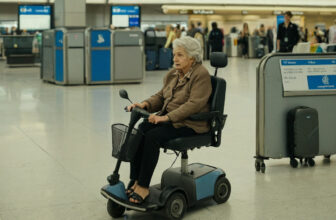
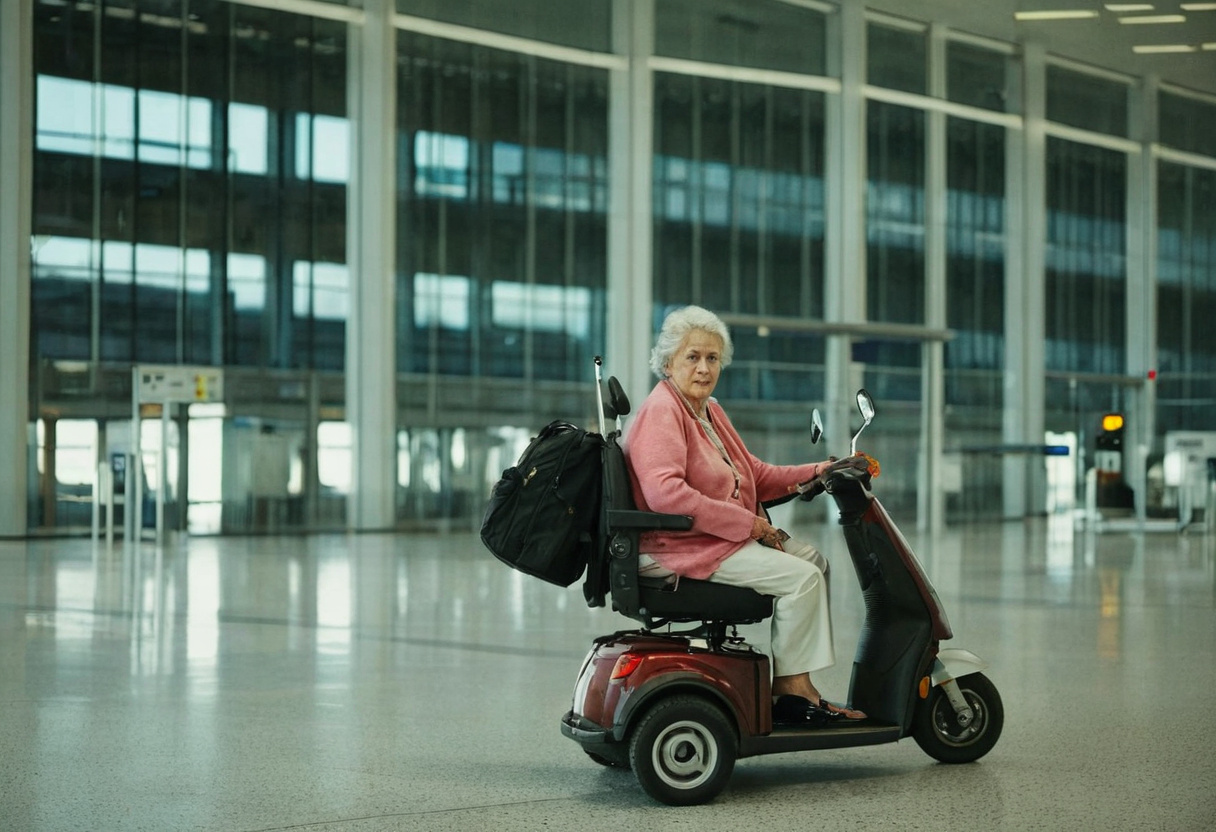
Flying with a mobility scooter is mostly a battery question and a rights question. Airlines set their own battery limits, so call yours before you book and again before you fly. What is not negotiable is the airline’s side: under 14 CFR 382.125 your scooter must be returned to you at the aircraft door, must be among the first items off the plane, and the airline must tell you before the cabin door closes whether it was loaded at all.
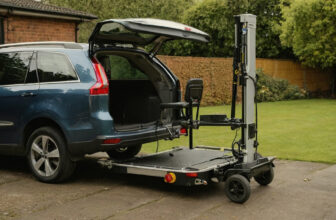
Travelling with a mobility scooter looks harder than it is, mostly because the rules live in three different places: the airline’s battery policy, the cruise line’s cabin and corridor limits, and your own vehicle’s cargo opening.
The variation is real: what one airline accepts, another restricts, and the deciding factor is almost always the battery rather than the scooter.
This guide covers what to ask each carrier, what documentation to carry, and the protections US regulation already gives you when a scooter travels in the hold.

- The U.S. FDA’s MAUDE database holds about 375 mobility-scooter adverse-event reports (vs ~1,556 for power wheelchairs), with only 2 scooter recalls, so serious device failures are rare.
- Most incidents involve tips, falls and curbs rather than mechanical failure, which is why stability, visibility and safe riding habits matter most.
Sources: U.S. FDA MAUDE adverse-event database.
The hidden complexity of mobility scooter travel
Transportation regulations for mobility scooters have evolved dramatically since 2024, creating a landscape where preparation becomes your most valuable asset. The key difference between frustrated travelers and successful ones lies in understanding that in transit your mobility scooter stops being personal equipment and becomes regulated cargo, subject to safety protocols.
There is no industry-wide class system for mobility scooters in travel, whatever a dealer or an article may tell you. Each carrier publishes its own limits, and they differ. What is consistent is that the battery, not the scooter, is what gets assessed: its chemistry, its watt-hour rating, and whether it can be removed and carried into the cabin.
Find the watt-hour figure on the battery label or in the manual before you call anyone, because it is the first thing you will be asked for.

Mastering airline travel with mobility scooters
Airlines are the most regulated part of any trip, and also the part where you have the clearest legal protections. US carriers operate under the Air Carrier Access Act rules in 14 CFR Part 382, which set out what an airline owes you when your scooter travels in the hold.
Battery regulations that determine everything
Lithium batteries are carried as dangerous goods, which is why the airline asks about them rather than about the scooter. Watt-hour thresholds and whether a spare may be carried differ by carrier and by route, so confirm the numbers with your own airline rather than relying on a figure quoted online.
Calculate your battery capacity by multiplying voltage by amp-hours. A typical 24V, 10Ah battery equals 240Wh (24 × 10 = 240), placing it safely under the 300Wh limit. However, dual-battery systems often push you over this threshold, requiring special procedures.

Ultra Lightweight Folding Mobility Scooter
Perfect for air travel with only 37.5 lbs weight and airline-approved batteries. Features 4-wheel stability with impressive 275 lbs capacity.
Price: current price on Amazon | ★★★★☆ 4.8
Cons: Higher price point, limited off-road capability
Buy on AmazonAdvance notice requirements vary by carrier, so ask yours what notice it wants and put the answer in your booking record. Giving notice is worth doing regardless: it lets ground crews prepare the right equipment.
What the airline owes you, in regulation
Four protections in 14 CFR 382.125 are worth knowing by heart. Your scooter must be returned “as close as possible to the door of the aircraft” unless you ask for it at baggage claim. It must be “among the first items retrieved from the baggage compartment”. Before the cabin door closes, the airline must tell you whether your scooter was loaded, including if it did not fit. And if it was not loaded, the airline “must offer to disembark the passenger and rebook them at no additional cost on the next available flight” where it will fit. You must also be told in writing that you can contact a Complaints Resolution Official and file a claim if the scooter is mishandled. Source: eCFR, 14 CFR 382.125.
Documentation requirements for smooth boarding
Carry the pages of your manual that show the battery type and rating, and the manufacturer’s instructions for disconnecting it. Those two are what ground staff actually ask to see. Anything further depends on the carrier, so ask when you give notice.
Keep those pages together in one folder, along with a photograph of the scooter assembled and folded. If the scooter is damaged in transit, a dated photograph taken before you handed it over is the single most useful thing you can produce.

Gate-to-gate service optimization
You can normally ride your own scooter through the terminal and right up to the aircraft door, where it is taken to be stowed and returned to you at the door on arrival. That is the arrangement 14 CFR 382.125 describes, and it is the one to ask for by name.
Give yourself more time than a standard check-in allows. Gate-checking a scooter involves paperwork, a walk-around, and often a wait for the right ground equipment, none of which is quick when a flight is boarding.
Related buying guides: Folding & Travel Scooters, Scooters That Fit a Car Trunk, Lightweight Scooters, and the full catalog and mobility statistics.