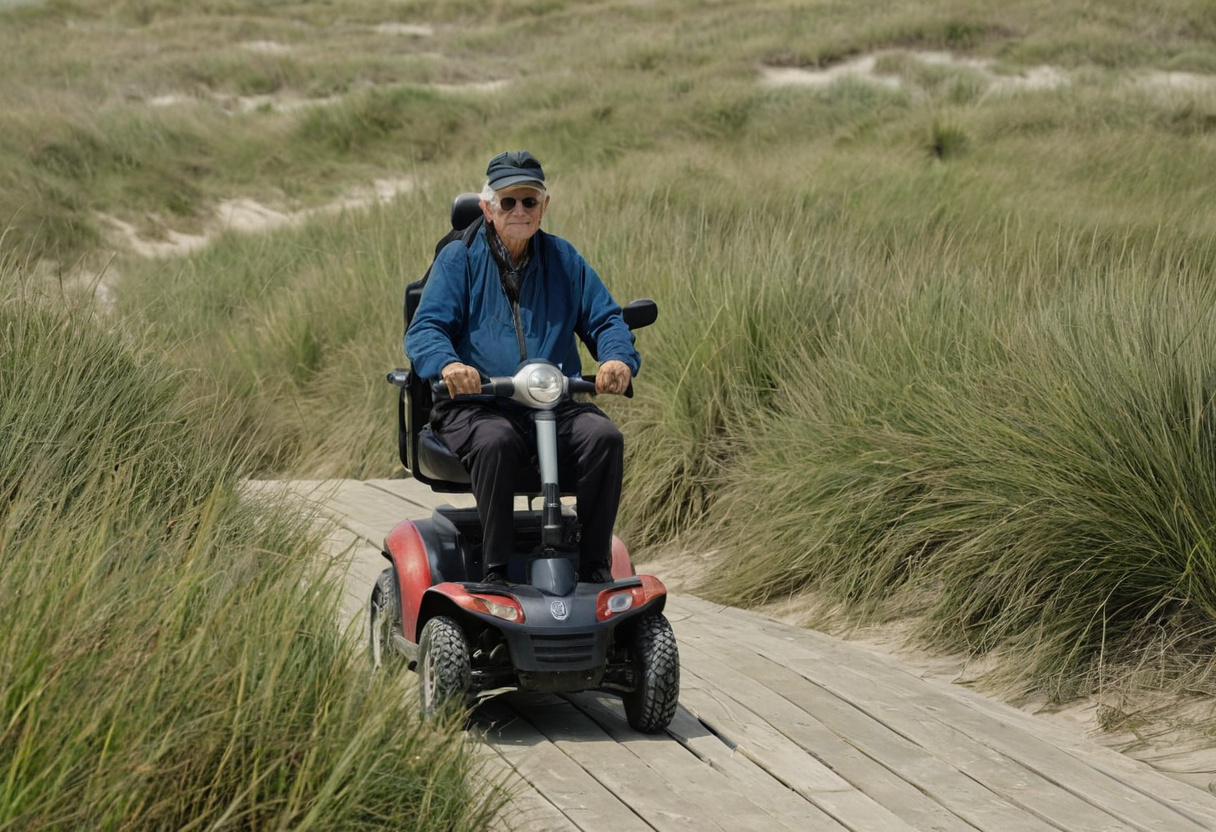
A mobility scooter cannot cross loose dry sand, and no all-terrain model changes that. It handles boardwalks, promenades, packed gravel, and the firm damp sand near the waterline. For the soft stretch, many coastal towns lend beach wheelchairs on balloon tires. Salt, not sand, is the lasting threat: wipe the frame with fresh water the same day, never pressure wash it, and let it dry fully before charging.
- In the U.S., 27.7% of adults 65+ and 16.8% of adults 45–64 report a mobility disability (serious difficulty walking or climbing stairs).
- In Canada, about 3.13 million adults live with a mobility-related disability, which is 63% of disabled seniors.
- Mobility disability is reported more often by women than men (13.6% vs 10.5%).
Sources: U.S. CDC Disability & Health Data System (DHDS), BRFSS 2021; Statistics Canada, Canadian Survey on Disability 2022.
Salt air, shifting sand, and the pull of the tide make the coast one of the trickiest places to take a mobility scooter, but with the right machine and a little planning, a day by the water is very doable. Here is what matters most before you head for the shore.
Salt air and corrosion: plan for it
The sea breeze carries salt, and that salt is the biggest long-term threat to any scooter. It settles on metal, creeps into bearings and electrical connectors, and speeds up rust and pitting long after you have left the beach, even if the machine never touches the water.
When you are shopping, favor frames and fittings made from stainless steel, aluminum, or coated metals, along with sealed electronics and rust-resistant hardware. A storage cover helps, and if you live near the coast, remember that salt reaches your garage on the wind too, not just at the beach itself.
Surfaces: where a scooter goes and where it stops
- Usually fine: boardwalks, paved promenades, packed gravel paths, and firm damp sand near the waterline.
- Generally a no: soft, dry, loose sand. The wheels dig in and bog down, and you risk getting stuck or straining the motor. Even rugged all-terrain models struggle in deep dry sand.
- Unpredictable: wet sand can be firmer at low tide, but one soft patch can trap you without warning.
A simple rule of thumb: if you could push a loaded stroller across it easily, a scooter can probably manage. If your own feet sink in, keep the scooter off it.
Tires and ground clearance
Air-filled (pneumatic) tires cushion bumps and grip uneven boardwalk planks and gravel far better than hard solid tires, though they can pick up a flat. Wider tires spread the scooter’s weight and float better over softer ground. Good ground clearance matters too, because it helps you ride over ridges, tree roots, ramp lips, and the gap where a boardwalk meets the path.
In general, a larger scooter with bigger wheels handles the coast better than a compact travel model. Just make sure the one you choose still fits in your vehicle and your storage space at home.
Rinse and dry after salt exposure
Salt keeps working at the metal after you get home, so a quick clean-up matters more at the coast than anywhere else. Do it the same day.
- Wipe the frame, tires, and controls with a cloth dampened in fresh water to lift off salt and sand. Do not blast it with a hose or pressure washer, because driving water into the motor, battery, or electronics does more harm than the salt.
- Dry everything with a towel, then let it air-dry fully before you charge or store it.
- Keep water away from the battery box, charging port, and control panel, and cover the connectors if you can.
- Now and then, a light wipe of anti-corrosion spray on exposed metal (away from anything electrical) adds protection.
Beach-wheelchair programs, tides, and boardwalk access
Many coastal towns lend out beach wheelchairs: special chairs with fat balloon tires built to roll over the soft sand where a scooter simply cannot go. Availability varies from place to place, so ask the local parks department, the lifeguard station, or the visitor center before your trip; some ask for a reservation or a returnable deposit. A common and comfortable plan is to ride your own scooter to the boardwalk or a firm path, then switch to a loaned beach chair for the sand itself.
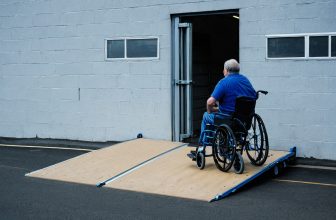
Plan around the tide as well. At low tide the sand near the water is firmer and the beach is wider; at high tide that firm strip can disappear, so it helps to check a tide chart before you go. Look up accessible entrances ahead of time, too, since many beaches have boardwalks, ramps, or roll-out access mats, often near the main entrances or lifeguard stations, that carry you closer to the water without ever crossing loose sand.
Coastal travel FAQ
Can I drive my mobility scooter right down to the water?
Only where there is a firm surface: a boardwalk, ramp, access mat, or packed damp sand. Loose, dry sand will bog the wheels down and can leave you stuck. For the soft stretch, use a loaned beach wheelchair instead, and always stay well back from the incoming tide.
Will one trip to the beach ruin my scooter?
No. Salt damage is gradual, not instant. The real risk comes from letting salt and sand sit on the machine for weeks. Wipe it down with fresh water and dry it thoroughly the same day, and your scooter will be fine.
How do I find out if my town offers beach wheelchairs?
Call the local parks and recreation department or the visitor center, or ask at the lifeguard station. Many coastal communities offer them at no charge or for a small deposit, but supply is limited, so it is well worth reserving one ahead of your visit.
Other models worth comparing: the Metro Mobility folding 4-wheel, the Ecomobi folding scooter.