
Mobility Scooters in Eugene, Oregon
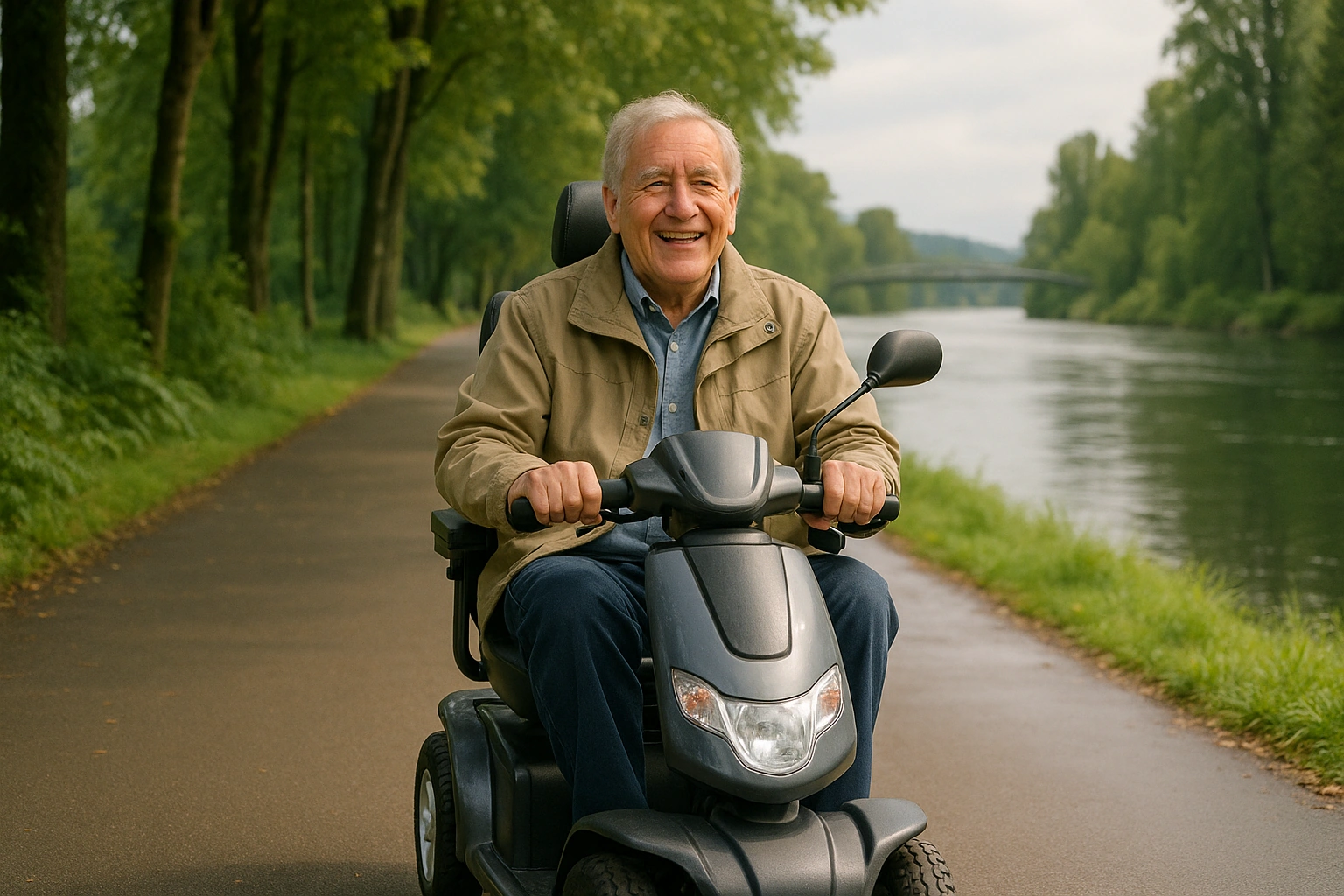
Looking for a mobility scooter in Eugene, Oregon, to buy or to rent? Eugene is Track Town USA, home to the University of Oregon, a mild, green city on the Willamette River. For a scooter rider two things stand out: a twelve-mile paved path along the river, and free transit for seniors. The climate is mild and wet (rain, not snow), so you ride most of the year. This guide covers the fares, the riverside path, the wet climate, how Oregon’s Medicaid (which does cover power mobility) pays, and the models that suit it. Polaris Mobility earns a commission on qualifying Amazon purchases through links on this page.
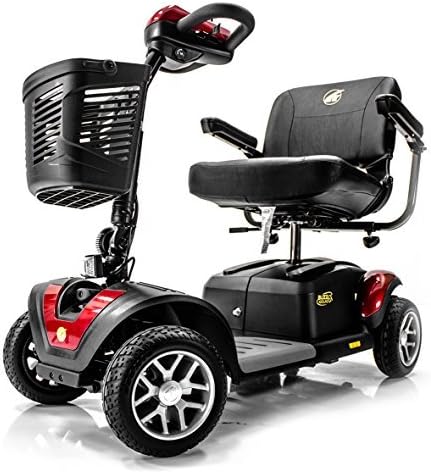
- Up to 330 lb
- ★ 4.7 owner rating
- 9″ wheels, 5.0 mph
- Comes apart for a car
Eugene’s challenge is the wet coast rather than a hard winter, and its riders skew a little older with a higher-than-average share living with a disability, so the pick is a scooter that is stable, comfortable and dependable for wet paths and daily use. The Buzzaround EX has the highest owner rating and the highest weight capacity of our four, four-wheel stability that holds a line on a damp path, and it comes apart for a car trunk. Two honest caveats: it does not fold flat like a travel scooter, so it is heavier to lift, and its 9″ wheels suit smooth pavement rather than rough ground. If you want the longest range for the full twelve-mile Ruth Bascom path, the Glashow S1 below has it.
On the Oregon Health Plan? Read the funding section, Oregon’s Medicaid covers power mobility.
Free for seniors on LTD
- RideSource is the door-to-door service. LTD’s RideSource is the ADA paratransit for riders who cannot use the regular bus; its tickets are sold at a discount through the LTD Shop and customer service, so register and confirm the current fare with LTD before you need it.
- A scooter plus free transit covers the city cheaply: own the scooter for the riverside path and the errands close to home, and let the free buses and the EmX carry the distance across Eugene and Springfield.
Twelve paved miles along the Willamette
- The Ruth Bascom path is the ride. Twelve flat, paved miles with car-free bridges let you cover real distance and turn back whenever you like, all away from traffic.
- Alton Baker Park is the green heart. The north-bank path runs right through it, alongside the river, an easy and beautiful place to spend a morning.
- Check it after heavy rain. The Willamette can flood parts of the path in high water, so after a big storm it is worth checking a stretch is open before you set out.
Rain, not snow
Paying for it: Oregon covers power mobility
- 65 or older? You are on Medicare. Part B may cover a scooter if a doctor confirms the need and you use a supplier that accepts Medicare (Medicare.gov).
- On the Oregon Health Plan? Ask about power mobility: Oregon covers it when it is medically necessary, through an enrolled provider, which is more than many states do.
- Neither, or in a hurry? A scooter bought on Amazon is a separate out-of-pocket purchase, and the right choice if you do not qualify or would rather pick your own model now.
Because the funded routes work through approved suppliers, buying online is a separate path. Confirm current criteria directly, as they change.
Comparing options across the state? Our Oregon mobility scooter guide covers statewide Medicaid and Medicare details, the best models for the local climate and terrain, and how the picture changes from city to city.
Renting vs. buying a mobility scooter in Eugene
In a mild city with a long riding season and twelve miles of paved riverside path, an owned scooter does real work, and buying within a couple of months is usually cheaper than renting.
- Keeps costing you. A travel scooter runs roughly $100 to $200 a week depending on model (Scootaround), so a month of regular use is several hundred dollars.
- You hand it back, and it never becomes yours.
- Not fitted or sized to you.
- Reasonable for a visit or a track-meet weekend.
- Pays for itself fast. A one-time purchase; after a few weeks of what renting costs you are ahead, and you keep the scooter.
- It is ready whenever you are, and Eugene’s mild climate means that is most of the year.
- It comes apart for the car, for a trailhead further along the river or an appointment.
- And Oregon may cover it. If your need is medical, the Oregon Health Plan or Medicare may pay for an approved device.
Bottom line: if you live here, buy: a stable, comfortable scooter for the riverside path that holds a line on a wet day and comes apart for the car. Check first whether the Oregon Health Plan or Medicare will fund it.
Who needs mobility support in Eugene
17.7% of Eugene residents are 65 or older (31,353 people out of 177,520) above the national 16.8%. And its disability rate, 15.1%, is higher than the national 13.0%: a notable figure for a university city (U.S. Census Bureau, ACS 2023, 5-year).
So the case for a scooter in Eugene is both the demographics and the ground. Thirty-one thousand seniors, plus a larger-than-average share of residents living with a disability, share a mild, flat-riverside city with twelve miles of paved path and free transit for older riders. The errand that is now too far becomes an easy trip, and a morning on the Ruth Bascom path is a genuinely good day out. There is no hard winter to plan around, just the rain, so a stable, dependable scooter you can use year round is the one that earns its keep.
Best mobility scooters for Eugene (2026)
Picks weighted for stability on a wet path, comfort and capacity for daily use, and range for the full riverside loop. Specs are per manufacturer listings; confirm current details and price on Amazon.
| Model | Wheels | Max rider | Top speed | Owner rating |
|---|---|---|---|---|
| Golden Buzzaround EX ★ Top pick | 9″ (4-wheel) | 330 lb | 5.0 mph | 4.7★ (verified) |
| Glashow S1 Folding Most range | 10″ (4-wheel) | 265 lb | 6.2 mph | 4.4★ (46) |
| Aotedor Lightweight Best on a budget | 7″ | 300 lb | 3.7 mph | 4.5★ (277) |
| Pride Go-Go Sport | 3-wheel | 325 lb | 4.7 mph | 4.4★ (109) |
4.7★ (verified owners) · 9″ wheels · up to 330 lb
Why Eugene: the highest rating and capacity here and four-wheel stability that holds a line on a wet path: the comfortable, dependable year-round choice. Comes apart for a car trunk.
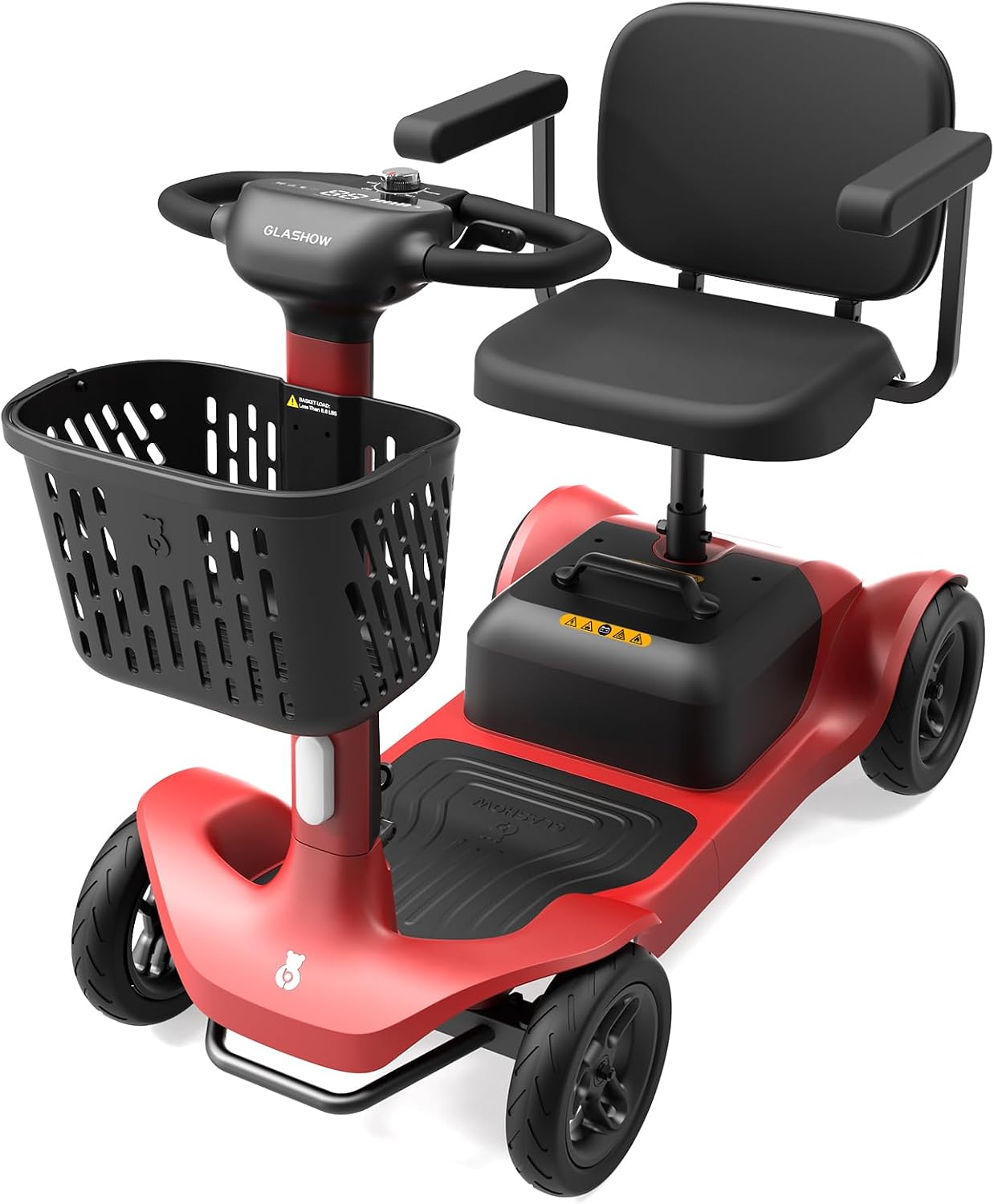
4.4★ (46 ratings) · 10″ wheels · rated ~25 mi range · 265 lb limit
Why Eugene: the longest range of the four for the full twelve-mile Ruth Bascom path, on bigger 10″ wheels, and it folds for the car. Check the 265 lb limit, the lowest here.
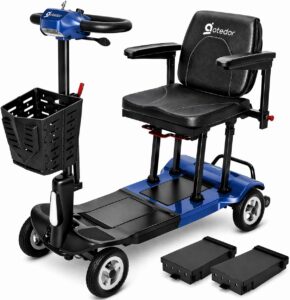
4.5★ (277 ratings) · folds compact · up to 300 lb
Why Eugene: the cheapest and most owner-reviewed here, light to lift and easy to store: a good budget fit for the flat riverside and shorter trips.
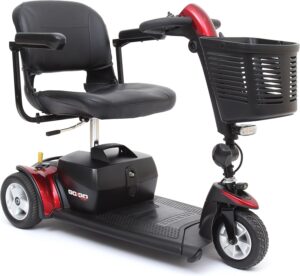
4.4★ (109 ratings) · compact · up to 325 lb
Why Eugene: a tight turning circle for indoor use: shops, clinics, the house. Four wheels are steadier once you are out on a wet riverside path.
Watch: the Buzzaround EX, our top pick
An independent walkthrough of the Golden Buzzaround EX, our top pick for Eugene, showing the four-wheel frame, seat, controls and how it comes apart to transport.
Video: Golden Buzzaround EX review (YouTube). Polaris Mobility is not affiliated with the reviewer.
Compare more 4-wheel models · full catalog
Eugene mobility scooter FAQ
How much is the bus for seniors in Eugene?
Free. Lane Transit District’s Honored Riders (passengers 65 and older, and riders with a disability) ride free on both the regular buses and the EmX bus rapid transit; for everyone else the fare is $1.75, with the EmX the same price as a regular bus. For door-to-door trips, LTD’s RideSource is the ADA paratransit for riders who cannot use the regular bus; its tickets are sold at a discount through the LTD Shop, so register and confirm the current fare with LTD.
Where can you ride a mobility scooter in Eugene?
On the Ruth Bascom Riverbank Path, above all. It is twelve miles of paved, multi-use path along both banks of the Willamette from Eugene to Springfield, tied together by five bridges for walkers and cyclists only, so you can make a loop of almost any length; it runs through Alton Baker Park and a riverbank forest, flat and green. Check a stretch after heavy rain, because the Willamette can flood parts of the path in high water. The city itself is fairly flat, so everyday riding is easy too.
Does Oregon Medicaid cover a mobility scooter?
Unusually, yes. The Oregon Health Plan, the state’s expanded Medicaid, covers power mobility devices when they are medically necessary, and its coordinated-care organizations are not allowed to deny one just because you have a caregiver, which is more than many states offer. Ask your provider about power mobility. If you are 65 or older, your route is Medicare instead. Either funded route goes through an approved supplier, so a scooter bought on Amazon is a separate out-of-pocket purchase.
What is the best mobility scooter for Eugene?
Our top pick is the Golden Buzzaround EX, because Eugene’s challenge is the wet coast rather than a hard winter, and its riders skew a little older with a higher-than-average disability rate, so a stable, comfortable, dependable scooter for wet paths and daily use matters more than folding for the cold; the Buzzaround has the highest rating and weight capacity of the four with four-wheel stability that holds a line on a damp path. It comes apart for a car trunk. If you want the longest range for the full twelve-mile Ruth Bascom path, the Glashow S1 Folding has it on bigger 10-inch wheels, and on a budget the Aotedor is a genuine choice for the flat riverside and shorter trips.