
Mobility Scooters in Kansas City

Looking for a mobility scooter in Kansas City, to buy or to rent? Kansas City is one metro built across two states, and that shapes this guide more than the weather does: cross State Line Road and the help you can get paying for a scooter changes completely, because Missouri expanded Medicaid and Kansas did not. Two other things matter right now. Bus fares came back on June 1, 2026 after six years of free rides, but seniors ride at half price and the streetcar is still free, and it is one of the most scooter-friendly rail lines in the country. This guide covers our top pick, renting vs. buying, the trails, transit, the two-state funding split, and the models that fit Kansas City. Polaris Mobility earns a commission on qualifying Amazon purchases through links on this page.
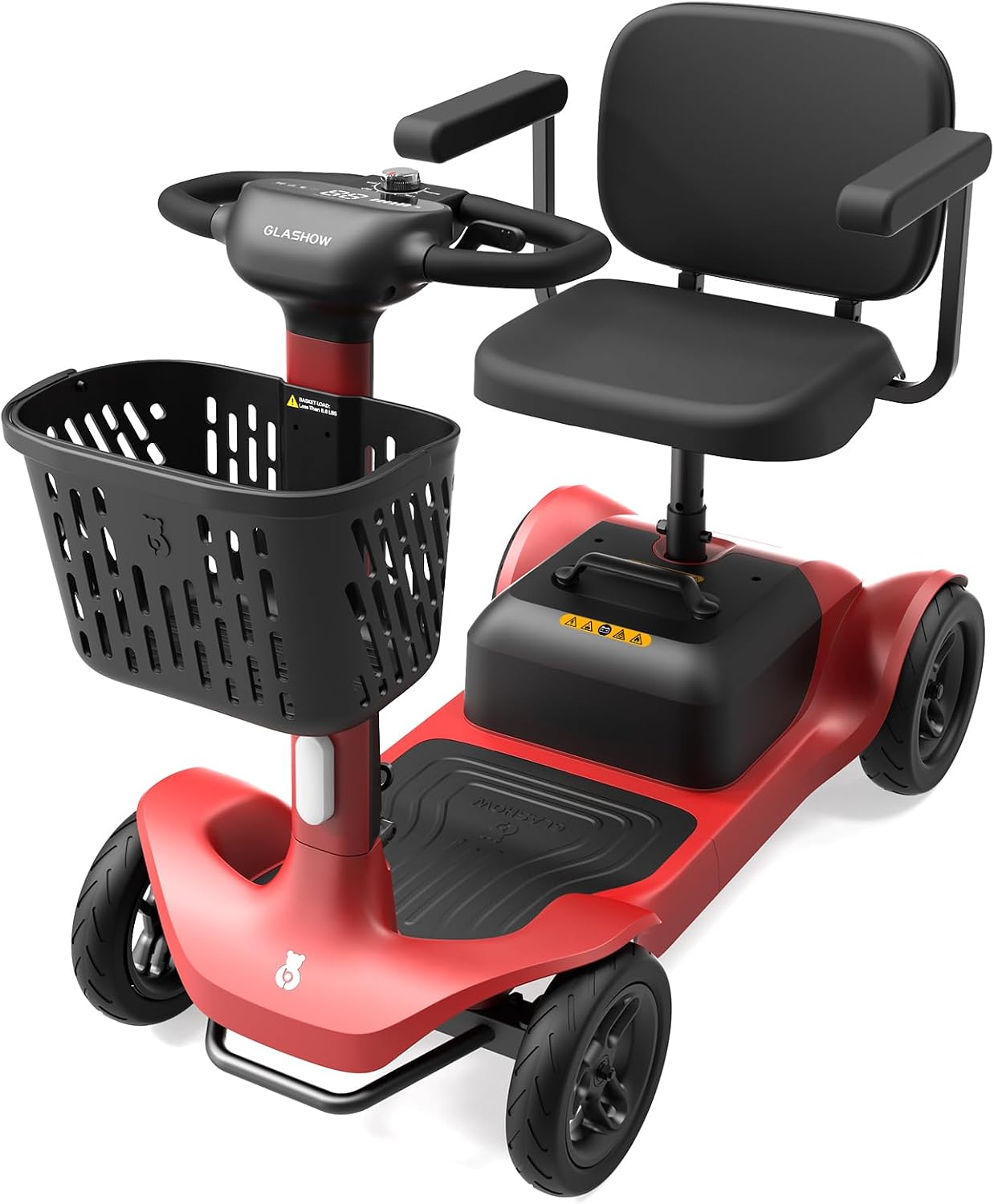
- 10″ wheels
- Rated ~25 mi range
- Folds for the car
- ★ 4.4 rating
Kansas City rewards range and wheel size. The Riverfront Heritage Trail alone runs fifteen miles, the metro is spread out, and winter here means wind and ice more than deep snow: all of which suit the biggest wheels and the longest rated range in this comparison. It also folds, so it rides in a car trunk and stores indoors through the cold months. Want maximum seat comfort and a brand service network instead? See the Golden Buzzaround EX in the comparison below.
On the Missouri side, MO HealthNet may cover a scooter. See the funding section first.
Renting vs. buying a mobility scooter in Kansas City
For regular use, renting adds up quickly and buying is usually cheaper within a season. Here is how they compare:
- Keeps costing you. A travel scooter runs roughly $100 to $200 a week depending on model and city (Scootaround), so a month of regular use is several hundred dollars.
- You hand it back, and it never becomes yours.
- Not fitted or sized to you; you take whatever model is free.
- Delivery windows, deposits and return deadlines to plan around.
- Pays for itself fast. A one-time purchase; after a few weeks of what renting costs you are ahead, and you keep the scooter.
- Always charged, sized to you and ready by the door.
- Spread the cost. Many scooters offer monthly payments at checkout or through your card, so it need not be one big hit.
- Comes with a manufacturer warranty and keeps resale value.
Where to rent locally
Kansas City has several local mobility outfits rather than only national delivery services, which is useful if you want to try a model before buying or need one for a week. The city’s tourism board lists KC Mobility Scooter Rentals (913-775-1098), Chuck’s Mobility (913-859-0290) and 101 Mobility (913-533-7717), along with wheelchair-accessible taxi options including Secure Transport (816-350-1800) and zTrip (Visit KC). Confirm current rates and delivery areas directly.
Bottom line: rent for a short visit; buy if you or a family member will use a scooter most weeks: it is cheaper within a month or two. Before you pay out of pocket, read the next section, because in this metro the answer depends on your address.
How to pay: which side of the state line you live on
This is the part of a Kansas City mobility guide that no other city needs. The metro straddles the Missouri–Kansas border, so two neighbours a few blocks apart, the same age, with the same diagnosis and the same income, can face completely different answers, because the two states made opposite decisions about Medicaid expansion.
Missouri voters expanded Medicaid by ballot initiative in 2020, and coverage took effect in 2021. MO HealthNet now covers low-income adults, and Missouri Medicaid can pay for a medically necessary power wheelchair or scooter when a doctor documents the need and it comes through an enrolled provider.
Start with your primary care provider or your health plan (Missouri MO HealthNet).
Kansas has not expanded Medicaid and remains one of roughly nine states with a coverage gap. An estimated 28,000 Kansans earn too much for traditional Medicaid but too little for Marketplace subsidies. Expansion bills were introduced again in early 2026 but have not been enacted.
KanCare covers about 430,000 Kansans through three managed care plans, but if you fall in the gap it will not reach you (KanCare).
Medicare works the same on both sides. Part B may cover a scooter if a doctor confirms you need it to move around your home and you can operate one safely, through a supplier that accepts Medicare (Medicare.gov). Because all of these programs work through approved suppliers, a scooter bought on Amazon is a separate out-of-pocket purchase, which is why many Kansas City buyers, and especially Kansas-side residents caught in the coverage gap, choose one for the lower price and immediate delivery. Confirm current criteria directly, as they change.
Comparing options across the state? Our Missouri mobility scooter guide covers statewide Medicaid and Medicare details, the best models for the local climate and terrain, and how the picture changes from city to city.
Bus fares are back, but the streetcar is still free
- If you are 65 or older, you pay half. Reduced fares are $1 a ride, $2 a day, $10 a week and $31.25 for 30 days, and the caps halve too. Medicare cardholders, people with disabilities and low-income riders qualify as well. Apply through United Way of Greater Kansas City: each person in a household applies separately, and the whole KCATA region is eligible whether you live here or are visiting.
- The KC Streetcar never started charging. It stayed fare-free, which makes it the cheapest and the easiest way to cross the middle of the city on a scooter.
The streetcar: the best scooter ride in the metro
- It got much longer, and recently. The Main Street extension opened on October 24, 2025, adding 3.5 miles and taking the line to 5.7 miles from the River Market south past Union Station to UMKC at 51st Street. The $352 million project more than doubled ridership (KCUR).
- What that means for you. The line now connects the River Market, the Power & Light District, Union Station, Crown Center, the Plaza area and UMKC: free, step-free, and without needing a car or a paratransit booking.
Fifteen miles of accessible trail
- Start short. Fifteen miles is far beyond a round trip for most scooters, so pick a segment, note where it passes restrooms and cafes, and turn back well within your battery range. The Berkley Riverfront stretch is a flat, easy first outing.
- The Trolley Track Trail. On the south side, this 6-mile paved rail-trail follows an old trolley route from Volker and Brookside Boulevards down to 85th Street and Prospect Avenue: quiet, level and residential.
- The Plaza. The Country Club Plaza’s wide brick sidewalks make for pleasant riding, though brick is rougher than asphalt: take it slower and let bigger wheels do the work.
Wind, ice and humid summers
- Winter: ice is the real problem, not snow depth. Wait for cleared, dry pavement, avoid the morning after a freeze, keep the scooter charged and stored indoors, and wipe road salt off the frame after outings. On bad days the streetcar and accessible buses are the safer choice.
- Summer: ride the cooler morning and evening hours, carry water, and plan routes past air-conditioned stops. Humidity makes 90°F feel considerably worse.
- Spring: this is thunderstorm, hail and tornado country. Check the forecast before a long trail outing and do not get caught fifteen miles out.
Getting around: buses and RideKC Freedom
- Buses are all ramp-equipped and accessible across the RideKC network (Visit KC), at the fares listed above: half price if you are 65 or older and registered.
- RideKC Freedom is the door-to-door paratransit, and its vehicles are built to carry wheelchairs and other mobility devices. ADA-eligible trips cost $4.00. There is a useful perk: if you use Freedom to connect directly to a regular fixed-route bus, that bus ride is 100% free (RideKC).
- How to apply: having a disability does not qualify you automatically: eligibility is based on your functional ability to use fixed-route transit independently. Call 816-842-9070 and press option 5 for eligibility, or option 1 to book a trip. Applications are available in English and Spanish.
- Across the line. Freedom also operates through Unified Government Transit in Kansas City, Kansas and Johnson County, and some services allow cross-service-area travel depending on your eligibility and the trip.
Wheelchair-accessible places in Kansas City
Kansas City invested millions of dollars in curb cuts, ramps and new building entrances through its Project Civic Access work, and the results show downtown and along the streetcar line, where level access is generally good. The Kansas City Zoo & Aquarium runs sensory-friendly activities, Bartle Hall’s ground-level entrances have been rebuilt for wheelchair access, and the airport’s new single terminal added service-animal relief areas and adult changing tables (Visit KC). Older storefronts in the historic districts vary, as they do everywhere, so it is worth confirming a venue’s entrance and restroom before visiting.
Who needs mobility support in Kansas City
Kansas City is a young city inside two older states. About 14.1% of residents are 65 or older (roughly 71,600 people out of 508,000) below Missouri’s 17.5%, Kansas’s 16.6% and the U.S. figure of 16.8%, with 12.8% reporting a disability (U.S. Census Bureau, ACS 2023). The chart below is the clearest picture of the problem this guide keeps coming back to: the two states are demographically almost the same, with nearly identical shares of older residents, yet they offer opposite answers on paying for a scooter.
Best mobility scooters for Kansas City (2026)
Picks that suit a spread-out metro with long paved trails, brick sidewalks, an icy windy winter and a free level-boarding streetcar: range and wheel size first, comfort and stability close behind. Specs are per manufacturer listings; confirm current details and price on Amazon.
| Model | Wheels | Max rider | Top speed | Owner rating |
|---|---|---|---|---|
| Glashow S1 Folding ★ Top pick | 10″ (4-wheel) | 265 lb | 6.2 mph | 4.4★ (46) |
| Golden Buzzaround EX | 9″ (4-wheel) | 330 lb | 5.0 mph | 4.7★ (verified) |
| Aotedor Lightweight | 7″ | 300 lb | 3.7 mph | 4.5★ (277) |
| Pride Go-Go Sport | 3-wheel | 325 lb | 4.7 mph | 4.4★ (109) |
4.4★ (46 ratings) · 10″ wheels · rated ~25 mi range
Why Kansas City: the longest rated range for a fifteen-mile trail and a spread-out metro, and the biggest wheels for brick sidewalks and cold pavement. Folds into a car and stores indoors for winter.
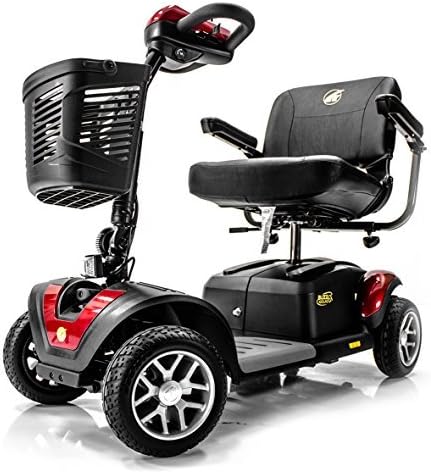
4.7★ (verified owners) · 9″ wheels · up to 330 lb
Why Kansas City: the comfort choice for long Plaza and trail afternoons, the highest owner rating here, the highest weight capacity, and a real brand service network behind it.
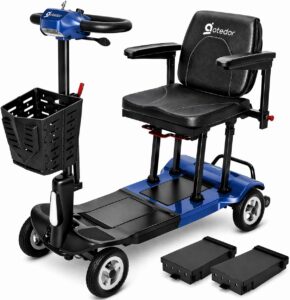
4.5★ (277 ratings) · folds compact · up to 300 lb
Why Kansas City: light to lift into a car and effortless to roll onto the free streetcar: a good downtown errand runner if most of your trips are along the Main Street line.
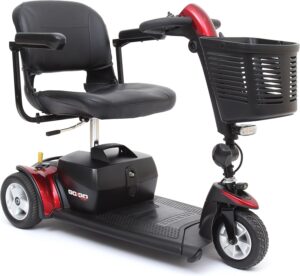
4.4★ (109 ratings) · compact · up to 325 lb
Why Kansas City: a tight turning circle for the City Market stalls and indoor venues. Four wheels feel steadier over trail distance and on cold, uneven brick.
Watch: a four-wheel travel scooter in action
An independent walkthrough of the Golden Buzzaround EX, the comfort alternative in the comparison above, showing the four-wheel frame, seat, controls and how it comes apart to transport.
Video: Golden Buzzaround EX review (YouTube). Polaris Mobility is not affiliated with the reviewer.
Compare more 4-wheel models · full catalog
Kansas City mobility scooter FAQ
Is Kansas City a good city for a mobility scooter?
Yes. The KC Streetcar is free and offers level boarding at every stop, so a scooter rolls straight on with no ramp or lift, and the Riverfront Heritage Trail gives you fifteen miles of fully accessible paved path. The metro is spread out, so range matters, and winter brings wind and ice rather than deep snow. The one thing to check carefully is funding, because Missouri and Kansas answer that question differently.
Does Medicaid pay for a mobility scooter in Kansas City?
It depends which side of the state line you are on. Missouri expanded Medicaid by ballot initiative in 2020, effective 2021, so MO HealthNet covers low-income adults and can pay for a medically necessary scooter through an enrolled provider. Kansas has not expanded Medicaid and is one of roughly nine states with a coverage gap, where an estimated 28,000 Kansans earn too much for traditional Medicaid but too little for Marketplace subsidies. Medicare Part B rules are the same on both sides.
Do I have to pay to ride the bus in Kansas City now?
Yes. Fares returned on June 1, 2026 after six years of free rides: $2 a single ride, $4 a day, $20 a week and $62.50 for 30 days, with automatic fare capping instead of free transfers. If you are 65 or older, a Medicare cardholder or a person with a disability, you pay half, so $1 a ride. The KC Streetcar stayed free.
Where is the best place to ride a mobility scooter in Kansas City?
The Riverfront Heritage Trail is the standout: fifteen miles of fully accessible paved path from the riverfront through the historic bi-state core to Kaw Point. On the south side, the Trolley Track Trail runs six paved miles from Brookside to 85th Street. The Country Club Plaza’s wide brick sidewalks are pleasant too, just rougher than asphalt. Pick a segment and turn back within your battery range.
What is the best mobility scooter for Kansas City?
For a spread-out metro with long trails, brick sidewalks and an icy, windy winter, range and wheel size matter most. Our top pick is the Glashow S1 for its 10-inch wheels and roughly 25-mile rated range, and because it folds for the car. The Golden Buzzaround EX is the comfort alternative with the highest owner rating and a service network, and a lightweight model is easiest to lift and roll onto the free streetcar.