
Mobility Scooters in Madison

Looking for a mobility scooter in Madison, Wisconsin, to buy or to rent? Madison is the state capital and home to the University of Wisconsin, and it sits on an isthmus: a narrow strip of land between Lake Mendota and Lake Monona, with the Capitol on the neck between them. That geography makes it one of the flattest, most roll-friendly cities in the Midwest: a compact core and miles of paved lakeside path. The one adversary is the winter. This guide covers the fares, the isthmus and the lake loops, the Wisconsin winter, how the state’s unusual Medicaid works, and the models that suit it. Polaris Mobility earns a commission on qualifying Amazon purchases through links on this page.
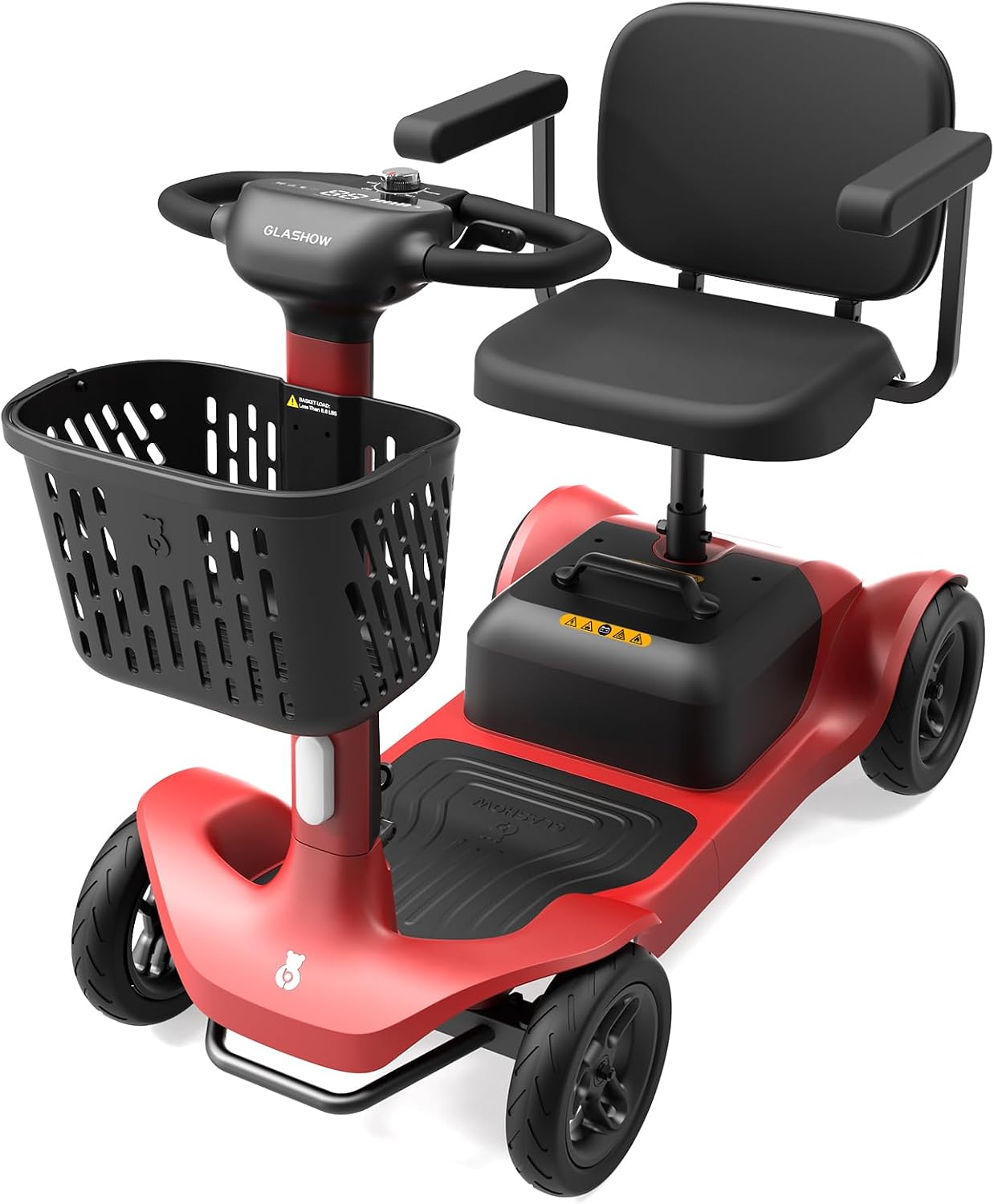
- Rated ~25 mi range
- Folds for winter storage
- 10″ wheels, 6.2 mph
- ★ 4.4 rating
Madison gives you long, flat, paved rides worth having range for: the Lake Monona Loop is 13 paved miles and the Capital City Trail runs another 17, all on ground a scooter just rolls over. The Glashow has the longest rated range of our four, and it folds to store indoors through a Wisconsin winter and lift into a car. Two honest caveats: its 265 lb limit is the lowest here, so check it fits you, and it has fewer owner reviews than the Golden below. If you want maximum stability, the highest capacity, and a brand service network, the Golden Buzzaround EX is the sturdier alternative.
On Medicare or BadgerCare? Read the funding section, Wisconsin takes an unusual middle path.
A dollar bus on the isthmus
- Metro Paratransit is the door-to-door service. For riders who cannot use the fixed-route bus, Metro Paratransit costs $3.25 a ride (or a booklet of six tickets for $19.50). It takes a written application and an in-person assessment, so start it before you need it; call Metro at (608) 266-4466.
- The compact isthmus helps. Because downtown, the Capitol Square and the campus sit close together on the neck between the lakes, a scooter plus a dollar bus covers the core easily: own the scooter for the lake paths and the errands, and let the bus handle the rest.
The lakes and the paved loops
- The isthmus is the everyday ground. Downtown and the Capitol Square are flat and compact, and the lake paths start close by: you can put together a real outing without fighting a hill.
- Ride the loops in sections. No travel scooter covers 13 miles and back on a charge, so pick a stretch (the John Nolen causeway with its Capitol view, or the quieter east-side shore), and let range decide how far you go.
- Watch the surface at the edges. Most of this network is smooth asphalt, but a few older or natural-surface connectors exist, so learn two or three routes you trust and stick to the paved spine.
The Wisconsin winter
Paying for it: Wisconsin’s Medicaid, and Medicare
- 65 or older? You are on Medicare. Part B may cover a scooter if a doctor confirms the need and you use a supplier that accepts Medicare (Medicare.gov).
- Under 65 with a disability? Wisconsin Medicaid covers disabled adults and can pay for medically necessary equipment such as a power wheelchair or scooter through an enrolled provider. Apply, and ask about durable medical equipment.
- Under 65, lower income? BadgerCare Plus or subsidized Marketplace coverage may apply: there is a route rather than a gap.
Because these work through approved suppliers, a scooter bought on Amazon is a separate out-of-pocket purchase, and the right choice if you do not qualify, or would rather not wait. Confirm current criteria directly, as they change.
Comparing options across the state? Our Wisconsin mobility scooter guide covers statewide Medicaid and Medicare details, the best models for the local climate and terrain, and how the picture changes from city to city.
Renting vs. buying a mobility scooter in Madison
In a flat city with miles of paved lakeside path, an owned scooter does real work most of the year, and buying within a couple of months is usually cheaper than renting.
- Keeps costing you. A travel scooter runs roughly $100 to $200 a week depending on model (Scootaround), so a month of regular use is several hundred dollars.
- You hand it back, and it never becomes yours.
- Not fitted or sized to you.
- Reasonable for a summer visit to the lakes.
- Pays for itself fast. A one-time purchase; after a few weeks of what renting costs you are ahead, and you keep the scooter.
- It folds and stores indoors through the winter, ready for the loops when the snow clears.
- It comes apart for the car, for the trailheads a little further out.
- And it may be funded. If your need is medical, Medicare or Wisconsin Medicaid may cover an approved device.
Bottom line: if you live here, buy: a scooter with the range for the lake loops and the fold to store it through a Wisconsin winter, backed up by a dollar bus. Check first whether Medicare or Wisconsin Medicaid will fund it.
Who needs mobility support in Madison
12.7% of Madison residents are 65 or older (35,012 people out of 275,568) below the national 16.8%, and its disability rate, 9.1%, sits well below the national 13.0%, as you would expect in a young university city. Madison is much younger on paper than Wisconsin as a whole, where 18.0% are over 65 (U.S. Census Bureau, ACS 2023, 5-year).
So the case for a scooter in Madison is not the demographics, it is the ground. For the 35,000 seniors and the residents with a disability who do live here, and for the visitors the lakes and the Capitol draw, this is close to ideal scooter country: a flat isthmus, a compact downtown, a dollar bus, and miles of smooth paved path around the water. What you plan around is the winter, and a scooter that folds to store indoors handles that.
Best mobility scooters for Madison (2026)
Picks weighted for range on the 13-mile lake loops, folding to store through the winter and load into a car, and stability on smooth paved path. Specs are per manufacturer listings; confirm current details and price on Amazon.
| Model | Wheels | Max rider | Top speed | Owner rating |
|---|---|---|---|---|
| Glashow S1 Folding ★ Top pick | 10″ (4-wheel) | 265 lb | 6.2 mph | 4.4★ (46) |
| Golden Buzzaround EX Sturdiest | 9″ (4-wheel) | 330 lb | 5.0 mph | 4.7★ (verified) |
| Aotedor Lightweight Best on a budget | 7″ | 300 lb | 3.7 mph | 4.5★ (277) |
| Pride Go-Go Sport | 3-wheel | 325 lb | 4.7 mph | 4.4★ (109) |
4.4★ (46 ratings) · 10″ wheels · rated ~25 mi range · 265 lb limit
Why Madison: the longest range for the 13-mile Monona loop and the Capital City Trail, and it folds to store through a Wisconsin winter. Check the 265 lb limit, the lowest here.
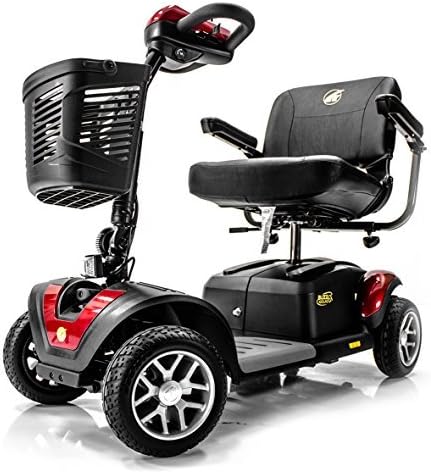
4.7★ (verified owners) · 9″ wheels · up to 330 lb
Why Madison: the highest rating and capacity here and a brand service network, with four-wheel stability for a full day on the paved loops. Comes apart for a car trunk.
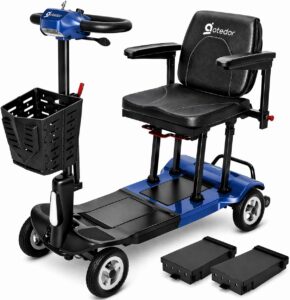
4.5★ (277 ratings) · folds compact · up to 300 lb
Why Madison: the cheapest and most owner-reviewed here, light to lift and easy to store indoors: a good budget fit for the compact isthmus and shorter trips.
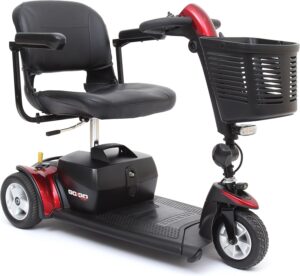
4.4★ (109 ratings) · compact · up to 325 lb
Why Madison: a tight turning circle for indoor use (shops, clinics, the house) through the winter months. Four wheels are steadier once you are out on the loop.
Watch: the Buzzaround EX, our sturdiest pick
An independent walkthrough of the Golden Buzzaround EX, the sturdiest alternative to our folding top pick, showing the four-wheel frame, seat, controls and how it comes apart to transport.
Video: Golden Buzzaround EX review (YouTube). Polaris Mobility is not affiliated with the reviewer.
Compare more 4-wheel models · full catalog
Madison mobility scooter FAQ
How much is the bus for seniors in Madison?
A dollar. Madison Metro charges a $2.00 adult fare, and riders 65 and older, people with a disability, and low-income riders (at or below 150% of the poverty line) pay $1.00 through the Fast Fare program, with the day capped at $2.50 and the week at $7.00 for reduced riders. For door-to-door trips, Metro Paratransit costs $3.25 a ride, or a booklet of six tickets for $19.50; it takes a written application and an in-person assessment, so call Metro at (608) 266-4466 to start.
Where can you ride a mobility scooter in Madison?
Madison is built for it. The city sits on an isthmus between Lake Mendota and Lake Monona, so downtown and the Capitol Square are flat and compact, and the paved lake paths start close by. The Lake Monona Loop runs about 13 miles, entirely paved, and it ties into the 17-mile Capital City Trail from Fitchburg through downtown to the east side. You ride the loops in sections rather than end to end, and most of the network is smooth asphalt, with a few natural-surface connectors to route around.
Does Wisconsin Medicaid cover a mobility scooter?
It can. Wisconsin never expanded Medicaid under the ACA, but a federal waiver covers childless adults up to 100% of the poverty level through BadgerCare Plus, with subsidized Marketplace coverage above that, so there is no coverage gap. Wisconsin Medicaid covers disabled adults and can pay for medically necessary equipment such as a power wheelchair or scooter through an enrolled provider, so ask about durable medical equipment. If you are 65 or older, your route is Medicare instead. Either funded route goes through an approved supplier, so a scooter bought on Amazon is a separate out-of-pocket purchase.
What is the best mobility scooter for Madison?
Our top pick is the Glashow S1 Folding, because Madison offers long, flat, paved rides, the 13-mile Lake Monona Loop and the 17-mile Capital City Trail, where range is the feature that matters, and the Glashow has the longest rated range of our four while folding to store indoors through a Wisconsin winter and lift into a car. Its trade-offs are a 265 lb weight limit, the lowest of the four, and fewer reviews than the Golden Buzzaround EX, which is the sturdier alternative with the highest capacity and a brand service network. On a budget the Aotedor is a genuine choice for the compact isthmus and shorter trips.