
Mobility Scooters in Richmond
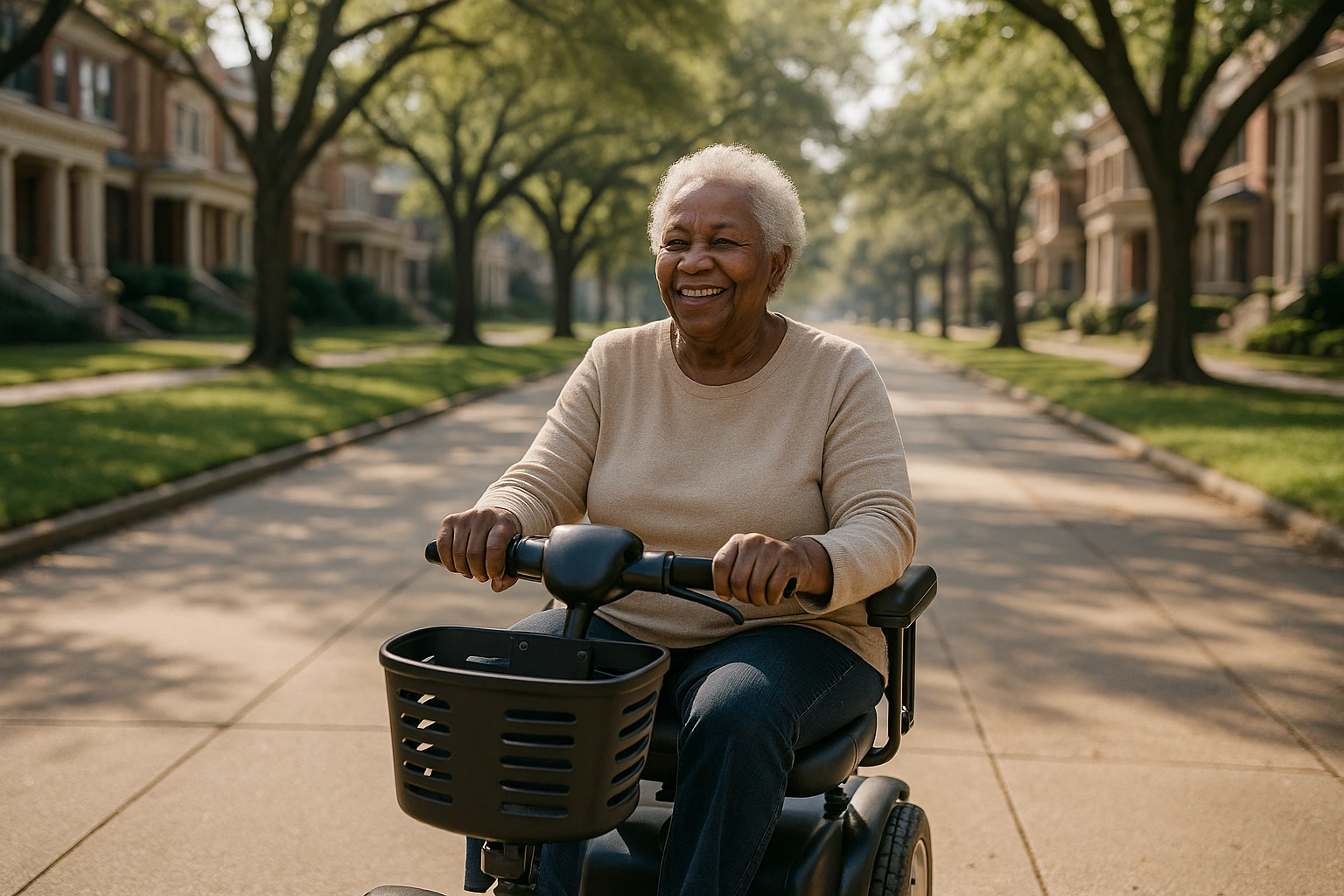
Looking for a mobility scooter in Richmond, to buy or to rent? Richmond does something no other city in this guide does quite so completely: the whole system is free. Not just the buses and the Pulse rapid transit line, but the door-to-door paratransit as well: no fare, no card, no pass. And the Virginia Capital Trail runs 51.7 paved miles from the edge of the city to Jamestown, built and described by the state as accessible to wheelchairs and other mobility devices. The honest catch is the terrain: the trail is flat at the Jamestown end and rolling at the Richmond end, because the city sits on the fall line. Below: our top pick, the free system, the trail, funding, and the models that fit Richmond. Polaris Mobility earns a commission on qualifying Amazon purchases through links on this page.
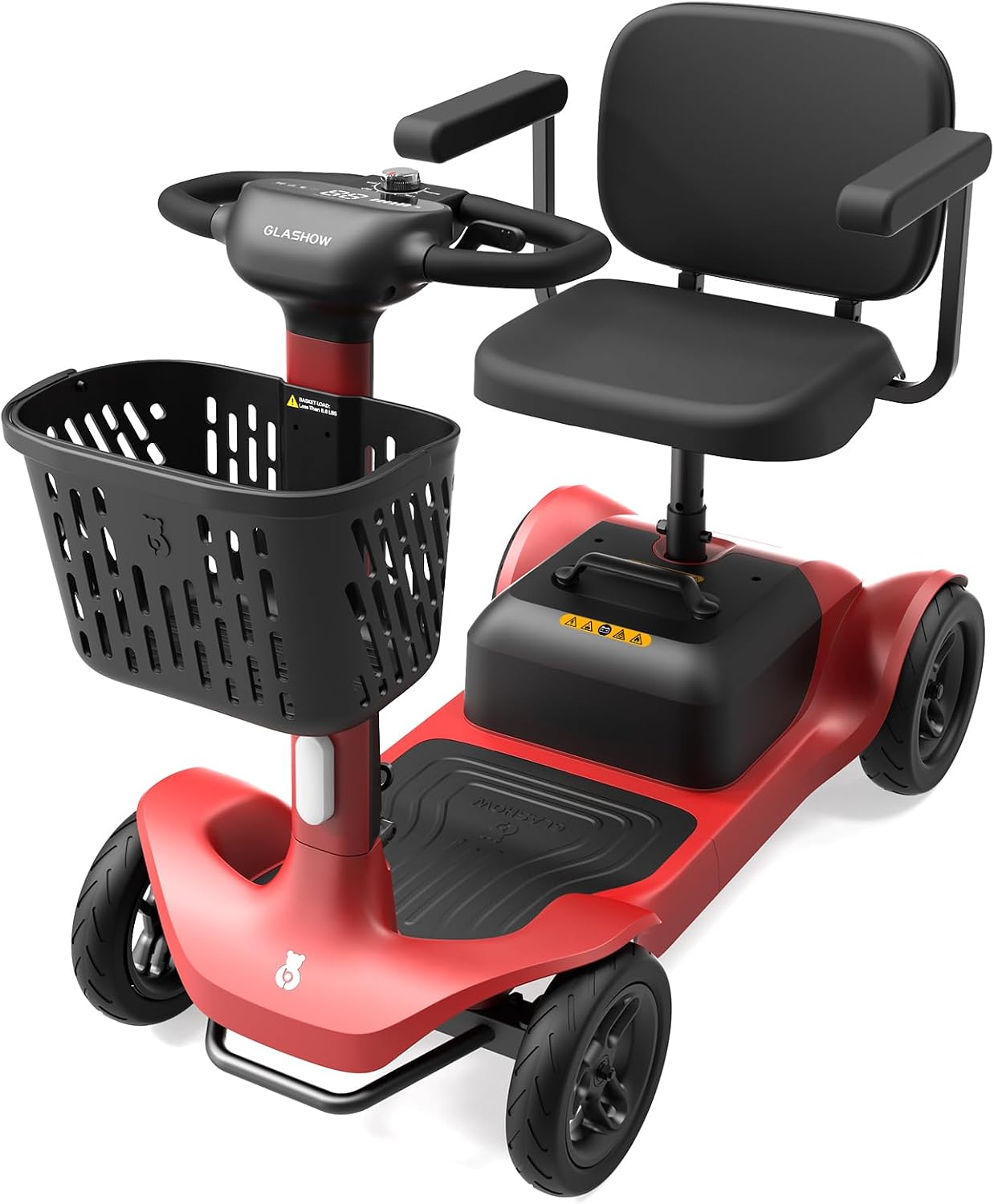
- Rated ~25 mi range
- 10″ wheels
- Folds for the car
- ★ 4.4 rating
Richmond hands you a 51.7-mile paved trail, and that changes what you should buy. This has the longest rated range in this comparison, which is what turns the Capital Trail from a nice idea into a real outing, and the biggest wheels for the rolling stretches at the Richmond end. It folds too, so you can drive out along Route 5 and start from a flatter section rather than climbing out of the city first. One thing to check honestly: its 265 lb limit is the lowest here: if that is tight for you, the Buzzaround EX below carries up to 330 lb and is the more comfortable seat.
On Medicare or Virginia Medicaid? Read the funding section before you pay out of pocket.
Everything is free, including the paratransit
- How long it is funded, honestly. Zero Fare started in March 2020 and has been renewed year by year ever since. On 19 May the GRTC board approved a roughly $101 million FY2027 budget that keeps the system fare-free through 30 June 2027, paying the roughly $6 million cost from a $2 million carried-over surplus, increased advertising revenue and about $1 million from the Virginia Department of Rail and Public Transportation. The agency is working on a five-year plan for long-term funding. So: free today, funded for this year, and worth re-checking before you rely on it in future years.
- The Pulse is built for you. It stops only at platform-level stations and uses smart traffic signals to hold its schedule: platform-level means you roll straight on, with no ramp to deploy and no lift to wait for.
- CARE eligibility is functional, based on your ability to use fixed-route buses independently, not on your diagnosis, your age or your type of disability. Apply through GRTC’s Eligibility Coordinator on (804) 358-3871 ext. 434, or call (804) 782-2273 for information.
- Booking is unusually flexible: by phone, email, fax, online, or through the GRTC on the Go app on iOS and Android. All CARE riders must carry their ADA Paratransit photo ID card and show it to the driver.
The Virginia Capital Trail: 51.7 paved miles
- The terrain is not uniform, and this is the thing to plan around. It is mostly flat near Jamestown and mostly rolling hills near Richmond. If you want easy riding, drive out and start from a southern section; if you start in the city you get the hills first, when your battery is full but your legs are not the ones doing the work.
- The Richmond trailhead is next to the James River at the downtown flood gates, at Great Shiplock Park.
- Fifty-one miles is a network, not a route. Ride a segment out and back well inside your battery range. Nobody is asking you to reach Jamestown.
- Best from March through October, per the trail’s own guidance, with fall the prettiest stretch of the year on it.
- More is coming: the planned north-south Fall Line Trail is projected to cross the Capital Trail near Richmond, which would connect the city into it from a second direction.
The fall line: why Richmond has hills at all
- Pick flat ground for daily riding. The boulevards, the riverfront and the trail’s eastern reaches are level enough for easy outings.
- Take descents slowly. Rolling terrain means what goes down comes back, and on a scooter the down part is the one that catches people out. Slow, straight, and no cutting across a slope at an angle.
- Plan the season. The trail is at its best from March to October; summer in Virginia is hot and humid, so ride the early morning and the evening, carry water, and let the wooded stretches do the shading.
Renting vs. buying a mobility scooter in Richmond
Richmond makes an unusually strong case for owning: the transit is free, so the scooter is not competing with a fare, and there is a 51.7-mile trail waiting for it. For regular use, renting adds up quickly and buying is usually cheaper within a season.
- Keeps costing you. A travel scooter runs roughly $100 to $200 a week depending on model and city (Scootaround), so a month of regular use is several hundred dollars.
- You hand it back, and it never becomes yours.
- Not fitted or sized to you; you take whatever model is free.
- Delivery windows, deposits and return deadlines to plan around.
- Pays for itself fast. A one-time purchase; after a few weeks of what renting costs you are ahead, and you keep the scooter.
- Always charged, sized to you and ready by the door.
- Spread the cost. Many scooters offer monthly payments at checkout or through your card, so it need not be one big hit.
- Comes with a manufacturer warranty and keeps resale value.
Bottom line: rent for a visit; buy if you live here. With free buses, a free Pulse and free paratransit covering the trips a scooter cannot, owning one covers everything else, and the Capital Trail is the kind of thing you use every week once it is yours.
How to pay: Medicare and Virginia Medicaid
If you are 65 or older, Medicare is your route. Part B may cover a scooter if a doctor confirms you need it to move around your home and you can operate one safely, through a supplier that accepts Medicare (Medicare.gov).
Virginia Medicaid can pay for medically necessary equipment such as a power wheelchair or scooter when a doctor documents the need and it comes through an enrolled provider. Start with your primary care provider or your health plan.
Because these programs work through approved suppliers, a scooter bought on Amazon is a separate out-of-pocket purchase, which is why many Richmond buyers who do not qualify choose one for the lower price and immediate delivery. Confirm current criteria directly, as they change.
Comparing options across the state? Our Virginia mobility scooter guide covers statewide Medicaid and Medicare details, the best models for the local climate and terrain, and how the picture changes from city to city.
Who needs mobility support in Richmond
Richmond is a young state capital. About 13.6% of residents are 65 or older (roughly 31,000 people out of 228,000) below Virginia’s 16.3% and the national 16.8% (U.S. Census Bureau, ACS 2023).
Disability runs the other way: 14.0% of Richmond residents report one, against 12.2% across Virginia and 13.0% nationally. It is the pattern that keeps showing up in this guide, a city younger than its state but with more disability than its state, and it is the reason a free bus, a free Pulse and a free paratransit trip do more good in Richmond than the age profile alone would predict.
Best mobility scooters for Richmond (2026)
Picks that suit a free transit system, a 51.7-mile paved trail and rolling ground at the city end: range first, with comfort and capacity close behind. Specs are per manufacturer listings; confirm current details and price on Amazon.
| Model | Wheels | Max rider | Top speed | Owner rating |
|---|---|---|---|---|
| Glashow S1 Folding ★ Top pick | 10″ (4-wheel) | 265 lb | 6.2 mph | 4.4★ (46) |
| Golden Buzzaround EX | 9″ (4-wheel) | 330 lb | 5.0 mph | 4.7★ (verified) |
| Aotedor Lightweight | 7″ | 300 lb | 3.7 mph | 4.5★ (277) |
| Pride Go-Go Sport | 3-wheel | 325 lb | 4.7 mph | 4.4★ (109) |
4.4★ (46 ratings) · 10″ wheels · rated ~25 mi range · 265 lb limit
Why Richmond: the range that makes the Capital Trail a real outing, the biggest wheels for the rolling Richmond end, and it folds so you can drive out to a flatter start. Check the 265 lb limit against your needs.
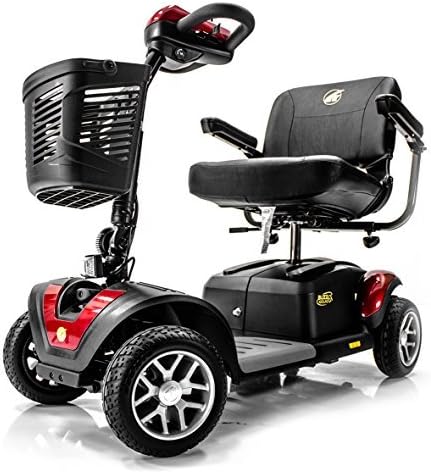
4.7★ (verified owners) · 9″ wheels · up to 330 lb
Why Richmond: the comfort choice for long humid afternoons and the highest capacity here at 330 lb, with a planted base for rolling ground and a real service network.
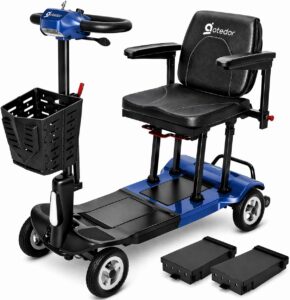
4.5★ (277 ratings) · folds compact · up to 300 lb
Why Richmond: light to lift into a car and effortless onto the platform-level Pulse: a good errand runner for the flat boulevards, though under-tyred for rolling trail miles.
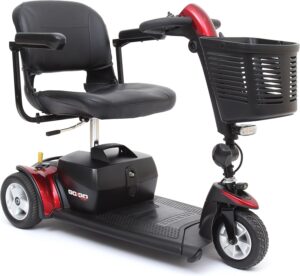
4.4★ (109 ratings) · compact · up to 325 lb
Why Richmond: a tight turning circle for shops, markets and a busy Pulse car. Four wheels feel steadier over trail distance and on rolling ground.
Watch: a four-wheel travel scooter in action
An independent walkthrough of the Golden Buzzaround EX, the comfort alternative in the comparison above, showing the four-wheel frame, seat, controls and how it comes apart to transport.
Video: Golden Buzzaround EX review (YouTube). Polaris Mobility is not affiliated with the reviewer.
Compare more 4-wheel models · full catalog
Richmond mobility scooter FAQ
Is Richmond a good city for a mobility scooter?
Yes, and its transit makes it better. GRTC runs fare-free, so buses, the Pulse rapid transit line and even the door-to-door CARE paratransit cost nothing, and the Virginia Capital Trail gives you 51.7 paved miles built to be accessible for mobility devices. The catch is the fall line: Richmond sits where the land drops toward the coastal plain, so the ground rolls near the city while the trail flattens out downriver.
Is the bus really free in Richmond, and will it stay free?
It is free today. GRTC’s Zero Fare policy began in March 2020 and has been renewed each year since. On 19 May the board approved a roughly $101 million FY2027 budget that keeps the system fare-free through 30 June 2027, funding the roughly $6 million cost from a carried-over surplus, advertising revenue and about $1 million from the Virginia Department of Rail and Public Transportation, while it works on a five-year plan for long-term funding. So it is free and funded for this year, and worth re-checking in future years.
Does Richmond charge for paratransit?
No. GRTC states that no fare is required to ride CARE or CARE Plus, its door-to-door ADA paratransit, until further notice: where most big cities charge roughly two to four dollars for the same trip. Eligibility is functional, based on your ability to use fixed-route buses independently rather than your diagnosis or age. Apply through the Eligibility Coordinator on (804) 358-3871 ext. 434, and note that all CARE riders must carry and show an ADA Paratransit photo ID card.
Where is the best place to ride a mobility scooter in Richmond?
The Virginia Capital Trail, 51.7 fully paved miles between Richmond and Jamestown in its own separated asphalt lane alongside Route 5, explicitly designed to be accessible for wheelchairs and other mobility devices. The Richmond trailhead is at Great Shiplock Park by the downtown flood gates. Be aware the trail is mostly rolling near Richmond and mostly flat near Jamestown, so for the easiest riding drive out and start from a southern section. It is at its best from March through October.
What is the best mobility scooter for Richmond?
With a 51.7-mile trail on the doorstep, range matters most. Our top pick is the Glashow S1 for the longest rated range here, 10-inch wheels for the rolling Richmond end, and a frame that folds so you can drive out to a flatter start, though its 265 lb limit is the lowest in this comparison, so check it. The Golden Buzzaround EX is the alternative for comfort and a 330 lb capacity.