
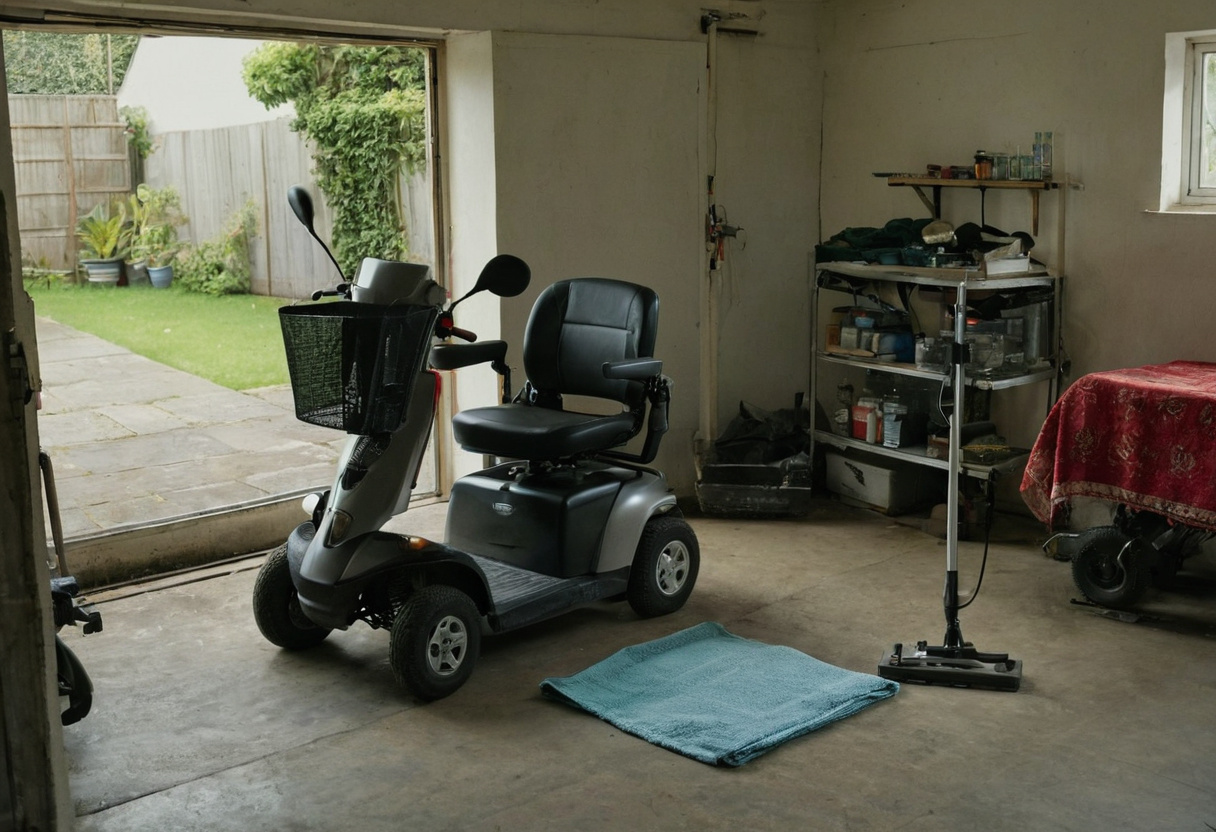
Most mobility scooter faults that feel like a breakdown are not one. Before calling anyone, check that the freewheel lever is in drive, that the seat is locked and facing forward for its sensor, that the key is pushed fully in, and that the charger was actually delivering power at the wall. Brakes, motor windings and internal wiring are where do-it-yourself stops and a technician starts.
Your mobility scooter stops working on the morning you planned to visit the farmers market. The battery seems charged, but nothing happens when you turn the key. Your first instinct might be to call for professional help, but what if you could diagnose and fix the problem yourself in just a few minutes?
Owners pay for service calls on problems they could have cleared themselves in a few minutes, because the symptom looks alarming while the cause is trivial. This guide covers the faults that come up most, the checks to run and in what order, and the point at which the job stops being yours.
Your scooter’s silent language: understanding the warning signs
Before diving into specific repairs, you need to learn how your mobility scooter communicates problems. Most modern scooters use a combination of visual indicators, sounds, and performance changes to alert you to issues. Understanding these signals can save you time and prevent minor problems from becoming major repairs.

Battery indicator patterns and their meanings
Your scooter’s battery gauge tells a story beyond just charge levels. A rapidly fluctuating needle often indicates loose connections, while a gauge that shows full charge but provides limited range suggests battery degradation. Pay attention to how quickly the indicator drops during use, since a healthy battery holds a fairly steady output through most of its charge rather than falling away early.
Temperature also plays a crucial role in battery performance. In colder climates across Canada and the northern United States, usable capacity falls noticeably in winter, which is why a route that was comfortable in September can leave you short in January. This is why understanding proper winter operation techniques becomes essential for year-round users.
Motor sounds that demand attention
Your scooter’s motor should produce a consistent, quiet hum during operation. Grinding noises often indicate worn brushes or bearing issues, while high-pitched squealing typically points to belt problems. Clicking sounds during startup usually suggest solenoid issues, while intermittent power loss accompanied by clicking indicates potential controller problems.

The essential toolkit: what every DIY repair enthusiast needs
Having the right tools makes the difference between a successful repair and a frustrating experience. Most mobility scooter repairs require basic tools that cost less than a single service call. Here’s what you should keep in your repair toolkit:
- Hand tools for panel removal and tightening connections: Phillips and flathead screwdrivers, Allen keys in the 3 to 8 mm range, and an adjustable wrench.
- Electrical for voltage testing and wiring: a digital multimeter, wire strippers and electrical tape.
- Safety: work gloves, safety glasses and a flashlight, because most of this happens under the seat or behind a panel.
- Cleaning for connections and debris: contact cleaner, compressed air and a soft brush.
Prices move, so check current listings rather than budgeting from a figure in an article. The whole kit generally costs less than one call-out.
Safety first: protecting yourself and your investment
Before starting any repair work, always disconnect the battery by removing the main power connection or turning off the main breaker. This prevents accidental activation and protects both you and the scooter’s electrical system. Work in a well-ventilated area, especially when dealing with batteries, and never smoke or use open flames near your scooter.
Keep your owner’s manual handy during repairs. If you’ve misplaced it, most manufacturers provide digital copies online. For users considering upgrading to smart mobility scooters, many newer models include built-in diagnostic features that simplify troubleshooting.
Battery blues: diagnosing and fixing power problems
Battery problems are the most common reason a scooter stops working. The good news is that most battery-related issues are preventable and many are easily fixable at home.

MALISA Long Range Mobility Scooter
Rating: ⭐⭐⭐⭐ 4.4/5
Price: see current price on Amazon
Perfect for users who need reliable long-range performance. Features 330 lbs weight capacity and extended battery life. The super seat provides excellent comfort for extended use.
Pros: Long range, comfortable seating, sturdy build
Cons: Higher price point, requires more storage space
Buy on AmazonRelated buying guides: 4-Wheel Scooters, Scooters for Seniors, 3-Wheel Scooters, and the full catalog and mobility statistics.